Artificial Intelligence and education: Guidance for policy-makers

See UNESCO full report, here

SHORT SUMMARY

AI and education: Promise and implications

Artificial Intelligence (AI) has the potential to address some of the biggest challenges in education today, innovate teaching and learning practices, and ultimately accelerate the progress towards SDG 4. However, these rapid technological developments inevitably bring multiple risks and challenges, which have so far outpaced policy debates and regulatory frameworks. This publication offers guidance for policy-makers on how best to leverage the opportunities and address the risks, presented by the growing connection between AI and education. It starts with the essentials of AI: definitions, techniques and technologies. It continues with a detailed analysis of the emerging trends and implications of AI for teaching and learning, including how we can ensure the ethical, inclusive and equitable use of AI in education, how education can prepare humans to live and work with AI, and how AI can be applied to enhance education. It finally introduces the challenges of harnessing AI to achieve SDG 4 and offers concrete actionable recommendations for policy-makers to plan policies and programmes for local contexts.

The Nord Stream gas pineline leaks the worst ever greenhouse gas event? Why it happened and what are the damages to the climate?

*Nord Stream is a network of natural gas pipelines run under the Baltic Sea from Russia to Germany

Nord Stream gas leaks may be biggest ever, with warning of ‘large climate risk’

theguardian.com

‘Colossal amount’ of leaked methane, twice initial estimates, is equivalent to third of Denmark’s annual CO2 emissions or 1.3m cars

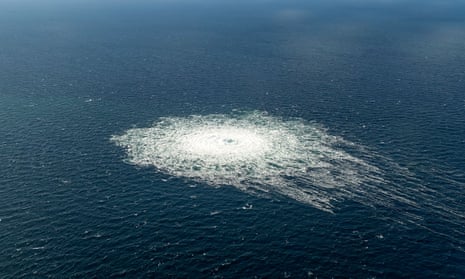
gas leak bubbling to surface of Baltic Sea
Scientists estimate the leaks could release up to 400,000 tonnes of methane into the atmosphere. Photograph: Danish Defence/AFP/Getty

Seascape: the state of our oceans is supported by

Scientists fear methane erupting from the burst Nord Stream pipelines into the Baltic Sea could be one of the worst natural gas leaks ever and pose significant climate risks.

Neither of the two breached Nord Stream pipelines, which run between Russia and Germany, was operational, but both contained natural gas. This mostly consists of methane – a greenhouse gas that is the biggest cause of climate heating after carbon dioxide.

Tiếp tục đọc “The Nord Stream gas pineline leaks the worst ever greenhouse gas event? Why it happened and what are the damages to the climate?”

Can Chinese Firms Be Truly Private?

bigdata.csis.org

As China’s economy moved away from state planning and policymakers introduced market reforms in the 1980s and 1990s, many observers expected that in addition to promoting the growth of the Chinese economy, privatization would also have substantial political implications. Most importantly, it was thought that the rise of the private sector could lead to the establishment of an independent business class that would seek to defend its interests, both in the short term through greater policy lobbying and over the longer term by pushing for institutionalized political change, including democratization. The actual economic and political trajectory of China’s private sector has been more complicated and has been a central area of contestation for economic and political power between firms and the Chinese party-state. Although Chinese companies have pushed to have greater autonomy, they have also faced immense pressure to adapt and cede authority in order to survive and grow.

Flourish logo

Tiếp tục đọc “Can Chinese Firms Be Truly Private?”

Hà Nội nằm trong 10 thành phố chất lượng không khí kém nhất thế giới

cand.com.vn

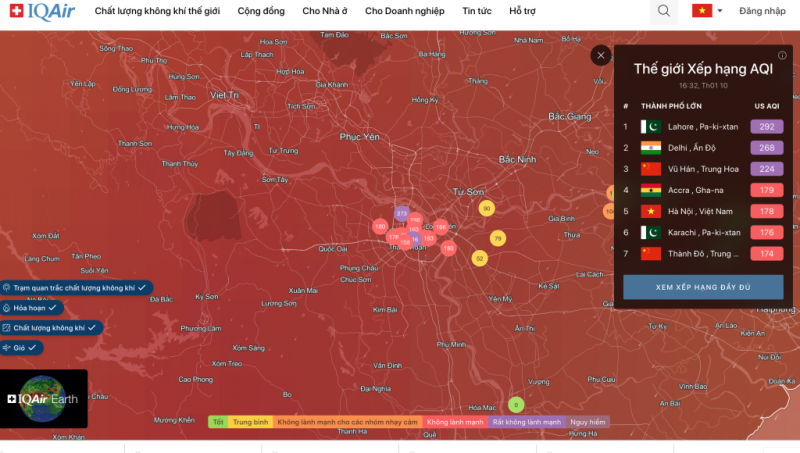
Chiều nay (10/1), trên trang IQAir, với chỉ số AQI trung bình 173 đơn vị, Hà Nội xếp thứ 5 trong 10 TP có chất lượng không khí kém nhất trên thế giới. Sáng nay, Hà Nội còn bị xếp thứ 4 với chất lượng không khí rất kém.

Trong ngày 10/1, chất lượng không khí ở nhiều nơi trên địa bàn Hà Nội rất kém. Toàn TP chìm trong sương mù. Dự báo, trạng thái này còn có thể kéo dài.

Các điểm có chỉ số AQI rất cao như Cầu Giấy 433, phố Phạm Tuấn Tài 305, Trường mầm non thực hành Hoa Sen 451, Thanh Xuân 318, Hoàn Kiếm 376. Cá biệt, Khu đô thị Time City lên tới con số 500.

1.png -0
Chất lượng không khí ở Hà Nội đang ở mức ô nhiễm.

Tiếp tục đọc “Hà Nội nằm trong 10 thành phố chất lượng không khí kém nhất thế giới”

Why rivers shouldn’t look like this

https://www.youtube.com/watch?v=zkmJRJaPBXE

The quintessential image of a river you might recognise from post cards and paintings – nice and straight with a tidy riverbank – is not actually how it is supposed to look. It’s the result of centuries of industrial and agricultural development. And it’s become a problem, exacerbating the impact of both extreme flooding and extreme drought. Josh Toussaint-Strauss looks into how so many rivers ended up this way, and how river restoration is helping to reestablish biodiversity and combat some of the effects of the climate crisis

‘This is what a river should look like’: Dutch rewilding project turns back the clock 500 years

‘We make nature here’: pioneering Dutch project repairs image after outcry over starving animals

Josh Toussaint-Strauss Ali Assaf Joseph Pierce Nick Hildred Ryan Baxter, Source: The Guardian

Pakistan’s nationwide power cuts highlight escalating economic crisis

Washingtonpost.com

By Pamela Constable and Shaiq Hussain January 24, 2023 at 4:39 a.m. EST

ISLAMABAD, Pakistan — Three weeks ago, Pakistani authorities ordered all markets, restaurants and shopping malls to close early, part of an emergency plan to conserve energy as the country of 220 million struggled to make overdue payments on energy imports and stave off a full-fledged economic collapse.

But the measures were too little, too late. On Monday morning, the country’s overburdened electrical system collapsed in a rolling wave of blackouts that began in the desert provinces of Baluchistan and Sindh but quickly spread to nearly the entire country, including the densely crowded cities of Karachi, Lahore and Rawalpindi.

Tiếp tục đọc “Pakistan’s nationwide power cuts highlight escalating economic crisis”

China Belt and Road dreams fade in Germany’s industrial heartland

Geopolitical tensions derail Duisburg’s hopes of trade bonanza

asia.nekkei.com

DUISBURG, Germany — Suad Durakovic, the owner of a truck driving school on the outskirts of the western German city of Duisburg, made it into Chinese newspapers in 2019 by testifying that Beijing’s Belt and Road Initiative had triggered a local logistics industry boom.

Today, his business benefits from a shortage of qualified truckers, but not because of China’s global infrastructure development strategy.

“The Silk Road has not developed for us,” Durakovic told Nikkei Asia. “First it was COVID, then it was the Ukraine war, so the boom is no longer about Silk Road logistics.”

Duisburg, a city of half a million people, is located in Germany’s industrial heartland at the junction of the Rhine and Ruhr rivers. A downturn in the country’s steel and coal industries in the 1990s and early 2000s battered its economy.

But the city found a savior in Chinese President Xi Jinping, who visited Duisburg in 2014 to officially make its inland port Europe’s main Belt and Road hub. While this fueled anticipation of a new heyday, recent events suggest the prospects are dimming.

Much of this stems from the Ukraine war and Germany’s awkward relationship with China.

Chancellor Olaf Scholz was the first European leader to visit Beijing since Xi secured a third term as party leader at the Communist Party Congress in October. But German attitudes have soured recently over China’s cozy relationship with Russia, Taiwan and human rights, as well as its growing trade deficit with the world’s second-biggest economy.

Tiếp tục đọc “China Belt and Road dreams fade in Germany’s industrial heartland”

The New Industrial Age

America Should Once Again Become a Manufacturing Superpower

foreignaffairs.com

By Ro Khanna

January/February 2023

Taylor Callery

Download Article

For many citizens, the American dream has been downsized. In recent decades, the United States has ceased to be the world’s workshop and become increasingly reliant on importing goods from abroad. Since 1998, the widening U.S. trade deficit has cost the country five million well-paying manufacturing jobs and led to the closure of nearly 70,000 factories. Small towns have been hollowed out and communities destroyed. Society has grown more unequal as wealth has been concentrated in major coastal cities and former industrial regions have been abandoned. As it has become harder for Americans without a college degree to reach the middle class, the withering of social mobility has stoked anger, resentment, and distrust. The loss of manufacturing has hurt not only the economy but also American democracy.

Tiếp tục đọc “The New Industrial Age”

The Global Energy Crisis 2021-2023 and Political Upheaval: Could It Get Worse?

energytracker.com

What started as a sharp post-pandemic rise in energy prices in mid-2020 has turned into a full-blown global energy crisis. How is this affecting the political stability of countries?

17 January 2023 – by Heba Hashem

Last updated on 24 January 2023

The world is going through a global energy crisis. Fuel costs affect many parts of daily life, including energy for heating and lighting, individual travel and commodities transportation.

The world is now facing a cost-of-living catastrophe. Millions of households are struggling to cover basic needs after energy prices spiked to levels not seen in decades.

Is There a Global Energy Crisis Today in 2023?

Actually, there is a global energy crisis. From Indonesia to the UK and Peru, people across the globe have taken their anger to the streets. As many as 92 countries witnessed protests against high fuel prices between January and September 2022. These include developed European countries like France, Spain and the UK.

Tiếp tục đọc “The Global Energy Crisis 2021-2023 and Political Upheaval: Could It Get Worse?”

Arctic Ocean acidifying up to four times as fast as other oceans, study finds

theguardian.com

Scientists ‘shocked’ by rate of change as rapid sea-ice melt drives absorption of CO2 – with ‘huge implications’ for Arctic sea life

A thin layer of grey ice on a rocky shore
Norway’s Svalbard archipelago. Melting sea ice in the Arctic Ocean is driving faster warming and acidification, in a feedback loop known as Arctic amplification. Photograph: Anadolu Agency/Getty

Acidification of the western Arctic Ocean is happening three to four times faster than in other ocean basins, a new study has found.

The ocean, which absorbs a third of all of the carbon dioxide in the atmosphere, has grown more acidic because of fossil fuel use. Rapid loss of sea ice in the Arctic region over the past three decades has accelerated the rate of long-term acidification, according to the study, published in Science on Thursday.

Tiếp tục đọc “Arctic Ocean acidifying up to four times as fast as other oceans, study finds”

Nuclear Power in China

world-nuclear.org

(Updated January 2023)

  • The impetus for nuclear power in China is increasingly due to air pollution from coal-fired plants.
  • China’s policy is to have a closed nuclear fuel cycle.
  • China has become largely self-sufficient in reactor design and construction, as well as other aspects of the fuel cycle, but is making full use of western technology while adapting and improving it.
  • Relative to the rest of the world, a major strength is the nuclear supply chain.
  • China’s policy is to ‘go global’ with exporting nuclear technology including heavy components in the supply chain.

Operable Reactors : 53,150 MWe

Reactors Under Construction: 21,867 MWe

Reactors Shutdown: 0 MWe

Electricity sector

Total generation (in 2019): 7541 TWh

Generation mix: 4899 TWh (65%) coal; 1304 TWh (17%) hydro; 406 TWh (5%) wind; 348 TWh (5%) nuclear; 226 TWh (3%) natural gas; 225 TWh (3%) solar; 121 (2%) biofuels & waste.

Import/export balance: 4.4 TWh net export (17.2 TWh imports; 21.7 TWh exports)

Total consumption: 6568 TWh

Per capita consumption: c. 4700 kWh in 2019

Source: International Energy Agency and The World Bank. Data for year 2019

Most of mainland China’s electricity is produced from fossil fuels, predominantly coal – 69% in 2019. Wind and solar capacity in 2019 was 21% of total installed generating capacity, but delivering under 9% of the electricity.

Rapid growth in demand has given rise to power shortages, and the reliance on fossil fuels has led to much air pollution. The economic loss due to pollution is put by the World Bank at almost 6% of GDP,1 and the new leadership from March 2013 prioritized this.* Chronic and widespread smog in the east of the country is attributed to coal burning.

* Official measurements of fine particles in the air measuring less than 2.5 micrometres, which pose the greatest health risk, rose to a record 993 micrograms per cubic metre in Beijing on 12 January 2013, compared with World Health Organization guidelines of no higher than 25.

The International Energy Agency (IEA) notes that since 2012, China has been the country with the largest installed power capacity, and it has increased this by 85% since then to reach 2011 GWe in 2019, about a quarter of global capacity.

In August 2013 the State Council said that China should reduce its carbon emissions by 40-45% by 2020 from 2005 levels, and would aim to boost renewable energy to 15% of its total primary energy consumption by 2020. In 2012 China was the world’s largest source of carbon emissions – 2626 MtC (9.64 Gt CO2), and its increment that year comprised about 70% of the world total increase. In March 2014 the Premier said that the government was declaring “war on pollution” and would accelerate closing coal-fired power stations.

Tiếp tục đọc “Nuclear Power in China”

China’s Failed Covid Vaccine Nationalism

Beijing rejected foreign mRNA shots, putting its citizens at greater risk.

WSJ.com

The disaster of China’s zero-Covid policy has many contributors, starting with the Communist Party’s need for political control. One of the byproducts of that control that deserves more attention is Beijing’s vaccine nationalism, and President Xi Jinping’s decision not to offer China’s 1.4 billion citizens access to Western-made mRNA Covid vaccines.

Months into the pandemic, as vaccine manufacturers around the world began their race to develop the shots, countries including Canada and the U.S. signed contracts with multiple vaccine suppliers. The fastest and best would be deployed. But China let Communist nationalism drive its procurement decisions and rejected foreign vaccines.

That decision is still haunting the Chinese public. China’s homegrown vaccines—including Sinovac and Sinopharm—are much less effective against Covid than are the mRNA shots created by Pfizer-BioNTech and Moderna. Sinovac was much less effective initially against symptomatic Covid—only about 50%—compared with more than 90% for the mRNA vaccines.

Tiếp tục đọc “China’s Failed Covid Vaccine Nationalism”

Afghan aid at risk from Taliban ban on women, warns United Nations

theguardian.com

Standoff between UN and Taliban may lead loss of billions in humanitarian aid for Afghanistan

A Taliban fighter stands guard in Kabul
A Taliban fighter stands guard in Kabul. UN flights carrying cash for humanitarian aid into Kabul have already been suspended. Photograph: Ebrahim Noroozi/AP

Patrick Wintour Diplomatic editorFri 6 Jan 2023 09.44 GMT

The UN’s lead humanitarian coordinator has said UN-supplied aid cannot continue if the Taliban do not lift their ban on women working for humanitarian aid agencies in Afghanistan.

Martin Griffiths, the head of the UN’s Office for the Coordination of Humanitarian Affairs, is due to visit Kabul shortly to discuss the impasse.

Although he said he did not want to pre-empt talks and was willing to examine workarounds on the ban, his remarks suggest a standoff is developing between the UN and the Taliban that could lead to billions in aid being cut off in the long term.

Tiếp tục đọc “Afghan aid at risk from Taliban ban on women, warns United Nations”

The creator of the CRISPR babies has been released from a Chinese prison

He Jiankui created the first gene-edited children. The price was his career. And his freedom.

technologyreview.com

By Antonio Regaladoarchive page April 4, 2022

He Jiankui

MS TECH | AP PHOTO/KIN CHEUNG

The daring Chinese biophysicist who created the world’s first gene-edited children has been set free after three years in a Chinese prison.

He Jiankui created shock waves in 2018 with the stunning claim that he’d altered the genetic makeup of IVF embryos and implanted them into a woman’s uterus, leading to the birth of twin girls. A third child was born the following year.

Following international condemnation of the experiment, He was placed under home arrest and then detained. In December 2019, he was convicted by a Chinese court, which said the researcher had “deliberately violated” medical regulations and had “rashly applied gene editing technology to human assisted reproductive medicine.”

His release from prison was confirmed by people familiar with the situation and He answered his mobile phone when contacted early today. “It’s not convenient to talk right now,” he said before hanging up.

Tiếp tục đọc “The creator of the CRISPR babies has been released from a Chinese prison”