I'm from Hanoi, Viet Nam.
I'm an author of Dot Chuoi Non (dotchuoinon.com/author/hangbelu/), a blog on Positive thinking, founded by Dr. Tran Dinh Hoanh, an attorney in Washington DC.
I'm a co-founder of Conversations on Vietnam Development - cvdvn.net, a virtual think tank. I am a co-founder of two companies in Viet Nam working on children education services. I advise companies on STEAM education, English language education for children and students in Vietnam.
I'm studying the Buddha's teaching and the teaching of Jesus. I practice mindful living including meditation.
I hold a PhD on Sustainable Energy Systems from University of Lisbon and Aalto University.
I graduated from Hanoi University of Technology on Environmental Engineering. I obtained a Master degree of the same major from Stanford University and Nanyang Technological University.
My English-language blog at: hangbelu.wordpress/.
I play table tennis as a hobby.
A World Energy Outlook Special Report on the Oil and Gas Industry and COP28
Today, oil and gas operations account for around 15% of total energy-related emissions globally, the equivalent of 5.1 billion tonnes of greenhouse gas emissions. In the International Energy Agency’s Net Zero Emissions by 2050 Scenario, the emissions intensity of these activities falls by 50% by the end of the decade. Combined with the reductions in oil and gas consumption in this scenario, this results in a 60% reduction in emissions from oil and gas operations to 2030.
Fortunately, oil and gas producers have a clear opportunity to address the problem of emissions from their activities through a series of ready-to-implement and costeffective measures. These include tackling methane emissions, eliminating all non-emergency flaring, electrifying upstream facilities with low-emissions electricity, equipping oil and gas processes with carbon capture, utilisation and storage technologies, and expanding the use of hydrogen from low-emissions electrolysis in refineries.
Upfront investments totalling USD 600 billion would be required to halve the emissions intensity of oil and gas operations globally by 2030. This is only a fraction of the record windfall income that oil and gas producers accrued in 2022 – a year of soaring energy prices amid a global energy crisis. This report aims to inform discussions on these issues in the run-up to the COP28 Climate Change Conference in Dubai in November and is part of a broader World Energy Outlook special report to be released later in 2023 focusing on the role of the oil and gas industry in net zero transitions.
TCCT ThS. Nguyễn Đắc Văn (Khoa Luật, Trường Đại học Đà Lạt)
Tóm tắt:
Giá đất là một chế định pháp lý quan trọng trong Luật Đất đai 2013, sau một thời gian áp dụng, những quy phạm về giá đất do cơ quan nhà nước xác định đã bộc lộ nhiều hạn chế cần phải sửa đổi, bổ sung. Bài viết tập trung phân tích, đánh giá làm rõ thực trạng pháp luật về giá đất do cơ quan nhà nước xác định tại Việt Nam hiện nay, cũng như chỉ ra một số bất cập của quy định pháp luật về vấn đề này, từ đó đề xuất một số kiến nghị hoàn thiện pháp luật về giá đất.
Từ khóa: giá đất, pháp luật đất đai, bất cập và phương hướng hoàn thiện.
1. Đặt vấn đề
Giá đất là một chế định pháp lý quan trọng trong Luật Đất đai 2013, sau một thời gian áp dụng, những quy phạm về giá đất do cơ quan nhà nước xác định đã bộc lộ nhiều hạn chế cần phải sửa đổi, bổ sung như: giá đất quy định trong khung giá đất, bảng giá đất thường thấp hơn nhiều lần giá đất phổ biến trên thị trường; những nguyên tắc xác định giá đất chưa được tuân thủ nghiêm chỉnh do sự thiếu rõ ràng của pháp luật; quy định về các phương pháp định giá đất, về Hội đồng thẩm định giá còn nhiều bất cập… Thực trạng pháp luật này đặt ra nhu cầu cần nghiên cứu để làm rõ những hạn chế trong quy định hiện hành, từ đó đề xuất một số kiến nghị hoàn thiện pháp luật về giá đất. Bài viết phân tích thực trạng pháp luật về giá đất do cơ quan nhà nước có thẩm quyền xác định nhằm đáp ứng nhu cầu đó.
2. Một số vấn đề pháp lý về giá đất do cơ quan nhà nước xác định theo quy định của pháp luật đất đai hiện nay
2.1. Về xác định giá đất phù hợp với giá đất phổ biến trên thị trường của loại đất có cùng mục đích sử dụng đã chuyển nhượng
Mireya Solís, director of the Center for East Asian Policy Studies at Brookings, explains the significance of Japan hosting the G7 summit in Hiroshima, and how Tokyo centers its foreign policy on promoting a free and open Indo-Pacific region. “This is Japan’s grand strategy,” Solís says, “this is really the roadmap that Japan has charted to achieve its security and prosperity.”
Mireya Solís, director of the Center for East Asian Policy Studies at Brookings, explains the significance of Japan hosting the G7 summit in Hiroshima, and how Tokyo centers its foreign policy on promoting a free and open Indo-Pacific region. “This is Japan’s grand strategy,” Solís says, “this is really the roadmap that Japan has charted to achieve its security and prosperity.”
TRANSCRIPT
[music]
DOLLAR: Hi, I’m David Dollar, host of the Brookings Trade podcast Dollar and Sense. Today, my guest is Mireya Solís, director of the Center for East Asian Policy Studies here at Brookings. Mireya is a leading expert on Japan’s trade and economic diplomacy, and she has a book coming out this summer on Japan’s quiet leadership. And one aspect of this quiet leadership, or maybe not so quiet right now, is Japan will be hosting the G7 summit in Hiroshima starting on May 19. That’s the main thing we’re going to talk about.
Because of the Memorial Day holiday in the United States, we’re going to push back production one week. So, the next episode will come out on June 5th.
So, welcome to the show, Mireya.
SOLÍS: Thank you so much, David. It’s a pleasure to be here.
Để có “phong bao” không ít công chức, viên chức đã “mê cung hóa” những quy trình xử lý, làm doanh nghiệp không thể không móc hầu bao.
Nhũng nhiễu tăng vọt
Giám đốc một doanh nghiệp tại Hà Nội cho biết, công ty ông phải tiếp các đoàn thanh tra khá thường xuyên. Mà trong mỗi lần kiểm tra thì y như rằng, họ yêu cầu, xét nét đủ thứ, không có “phong bao” thì không được. Có cán bộ còn chủ động xin số zalo để kết nối dễ, mỗi lần “có việc” là họ lại chủ động liên hệ “xin”.
Đây chính là hành vi nhũng nhiễu, hay nói chính xác là tham nhũng vặt, của những người có chức vụ, quyền hạn, nhằm vụ lợi từ doanh nghiệp. Những hành vi này đã diễn ra từ lâu và diễn ra hàng ngày ở nhiều nơi, nhiều cơ quan, tổ chức khác nhau, thậm chí gần như trở thành thông lệ, thói quen, của không ít cán bộ hiện nay.
Chi phí không chính thức vẫn tồn tại phổ biến trong nhiều lĩnh vực quản lý Nhà nước. Ảnh minh họa: Hoàng Hà
Editor’s note: This story was originally published by The Guardian. It appears here as part of the Climate Desk collaboration.
The next UN climate summit will be the first to consider health issues in depth, with a meeting of global health ministers to highlight the consequences of the climate crisis for wellbeing.
Sultan Al Jaber, the president of Cop28, which will take place in Dubai this November, said on Tuesday: “We will be the first Cop to dedicate a day to health and the first to host a health and climate ministerial. And we need to broaden our definition of adaptation to enable global climate resilience, transform food systems and enhance forestry land use and water management.”
In 2020, Amazon founder Jeff Bezos committed $10bn to create the Bezos Earth Fund, to help address the pressing issues of climate change. And, since then, the fund’s chief executive, Andrew Steer — who joined from the World Resources Institute, following a stint as the World Bank’s special envoy for climate change — has focused its efforts on funding energy transition.
At the COP 27 conference in Egypt, last November, Steer, alongside John Kerry, the US special presidential envoy for climate, and the philanthropic Rockefeller Foundation, announced plans for an Energy Transition Accelerator (ETA) programme, to bring private capital to clean energy transition projects in emerging and developing economies. It’s aim was to do this by verifying the greenhouse gas emission reductions from transition projects, which participating jurisdictions would be able to issue as marketable carbon credits. Under the still to be developed proposal, these credits might then be purchased by companies to achieve their net zero emission targets, creating a predictable finance stream to de-risk costly transition investment.
In March, Steer joined the FT’s climate editor, Emiliya Mychasuk, at the FT Climate Capital Live event, to give an update on the ETA’s progress.
Three out of four crops across the globe producing fruits, or seeds for use as human food depend, at least in part, on bees and other pollinators. PHOTO:Photo FAO/Greg Beals
Bees and other pollinators, such as butterflies, bats and hummingbirds, are increasingly under threat from human activities.
Pollination is, however, a fundamental process for the survival of our ecosystems. Nearly 90% of the world’s wild flowering plant species depend, entirely, or at least in part, on animal pollination, along with more than 75% of the world’s food crops and 35% of global agricultural land. Not only do pollinators contribute directly to food security, but they are key to conserving biodiversity.
To raise awareness of the importance of pollinators, the threats they face and their contribution to sustainable development, the UN designated 20 May as World Bee Day.
The goal is to strengthen measures aimed at protecting bees and other pollinators, which would significantly contribute to solving problems related to the global food supply and eliminate hunger in developing countries.
We all depend on pollinators and it is, therefore, crucial to monitor their decline and halt the loss of biodiversity.
Bee engaged: Celebrating the diversity of bees and beekeeping systems
Sudan’s health system is disintegrating under the weight of the fighting raging in the country since mid-April, doctors and health officials warn, with the damage expected to last for decades.
Health and relief institutions say the conflict threatens to become a humanitarian catastrophe as tens of thousands flee for safety to neighbouring South Sudan, Chad, Egypt and Ethiopia amid intense fighting between the army and militia.
Services have ceased in more than 70 per cent of hospitals in areas hit by the clashes in a number of Sudanese states, Sudan’s doctors’ syndicate said Tuesday (25 April). In total, 13 of the hospitals were bombed, while 19 others forcibly evacuated.
“We are in a state of total collapse,” said Atiya Abdullah Atiya, a key member of the syndicate, in a phone call to SciDev.Net.
“Our drug stocks are depleted, health institutions have been destroyed, and our medical teams have been killed in battle.”
The shortage of staff and medical supplies and constant power outages threaten to shut down the remaining functioning hospitals, while the number of victims of the ongoing clashes continues to rise, according to Atiya.
Fighting erupted on 15 April in the capital Khartoum between the army and a paramilitary group known as the Rapid Support Forces. A fragile US-brokered ceasefire which came into effect Tuesday was due to end later today (Thursday), with negotiations ongoing.
(CATP) Ngày 19-12 tại TP.Cần Thơ, Tổ chức quốc tế về bảo tồn thiên nhiên Việt Nam (WWF – Việt Nam) phối hợp với Báo Nông nghiệp Việt Nam tổ chức tọa đàm với chủ đề “Quản lý cát bền vững ở ĐBSCL và giải pháp nào cho tình trạng khan hiếm cát dưới góc nhìn chuyên gia và truyền thông” với sự tham gia các nhà quản lý, chuyên gia, cơ quan báo, đài. Tại đây, nhiều chuyên gia cho rằng không nên khai thác “cát biển” để làm nguồn vật liệu thay thế, bởi như vậy là chúng ta đang “cắt đứt đôi chân” của mình.
Vùng ĐBSCL là một trong những khu vực kinh tế trọng điểm của Việt Nam, đóng góp 31,37% GDP ngành nông nghiệp, 50% sản lượng lúa, 65% sản lượng nuôi trồng thủy sản, 70% sản lượng trái cây, 95% lượng gạo xuất khẩu và 60% sản lượng cá xuất khẩu. Tuy nhiên, nơi đây đang chịu tác động mạnh do biến đổi khí hậu cùng các hiện tượng cực đoan như: hạn hán, xâm nhập mặn, sạt lở. Tình trạng khai thác cát quá mức đã làm gia tăng sạt lở bờ sông, ảnh hưởng không nhỏ đến đời sống người dân đồng bằng. Do đó, việc quản lý khai thác cát một cách hiệu quả và bền vững cần những giải pháp căn cơ và lâu dài.
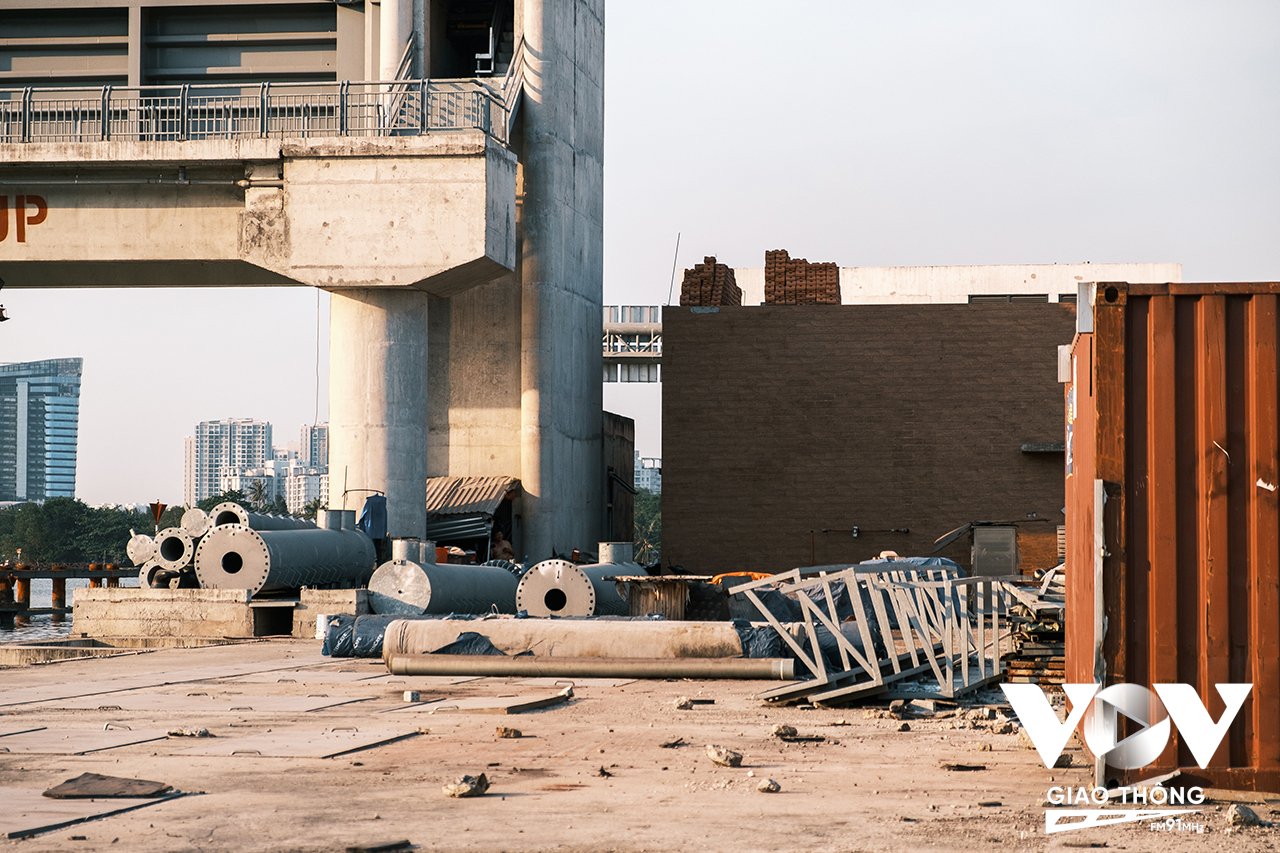
Nếu dự án ngăn triều chống ngập được hoàn thành, nỗi lo ngập nước vì triều cường và mưa lớn ở thành phố sẽ cơ bản được giải quyết. Việc tháo gỡ những vướng mắc về vốn đã tồn tại gần 7 năm qua là điều lãnh đạo thành phố cần quan tâm.
Nhiều vật liệu, máy móc công trình nằm phơi mưa, phơi nắng trong suốt thời gian dài.
Trong bối cảnh TP.HCM mỗi ngày thêm ngập, dự án chống ngập do triều có xét đến yếu tố biến đổi khí hậu lên đến 10.000 tỷ đang dừng thi công là một lực cản rất lớn cho nỗ lực giải quyết bài toán ngập lụt của thành phố. Nếu công trình còn chậm ngày nào, người dân nhiều khu vực của thành phố còn tiếp tục trầm mình với nước ngập ngày đó; nhất là những hộ dân xung quanh công trình, cống đập đang được xây dựng.
Liên quan đến dự án này đã có nhiều cuộc làm việc, giải quyết của các bên nhưng đến nay dù công trình đã đạt hơn 95% khối lượng nhưng vẫn chưa thể đưa vào sử dụng. Lý do cơ bản vẫn là chưa được đầu tư vốn bổ sung để hoàn thành do các bên liên quan không thống nhất được cách thức triển khai cũng như bố trí nguồn lực. Đây chính là những vướng mắc khiến công trình trì trệ, chậm tiến độ kéo dài suốt từ năm này sang năm khác. Người dân thì khắc khoải đợi chờ và hy vọng.
Hiện nay, chủ đầu tư, đơn vị thi công đang tìm cách tháo gỡ các khắc mắc để công trình tái khởi động trở lại vào tháng 6 tới đây. Tuy nhiên điều đáng nói ở đây là với các công trình hàng ngàn tỷ, liên quan mật thiết đến đời sống dân sinh hàng ngày thế này, nếu các bên không tận tâm, tận lực; không” sốt ruột” để giải quyết sẽ khiến cả hàng triệu người bị ảnh hưởng. Gây bức xúc trong dư luận xã hội.
Điều này cũng cần được nhìn nhận, đánh giá khách quan, rút ra bài học kinh nghiệm sâu sắc để sau này không lặp lại trong việc triển khai đầu tư dự án.Từ khâu quy hoạch, thiết kế, tư vấn giám sát dự án đến việc lựa chọn nhà thầu thi công; cũng như cách thức hỗ trợ để nhà thầu hoàn thành dự án đúng tiến độ; kịp thời phục vụ đời sống. Tránh chưa làm thì hết vốn hoặc liên tục rơi vào “lùm xùm” các tranh cãi khác nhau; khiến dự án thì cứ nằm im, không sao chuyển động được. Chậm ngày nào dân thiệt ngày đó.
Do vậy, ngay lúc này, các cơ quan quản lý cần tạo ra các cơ chế rõ ràng, hỗ trợ tối đa cho nhà thầu để dự án thi công trở lại, đảm bảo đúng hạn định. Nhà thầu cũng phải thấy được phần trách nhiệm của mình, đẩy nhanh tiến độ; làm dứt điểm các hạng mục đã triển khai; tránh tình trạng để dây dưa kéo dài, khiến người dân ở khu vực lân cận lâm cảnh nước tù đọng, bủa vây, gây xáo trộn cuộc sống.
Việc chống ngập của TP.HCM hay Hà Nội và nhiều địa phương khác không chỉ trông chờ vào một hoặc vài ba công trình mà phải là giải pháp tổng thể. Từ cơ sở hạ tầng với các dự án công trình hàng ngàn tỷ đến các biện pháp mềm, phi công trình. Bởi nếu các công trình chống ngập, hồ chứa nước được xây dựng liên tiếp nhưng cộng đồng vẫn tiếp tục xả rác vào cống rãnh; lấn chiếm sông ngòi, kênh rạch; làm cản trở dòng chảy. Hay độ bê tông hóa ngày càng nhiều sẽ khiến cho tình trạng ngập lụt của đô thị ngày càng trầm trọng.
Do vậy, ngay lúc này,các phong trào không xả rác; bảo vệ hàng lang kênh rạch; chủ động tiêu thoát nước tại khu đô thị, tổ dân phố, hộ dân cư tiếp tục được duy trì. Việc đô thị hóa đảm bảo tuân thủ các điều kiện quy hoạch về xây dựng; đấu nối tiêu thoát nước đầy đủ.
Đây chính là những cơ sở quan trọng để đảm bảo cho các đô thị không bị ngập lụt nghiêm trọng mỗi khi triều cường và mưa xuống. Để làm được điều này, cần sự thực thi đến nơi đến chốn có kiểm tra, giám sát của các các cấp chính quyền và mỗi người dân ở TP.HCM, Hà Nội nói riêng và từng đô thị khác trong cả nước nói chung.
Most of the clothing and gadgets you buy in stores today were once in shipping containers, sailing across the ocean. Ships carry over 80% of the world’s traded goods. But they have a problem – the majority of them burn heavy sulfur fuel oil, which is a driver of climate change.
While cargo ships’ engines have become more efficient over time, the industry is under growing pressure to eliminate its carbon footprint.
Most of the big shippers’ fleets are less than 20 years old, but even the newer builds don’t necessarily have the most advanced technology. It takes roughly a year and a half to come out with a new build of a ship, and it will still be based on technology from a few years ago. So, most of the engines still run on fossil fuel oil.
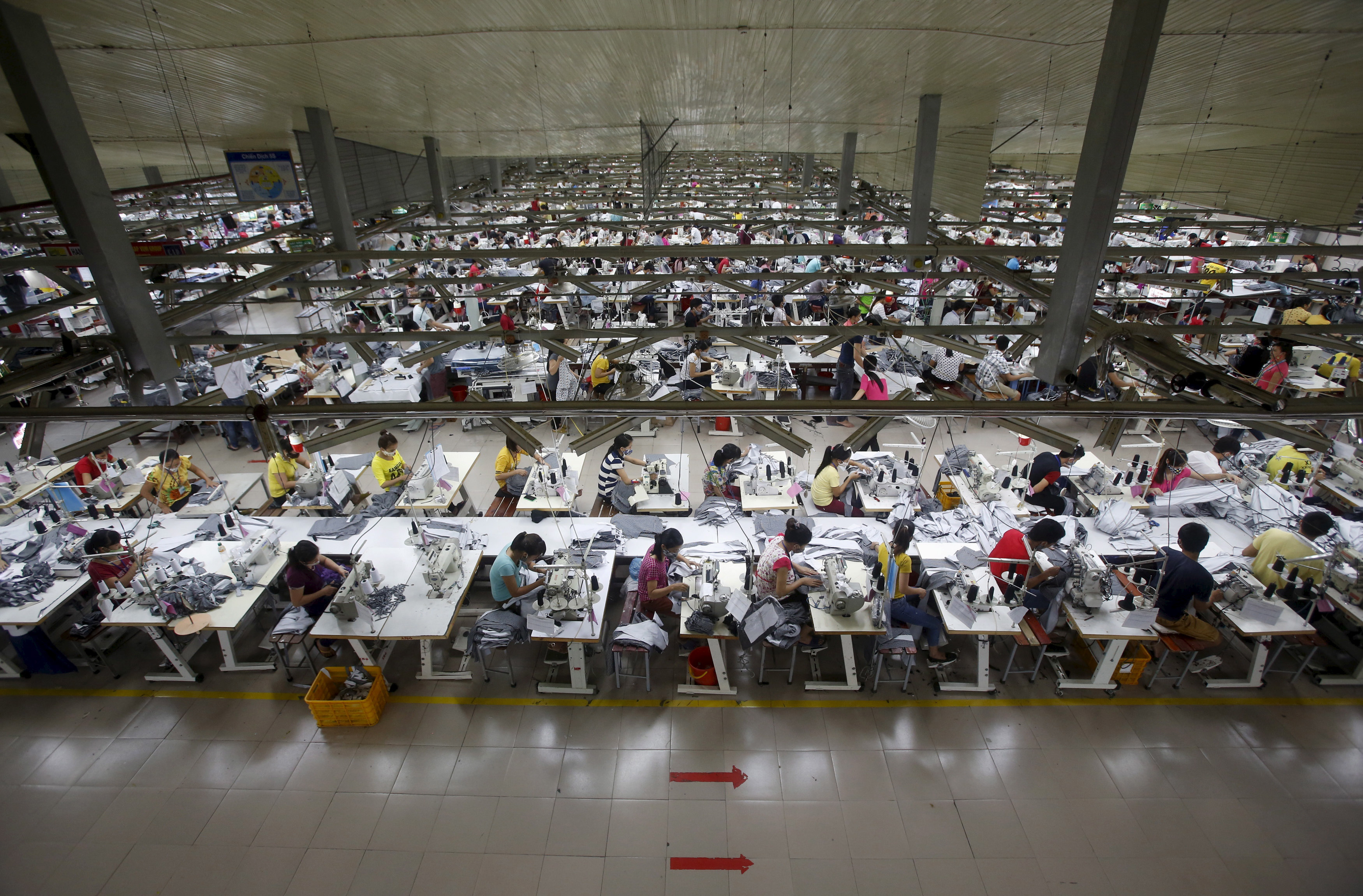
Labourers work at a garment factory in Bac Giang province, near Hanoi October 21, 2015. Vietnam’s textiles and footwear would gain strongly from the TPP, after exports of $31 billion last year for brands such as Nike, Adidas, H&M, Gap, Zara, Armani and Lacoste. REUTERS/Kham
Summary
Companies
Vietnam apparel worst hit by U.S. curbs, data show
Apparel suppliers to big brands depend on Chinese input
Blow to apparel exports hurts Vietnam’s growth
HANOI, April 27 (Reuters) – Tighter U.S. rules to ban imports from China’s Xinjiang are compounding pressure on Vietnam’s apparel and footwear makers, hitting a sector that has already shed nearly 90,000 jobs since October in the global manufacturing hub as demand slowed.
Among garment exporters, Vietnam has faced the worst hit from the the Uyghur Forced Labor Protection Act (UFLPA), a Reuters review of official U.S. data showed. The law, in place since June, requires companies to prove that they do not use raw material or components produced with Xinjiang’s forced labor.
Governments across Southeast Asia have little incentive to protect freedom of expression domestically but steps taken by both domestic and international actors could mean the difference between freedom and its opposite.
All of the countries of Southeast Asia currently sit in the bottom half of the World Press Freedom Index, with four – Brunei, Laos, Singapore and Vietnam – ranked below 150 in the 180-country list, and Myanmar expected to join them following its February 2020 coup.
In these countries, critical coverage is not formally banned but there is no presumption of the right to publish. In Cambodia, Indonesia, Malaysia, Philippines and Thailand, for example, a theoretical commitment to freedom of expression is marred by restrictive legislation, intimidation and even the killing of journalists.
The media in Southeast Asia faces two problems – vaguely worded laws open to abuse and politically-motivated prosecutions – and, in the absence of robust independent courts willing to challenge these governments, politicians have been able to pursue personal vendettas against publications and individuals with few limitations.
.
Without independent courts, even those countries with rules-based legal systems, will fail to defend dissenting voices against politicians in power.
Wrongful convictions have severe consequences and effects on the values, dignity, and self-esteem of the innocent and their beloved ones. While Vietnam is implementing the rule of law to ensure the protection of citizens’ fundamental rights, recent and serious wrongful conviction cases suggest a need to enhance the effectiveness and credibility of criminal justice reform. Using several cases for examples from Vietnam, this study examines two levels of factors that contribute to wrongful convictions: (i) the acknowledged causes (the top of the iceberg) and (ii) the hidden roots (beneath the surface). In addition, we compare the case of Vietnam to the findings from other Asian nations, notably those of East Asia. We conclude that the causes for wrongful convictions are embedded in the criminal justice process and culture, and eradication of wrongful convictions requires careful planning and innovative reforms that address the root causes of the problems. Relevant policy and practical recommendations are offered to deal with the factors leading to wrongful convictions in Vietnam.
Introduction
In recent years, Vietnam’s criminal justice system has been more effective in addressing human rights and responding to transnational crimes and maintaining national security. New legislation in Vietnam’s criminal justice system sets the goals of safeguarding justice and human rights first and foremost, a component of which requires reduction of wrongful convictions. Wrongful convictions have weakened public trust in the criminal justice system, violated human rights, and affected the integrity of the rule of law. Yet, at the domestic level, wrongful convictions are still persistent.
Vietnamese legal scholars have started examining wrongful convictions, particularly after the Communist Party of Vietnam (CPV) called for judicial reforms in the 2000s (Dao, 2020; Thai, 2020). These scholars have paid little attention, however, to the fundamental reasons that lead to wrongful convictions. While the CPV encouraged the combination of inquisitorial and adversarial models in criminal proceedings, the legal ideology to identify and recognize hidden factors of wrongful convictions has not been seriously considered in the process. In other words, the hidden factors contributing to wrongful convictions are still not reviewed and assessed alongside the surface elements of wrongful convictions in Vietnam.
Ngoài đền thờ Vua Hùng ở Thảo Cầm Viên là di tích được xếp hạng để bảo tồn, thành phố còn có đền tưởng niệm lớn nhất Nam Bộ.
Đền thờ vua Hùng trong Thảo Cầm Viên
Đền thờ vua Hùng nằm cạnh quầy vé Thảo Cầm Viên (quận 1, TP HCM), do người Pháp xây dựng năm 1926. Công năng ban đầu của công trình là đền tưởng niệm những người Việt tử trận vì đi lính cho Pháp trong Thế chiến thứ nhất.
Sau năm 1954, khi người Pháp rút khỏi Việt Nam, công trình được đổi tên thành đền Quốc Tổ Hùng Vương. Trong đó, ngoài việc thờ vua Hùng, còn thờ một số nhân vật lịch sử khác như Trần Hưng Ðạo, Tả quân Lê Văn Duyệt. Sau năm 1975, đền được đổi thành đền thờ Hùng Vương và giao cho Bảo tàng lịch sử Việt Nam – TP HCM trực tiếp quản lý.
Ngôi đền có bình đồ hình vuông, mang phong cách kiến trúc thời nhà Nguyễn với bộ mái chồng diêm, tạo thành ba tầng mái cong. Về tổng thể, công trình phảng phất tòa Minh lâu của lăng Minh Mạng ở Huế.
Mỗi tuần, đền mở cửa miễn phí cho khách đến thăm từ thứ 3 đến ngày chủ nhật. Ngày giỗ tổ Hùng Vương mùng 10 tháng 3 âm lịch hàng năm, ở đây đều tổ chức lễ dâng hương.
Năm 2015, UBND TP HCM xếp hạng di tích lịch sử – văn hóa cấp thành phố cho công trình này. Ảnh: Quỳnh Trần

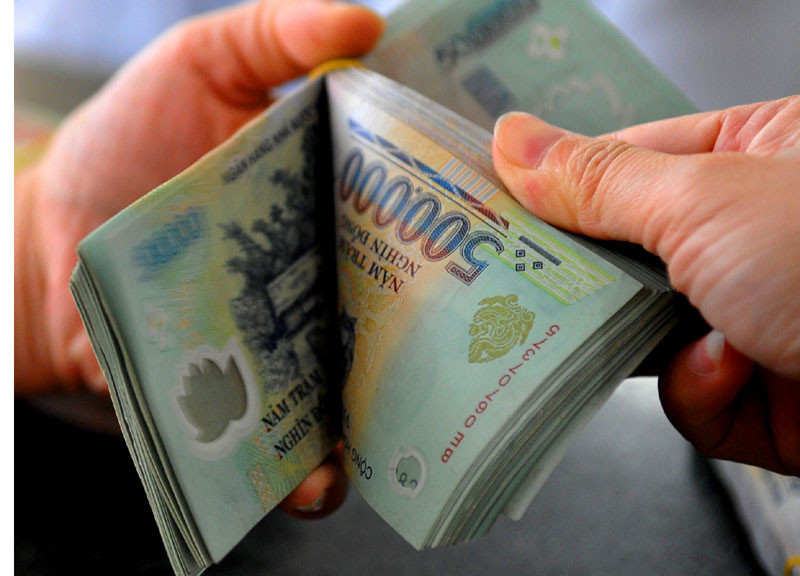
 Photo by