Protected areas hit hard as Mekong countries’ forest cover shrank in 2024

mongabay.com Gerald Flynn 6 Oct 2025Asia

  • The five Mekong countries lost nearly 1 million hectares (2.5 million acres) of tree cover in 2024, with nearly a quarter of which was primary forest, and more than 30% of losses occurring inside protected areas.
  • Cambodia and Laos saw some of the highest levels of loss inside protected areas, driven by logging, plantations and hydropower projects, though both countries recorded slight declines from 2023.
  • In Myanmar, conflict has complicated forest governance, with mining and displacement contributing to losses, though overall deforestation fell slightly compared to the previous year.
  • Thailand and Vietnam bucked the regional trend, with relatively low forest losses in protected areas, supported by logging bans, reforestation initiatives, and stricter law enforcement.

See All Key Ideas

BANGKOK — The Mekong countries of Cambodia, Laos, Myanmar, Thailand and Vietnam lost a combined area of tree cover of nearly a million hectares in 2024, or an area almost the size of Lebanon. That’s according to Mongabay’s analysis* of satellite data published by the Global Land Analysis and Discovery (GLAD) laboratory at the University of Maryland, in partnership with Global Forest Watch (GFW).

GFW data show 991,801 hectares (2.45 million acres) of tree cover were lost in 2024, including nearly 220,000 hectares (544,000 acres) of primary forest, across the five Mekong countries. More than 30% of tree cover loss recorded in 2024 occurred inside protected areas, although across the region, the rate of deforestation — both within protected areas and outside of them — slowed slightly from 2023. Despite this, the drivers of deforestation vary somewhat from country to country, and last year’s losses still reflect a grim trajectory for forests in the Mekong region.

The economies of almost all Mekong countries are heavily reliant on agriculture, with forests cleared for both agribusiness-run plantations or subsistence farming plots. But research indicates the conversion of forest to croplands has resulted in increasingly unpredictable weather patterns and subsequently poorer agricultural yields.

Tiếp tục đọc “Protected areas hit hard as Mekong countries’ forest cover shrank in 2024”

Một công ty nhiều năm khai thác trái phép khoáng sản mà tỉnh không biết?

dantri.com.vn Thứ hai, 27/10/2025 – 09:49

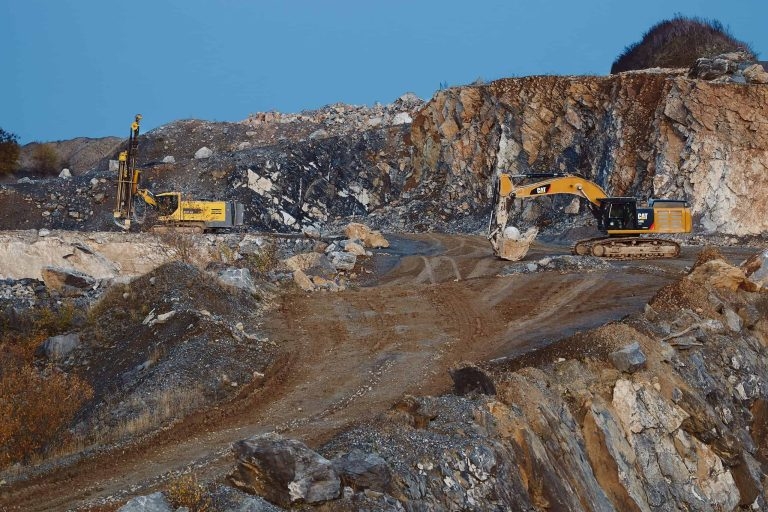
(Dân trí) – Quá trình khai thác mỏ, Công ty cổ phần Vissai Ninh Bình đã khai thác, sử dụng trái phép lượng lớn khoáng sản là phần tài nguyên trữ lượng chưa được cấp phép.

9 năm khai thác trái phép 4,4 triệu tấn khoáng sản

Sở Nông nghiệp và Môi trường tỉnh Ninh Bình vừa ban hành quyết định xử phạt vi phạm hành chính đối với Công ty cổ phần Vissai Ninh Bình, do ông Hoàng Mạnh Tùng làm giám đốc.

Một công ty nhiều năm khai thác trái phép khoáng sản mà tỉnh không biết? - 1
Mỏ khai thác đá của Công ty cổ phần Vissai Ninh Bình tại xã Gia Viễn, tỉnh Ninh Bình (Ảnh: Thanh Bình).

Tiếp tục đọc “Một công ty nhiều năm khai thác trái phép khoáng sản mà tỉnh không biết?”

Government Debt to GDP by Country in 2025

visualcapitalist

By Niccolo Conte Graphics/Design: Sabrina Lam

Global map of government debt in 2025 by country

Key Takeaways

  • The global debt-to-GDP ratio rose 2.3 percentage points to 94.7% in 2025, but is still below the pandemic-era peak of 98.7% in 2020.
  • Japan remains the world’s most indebted nation at 230% of GDP, followed by Sudan (222%) and Singapore (176%).

Global debt levels continue to rise, with 2025 marking another year of fiscal strain across both advanced and developing economies.

Tiếp tục đọc “Government Debt to GDP by Country in 2025”

Bảo tàng dừa sáp Trà Vinh

thanhnien.vn – Duy Tân – 22/07/2025 08:00

Mong muốn bảo tồn giá trị văn hóa và lan tỏa giá trị của dừa sáp, anh Trần Duy Linh (38 tuổi, ngụ xã Tam Ngãi, Vĩnh Long – trước đây là xã Thạnh Phú, H.Cầu Kè, Trà Vinh) xây dựng bảo tàng với kinh phí hơn 20 tỉ đồng.

Tri ân người mang dừa sáp về Việt Nam

Tọa lạc tại xã Tam Ngãi, Vĩnh Long, bảo tàng dừa sáp khánh thành ngày 13.12.2024 sau gần 2 năm xây dựng, với tổng vốn đầu tư hơn 20 tỉ đồng. Công trình được xây dựng trên diện tích gần 1.500 m2, gồm 1 trệt và 2 lầu.

Nơi đây tái hiện sinh động câu chuyện về cây dừa sáp, từ sự xuất hiện đầu tiên đến hành trình gắn bó với đời sống của người dân bản địa. Không gian trưng bày tôn vinh sự giao thoa văn hóa độc đáo giữa 3 cộng đồng Kinh, Khmer và Hoa, những cư dân đã chung tay tạo nên nét văn hóa đặc sắc cho vùng đất này.

Chàng trai đầu tư hơn 20 tỉ đồng xây bảo tàng dừa sáp - Ảnh 1.
Bảo tàng dừa sáp do anh Trần Duy Linh đầu tư xây dựng là bảo tàng tư nhân đầu tiên của Vĩnh Long
Tiếp tục đọc “Bảo tàng dừa sáp Trà Vinh”

Remote Sensing for Climate-Sensitive Infectious Diseases

NASA Earth Data

This ARSET training covers general approaches to apply satellite remote sensing data when studying or forecasting climate-sensitive infectious diseases.

Description

Climate-sensitive vector-borne diseases such as malaria impact millions of people each year, causing more than 700,000 deaths annually, according to the World Health Organization (WHO). Satellite remote sensing data can provide valuable insights for monitoring conditions which support disease vectors. In this training, participants will learn the basic principles of how satellite remote sensing data can be applied to track climate-sensitive vector-borne disease outbreaks and provide early warnings for potential outbreaks. Participants will learn about general approaches to apply satellite remote sensing data when studying or forecasting climate-sensitive infectious diseases. These will be illustrated with a case study example in the forecasting of malaria. Participants will also become familiar with some of the common, freely available NASA remote sensing datasets used in these applications, as well as where and how to access them and how to decide which datasets are fit for their purpose.

Part 1: How Remote Sensing Can be Used to Study Climate-Sensitive Infectious Diseases

  • Identify environmental variables and conditions that can be observed from space which are relevant to climate-sensitive infectious disease outbreaks.
  • Identify how satellite observations can improve the assessment and forecasting of climate-sensitive infectious disease outbreaks.
  • List the steps of a conceptual framework for incorporating remote sensing data into the study of climate-sensitive infectious diseases.
  • Recognize several remote sensing datasets commonly used to study and forecast climate sensitive infectious diseases, along with their key attributes such as resolution, coverage, latency, and uncertainty.
  • Select appropriate remote sensing datasets for studying climate-sensitive infectious diseases based on the disease characteristics, region of interest, and relevant environmental parameters.
  • Examine common benefits and challenges of using remote sensing data for studying climate-sensitive infectious diseases.

Host: Assaf Anyamba

Guest Instructors: Tatiana Loboda

Materials

Part 2: Case Study in the Use of Remote Sensing to Study Climate-Sensitive Infectious Diseases

  • Identify environmental variables and conditions relevant to malaria that can be observed from space.
  • Recognize why the remote sensing datasets used in this case study were chosen, based on their key attributes.
  • Recognize the steps taken for accessing and preparing remote sensing data for use in this case study.
  • Identify the steps used by the EPIDEMIA system for integrating remote sensing data.
  • Examine the benefits and challenges of using remote sensing data for tracking and forecasting malaria in Ethiopia, and how these were addressed through the case study.
  • Examine the primary outcomes of the case study and ways its approach might be expanded in the future.

Host: Assaf Anyamba

Guest Instructors: Michael Wimberly

Materials

CAO VỌNG CỦA BỌN THANH NIÊN AN NAM

Thư viện số Nguyễn An Ninh

Tối 15/10/1923, sau khi từ Paris về Nam Kỳ, Nguyễn An Ninh có bài diễn thuyết bằng tiếng Pháp tại Hội Khuyến học Nam Kỳ với chủ đề “L’idial de la Jeunesse Annamite” (Lý tưởng của thanh niên An Nam). Bài diễn thuyết sau đó được đăng trên tờ La Cloche Fêlée (Tiếng Chuông rè) số 5 và số 6 ngày 7 và 14/1/1924. Năm 1926, Nguyễn An Ninh dịch bài diễn thuyết ra tiếng Việt với tiêu đề “Cao vọng của bọn thanh niên An Nam” và in thành sách khổ nhỏ bỏ túi bán cho nhân dân.

Theo tôi, thanh niên ta ngày nay cần nên tránh nói về Tổ Quốc và lòng Yêu nước, mà chỉ nên tập trung sức lực để đi tìm tòi cho ra bản ngã của mình. Khi mà ta đã xác định được bản thân ta, thì hai chữ Tổ Quốc và Yêu nước sẽ trở thành những danh từ rộng lớn hơn, cao thượng hơn, thanh nhã hơn đối với ta, mà chúng ta sẽ phải hổ thẹn vì trong lúc còn ngu dốt, chúng ta đã pha trọn vào hai chữ Tổ quốc và Yêu nước những ý nghĩa thấp kém, hèn mạt nữa. Đến ngày mà tuổi trẻ An Nam không còn thấy suy tôn những mảnh bằng cấp nữa, bất chấp các thành kiến xã hội, xem thường áo mão cân đai dát vàng của bọn tay sai của thực dân, khinh miệt dáng vẻ bên ngoài trịnh trọng của các vị thân giả, khinh miệt những lời ca ngợi các tài năng giả tạo, những năng lực bất lực.

Thưa các ông,

Năm ngoái, cũng tại đây, trong một buổi thuyết trình ngắn, tôi có đề cập đến vấn đề “cần xây dựng cho dân An Nam ta một nền văn hoá”.

Tiếp tục đọc “CAO VỌNG CỦA BỌN THANH NIÊN AN NAM”

Military Responses to Climate Hazards tracker

Aproject of the Center for Climate and Security (CCS). Please read important information on this project’s scope, methodology, limitations, and citation guidelines below. 

Tracker https://csrisks.maps.arcgis.com/apps/dashboards/1225aca7da4a4d528687e8d02f3ef9c8

Methodology

This map is based on a dataset regularly updated by CCS staff, based on publicly available information, tracking the date, location, actors, and circumstances of military deployments to climate-related hazards. 

Researchers, journalists, academics, government officials, or members of the public are encouraged to contribute to this effort by entering information and sourcing on such incidents here, which CCS uses to supplement its own tracking in updating this map. 

The dataset starts in June 2022 and was last updated 30 September, 2025.  

Scope and Definitions

This project tracks the deployment of military and paramilitary personnel and equipment in response to natural hazards exacerbated by climate change, worldwide. 

This includes all hazard types that climate change is known to make more likely or intense–such as heatwaves, flooding, drought, extreme precipitation, and storms and hurricanes—even if a scientific study has not yet quantified the role of climate change in a particular incident. Natural disasters largely unrelated to climate change, such as earthquakes or volcanoes, are excluded. Entries include direct deployment of military forces, the use of other armed paramilitaries, and the lending of military personnel or equipment to civil authorities, but does not include purely civilian disaster response.

Similarly, military deployments in response to challenges indirectly contributed to by climate change (such as migration or civil unrest) are not included, nor are deployments related to energy security or the energy transition. 

Limitations

Users should be aware of limitations in this project, especially in comprehensiveness and precision. Because of the project’s scope, data access issues, and English-language focus, this page probably misses some incidents that fit the project’s criteria, especially in locations under-covered in English-language media and/or with opaque militaries. CCS logs incidents based on approximate start date and displays incidents by month, and logs incidents by the most precise location feasible based on available information and the geographic scope of the hazard. Finally, this project does not distinguish military deployments or hazards by magnitude – users should click through to underlying sources to learn more about the size of a given incident.

Citation

This data may be freely cited by academics, researchers, or journalists, crediting The Center for Climate and Security.

Growing demand for military involvement in climate emergencies worldwide

Global Military Advisory Council on Climate Change 


Brussels / The Hague – 30 July  2025

A groundbreaking new report, “Resilience, Readiness, and Response,” from Project CASA (Climate and Security Action through Civil-Military Cooperation in Climate-Related Emergencies) highlights the increasing and essential role of national militaries in addressing the escalating global climate crisis.

The report is the result of a comprehensive two-year study which provides the first cross-national dataset on military involvement in climate disasters. Edited by Ronald A. Kingham and Dr. Ashley McIlvain Moran and published by the Environment & Development Resource Centre (EDRC), the report serves as both a critical resource and a call to action for policymakers and practitioners grappling with climate-worsened disasters.

Tiếp tục đọc “Growing demand for military involvement in climate emergencies worldwide”

Còn cây, còn rừng – con người mới còn thở

*Bài viết đăng trên ĐCN, ngày 21 tháng 9 năm 2023

Đào Thu Hằng

Nếu các bạn để ý, từ đầu mùa hè năm cho đến hiện nay tháng 9-2023 có quá nhiều thiên tai, bão lụt, cháy rừng thảm khốc trên toàn thế giới từ Hồng Kông, Libya cho đến Pakistan. Việt Nam ta không ngoại lệ. Chúng ta đang phòng đón các mùa bão ngày càng bất thường. Thêm vào đó, sạt lở đất ngày càng thường xuyên ở các dự án phát triển xây dựng. Các dự án này có nguy cơ lấy đất rừng, chặt phá rừng tự nhiên. Việc này sẽ càng làm trầm trọng tình trạng sạt lở đất khi lũ đến ở Việt Nam.

Có lẽ không cần phải nhắc lại nhiều rằng chúng ta đang chứng kiến những ảnh hưởng tàn khốc của biến đổi khí hậu ra sao: từ thiên tai đến thời tiết cực đoan. Điều này không hề mới. Điểm khác là những thiên tai sẽ còn tiếp diễn khó lường và chúng ta không phản ứng kịp.

Tiếp tục đọc “Còn cây, còn rừng – con người mới còn thở”

“We must stop Genocide in Gaza” The World leaders at 80th session of the UN General Assembly

Slovenia – President Addresses United Nations

“We did not stop the holocaust. We did not stop the genocide in Ruanda. We did not stop the genocide in Srebrenica. We must stop the genocide in Gaza. There are no excuses any more. None.”

Ireland – PM Addresses United Nations “We have recognised the State of Palestine.”

Viet Nam – State President Addresses United Nations “Viet Nam welcomes the recent recognition of the State of Palestine by more countries, and urges the international community to act swiftly to end the humanitarian crisis faced by the Palestinian people.”

3 năm nữa, nội thành Hà Nội sẽ hết ngập

*Lưu ý: Đây là bản tin đăng trên Vietnamnet năm 2012

vietnamnet.vn Thứ Ba, 10/07/2012 – 18:19

Giai đoạn 2011-2015, Hà Nội sẽ giải quyết cơ bản chống ngập úng cho khu vực đô thị trung tâm phía Nam sông Hồng đến sông Tô Lịch, khắc phục khoảng 60 điểm ngập úng cục bộ trong đô thị trung tâm.

Theo bản Quy hoạch thoát nước Thủ đô Hà Nội đến năm 2030, tầm nhìn đến năm 2050 được trình kỳ họp HĐND TP đang diễn ra, giai đoạn 2011-2015, TP sẽ đáp ứng được các vấn đề bức xúc của thành phố về giảm thiểu ngập úng và ô nhiễm nguồn nước mặt.

Theo đó, sẽ giải quyết cơ bản chống ngập úng cho khu vực đô thị trung tâm phía Nam sông Hồng đến sông Tô Lịch (quận Hoàn Kiếm, Ba Đình, Đống Đa, Hai Bà Trưng, Hoàng Mai) với trận mưa có chu kỳ tính toán 10 năm và khắc phục khoảng 60 điểm ngập úng cục bộ hiện nay trong đô thị trung tâm.

Cảnh ngập lụt ở Hà Nội tháng 11/2008. Ảnh: VietNamNet

Cũng  trong giai đoạn này, TP đề ra mục tiêu từng bước giải quyết ngập úng cục bộ cho các khu tập trung dân cư của các đô thị vệ tinh và cải tạo các hồ hiện trạng có chức năng điều hòa nước mưa trong khu vực đô thị trung tâm.

Hà Nội cho rằng, để đảm bảo đủ chi phí quản lý vận hành hệ thống thoát nước, thu gom và các nhà máy xử lý nước thải, cần thiết phải thu phí nước thải và tăng phí theo lộ trình. Theo tính toán ban đầu, sẽ thu 1.501 đồng/m3 vào năm 2015, 12.200 đồng/m3 đến năm 2020 và 52.500 đồng/m3 đến năm 2050 (tính theo giá hiện tại).

Hiện nay, tổng lượng mưa cả năm tại Hà Nội trung bình là 1.676 mm, cao hơn trung bình các thập kỷ trước. Vì vậy, trong tương lai, TP nhận định cần xem xét kế hoạch dự phòng cho hệ thống thoát nước đô thị với lượng mưa tăng lên theo kịch bản biến đổi khí hậu của Việt Nam.

Hiền Anh

Bangkok sinkhole: Thai MRT authority takes responsibility, will inspect all tunnels on same line

straitstimes.com

A tunnel collapse opened up a sinkhole more than 18m deep along a Bangkok road early on Sept 24.

A tunnel collapse opened up a sinkhole more than 18m deep along a Bangkok road early on Sept 24.

PHOTO: REUTERS Published Sep 25, 2025, 11:42 AM

BANGKOK – The Mass Rapid Transit Authority of Thailand (MRTA) has taken responsibility for the massive sinkhole dozens of metres deep in front of Vajira Hospital in Bangkok.

The location falls under Contract 1, which covers the design and construction of the tunnel and underground stations along the Taopoon-National Library section, involving a distance of 4.8km and worth 19.43 billion baht (S$778 million).

The contractor for this section is the CKST-PL joint venture, comprising CH Karnchang and Sino-Thai Engineering and Construction.

Tiếp tục đọc “Bangkok sinkhole: Thai MRT authority takes responsibility, will inspect all tunnels on same line”

What happens when you say “Hello” to ChatGPT?

The Hidden Behemoth Behind Every AI Answer

Billions of daily queries are reshaping energy and infrastructure

IEEE.org

Such a simple query might seem trivial, but making it possible across billions of sessions requires immense scale. While OpenAI reveals little information about its operations, we’ve used the scraps we do have to estimate the impact of ChatGPT—and of the generative AI industry in general.

This article is part of The Scale Issue.

OpenAI’s actions also provide hints. As part of the United States’ Stargate Project, OpenAI will collaborate with other AI titans to build the largest data centers yet. And AI companies expect to need dozens of “Stargate-class” data centers to meet user demand.

ChatGPT uses 8.5 Wh/day per user in 2025, equal to running a 10W LED bulb for 1 hour.

Estimates of ChatGPT’s per-query energy consumption vary wildly. We used the figure of 0.34 watt-hours that OpenAI’s Sam Altman stated in a blog post without supporting evidence. It’s worth noting that some researchers say the smartest models can consume over 20 Wh for a complex query. We derived the number of queries per day from OpenAI’s usage statistics below. illustrations: Optics Lab

ChatGPT uses 850 MWh daily, equaling 14,000 EV charges for 2.5 billion global queries.

OpenAI says ChatGPT has 700 million weekly users and serves more than 2.5 billion queries per day. If an average query uses 0.34 Wh, that’s 850 megawatt-hours; enough to charge thousands of electric vehicles every day.

ChatGPT's 912B queries yearly need 310 GWh, equal to powering 29,000 US homes.

2.5 billion queries per day adds up to nearly 1 trillion queries each year—and ChatGPT could easily exceed that in 2025 if its user base continues to grow. One year’s energy consumption is roughly equivalent to powering 29,000 U.S homes for a year, nearly as many as in Jonesboro, Ark.

AI queries need 15 TWh/year, equal to two nuclear reactors\u2019 output.

Though massive, ChatGPT is just a slice of generative AI. Many companies use OpenAI models through the API, and competitors like Google’s Gemini and Anthropic’s Claude are growing. A report from Schneider Electric Sustainability Research Institute puts the overall power draw at 15 terawatt-hours. Using the report’s per-query energy consumption figure of 2.9 Wh, we arrive at 5.1 trillion queries per year.

Generative AI queries projected to reach 120 trillion annually by 2030.

AI optimists expect the average queries per day to jump dramatically in the next five years. Based on a Schneider Electric estimate of overall energy use in 2030, the world could then see as many as 329 billion prompts per day—that’s about 38 queries per day per person alive on planet Earth. (That’s assuming a global population of 8.6 billion in 2030, which is the latest estimate from the United Nations.) As unrealistic as that may sound, it’s made plausible by plans to build AI agents that work independently and interact with other AI agents.

Diagram of 38 Stargate-class data centers with racks of GPUs and construction needed.

The Schneider Electric report estimates that all generative AI queries consume 15 TWh in 2025 and will use 347 TWh by 2030; that leaves 332 TWh of energy—and compute power—that will need to come online to support AI growth. That implies the construction of dozens of data centers along the lines of the Stargate Project, which plans to build the first ever 1-gigawatt facilities. Each of these facilities will theoretically consume 8.76 TWh per year—so 38 of these new campuses will account for the 332 TWh of new energy required.

Graphic: 347 TWh requires 44 nuclear reactors with icons of cooling towers.

While estimates for AI energy use in 2030 vary, most predict a dramatic jump in consumption. The gain in energy consumption will be driven mostly by AI inference (the power used when interacting with a model) instead of AI training. This number could be much lower or much higher than the Schneider Electric estimate used here, depending on the success of AI agents that can work together—and consume energy—independent of human input.

How about instead of adding a pink ribbon to their products this month, companies actually remove the ingredients from their products that cause cancer.

Pink ribbons don’t stop breast cancer. Removing cancer-causing ingredients does.

Just a friendly reminder for this year’s breast cancer awareness month.

A growing body of research shows that common agents linked to breast cancer are hiding in plain sight — in the products we use each and every day.

Some of these agents are known carcinogens, while others disrupt hormones critical to breast development and cell regulation. Together, these exposures may weaken the body’s ability to repair or destroy damaged cells, increasing cancer risk over time.

Scientists point to compounds like bisphenol A (BPA) in canned foods, PFAS in cosmetics, and flame retardants in electronics as among the many substances with ties to breast cancer. These compounds don’t just affect people through direct contact—they’re found in air, water, and even household dust, accumulating slowly but persistently in the body.

Tiếp tục đọc “How about instead of adding a pink ribbon to their products this month, companies actually remove the ingredients from their products that cause cancer.”

‘Quý bà linh trưởng’ Jane Goodall qua đời

thnahnien.vn

Nhà khoa học và nhà hoạt động toàn cầu Jane Goodall, người biến tình yêu linh trưởng từ thuở nhỏ thành sứ mệnh cả đời bảo vệ môi trường, đã qua đời ở tuổi 91, theo thông báo từ tổ chức do bà sáng lập vào ngày 1.10.

Bà Jane Goodall, nhà khoa học và nhà hoạt động toàn cầu, người dành cả đời vận động vì môi trường, đã qua đời ở tuổi 91.

Tổ chức do bà sáng lập hôm 1.10 cho biết bà qua đời do các nguyên nhân tự nhiên.

Bà Goodall là một nhà tiên phong, cả với tư cách là một nữ khoa học trong thập niên 1960 lẫn trong công việc nghiên cứu linh trưởng của bà.

AdvertisementsX

Bà đã mở ra một con đường để nhiều phụ nữ khác noi theo, trong đó có nhà linh trưởng học Dian Fossey.

Bà nỗ lực đưa những con tinh tinh mà bà yêu quý đến gần hơn với công chúng, hợp tác với tổ chức National Geographic thực hiện nhiều bộ phim, chương trình truyền hình và tạp chí.

Bằng cách đặt tên thay vì đánh số cho những con tinh tinh, tập trung vào các mối quan hệ và cảm xúc của chúng, và phát hiện ra rằng chúng biết sử dụng công cụ, bà Jane Goodall đã đảo ngược các quy chuẩn khoa học đương thời.

Bà từng nói trong một bài phát biểu tại TED năm 2002 rằng: “Không có một ranh giới rõ rệt nào chia cách con người với phần còn lại của giới động vật”.

Chuyên gia linh trưởng nổi tiếng Jane Goodall qua đời ở tuổi 91 - Ảnh 1.
Tổng thống Mỹ Joe Biden trao Huân chương Tự do của Tổng thống cho bà Jane Gooddall tại Nhà Trắng hôm 4.1.2025

Khi sự nghiệp phát triển, bà chuyển trọng tâm từ linh trưởng sang vận động chống biến đổi khí hậu sau khi chứng kiến sự tàn phá môi trường sống diện rộng, và thúc giục thế giới hành động nhanh chóng và khẩn cấp.

Bà từng chia sẻ: “Tôi nhận thức rất rõ về những vấn đề này và luôn cố gắng nghĩ ra cách nào đó để chúng ta có thể có cuộc sống bền vững hơn. Và một điều chúng ta có thể làm là giảm bớt những lối sống không bền vững. Chúng ta có thể bắt đầu nghĩ về những gì chúng ta cần, không chỉ những gì chúng ta muốn. Chúng ta có thể bắt đầu nghĩ về rác thải. Chúng ta có thể bắt đầu nghĩ về các phương thức canh tác khác, như nông nghiệp vĩnh cửu”.

Năm 2003, bà Jane Goodall được phong tước Quý bà của Đế chế Anh, và vào năm 2025, bà nhận được Huân chương Tự do Tổng thống của Mỹ.