I'm from Hanoi, Viet Nam.
I'm an author of Dot Chuoi Non (dotchuoinon.com/author/hangbelu/), a blog on Positive thinking, founded by Dr. Tran Dinh Hoanh, an attorney in Washington DC.
I'm a co-founder of Conversations on Vietnam Development - cvdvn.net, a virtual think tank. I am a co-founder of two companies in Viet Nam working on children education services. I advise companies on STEAM education, English language education for children and students in Vietnam.
I'm studying the Buddha's teaching and the teaching of Jesus. I practice mindful living including meditation.
I hold a PhD on Sustainable Energy Systems from University of Lisbon and Aalto University.
I graduated from Hanoi University of Technology on Environmental Engineering. I obtained a Master degree of the same major from Stanford University and Nanyang Technological University.
My English-language blog at: hangbelu.wordpress/.
I play table tennis as a hobby.
Pandemics have killed millions of people throughout history. How many deaths were caused by different pandemics, and how have researchers estimated their death tolls?
COVID-19 has brought the reality of pandemics to the forefront of public consciousness. But pandemics have afflicted humanity for millennia. Time and again, people faced outbreaks of diseases – including influenza, cholera, bubonic plague, smallpox, and measles – that spread far and caused death and devastation.
Our ancestors were largely powerless against these diseases and unable to evaluate their true toll on the population. Without good record-keeping of the number of cases and deaths, the impact of outbreaks was underrecognized or even forgotten. The result is that we tend to underestimate the frequency and severity of pandemics in history.
UN Steps Up Pressure for Gaza Cease-Fire With Strongest Move Since 1971
United Nations chief Antonio Guterres, in a letter to the Security Council, invoked the use of Article 99 of the Charter of the UN over the war in Gaza. Article 99 states that “the Secretary-General may bring to the attention of the Security Council any matter which in his opinion may threaten the maintenance of international peace and security,” according to Stéphane Dujarric, spokesperson for the UN Secretary-General
UN Secretary-General Antonio Guterres used a rarely exercised power to warn the Security Council on Wednesday of an impending “humanitarian catastrophe” in Gaza and urged its members to demand an immediate humanitarian ceasefire. The UN Security Council – of which most members are favourable to a ceasefire – is likely to meet Friday to discuss the matte
Invoking a rarely used article of the UN Charter, Secretary-General António Guterres on Wednesday called on the Security Council to “press to avert a humanitarian catastrophe” in Gaza and unite in a call for a full humanitarian ceasefire between Israel and Palestinian militants.
In a letter to the Council, Mr. Guterres invoked Article 99, contained in Chapter XV of the Charter.
This says that the UN chief “may bring to attention of the Security Council any matter which in his opinion, may threaten the maintenance of international peace and security.”
In a statement to journalists along with the letter, UN Spokesperson Stéphane Dujarric said that this was the first time Mr. Guterres had felt compelled to invoke Chapter 99, since taking office in 2017.
But better markets and better monitoring will let them do more
image: ben denzer
“Everything you see, as far as the eye can see, belongs to us,” says David Beleznay. “Us” is Mosaic, a forest-management company that looks after the upkeep and logging of much of Vancouver Island; Mr Beleznay is its director of climate and watersheds. “As far as the eye can see” takes in a long, deep valley whose forested flanks rise to the rocky top of Mount Arrowsmith. Towering evergreens—Douglas fir, cedar, hemlock—drape the island from its central peaks to the water’s rocky edge.
This drapery is, though, a bit patchy in places. Directly behind Mr Beleznay’s parked pickup are some “polygons”, as the industry calls them, where the trees have been clear-cut, leaving behind jumbled soil, stumps and woody debris; tiny saplings poke through it higgledy-piggledy. Mosaic has an eye to water quality in forest streams, to maintaining biodiversity, to being a partner to the island’s first nations. But the forest it manages is also the basis of a timber business.
On the eve of the UN Climate Change Conference (COP28), the media buzz about corporate climate action is decidedly mixed. Optimism about the growing numbers of companies setting climate goals is tempered by disappointing news about the pace of many companies’ actions to achieve their goals. We are still creating new structures and systems to guide corporate climate action and working through challenges as these systems mature. Beneath the surface, however, there are encouraging signals. Strong systemic forces are inexorably driving more companies to report greenhouse gas emissions, set independently verified climate action targets, and implement strategies to achieve these goals.
RMI is creating new tools and methods, still under development, to better analyze the potential implications of corporate climate action. In this article, we assess recent developments across this landscape, including preliminary analysis from the Corporate Commitments and Emissions Explorer (Corporate Explorer), a new online tool that allows users to explore sectoral emissions targets and actions.
Health has made it onto the agenda of a UN climate conference, and health advocates at COP28 in Dubai on Sunday said the topic was long overdue for discussion as climate inaction is costing lives and impacting health every single day.
Our planet has logged higher mean temperatures each year, with 2023 set to be the hottest on record. Ice sheets are melting at an unprecedented rate. Wildfires have made the air hazardous in some regions, while in others, floods regularly threaten to contaminate drinking water.
Tweet URL
“For too long, health has been a footnote climate discussion. No more, after what we have seen starting today. I thank sincerely the UAE for taking this historic step and making health central to its COP28 Presidency. Thank you, UAE for being the pathfinder.”
Against this backdrop, more and more people are being affected by disasters, climate-sensitive diseases and other health conditions.
Climate change exacerbates some existing health threats and creates new public health challenges. Worldwide, only considering a few health indicators, an additional 250,000 deaths per year will occur in the next decades because of climate change, according to the UN World Health Organization (WHO).
WHO Director General Dr. Tedros Adhanom Ghebreyesus told delegates at COP28 that it was long overdue for talks around environmental health, rising sea levels, and melting glaciers to include the direct impacts of such climate shocks on human health.
Global drug policies need an overhaul, new report says. Credit: Jonathan Gonzalez/Unsplash
BRATISLAVA, Dec 5 2023 (IPS) – A major advocacy group has demanded an overhaul of global drug policies as a landmark report is released showing how governments’ complacency has perpetuated a failed ‘war on drugs’ despite its devastating consequences for millions of people around the world.
Defaults by Chinese borrowers have surged to a record high since the outbreak of the coronavirus pandemic, highlighting the depth of the country’s economic downturn and the obstacles to a full recovery.
A total of 8.54mn people, most of them between the ages of 18 and 59, are officially blacklisted by authorities after missing payments on everything from home mortgages to business loans, according to local courts. That figure, equivalent to about 1 per cent of working-age Chinese adults, is up from 5.7mn defaulters in early 2020, as pandemic lockdowns and other restrictions hobbled economic growth and gutted household incomes.
The soaring number of defaulters will add to the difficulty of shoring up consumer confidence in China, the world’s second largest economy and a crucial source of global demand. It also throws a spotlight on the country’s lack of personal bankruptcy laws that might soften the financial and social impact of soaring debt.
Under Chinese law, blacklisted defaulters are blocked from a range of economic activities, including purchasing aeroplane tickets and making payments through mobile apps such as Alipay and WeChat Pay, representing a further drag on an economy plagued by a property sector slowdown and lagging consumer confidence. The blacklisting process is triggered after a borrower is sued by creditors, such as banks, and then misses a subsequent payment deadline.
“The runaway increase in defaulters is a product of not only cyclical but also structural problems,” said Dan Wang, chief economist at Hang Seng Bank China. “The situation may get worse before it gets better.” The personal debt crisis follows a borrowing spree by Chinese consumers. Household debt as a percentage of gross domestic product almost doubled over the past decade to 64 per cent in September, according to the National Institution for Finance and Development, a Beijing-based think-tank. But mounting financial obligations have become increasingly unmanageable as wage growth has stalled or turned negative in the midst of the economic malaise.
As a growing number of cash-strapped Chinese consumers have struggled to make ends meet, many have stopped paying their bills. More Chinese residents are also struggling for work: youth unemployment hit a record 21.3 per cent in June, prompting authorities to stop reporting the data. “I will pay my Rmb28,000 ($4,000) credit card balance when I have a job,” said John Wang, a Shanghai-based office worker who defaulted on his payments after being laid off in May. “I don’t know when that will happen.” China Merchants Bank said this month that bad loans from credit card payments that were 90 days overdue had increased 26 per cent in 2022 from the year before.
By ZHAO LEI | China Daily | Updated: 2023-12-06 23:09
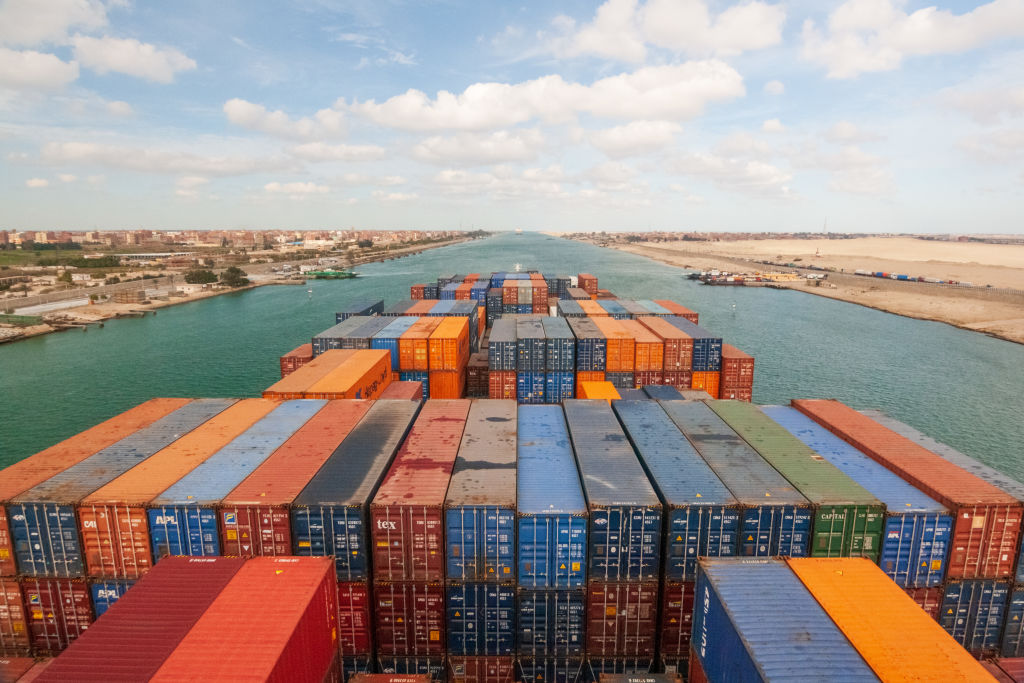
An illustration of the large nuclear-powered container ship, which can carry 24,000 standard containers. [Photo provided to China Daily]
China has unveiled a conceptual design for what could potentially become the world’s largest nuclear-powered container ship.
The vessel, which has yet to be named, will be powered by molten salt reactors and will have the capacity to carry 24,000 standard containers. In other words, it will be able to hold more than 1 billion boxes of Apple iPhones.
The conceptual design, made by China State Shipbuilding Corp’s Jiangnan Shipyard in Shanghai, was published on Tuesday, as the four-day Marintec China 2023 exhibition opened in the city.
The ship’s design earned an Approval in Principle certificate from the DNV, one of the world’s leading classification societies, at an unveiling ceremony.
A senior researcher at Jiangnan Shipyard, who asked to be identified only as Hu, told China Daily on Wednesday that the idea for a nuclear-powered container ship was the result of the shipyard’s endeavor to seek clean energy solutions for its products.
“Shipbuilders around the world have been under huge pressure from shipping businesses, investors and environmentalists to find cleaner fuel solutions. It is only natural for us to take nuclear power into consideration,” he said.
According to industry statistics, shipping operations account for about 3 percent of global greenhouse gas emissions. The International Maritime Organization has repeatedly pledged to reduce the emissions caused by shipping businesses.
APnews.com BY SYLVIA HUIUpdated 4:23 PM GMT+7, December 5, 2023
Britain’s polar research ship RRS Sir David Attenborough has crossed paths with the world’s largest iceberg as it was drifting out of Antarctic waters. (Dec. 5)Photos
BY SYLVIA HUIUpdated 4:23 PM GMT+7, December 5, 2023Share
LONDON (AP) — Britain’s polar research ship has crossed paths with the largest iceberg in the world — a “lucky” encounter that enabled scientists to collect seawater samples around the colossal berg as it drifts out of Antarctic waters, the British Antarctic Survey said Monday.
The RRS Sir David Attenborough, which is on its way to Antarctica for its first scientific mission, passed the mega iceberg known as the A23a on Friday near the tip of the Antarctic Peninsula.
Raz Segal, an Israeli expert in modern genocide, calls Israel’s assault on Gaza a textbook case of “intent to commit genocide” and its rationalization of its violence a “shameful use” of the lessons of the Holocaust. Israeli state exceptionalism and comparisons of its Palestinians victims to “Nazis” are used to “justify, rationalize, deny, distort, disavow mass violence against Palestinians,” says Segal.
Giữa tháng 10/2023 Cơ quan An ninh điều tra – Công an tỉnh Kiên Giang đã ra Quyết định khởi tố bị can, thực hiện Lệnh bắt tạm giam đối với Trần Văn Luyến (sinh năm 1981 – ngụ phường Vĩnh Bảo, TP. Rạch Giá) và Phạm Chí Dũng (sinh năm 1965, ngụ xã Mỹ Lâm, huyện Hòn Đất, tỉnh Kiên Giang) về tội “Tổ chức cho người khác xuất cảnh trái phép” theo khoản 3 Điều 348 Bộ luật Hình sự.
Trần Văn Luyến (bên trái) bị bắt giữ và khởi tố
Theo cơ quan Công an, để điều tra xử lý vụ việc nêu trên, Cục Cảnh sát hình sự- Bộ Công an đã cử một tổ công tác gồm những cán bộ, điều tra viên nhiều kinh nghiệm phối hợp với Công an tỉnh Kiên Giang tổ chức điều tra. Ban chuyên án xác định việc các đối tượng đưa tàu, thuyền viên ra vùng biển nước ngoài đánh bắt hải sản có dấu hiệu hành vi “Tổ chức, môi giới cho người khác xuất cảnh trái phép”.
‘I would think that you would notice that you’re dragging an anchor behind you for hundreds of kilometers,’ says minister.
Finland and Estonia have since been in touch with Chinese authorities seeking their cooperation with the investigation | Heikki Saukkomaa/Lehtikuva/AFP via Getty Images
BRUSSELS — As the investigation into damage to Baltic Sea critical infrastructure continues, Finland’s Minister of European Affairs Anders Adlercreutz said it’s hard to believe sabotage to the undersea gas pipeline was accidental — or that it happened without Beijing’s knowledge.
“I’m not the sea captain. But I would think that you would notice that you’re dragging an anchor behind you for hundreds of kilometers,” Adlercreutz said in an interview Thursday in Brussels. “I think everything indicates that it was intentional. But of course, so far, nobody has admitted to it.”
Finland and Estonia have been investigating the rupture of the Balticconnector, a 77-kilometer-long gas pipeline that connects the two NATO members beneath the Baltic Sea. The pipeline was damaged around October 7-8, along with two telecoms cables connecting Estonia to Finland and Sweden.
An investigation by Finnish authorities identified as the main suspect Chinese container ship Newnew Polar Bear, which is believed to have dragged its anchor across the Baltic Sea seabed, cutting through the cables and gas lines. The anchor — which weighs 6,000 kilograms — was retrieved a few meters from the site of the damage.
Finland and Estonia have since been in touch with Chinese authorities seeking their cooperation with the investigation. The Baltic Times reported earlier this week that the two European countries have asked to send representatives to Beijing to investigate the vessel, which is currently en route to a Chinese port.
Adlercreutz said he can’t speculate on whether the action was approved by the Chinese government. But the vessel’s imminent return to China raises some questions, he said.
“If I as a captain would have done something that the Chinese government wouldn’t approve of, then I would be concerned about returning with my boat to China,” he said.
Estonian Defense Minister Hanno Pevkur expressed similar sentiment in an interview with Swedish public broadcaster SVT last month, saying the captain of the ship surely “understood that there was something wrong” after dragging an anchor for over 180 kilometers.
Coming more than a year after the Nord Stream gas pipelines connecting Russia to Germany were damaged by several explosions, the Balticconnector incident raises more concerns over the safety of undersea critical infrastructure and possible measures to protect them from external sabotage. No culprit has been identified for the Nord Stream attack despite an international investigation.
Adlercreutz said there should be “more protection” of these types of infrastructure, for example in terms of better surveillance of suspicious ships. But there are limitations to what can be done, he added.
Mourners carry the coffins of the two Al-Mayadeen TV journalists killed November 21 by an Israeli strike in Lebanon. The funeral procession is shown outside the station’s Beirut headquarters on November 22. (Photo: AP/Bilal Hussein)
Editor’s note: The list below is CPJ’s most complete account of journalist deaths in the war. Our database will not reflect many of these casualties until we have fully investigated the circumstances surrounding them. For more information, read our FAQ.
The Israel-Gaza war has taken a severe toll on journalists since Hamas launched its unprecedented attack against Israel on October 7 and Israel declared war on the militant Palestinian group, launching strikes on the blockaded Gaza Strip.
CPJ is investigating all reports of journalists and media workers killed, injured, or missing in the war, which has led to the deadliest month for journalists since CPJ began gathering data in 1992.
As of December 4, CPJ’s preliminary investigations showed at least 63 journalists and media workers were among the more than 16,000 killed since the war began on October 7—with more than 15,500 Palestinian deathsin Gaza and the West Bank and 1,200 deaths in Israel. The deadliest day of the war for journalist deaths was its first day, October 7, with six journalists killed; the second-deadliest day occurred on November 18, with five killed.
The Israel Defense Forces (IDF) told Reuters and Agence France Press news agencies that it could not guarantee the safety of their journalists operating in the Gaza Strip, after they had sought assurances that their journalists would not be targeted by Israeli strikes, Reuters reported on October 27.
Journalists in Gaza face particularly high risks as they try to cover the conflict during the Israeli ground assault, including devastating Israeli airstrikes, disrupted communications, supply shortages and extensive power outages.