What Will the U.S. Energy Industry Look Like Over the Next Five Years?

Experts discuss shale’s impact on prices, where OPEC is headed, and other topics

The U.S. shale-oil boom and OPEC’s actions will factor into energy prices and renewables.
The U.S. shale-oil boom and OPEC’s actions will factor into energy prices and renewables. Photo: Lucy Nicholson/Reuters

WSJ – Low fuel prices and new climate policies are rapidly transforming the American energy sector, while escalating wars in the Middle East and a nuclear deal with Iran are clouding the global oil picture.

To get a sense of what the energy future may hold, The Wall Street Journal reached out to three experts in energy and geopolitics: Amy Myers Jaffe, executive director of energy and sustainability at the University of California, Davis; Sarah Emerson, principal at ESAI Energy and president of Energy Security Analysis Inc.; and Meghan O’Sullivan, the Jeane Kirkpatrick professor of the practice of international affairs and director of the Geopolitics of Energy Project at Harvard University’s Kennedy School of Government. Here are edited excerpts.

One-year outlook

WSJ: What will the U.S. energy industry look like a year from now if low oil and gas prices persist? Tiếp tục đọc “What Will the U.S. Energy Industry Look Like Over the Next Five Years?”

Biological research: Rethink biosafety

11 November 2015

Tim Trevan calls on those working with organisms that are hazardous, or could be so, to take lessons from the nuclear industries, hospitals and other sectors that have established a safety culture.

Article tools PDF Rights & Permissions

Douglas C. Pizac/AP/Pa Images Biosafety-level-3 protection at the US Army’s Dugway Proving Ground, Utah.

Nature – Two months ago, the US Department of Defense froze operations at nine biodefence laboratories where work is done on dangerous pathogens. Inspectors had discovered live anthrax outside a containment area at the US Army’s Dugway Proving Ground — a facility in Utah that tests defence systems against biological and chemical weapons. Tiếp tục đọc “Biological research: Rethink biosafety”

Preventable maternal mortality can be eliminated by 2030, but much more effort is needed

Report from WHO, UNICEF, UNFPA, World Bank Group
and the United Nations Population Division highlights progress since 1990

Maternal mortality has fallen by 44% since 1990, United Nations agencies and the World Bank Group reported today.

Maternal deaths around the world dropped from about 532 000 in 1990 to an estimated 303 000 this year, according to the report, the last in a series that has looked at progress under the Millennium Development Goals (MDGs).  This equates to an estimated global maternal mortality ratio (MMR) of 216 maternal deaths per 100 000 live births, down from 385 in 1990.

Maternal mortality is defined as the death of a woman during pregnancy, childbirth or within 6 weeks after birth.

“The MDGs triggered unprecedented efforts to reduce maternal mortality,” said Dr Flavia Bustreo, WHO Assistant Director-General, Family, Women’s and Children’s Health. “Over the past 25 years, a woman’s risk of dying from pregnancy-related
causes has nearly halved.  That’s real progress, although it is not enough. We know that we can virtually end these deaths by 2030 and this is what we are committing to work towards.” Tiếp tục đọc “Preventable maternal mortality can be eliminated by 2030, but much more effort is needed”

Leading powers to double renewable energy supply by 2030

study published this month by the World Resources Institute (WRI) analysed the Intended Nationally Determined Contributions (INDCs) of the 10 largest greenhouse gas emitters to determine how much they will clean up their energy mix in the next 15 years.

First-ever Vietnam Annual Tourism Report unveiled

The full report, in both Vietnamese and English, can be accessed at: http://bit.ly/baocaothuongniendulich2014.

The Vietnam National Administration of Tourism (VNAT) under the Ministry of Culture, Sports and Tourism on November 17 announced the ‘Vietnam Annual Tourism Report 2014’ for the first time.

1777551-20151118091944-1

talkvietnam – The report, compiled with technical help of the EU-funded Environmentally and Socially Responsible Tourism Capacity Development Programme, is the first complete document produced in line with international experience, aiding the assessment of tourism’s socio-economic impacts. Tiếp tục đọc “First-ever Vietnam Annual Tourism Report unveiled”

The Asia-Pacific Antitrust Review 2015 – Vietnam: Merger Control

Globalcompetitionreview – Under Vietnam’s Competition Law (VCL), economic concentration includes company mergers, consolidations and acquisitions, and the creation of joint venture. Since it was created in 2005, the Vietnam Competition Authority (VCA) has not officially rejected any proposals for economic concentration that have been notified. However, this does not necessarily mean that this aspect of competition law is overlooked in Vietnam. According to the VCA’s reports, since 2011, it has dealt with an average of three to four notifications per year. In addition, the VCA is closely monitoring merger and acquisition activities in the market by cooperating with the licensing authorities and administering the structural changes of enterprises to ensure that all economic concentration is properly controlled by the competition authority. Notably, on 22 December 2014, the prime minister issued Decision 2327/QD-TTg (Decision 2327), granting an exemption to a merger between the only two card networks, resulting in a monopoly in the relevant market. This is remarkable for being the first exemption granted by the prime minister after 10 year’s enforcement of the VCL. Tiếp tục đọc “The Asia-Pacific Antitrust Review 2015 – Vietnam: Merger Control”

Implications of a Low-Carbon Future

2016 Global Forecast

  • Nov 16, 2015

    The world relies heavily on fossil fuels to meet its energy needs, and the development and trade of those fuels has influenced relationships among countries throughout modern history. Most reasonable projections of the next several decades anticipate that the role of coal, oil, and gas will be maintained but lose market share to lower-carbon energy sources like wind, solar, nuclear, and greater efficiency. Despite the continued role for fossil fuels, the push for greater reliance on lower-carbon energy sources has made progress since it began in earnest several decades ago. Nearly $318 billion was invested in new clean energy sources around the world last year, up from $60 billion in 2004. Nearly half of this investment took place in large developing economies, particularly China but also Brazil, India, and South Africa.

 application/pdf icon

Implications of Sustained Low Oil Prices

 application/pdf icon

Harmonizing the Benefits of Distributed Energy Resources for the Benefit of the Grid

We need to set the right framework for DER integration, argues Stephanie Wang.

by Stephanie Wang, November 13, 2015
{title}

greentechmedia – California is rethinking how to incentivize consumers to manage their energy use. In September, the California Public Utilities Commission (CPUC) said it would seek to create an integration framework to make choosing and integrating distributed energy resources easier for consumers.

The CPUC found that “harmonization” of consumer benefits and “system” (grid and societal) benefits is necessary for integrating more distributed energy resources (DERs). How can we harmonize these benefits with simple, scalable solutions that work for consumers and communities?
Equalize or align benefits

Let’s start with a fundamental question on the definition of harmonization. Does that mean equalization of benefits — ensuring that benefits to consumers and the system are roughly equal? Tiếp tục đọc “Harmonizing the Benefits of Distributed Energy Resources for the Benefit of the Grid”

How Thailand’s Solar Power Visionary Built an Industry with a Boost from IFC

Image

Courtesy of Solar Power Company Group

STORY HIGHLIGHTS
  • One of the winners of this year’s UN Momentum for Change awards has been transforming Thailand’s renewable energy capacity with utility-scale solar farms.
  • To get finance flowing for what was then a new industry in the country, she worked with the World Bank Group’s International Finance Corporation (IFC) and the Clean Technology Fund to access blended finance.
  • The project is increasing clean energy capacity while helping drive economic growth in one of Thailand’s most impoverished regions.

Worldbank – Thailand’s solar power market was at a standstill in 2008, with solar energy accounting for less than 2 MW of installed capacity. Technology costs were falling, though, and the government was starting incentives for renewable energy developers. Wandee Khunchornyakong, a retired solar panel manufacturing executive, saw potential. Tiếp tục đọc “How Thailand’s Solar Power Visionary Built an Industry with a Boost from IFC”

Loss of diversity near melting coastal glaciers

Loss of diversity near melting coastal glaciers

Sedimentation impacting an entire ecosystem on seafloor

Date:
November 13, 2015
Source:
Alfred Wegener Institute, Helmholtz Centre for Polar and Marine Research
Summary:
Melting glaciers are causing a loss of species diversity among benthos in the coastal waters off the Antarctic Peninsula, impacting an entire seafloor ecosystem. This has been verified in the course of repeated research dives, the results of which were recently published by experts from Argentina, Germany and Great Britain.

Tiếp tục đọc “Loss of diversity near melting coastal glaciers”

Will Vietnam’s communist princelings deliver?

13 November 2015
Author: Hai Hong Nguyen, University of Queensland
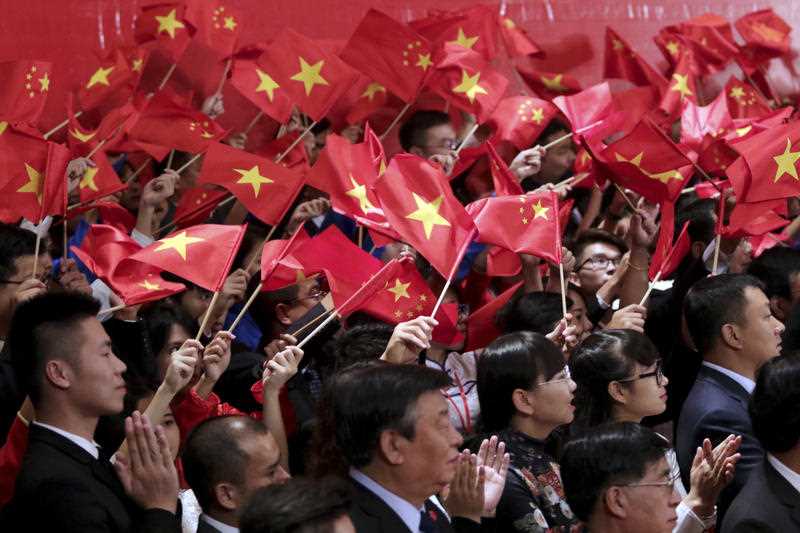
eastasiaforum – The Vietnamese Communist Party (VCP) is preparing a new slate of leaders to replace the old guard who are retiring at the 12th National Congress in 2016. Public attention has been drawn to the rise of young ‘princelings’ — the children of current or former leaders in communist authoritarian regimes like Vietnam and China — to local executive positions and bodies. Vietnamese and Chinese communist youths wave flags to welcome Chinese President Xi Jinping and Vietnamese Communist Party General Secretary Nguyen Phu Trong at a meeting in Hanoi, Vietnam, Friday, Nov. 6, 2015. (Photo: AAP)The ability of these princelings to deliver on a broad range of governance issues, beyond just high levels of economic growth, will determine the durability of the current regime. Tiếp tục đọc “Will Vietnam’s communist princelings deliver?”

The History of Jobs In America

 Lloyd Alter


treehuggerPaul Kedrosky points to this very cool tool for visualizing the jobs people have done between 1850 and 2000; you click on any one or write it in the window and see how they have changed. Kedrosky writes “Too bad it ends at 2000, thus taking away the fun of watching the profusion of real estate agents and mortgage brokers.” But what about “green jobs”? Can one get a sense of what people are doing, and what the trends are?

There appear to be a lot fewer carpenters than there used to be, although again by ending in 2000 this is missing the housing boom of earlier this decade. Tiếp tục đọc “The History of Jobs In America”

The SDGs: why should business schools care?

This post is written by Giselle Weybrecht, advisor, speaker in the areas of sustainability and business and author of The Sustainable MBA: A Business Guide to Sustainability. A version this post first appeared on the AACSB blog


What Are the Sustainable Development Goals?

Post2015 – On September 25 this year, all 193 member states of the United Nations adopted a plan for a path to achieve a better future for all, to end extreme poverty, fight inequality and injustice, and protect the planet. A set of 17 Sustainable Development Goals (SDGs) and 169 related targets were presented that address the most important economic, social, environmental, and governance challenges and that will help guide national priorities over the next 15 years.

Unlike its predecessor, the Millennium Development Goals (MDGs), which expire at the end of 2015, the SDGs were developed through the largest global consultation process ever with a wide range of stakeholders, including business through the UN Global Compact as well as business schools through the Principles for Responsible Management Education (PRME). Although progress was made on the MDGs, which started in 2001, the SDGs represent a much more complete path forward and, despite the increased complexity of having 17 goals instead of just seven, look to enjoy a much larger acceptance and push for action, in particular by business. Tiếp tục đọc “The SDGs: why should business schools care?”

A Return to the Rule of Law in the South China Sea?

The UNCLOS tribunal’s ruling that it has jurisdiction in the case brought by the Philippines will likely improve prospects for the rule of law in the South China Sea – and it is in China’s interest to contribute to this development.
DigitalGlobe high-resolution imagery of the Subi Reef in the South China Sea. Photo via Getty Images.DigitalGlobe high-resolution imagery of the Subi Reef in the South China Sea. Photo via Getty Images.

Chathamhouse – China has been on a diplomatic charm offensive last week to improve its relations with  neighbours who have a stake in the stability of the South China Sea (SCS), reaching out to Vietnam and Japan and  culminating in the historic meeting with Taiwan’s leader Ma Ying-jeou on 7 November. This followed on from recent setbacks for its ambitions in the SCS . First, the United States sent its warship USS Lassen within 12 nautical miles of the Chinese controlled Subi Reef to challenge China’s claim to the feature. Then, on 29 October an arbitral tribunal established under the United Nations Convention on the Law of the Sea (UNCLOS) and hosted by the Permanent Court of Arbitration (PCA) at the Hague found that it has jurisdiction to hear the claims put forward by the Philippines in a case against China concerning maritime rights in a part of the SCS claimed by both. Tiếp tục đọc “A Return to the Rule of Law in the South China Sea?”