More than 600 days into its genocidal war in Gaza, some of Israel’s closest allies have begun to condemn its actions. Alongside the changing global narrative, growing opposition in Israel to the Netanyahu government’s war methods has seeped into the media coverage – fracturing a consensus that dates back to October 7, 2023.
Tác giả: Đào Thu Hằng
Visualizing 11,500+ Dead Palestinian Children
#gaza #israel #palestine
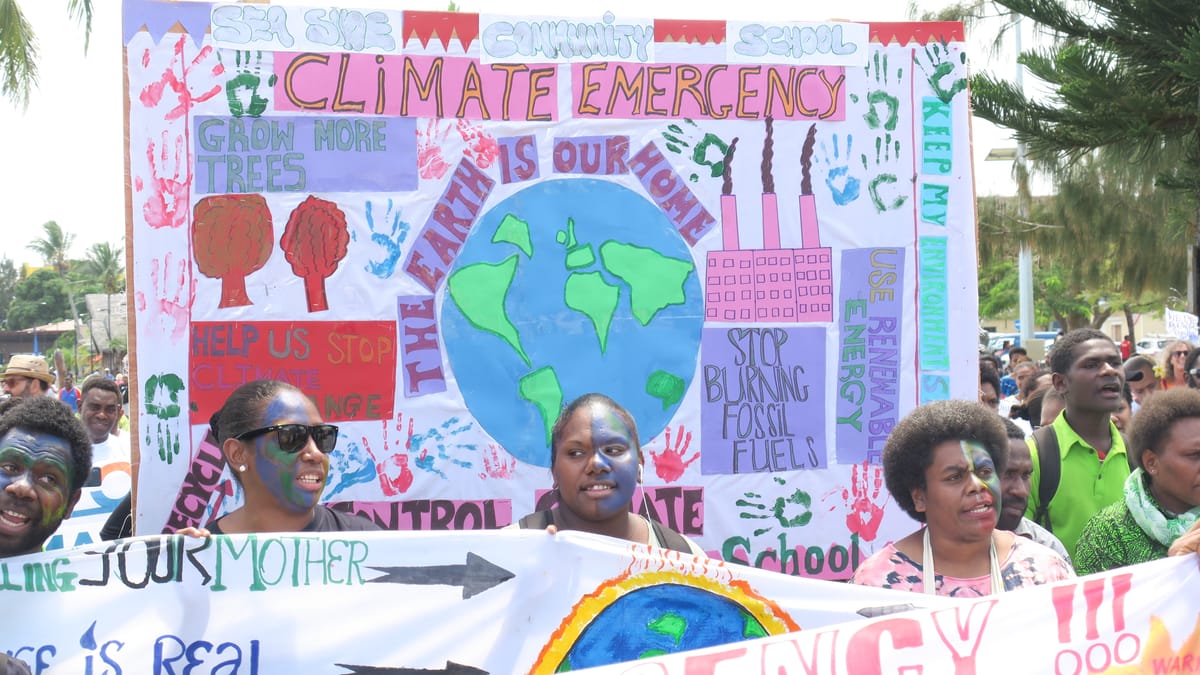
A “Turning Point”: How International Courts Are Addressing The Climate Emergency
Dana Drugmand May 15, 2025

Co-published with One Earth Now
The climate crisis is the single greatest global public health threat of this century, health professionals say. Human rights experts warn it poses an unprecedented risk to human rights. For the world’s poor and most vulnerable people and communities on the frontlines of climate impacts like rising seas, it is an existential crisis threatening their very survival.
Yet the global response to what scientists say is undoubtedly a global emergency has fallen woefully short, through a United Nations governance framework that essentially rests upon voluntary pledges that nations of the world submit – called Nationally Determined Contributions – to reduce their greenhouse gas emissions. Last year, leading climate experts wrote to top UN officials calling for reform of the international climate negotiations, arguing that the “current structure simply cannot deliver the change at exponential speed and scale, which is essential to ensure a safe climate landing for humanity.”
Tiếp tục đọc “A “Turning Point”: How International Courts Are Addressing The Climate Emergency”
It didn’t start on October 7: A historical timeline of Israel’s brutality towards Palestinians
The narrative around October 7 often overlooks the deep-rooted history of the Israel-Palestine conflict. This timeline reveals key events dating back to 1897, when the First Zionist Congress was held, through the Nakba in 1948, and decades of subsequent violence. The focus on a single day obscures a much longer story of displacement and systemic injustice that continues to affect Palestinians today.
Palestinian ambassador Riyad Mansour breaks down in tears at UNSC over children killed in Gaza
“I wonder if any member of this Council has ever met a five-year-old child who no longer wants to live.”
American trauma surgeon Feroze Sidhwa, addressing the UN Security Council on Wednesday, recounted cases he encountered in Gaza, stating that many of his patients were children.
Emergency reserves, high prices, rationing. How did Japan’s rice crisis get this far?
Japan’s agriculture minister has resigned because of political fallout over his comment that he “never had to buy rice” because he got it from supporters as gifts.Read More
Japan’s agriculture minister has resigned because of political fallout over his comment that he “never had to buy rice” because he got it from supporters as gifts. (Produced by Elaine Carroll)Read More
Tiếp tục đọc “Emergency reserves, high prices, rationing. How did Japan’s rice crisis get this far?”
I see Gaza
I See Gaza | EP 1: From Oslo’s Streets to Gaza
See Gaza’s first episode takes us to Oslo, where artists, students, and citizens fill the streets in support of Gaza. Though far from Palestine, their voices echo beyond Norway’s borders. Watch the first episode to see how they demand justice, resist violence, and call for accountability. Tiếp tục đọc “I see Gaza”
Gaza hunger crisis: Desperate crowds storm US aid distribution site in Rafah as operation collapses
May 27, 2025 #Palestine #Israel #Gaza
Chaotic scenes unfolded in Rafah, southern Gaza, as Palestinians rushed a US aid distribution site in Tal as-Sultan, prompting American security personnel to fire warning shots. Israeli forces reportedly intervened remotely to disperse crowds. Israeli Army radio cited security sources distancing Israel from the incident while confirming US contractors regained control. The aid was distributed by the Gaza Humanitarian Foundation, a controversial organisation established after Israel blocked UN access in March. Footage shows desperate civilians amid strict aid restrictions. The foundation’s private contractor-led operations have drawn criticism for lacking UN neutrality protocols. This incident highlights escalating tensions over aid delivery in the besieged enclave.
Al Jazeera’s correspondents are tracking developments across key locations, including Hind Khoudary and Hani Mahmoud in Gaza, and Kristen Saloomey at the United Nations in New York. We’re also joined by analysts and experts: Tamer Qarmout, Associate Professor of Public Policy at the Doha Institute for Graduate Studies, speaking from Doha; Ahmed Bayram, Middle East Spokesperson for the Norwegian Refugee Council, joining us from Amman; and Chris Gunness, former Chief Spokesperson for the United Nations Relief and Works Agency for Palestine Refugees, speaking from London.
Palestinians in Gaza are facing a death sentence
Doctors Without Borders / MSF-USA
We are running out of time to save lives. The humanitarian situation in Gaza is catastrophic, as a result of the ongoing Israeli-imposed siege that has lasted for over two months. We call on the Israeli authorities and their supporters to abide by International Humanitarian Law and follow the principles which allow for unhindered humanitarian aid for people trapped inside the Strip. Tiếp tục đọc “Palestinians in Gaza are facing a death sentence”
Vietnam’s diaspora is shaping the country their parents fled
The Economist Asia | Meet the Viet Kieu
As well as sending remittances, many are returning to their homeland

May 22nd 2025|HO CHI MINH CITYShareListen to this story
Fifty years ago Thinh Nguyen left his homeland aboard an American navy ship. Some of his compatriots escaped in helicopters. Tens of thousands fled in makeshift boats. Many more, including Mr Nguyen’s father and brother, were left behind as troops from North Vietnam stormed into Saigon, then the capital of American-backed South Vietnam. The chaotic evacuation marked the end of the Vietnam war, badly damaged American credibility and left Vietnam in Communist hands. It also helped create one of the world’s biggest diasporas.
Tiếp tục đọc “Vietnam’s diaspora is shaping the country their parents fled”
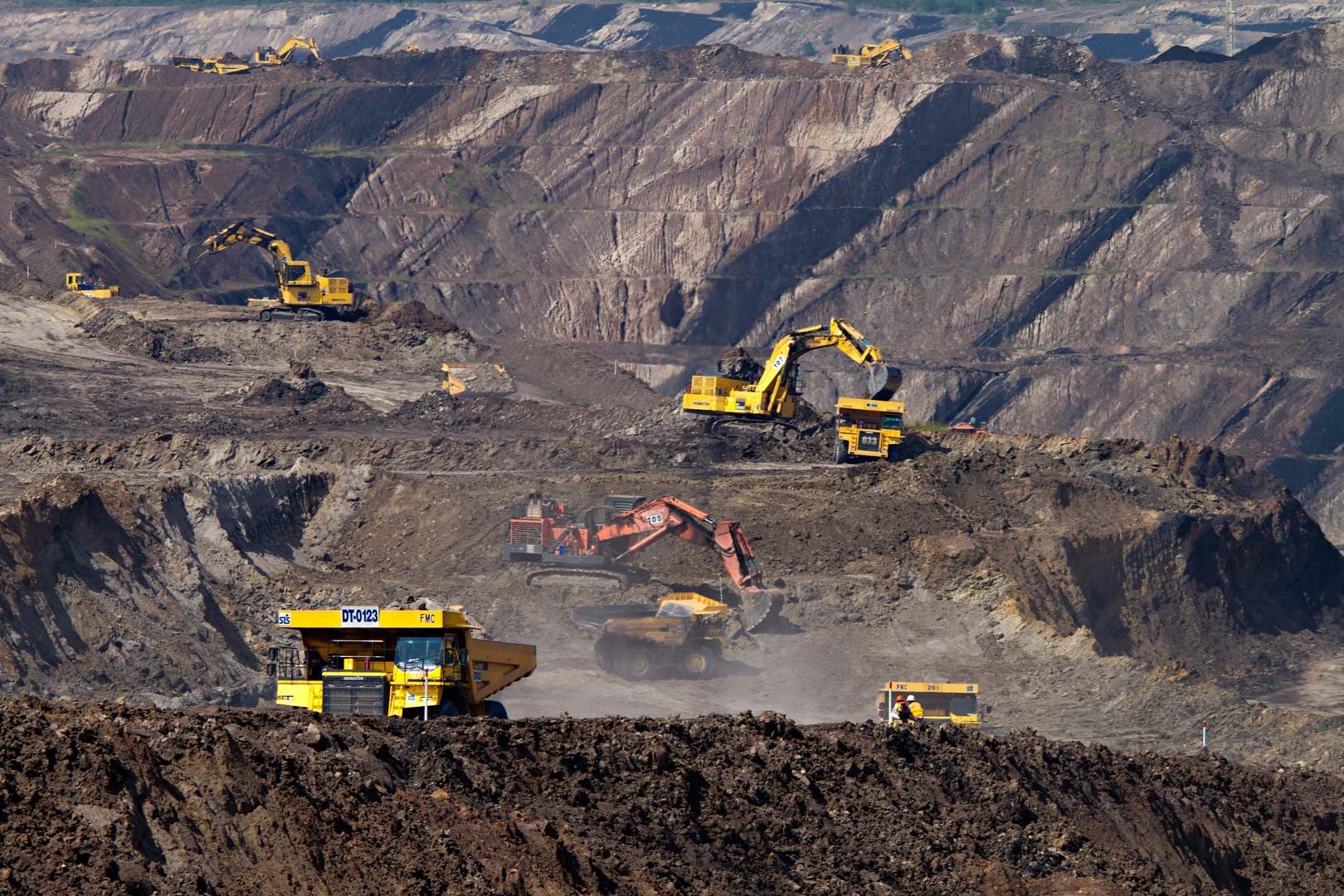
Crimes Associated with Critical Minerals in Southeast Asia
UNICRI – United Nations Interregional Crime and Justice Research Institute
NEW UNICRI Report: Crimes Associated with Critical Minerals in Southeast Asia
As Southeast Asia’s role in global critical mineral supply chains grows, so does its exposure to criminal threats like environmental crimes, corruption, and illicit financial flows.
UNICRI’s latest publication analyzes how various actors exploit legal and enforcement gaps across the mineral value chain. It includes case studies on unlawful extraction, smuggling, and corruption-linked offenses.
Key criminal patterns identified:
- Illegal mining operations
- Corruption in licensing and environmental compliance
- Smuggling and laundering of proceeds
- Lack of supply chain transparency
Recommendations to strengthen regional responses:
- Enhance financial investigation and AML cooperation
- Develop traceability tools and leverage complementary technologies such as satellite monitoring
- Build enforcement capacity on mining-related crime
- Promote inter-agency coordination
- Empower Indigenous and local communities through strengthened FPIC implementation
- Advance research on criminal methodologies in mineral supply chains
UNICRI supports collaboration among Member States and relevant stakeholders to promote secure, transparent, and sustainable mineral supply chains.
Read the report: https://bit.ly/4lHUBf3

Curse Of Crystal Meth: Addiction, Trafficking & Dangerous Production Exposed | Addicted – Ep 1/3
May 24, 2025 #Meth#CNAInsider#DrugAddiction
An estimated 39.5 million people globally suffer from drug-use disorders — with a growing number hooked on synthetic drugs that are cheaper, more accessible, and far more lethal. We investigate the impacts of this synthetic curse, beginning in Karachi, where millions of young Pakistanis are caught in a deadly spiral of addiction and crime.
Vì sao sinh vật biển hay nuốt nhầm rác nhựa?
What the blackout in Spain, Portugal says about renewables
DW.com Holly Young 05/20/2025May 20, 2025
The recent power outage in Spain and Portugal has raised questions about the stability of solar and wind power. It also reignited the debate around the phasing out of nuclear energy.

At 12:33 p.m. on April 28, swathes of Spain and parts of Portugal were plunged into darkness: trains were stranded, phone and internet coverage faltered, and ATMs stopped working.
The electricity blackout across the Iberian Peninsula is believed to be one of the worst in Europe’s history.
While most power was restored by the next morning, weeks later the investigation into the blackout is ongoing.
Last week, Spain’s energy minister Sara Aagesen said so far it was clear an abrupt loss of power at a substation in Granada, followed by failures in Badajoz and Seville, led to a loss of 2.2 gigawatts of electricity, but that the precise cause was unknown.
In the wait for answers, some have pointed the finger at Spain’s high reliance on renewables and reignited debates over plans to phase out nuclear power by 2035.
Are renewables to blame for the blackout?
Tiếp tục đọc “What the blackout in Spain, Portugal says about renewables”