I'm from Hanoi, Viet Nam.
I'm an author of Dot Chuoi Non (dotchuoinon.com/author/hangbelu/), a blog on Positive thinking, founded by Dr. Tran Dinh Hoanh, an attorney in Washington DC.
I'm a co-founder of Conversations on Vietnam Development - cvdvn.net, a virtual think tank. I am a co-founder of two companies in Viet Nam working on children education services. I advise companies on STEAM education, English language education for children and students in Vietnam.
I'm studying the Buddha's teaching and the teaching of Jesus. I practice mindful living including meditation.
I hold a PhD on Sustainable Energy Systems from University of Lisbon and Aalto University.
I graduated from Hanoi University of Technology on Environmental Engineering. I obtained a Master degree of the same major from Stanford University and Nanyang Technological University.
My English-language blog at: hangbelu.wordpress/.
I play table tennis as a hobby.
Bui Van Phong faced a choice when the Vietnam war ended 50 years ago: stay in his small village and help his parents carry on the family’s centuries-old tradition of making fish sauce, or join the hundreds of thousands of people fleeing his country for a better life.
Phong chose to stay behind and nurtured a business making the beloved condiment, known as nuoc mam in Vietnam, that is now in its fourth generation with his son, Bui Van Phu, 41, at the helm.
“Allowing for stops, the first train to run on the S&DR averaged a speed of 8mph (13km/h) on its inaugural journey.”
It also cost £5.1m (in today’s money) and took only 3 years to complete.
Thus 2025, is the 200th anniversary of the existence of passenger rail.
At that time, the Tokugawa shogunate (Edo period) still ruled Japan, which remained more or less closed off to the rest of the world. And wouldn’t start opening up until it was forced to do so by the Americans from 1853.
Japan wouldn’t open it’s first railway line from Tokyo to Yokohama until 1872 almost 50 years after the UK.
High seas cover over half of our planet’s surface, and represent two-thirds of the entire ocean. They serve as a crucial habitat for countless marine species, many of which remain undiscovered. They also play a vital role in climate regulation. The high seas are also home to secret treasures that could potentially reshape medical science. Painkillers, antibiotics and many other drugs have been produced from genetic material found in the depths of the ocean.
Despite their immense ecological and medical importance, only 1% of these international waters are legally protected. Since they fall outside the jurisdiction of any country, high seas are not governed by anyone. This has led to patchy regulation and uncoordinated management, leaving them vulnerable to threats like overfishing, shipping traffic, and ocean acidification.
An international treaty aims to address these concerns. Last year, countries around the world agreed upon the Agreement on Marine Biodiversity of Areas Beyond National Jurisdiction (BBNJ Treaty) after decades of discussions and negotiations. The historic treaty aims to establish legal frameworks for the conservation and sustainable use of marine resources. The treaty has created a blueprint for countries that want to propose and create protected areas in the high seas. It tackles prior assessment of potentially damaging activities like deep sea mining while also trying to figure out a way to share and distribute marine resources in an equitable manner. Sixty countries will have to ratify the treaty before it goes into effect.
Watch this video to learn more about the high seas, the significance of the BBNJ treaty and the questions that remain unanswered
As global demand for critical minerals grows, it will be important to anticipate and address the potential harms the mining and metals sector can have on societies, communities and the environment. Overlooking these risks can ultimately disrupt supply for clean energy technologies.
Traceability systems can, when used as part of a wider risk-based due diligence process, help meet emerging policy goals by providing ways to integrate data on origin, evolution, and ownership of minerals. Some traceability approaches can also provide a platform for embedding data on environmental, social and governance issues. To work effectively, however, traceability systems must be carefully designed – balancing standardisation and context, maintaining data quality, and adapting to varying supply chain complexities. They also require strong collaboration among companies, governments and civil society, backed by cost-sharing, reliable verification and secure data-sharing protocols. Above all, traceability should serve clear objectives rather than become an end in itself: policy makers and practitioners should adopt a measured approach, progressively deploying mechanisms where necessary while allowing for inclusive participation and access to markets and investment.
This report includes a practical eight-step roadmap, from setting policy objectives to building trust mechanisms, which can help ensure traceability systems are fit for purpose and aligned with the realities of global supply chains.
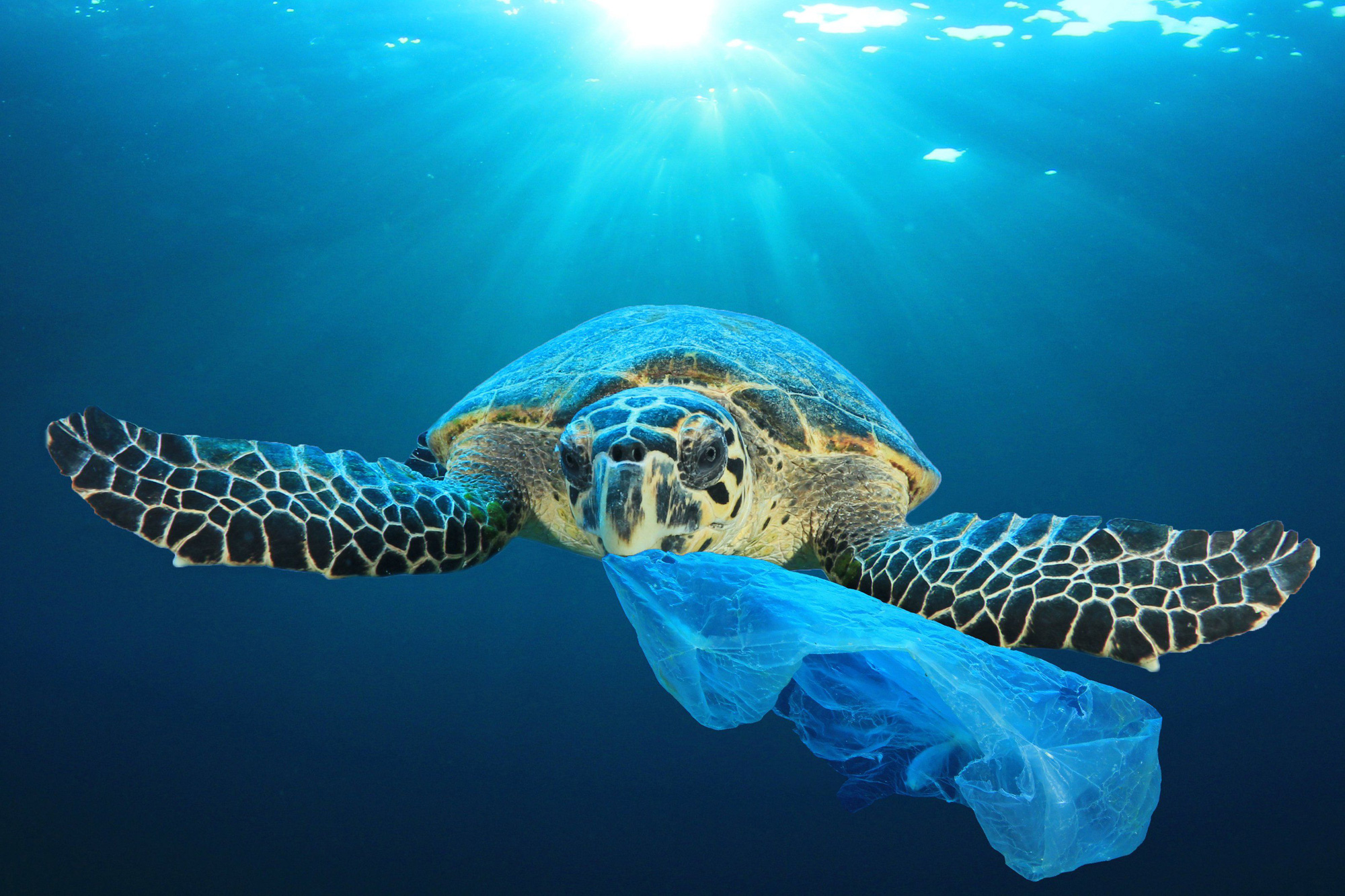
Over 400 million tonnes of plastic was projected to be wasted in 2024 according to an OECD report from 2020. Further, plastic waste is expected to nearly triple worldwide by 2060, with half of all waste expected to be in landfill while less than one-fifth of it will be recycled.
Unbelievably, if all this plastic waste were put in a kitchen bin and scaled up uniformly, this would double the height of the Burj Khalifa.
TripAdvisor listing of settler-managed historical sight on Palestinian land
The image above is a TripAdvisor listing of a heritage site managed by settlers in the village of Susiya – on Palestinian land. The UN has released a list of over 100 other companies that also have business interests in Israeli settlements built on Palestinian land.
But why is this a problem?
Illegal Settlements
In 1967, Israel began the process of building settlements on occupied Palestinian territory.
Firstly, what is a settlement?
It is Israel’s building of villages, towns and cities on occupied Palestinian territory.
What makes them illegal?
The transfer of Israeli civilians to these settlements is illegal under international law. In fact it is a war crime according to the Rome Statute of the International Criminal Court.
Hundreds of thousands Displaced
Since 1948, hundreds of thousands of Palestinians had to flee their homes to escape violence or were forcibly removed. Not just their they lost their land and businesses too. Many are remain in refugee camps till this day. Here they have become parents and even grand parents.
Suffocating laws
Some Palestinians stayed behind and refused to give up their land. Their lives have been made impossible as consecutive governments have introduced discriminatory laws and policies, in the hope they will eventually leave. But as the settlements continue to expand some are still standing their ground.
What TripAdvisor doesn’t show you
(A resident of Susiya shows us a water system installed on his land for the sole benefite of the nearby settlement)
The Palestinian village of Susiya, in the occupied West Bank is home to around 300 Palestinians. The village has a few tents and shacks, a couple of water cisterns and some sheep. There is no access to electricity or running water.
Vietnam and China, the two largest markets for traditional medicine (TM) that uses wild plants and animals, announced a new partnership in January to adopt practices that protect wildlife while preserving the countries’ cultural heritage.
The first-of-its-kind agreement involved leading TM associations from Vietnam and China — the Vietnam Oriental Traditional Medicine Association (VOTMA) and the China Association of Traditional Chinese Medicine (CATCM) — along with researchers, policymakers and pharmaceutical leaders. TRAFFIC, an international NGO monitoring illegal wildlife trade, facilitated it.
The partnership aims to explore “several sustainable practices to make traditional medicine more conservation-friendly,” said TRAFFIC Vietnam director Trinh Nguyen in a statement to Mongabay. She said these include encouraging practitioners to switch to legal, sustainable and cultivated plant-based alternatives, and eliminating illegal wildlife ingredients in prescriptions.
Historical TM practices in the two countries have incorporated wildlife-derived ingredients, including those from threatened species, such as tiger bones, pangolin scales, rhino horns and bear bile. While many such ingredients are legal to trade inside China, the wildlife parts are often sourced from other countries to meet domestic demand. Many of the threatened species are, however, listed on CITES Appendix I, making the international trade in their parts illegal. As TM becomes popular globally, conservationists worry about its impact on wildlife.
Plastic is now ubiquitous in the Mekong, Asia’s Mother of Rivers, and experts and local people are struggling to contain the risks to human health, biodiversity and livelihoods
ILLUSTRATION: Sunhee Park / Dialogue Earth
On Sơn Island in Viet Nam’s Mekong Delta, Le Trung Tin scatters fish feed into his ponds, where dozens of snakehead fish leap through the surface in synchronized bursts. “I taught them how to do that,” he says proudly, tossing another handful of feed at his fish.
The scene looks idyllic, but Le’s fish farm is a reluctant response to an escalating crisis. For decades, he made his living fishing the Hậu River, a distributary of the Mekong. But in recent years, plastic waste clogged his nets and strangled the fish. “I had no choice but to stop,” he says. “Everything was tangled – trash, nets, even the fish themselves. It was hopeless.”
Now, Le relies on enclosed ponds using filtered water to keep his fish alive. “I built this ecological environment free of plastic waste, chemical spills and [protected it from] extreme weather,” he says.
Le’s experience reflects the wider challenges facing the Mekong. Stretching over 4,300 kilometres from the Tibetan Plateau to the South China Sea, the river supports nearly 70 million people and some of the world’s most biodiverse ecosystems. Yet, it is one of the most plastic-polluted rivers in the world and among the 10 rivers in Asia that carry the vast majority of plastic to the sea. The Mekong dumps – by some estimates – tens of thousands of tonnes each year into the ocean, with plastic waste accumulating along its banks, tributaries and lakes.
Plastic enters the Mekong in myriad ways – agricultural runoff, unregulated dumping and a flood of single-use packaging from upstream countries like China and Myanmar. It accumulates in hotspots like Tonle Sap Lake in Cambodia and the wetlands of Vietnam’s Mekong Delta, where this plastic waste threatens biodiversity, food security and human health.
Plastics and other waste accumulate along the riverbank near the city of Can Tho in Vietnam’s Mekong Delta region. PHOTO: Anton L. Delgado / Dialogue Earth
The world is warming despite natural fluctuations from the El Niño cycle.
In 2024, the world was around 1.5°C warmer than it was in pre-industrial times.1 You can see this in the chart below, which shows average warming relative to average temperatures from 1861 to 1890.2
Temperatures, as defined by “climate”, are based on temperatures over longer periods of time — typically 20-to-30-year averages — rather than single-year data points. But even when based on longer-term averages, the world has still warmed by around 1.3°C.3
But you’ll also notice, in the chart, that temperatures haven’t increased linearly. There are spikes and dips along the long-run trend.
Many of these short-term fluctuations are caused by “ENSO” — the El Niño-Southern Oscillation — a natural climate cycle caused by changes in wind patterns and sea surface temperatures in the Pacific Ocean.
While it’s caused by patterns in the Pacific Ocean and most strongly affects countries in the tropics, it also impacts global temperatures and climate.
There are two key phases of this cycle: the La Niña phase, which tends to cause cooler global temperatures, and the El Niño phase, which brings hotter conditions. The world cycles between El Niño and La Niña phases every two to seven years.4 There are also “neutral” periods between these phases where the world is not in either extreme.
The zig-zag trend of global temperatures becomes understandable when you are taking the phases of the ENSO cycles into account. In the chart below, we see the data on global temperatures5, but the line is now colored by the ENSO phase at that time.6
The El Niño (warm phase) is shown in orange and red, and the La Niña (cold phase) is shown in blue.
You can see that temperatures often reach a short-term peak during warm El Niño years before falling back slightly as the world moves into La Niña years, shown in blue.
Myanmar has struggled with civil war, military rule and widespread poverty for much of the past seven decades. But the country’s youth have never faced threats to their survival and future as severe as today.
The military coup of February 2021 shattered the hopes of many young people in Myanmar who had envisioned a better and more stable future under their democratically elected leader, Aung San Suu Kyi.
As brutal crackdowns on peaceful protests unfolded, thousands of young people fled to the jungles to take up arms. Hundreds of thousands more joined the civil disobedience movement, abandoning their studies to protest military rule through demonstrations and strikes.
The military situation in Myanmar as of February 4 2025. Wikimedia Commons
Myanmar’s armed opposition has made significant gains over the past year, seizing vast territories from the military – though the latter still controls major cities like Naypyidaw, Yangon, and Mandalay.
Amid the surging violence, young people in Myanmar are finding themselves even more deprived of opportunities and increasingly forced into submission.
In February 2024, Myanmar’s junta declared mandatory military service for men aged 18 to 35 and women aged 18 to 27. Those who do not comply face up to five years in prison.
Families of victims, human rights groups call for ‘expeditious surrender and transfer of custody’ of Duterte to the ICC.
Relatives of victims of former Philippine President Rodrigo Duterte’s deadly war on drugs cry during a mass for victims at a church in Manila following his arrest on Tuesday [Ted Aljibe/AFP]
By Ted Regencia Published On 11 Mar 202511 Mar 2025
Manila, Philippines – Almost three years after leaving the presidency, former President Rodrigo Duterte has been arrested by Philippine authorities in Manila, upon the request of the International Criminal Court (ICC) at The Hague, which is investigating allegations of “crimes against humanity” committed during his six years in power.
Duterte was immediately taken into police custody on Tuesday at the Manila international airport following his arrival from Hong Kong, in a move hailed by human rights groups as “a critical step for accountability in the Philippines”.
His trip to Hong Kong over the weekend had whipped up speculation that he would evade arrest.
Significant releases from China’s large dams push river to higher-than-normal levels.
Sustained large releases from China’s Xiaowan and Nuozhadu Dams are causing the river to run at levels 1-2 meters higher than normal along the Thai-Lao border. The two graphs illustrate the sudden spike in river level occurring during the last days of February, corresponding to about 900 million cubic meters of water releases from China’s dams. Under normal dry season conditions, the river level does not spike in a manner seen on the graphs. At this time of year, the river level should gradually decrease over the next six weeks. Sudden spikes in river level, particularly those which run for sustained periods at higher levels, can be devastating for the river’s ecological processes and for the communities who depend on the river.
What Happened Last Week?
Where’s the Water: Last week, dams throughout the basin released a significant cumulative total of 1.6 billion cubic meters of water. Significant releases came from Xiaowan (PRC, 749 million cubic meters), Nuozhadu (PRC, 164 million cubic meters), and Thuen Hinboun Expansion (LAO, 199 million cubic meters). Dry season water releases generate hydropower but also artificially raise the level of the river. Where is the water?
River Levels: River levels throughout the basin are now about one meter higher than normal. See how this looks.
Wetness and Weather: While the headwaters of the Mekong in China are excessively wet (blue), most of the lower Mekong region is experiencing intensifying drought (red). Dry season irrigation activities in the Mekong Delta are creating slightly above average wetness anomalies in Vietnam’s delta. Temperatures in the Mekong basin were about average overall, with slightly above-average temperatures in the northern portion of the basin and slightly below average temperatures in the lower basin. See the maps.
Trump’s rent-seeking foreign policy pertaining to energy and critical minerals will force Southeast Asian countries to do what they least desire: making a choice between China and the US.
The Trump administration’s insular and rent-seeking foreign policy will significantly alter the geopolitics of energy transition in Southeast Asia. This will manifest in two ways. First, the potential cessation of US involvement in the region’s energy sector will heighten fears of China’s dominance in energy infrastructure projects — including the ASEAN Power Grid (APG). Second, Trump’s intentions of using critical minerals as a bargaining chip for providing military assistance, if applied to the ASEAN region, will impact the regional vision for sustainable mineral development.
The shutting down of the United States Agency for International Development (USAID), an important player in the energy sector, will intensify existing fears of China’s dominance in electricity transmission and generation. As shown in Table 1, China provided approximately US$534 million in aid to the region’s energy sector in 2022, accounting for more than a quarter of the total share. Comparatively, the US provided only US$23.7 million, or 1 per cent of total energy-related aid to Southeast Asia. In addition, the China Southern Power Grid Company and State Grid Corporation of China own and operate significant portions of the national grids in Laos and the Philippines, respectively.
China Leads in Energy Aid
Table 1 Energy-related aid to Southeast Asia 2022 (excerpt) (USD, in %)
Donor
Amount
Contribution
China
534 million
26
ADB
368 million
18
Germany
274 million
13
Canada
231 million
11
South Korea
211 million
10
Japan
167 million
8
World Bank
90.0 million
4
EU Institutions
42.3 million
2
France
42.2 million
2
AIIB
34.8 million
2
United States
23.7 million
1
The table is modified from Lowy Institute’s (2024) Southeast Asia Aid Map.