I'm from Hanoi, Viet Nam.
I'm an author of Dot Chuoi Non (dotchuoinon.com/author/hangbelu/), a blog on Positive thinking, founded by Dr. Tran Dinh Hoanh, an attorney in Washington DC.
I'm a co-founder of Conversations on Vietnam Development - cvdvn.net, a virtual think tank. I am a co-founder of two companies in Viet Nam working on children education services. I advise companies on STEAM education, English language education for children and students in Vietnam.
I'm studying the Buddha's teaching and the teaching of Jesus. I practice mindful living including meditation.
I hold a PhD on Sustainable Energy Systems from University of Lisbon and Aalto University.
I graduated from Hanoi University of Technology on Environmental Engineering. I obtained a Master degree of the same major from Stanford University and Nanyang Technological University.
My English-language blog at: hangbelu.wordpress/.
I play table tennis as a hobby.
vietnamnet.vn_The Mekong Delta is sinking 2.5cm every year because of ground water extraction and unreasonable planning and constructions on the surface.
Gutsy girls skateboard, climb trees, clamber around, fall down, scrape their knees, get right back up — and grow up to be brave women. Learn how to spark a little productive risk-taking and raise confident girls with stories and advice from firefighter, paraglider and all-around adventurer Caroline Paul.
Caroline Paul: To raise brave girls, encourage adventure
This new REN21 Renewables Global Futures Report presents views of 114 renowned energy experts from around the world, on the feasibility and challenges of achieving a 100% renewable energy future. Their thoughts are grouped into 12 Great Debates ranging from the future of heating and transport, the interconnection of sectors, the role of mega-cities and what utilities of the future could look like. The report does not predict the future but should spur debate about the opportunities and challenges of a 100% renewable energy future.
Reuters_Vietnam’s Daklak province on Saturday granted licences and signed memorandums of understanding for the development of several solar power projects worth a combined $3.3 billion.
Vietnam has been mostly reliant on coal-fired and hydro power plants to accommodate its annual electricity demand growth of around 11 percent, but wants to boost its renewable energy output amid rising resources scarcity and environmental issues.
U.S. group AES Corporation signed an memorandum of understanding with the province to invest $750 million in a solar plant with expected capacity of 300-500 megawatts.
Vietnamese private firm Xuan Thien Daklak on Saturday received a provincial government licence to invest $2.2 billion in a 2,000-megawatt solar power project in Daklak province in the Central Highlands.
South Korea’s Solar Park Global also received a certificate to invest $45 million in a solar power project and Vietnamese Long Thanh Infrastructure Development and Investment Company will invest $308 million in a 250-megawatt solar plant.
Indonesia, Thailand and Vietnam are seeking to secure sources of solar energy and have introduced targets to fire up green energy generation as global agreements to curb pollution take effect. (Reporting by Mai Nguyen; Editing by Sam Holmes)
A small village in Weesp, the Netherlands, where every resident has severe dementia
Living with Dementia: To Be or Not To Be
Yvonne van Amerongen is Head of Quality and Innovation at Hogewey, and one of the founders of its internationally award-winning small-scale living model of care.
Yvonne has been working at Vivium Zorggroep since 1983, in particular at nursing home Hogewey. In 1990, she developed a new product which revolutionised care for people developing dementia in the vicinity of the Hogewey nursing home. In 1993, Yvonne became a fulltime project manager for the development of the care project small-scale living with lifestyle for the psycho-geriatrics target group.This project was also the subject matter of her graduation thesis for the Higher Vocational Training in Social Pedagogic Care with a specialisation in Management. Since 1996 Yvonne has been a staff executive for Quality & Innovation for Vivium Zorggroep in Weesp.
Hogewey is located in Weesp, a town outside Amsterdam. Since it opened in 2009, Hogewey has attracted a huge amount of interest from all over Europe, with a centre based on its design currently being built in Switzerland.
Quang cảnh tháo dỡ các bậc thềm lấn chiếm vỉa hè trước rạp Công Nhân vào tối qua
Đêm qua, 22.3, ông Đoàn Ngọc Hải, Phó chủ tịch quận 1 đã dừng chân trước rạp Công Nhân (Nhà hát kịch thành phố) nằm trên đường Trần Hưng Đạo (thuộc phường Nguyễn Cư Trinh), ra lệnh phá dỡ toàn bộ 5 bậc thềm có chiều ngang hơn 20 mét vì lấn chiếm vỉa hè. Ít ai biết rạp hát có tuổi đời gần 1 thế kỷ này từng là tài sản của một vị đại gia lẫy lừng Sài Gòn.
Ông Lê Quan Ba, một nhân viên kỳ cựu của Nhà hát kịch thành phố nói trong tiếng ồn của máy khoan: “Tôi năm nay đã được 83 tuổi thì 5 bậc thềm lên xuống rạp này đã có khoảng 80 năm”. Ông Ba cho biết khi nghe tin lực lượng chức năng tháo dỡ bậc thềm, ông chạy từ trên lầu nhà hát xuống để nhìn nó lần cuối, vì bậc thềm này gắn bó nhiều kỷ niệm với ông từ khi còn nhỏ. Trong khi bậc thềm lần lượt bị phá dỡ thành đống gạch vụn thì ông Ba ngồi trên ghế nhìn chăm chú. Tiếp tục đọc “Quận 1: Tháo dỡ bậc thềm lấn chiếm vỉa hè của rạp hát gần trăm tuổi”→
This issue brief—the third in Stimson’s “Letters from the Mekong” series — continues to challenge the prevailing narrative that the current rapid pace of dam construction on the Mekong River in mainland Southeast Asia will continue until the entire river is turned into a series of reservoirs. Certainly, the construction of even a few large dams will severely impact food security in the world’s most productive freshwater fishery and sharply reduce the delivery of nutrient-rich sediment needed to sustain agriculture, especially in Cambodia and Vietnam’s Mekong Delta. However, our team’s extensive research over a number of years, including site visits and meetings with regional policymakers, provides compelling evidence that not all of the planned dams will be built due to rising political and financial risks, including questions about the validity of current supply and demand projections in the greater Mekong region. As a consequence, we have concluded that it is not yet too late for the adoption of a new approach that optimizes the inescapable “nexus” tradeoffs among energy, export revenues, food security, and fresh water and protects the core ecology of the river system for the benefit of future generations.
In particular, through a continued examination of rising risks and local and regional responses to those risks, we believe that Laos and Cambodia will fall far short of current plans for more than 100 dams on the Mekong mainstream and tributaries. This reality will have particular implications for Laos, which seeks to become the “Battery of Southeast Asia” by setting the export of hydropower to regional markets as its top economic development priority.
In the case of Laos in particular, the reluctant recognition that its dream of damming the Mekong are in jeopardy may cause a reconsideration of its development policy options. Fewer Lao dams will mean that national revenue targets will not be met. Already the government has begun to make overtures for US and other donor assistance in managing the optimization of its hydropower resources. This is not surprising since Lao decision makers depend almost entirely on outside developers to build out its planned portfolio of dams under commercial build-own-operate-transfer (BOOT) concessions for export to neighboring countries. All of these dams are being constructed in a one-off, project-byproject manner with no prior input from the intergovernmental Mekong River Commission (MRC) or neighboring countries, and hence there is little practical opportunity for synergistic planning that could optimize the benefits of water usage on a basin-wide scale.
Because planners cannot see past the next project, it is impossible to determine to what extent the targets for the final power output of either Laos or the basin as a whole are achievable. Further, critical red lines of risk tolerance, particularly toward the environmental and social risks that impede dam construction, are unidentifiable because the government has little stake invested in the projects and derives few resources from the BOOT process to mitigate risk.
By 2020 roughly 30% of the Mekong basin’s power potential in Laos will be tapped by existing dams and those currently under construction. Beyond 2020 the prospect for completing the remaining 70 plus dams planned or under study by the Lao Ministry of Energy and Mines is unknowable. As Lao officials begin to realize they will not necessarily meet their development goals, there will still be time to transition to a basin-wide, strategic energy plan that meets projected revenue goals while minimizing impacts on key environmental flows through a combination of fewer dams and other non-hydropower sources of clean energy generation.
Opinions expressed by Forbes Contributors are their own.
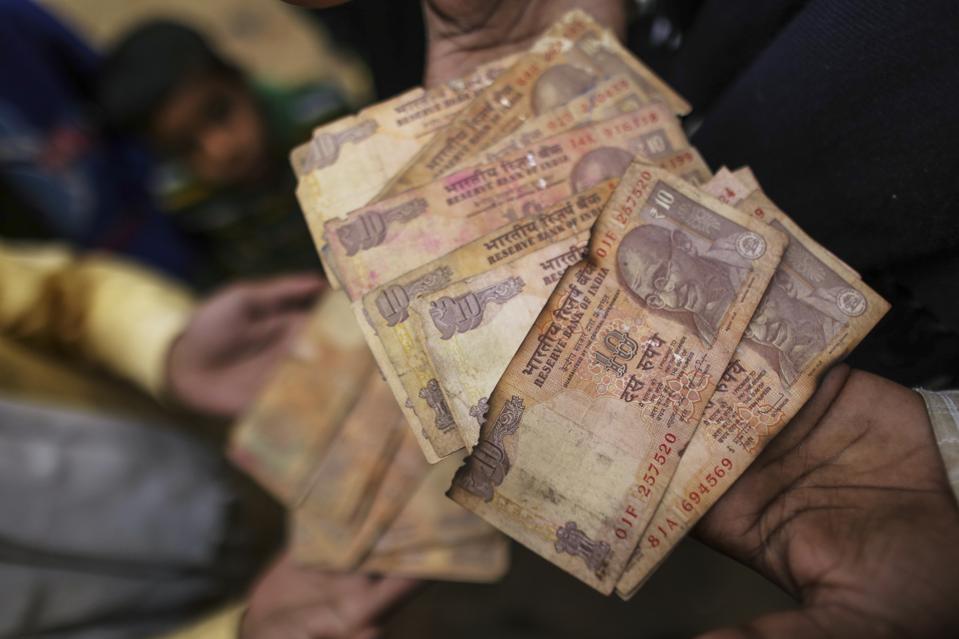
Ten rupees Indian banknotes (Photographer: Dhiraj Singh/Bloomberg)
From South Korea’s presidential scandal to Malaysia’s 1MDB fund, not many Asian countries have been able to avoid the smear of corruption. But just how pervasive is the problem across the continent? Tiếp tục đọc “Asia’s Five Most Corrupt Countries”→
nytimes_NGHIA BINH, Vietnam — Growing up in this village of rice paddies and banana trees, Doan Thi Huong was known as a gentle girl and a diligent student, her brother said.
She left home at 17 to study pharmacology in Hanoi, the capital, and has returned home only about twice a year in the decade since, said her brother, Doan Van Binh. He said that he rarely pressed his sister for details about her life, and did not realize until a few days ago that she had been working in Malaysia.


 CVD
CVD 