I'm from Hanoi, Viet Nam.
I'm an author of Dot Chuoi Non (dotchuoinon.com/author/hangbelu/), a blog on Positive thinking, founded by Dr. Tran Dinh Hoanh, an attorney in Washington DC.
I'm a co-founder of Conversations on Vietnam Development - cvdvn.net, a virtual think tank. I am a co-founder of two companies in Viet Nam working on children education services. I advise companies on STEAM education, English language education for children and students in Vietnam.
I'm studying the Buddha's teaching and the teaching of Jesus. I practice mindful living including meditation.
I hold a PhD on Sustainable Energy Systems from University of Lisbon and Aalto University.
I graduated from Hanoi University of Technology on Environmental Engineering. I obtained a Master degree of the same major from Stanford University and Nanyang Technological University.
My English-language blog at: hangbelu.wordpress/.
I play table tennis as a hobby.
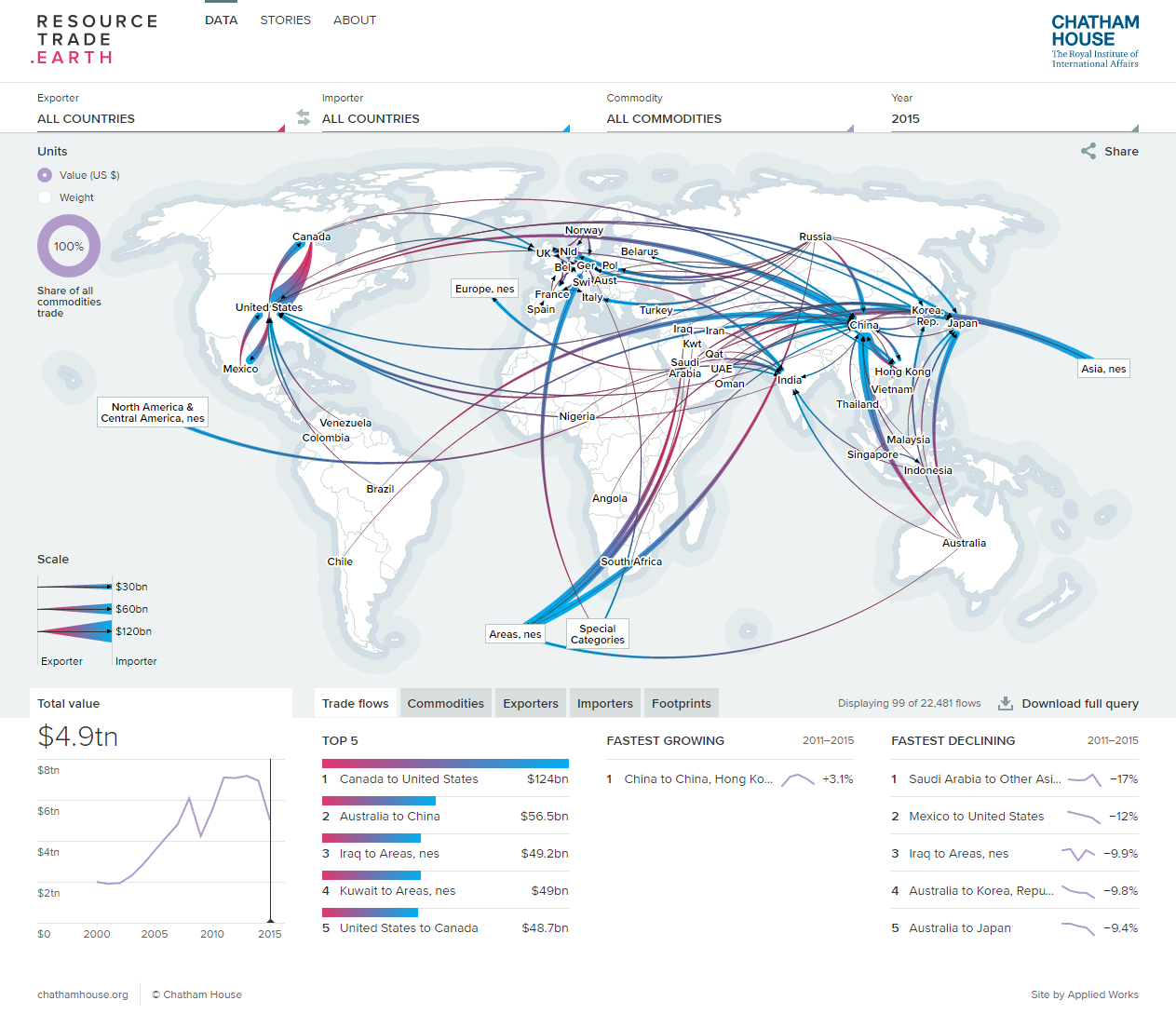
resourcetrade.earth features powerful interactive visualisations that provide easy access to an extensive and authoritative database of international trade in natural resources, developed from United Nations data. The Chatham House Resource Trade database reorganizes UN Comtrade data into a natural resource hierarchy, covering trade in over 1,350 different types of natural resources and resource products, including agricultural, fishery and forestry products, fossil fuels, metals and other minerals, and pearls and gemstones. The site allows users to easily interrogate resource trade flows between more than 200 countries and territories since the year 2000, by monetary value and by weight, at varying degrees of granularity and aggregation.The political economy of natural resources is increasingly shaped by large, structural shifts in the changing natural environment, in the deepening interrelationship between resource systems and actors, and in the rebalancing of global income and power. We consider these dynamics in the stories section of the site, which provides detailed explorations of different facets of resource trade and the economic, political, and environmental implications of resource interdependencies. Featuring expert analysis and insights from Chatham House and others, this section will continue to expand with new content over time. We launch with an overarching look at the scale and significance of resource trade, and Professor Tim Benton considers the state of agricultural trade, food security, and the potential impacts of an outbreak of protectionism affecting the key food commodities.
For the first time, resourcetrade.earth opens up complex patterns of resource trade for examination by non-experts as well as policy-makers, civil society groups, business analysts, and everyone with an interest in resource trade dynamics and their environmental impacts.
Nghệ sĩ người Nhật Isao Hashimoto đã làm nên một bản đồ thời gian thật đẹp, một sự thật đáng sợ không thể phủ nhận của 2053 vụ nổ hạt nhân năm xảy ra từ năm 1945 và đến 1998, bắt đầu với thử nghiệm “Trinity” của dự án Manhattan gần Los Alamos và kết thúc với thử nghiệmhạt nhân của Pakistan vào tháng 5 năm 1998. Bản đồ này thiếy 2 vụ thử nghiệm hạt nhân của Bắc Triều Tiên trong thập niên vừa qua (do tính hợp pháp của hai vụ này chưa rõ ràng 100%).
Trong bản đồ, mỗi quốc gia đều có một đốm sáng và một chấm nhấp nháy trên bản đồ bất cứ khi nào có một vụ nổ vũ khí hạt nhân, với một thanh chạy trên cùng và dưới cùng của màn hình. Hashimoto, bắt đầu dự án vào năm 2003, nói rằng ông đã tạo ra nó với mục tiêu cho thấy “nỗi khiếp sợ và điên cuồng của vũ khí hạt nhân”. Bản đồ bắt đầu rất chậm – nếu bạn muốn xem hành động thực sự, hãy bỏ qua trước năm 1962 hoặc lâu hơn nữa – nhưng sự tích lũy trở nên quá tải.
A Time-Lapse Map of Every Nuclear Explosion Since 1945 – by Isao Hashimoto
Japanese artist Isao Hashimoto has created a beautiful, undeniably scary time-lapse map of the 2053 nuclear explosions which have taken place between 1945 and 1998, beginning with the Manhattan Project’s “Trinity” test near Los Alamos and concluding with Pakistan’s nuclear tests in May of 1998. This leaves out North Korea’s two alleged nuclear tests in this past decade (the legitimacy of both of which is not 100% clear).
Each nation gets a blip and a flashing dot on the map whenever they detonate a nuclear weapon, with a running tally kept on the top and bottom bars of the screen. Hashimoto, who began the project in 2003, says that he created it with the goal of showing”the fear and folly of nuclear weapons.” It starts really slow — if you want to see real action, skip ahead to 1962 or so — but the buildup becomes overwhelming.
ODI_Creating more and better jobs is frequently identified as a top priority in global development, and the Sustainable Development Goals (SDGs) are no exception.
Nearly six million participants of the MY World Survey, a UN survey which influenced and informed the SDGs, identified ‘better job opportunities’ as key for their and their families’ futures. As a result, jobs have found their space in SDG8: ‘Promote sustained, inclusive and sustainable economic growth, full and productive employment and decent work for all’, and are referenced in several other goals.
10 things to know about the global labour force examines the number of people inside and outside the global labour force, illustrating who they are, where they are and the scale of the global jobs challenge, drawing attention to the 2 billion people of working age classified as outside the labour force, many of whom want to work. Surprisingly, there has been little focus on this group. Less surprisingly, about two-thirds are women, and a very high share of them are in the Asia-Pacific region. Their need for jobs will add significantly to the challenges of job creation and of meeting the SDGs.
BBC_Our changing climate seems set to disrupt just about everything. From rising sea levels to ocean acidification, the list of negative consequences from climate change is endless. But one area that often goes unmentioned in the climate change discussion is sex.
Over the last two decades, scientists have found that warmer temperatures are quietly spoiling the mood, making it harder for plants and animals to reproduce.
Here are five ways that climate change is ruining sex lives.
It’s a numbers game
While humans and many other animals determine sex genetically, many reptiles and some fish use the incubation temperature of the eggs to set the gender of their offspring. This means that changing global temperatures could alter the ratio of sexes produced, making it harder for these animals to find mates. Tiếp tục đọc “Climate change is disrupting the birds and the bees”→
Buildings and streets are illuminated in the Ginza shopping district in Tokyo. The lights of the district’s high-end boutiques and bars may someday be powered by coal burned more than 2,700 km away in Mongolia. | BLOOMBERG
Experts in 2016 examining a painting at the Fine Arts Museum in Ho Chi Minh City said to be “Banana Garden” by Nguyen Sang. It was among 17 works the museum ultimately declared to be fraudulent.CreditQuinn Ryan Mattingly for The New York Times
nytimes_HO CHI MINH CITY, Vietnam — The exhibition at the Fine Arts Museum in Ho Chi Minh City was billed as a triumphant homecoming for works by some of Vietnam’s most influential artists.
But Nguyen Thanh Chuong, a prominent artist himself, was stunned by what he saw.
Hanging on the wall was a painting he recognized as his own, a Cubist-inspired portrait he did in the early 1970s.
But instead of his name, the canvas bore the signature of one of Vietnam’s best-known artists, Ta Ty, and the date 1952. “I could not believe my eyes,” he said. “It made my hair stand on end.”
Mr. Chuong’s discovery set off a scandal that has rocked the Vietnam art world and highlighted an embarrassing truth: The Vietnamese art market, where prices of prewar paintings have recently broken the million-dollar mark, is rife with fraud.
eco-business_A new report by WWF has found that most major Asian consumer goods firms are lagging behind their western counterparts on making their operations and supply chains more sustainable, and their investors are also not paying enough attention to environmental risks.
A well-stocked supermarket in Shenzhen, China. Asia’s growing middle class is set to exponentially increase demand for consumer goods such as food and beverages, household items, and personal care products. Image: Sorbis / Shutterstock.com
Non-profit group World Wide Fund for Nature (WWF) has published a report shining an uncomfortable spotlight on Asian consumer firms, which finds them severely lagging behind international standards on sustainability.The international group said the lack of sustainability among Asian manufacturers of food, household, and personal care products is in part due to a lack of scrutiny from financiers. Tiếp tục đọc “Asian consumer firms need to buck up on sustainability: New report”→
globalwitness_It has never been deadlier to take a stand against companies that steal land and destroy the environment. Our new report Defenders of the Earth found that nearly four people were murdered every week in 2016 protecting their land and the natural world from industries like mining, logging and agribusiness.
Murder is just one of a range of tactics used to silence land and environmental defenders, including death threats, arrests, sexual assault and aggressive legal attacks.
Tired of getting laughed at by visitors for its hilariously bad English translations, China is planning to institute a set of fun-killing national guidelines aimed at wiping out the scourge of Chinglish once and for all.
This new English translation standard will go into effect on December 1st, 2017 — a dark day in the 5,000 years of Chinese history — in order to improve the quality of English translations in 13 different public arenas like transportation, entertainment and medicine. Additionally, it will provide a list of standardized translations for some 3,500 commonly used phrases and terms.
Thế giới, vốn quen với nguồn dầu mỏ dồi dào và giá rẻ, chỉ bừng tỉnh sau cơn khủng hoảng dầu mỏ đầu tiên vào năm 1973. Trong suốt nhiều thập niên, các công ty công nghiệp nhiệt, im lặng trước sự lạm dụng quá mức năng lượng hóa thạch đầy carbon, đã đi vào con đường hủy diệt hệ sinh thái ở mức độ toàn cầu.
Hệ thống năng lượng khắp mọi nơi hiện nay, vẫn còn dựa trên các nguồn năng lượng lưu trữ (than, dầu mỏ, khí, uranium), đang chuyển biến mạnh mẽ.
Trên đường hướng đến một nền kinh tế xanh và số hóa, thế giới đang tiến sâu vào một cuộc cách mạng năng lượng. Ta chứng kiến những đột phá và thay đổi lớn lao. Công nghệ số và Internet cũng đóng một vai trò quan trọng trong lĩnh vực năng lượng. Các nguồn thông lượng (thủy điện, mặt trời, gió, sinh khối, năng lượng biển…), miễn phí và có mặt trên toàn cầu, sẽ chiếm lĩnh thị trường. Không nên quên rằng năng lượng mặt trời có thể cung cấp ít nhất là 20 lần tổng lượng điện tiêu thụ hiện nay của thế giới. Mặt trời, cũng như gió, sẽ cho phép 1.5 tỉ người chưa hề biết năng lượng là gì nhanh chóng có điện để sử dụng hàng ngày. Tiếp tục đọc “Việt Nam có thể đạt 100% năng lượng tái tạo vào năm 2050”→
nangluongvietnam_Ngành công nghiệp điện trên thế giới hiện nay chủ yếu dựa trên công nghệ nhiệt điện và thủy điện đã mang đến cho nhân loại nền văn minh điện, nhưng cũng đã bộc lộ mặt trái của nó đối với môi trường trái đất. Với việc đốt cháy nhiên liệu gốc hóa thạch, đã trở thành nguồn phát thải khí nhà kính lớn nhất gây ra biến đổi khí hậu trên toàn cầu. Còn công nghệ điện hạt nhân lại không an toàn và gây ra những hiểm họa phóng xạ như Checnobưn, Fukishima và để lại tác hại lâu dài cho môi trường.
Phát triển “năng lượng xanh” là xu thế tất yếu
Vì vậy, Thế kỷ 21 với chiến lược phát triển bền vững trên toàn cầu, đặc biệt là thời kỳ phát triển “kinh tế xanh”, “năng lượng xanh” đã bắt đầu chứng kiến những công nghệ mới để sản xuất điện, nhiên liệu “sạch hơn”, trong đó có sản xuất điện từ các nguồn năng lượng tái tạo vô tận trong tự nhiên, hay luôn phát sinh cùng đời sống con người. Ðó là những công nghệ sản xuất điện từ nguồn năng lượng tái tạo có sẵn trong tự nhiên như: mặt trời, gió, sinh khối, sóng biển, thủy triều, địa nhiệt và nhiệt biển. Tiếp tục đọc “Cần có bước đột phá trong chiến lược phát triển năng lượng tái tạo”→



 Buildings and streets are illuminated in the Ginza shopping district in Tokyo. The lights of the district’s high-end boutiques and bars may someday be powered by coal burned more than 2,700 km away in Mongolia. | BLOOMBERG




 CVD
CVD 