
Tác giả: Đào Thu Hằng
I'm from Hanoi, Viet Nam.
I'm an author of Dot Chuoi Non (dotchuoinon.com/author/hangbelu/), a blog on Positive thinking, founded by Dr. Tran Dinh Hoanh, an attorney in Washington DC.
I'm a co-founder of Conversations on Vietnam Development - cvdvn.net, a virtual think tank. I am a co-founder of two companies in Viet Nam working on children education services. I advise companies on STEAM education, English language education for children and students in Vietnam.
I'm studying the Buddha's teaching and the teaching of Jesus. I practice mindful living including meditation.
I hold a PhD on Sustainable Energy Systems from University of Lisbon and Aalto University.
I graduated from Hanoi University of Technology on Environmental Engineering. I obtained a Master degree of the same major from Stanford University and Nanyang Technological University.
My English-language blog at: hangbelu.wordpress/.
I play table tennis as a hobby.
Global nuclear weapons: downsizing but modernizing
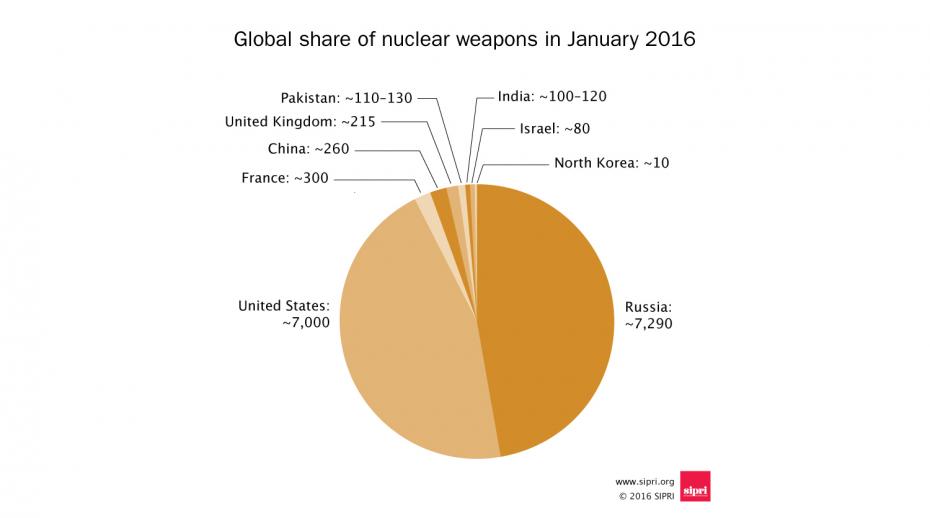
SPIRI_(Stockholm, 13 June 2016) The Stockholm International Peace Research Institute (SIPRI) today launches its annual nuclear forces data, which highlights the current trends and developments in world nuclear arsenals. The data shows that while the overall number of nuclear weapons in the world continues to decline, none of the nuclear weapon-possessing states are prepared to give up their nuclear arsenals for the foreseeable future.
At the start of 2016 nine states—the United States, Russia, the United Kingdom, France, China, India, Pakistan, Israel and North Korea—possessed approximately 4,120 operationally deployed nuclear weapons. If all nuclear warheads are counted, these states together possessed a total of approximately 15,395 nuclear weapons compared with 15,850 in early 2015 (see table 1).
Table 1. World nuclear forces, 2016 Tiếp tục đọc “Global nuclear weapons: downsizing but modernizing”
Universities and students are revolutionalizing Sustainability
worldwatch_As leaders of knowledge and innovation, universities are places where sustainable futures are imagined. They are institutions where experts research emerging issues and generate new ideas. They contain multitudes of idealistic and adaptive young students who can be mobilized to protect their futures. It is only natural that some of the most progressive sustainability ideas are emerging from universities.
Universities around the world are striving to curb their wasteful tendencies as well as to foster an atmosphere that encourages environmental consciousness. Here are three areas of campus life that universities have sought to make greener:

-
Fostering sustainable lifestyles through transportation initiatives
One of the most pressing issues pertaining to environmental sustainability at universities is transportation. A 2011 study by Complete College America reports that 75 percent of all college students in the United States commute to campus, often traveling by car, bus, and other carbon-emitting vehicles. Overall, the transportation sector is one of the country’s highest contributors to greenhouse gas emissions.
Tiếp tục đọc “Universities and students are revolutionalizing Sustainability”
Using real-time satellite data to track water productivity in agriculture
New FAO tool offers water-scarce countries and river basins a way to boost productivity

Watering crops in the Democratic Republic of Congo.
FAO 20 April 2017, Rome – Measuring how efficiently water is used in agriculture, particularly in water-scarce countries, is going high-tech with the help of a new tool developed by FAO.
The WaPOR open-access database has gone live, tapping satellite data to help farmers achieve more reliable agricultural yields and allowing for the optimization of irrigation systems.
WaPOR was presented this week during a high-level partners meeting for FAO’s Coping with water scarcity in agriculture: a global framework for action in a changing climate. It allows for fine-grained analysis of water utilised through farming systems, generating empirical evidence about how it can be most productively used.
Worldwide water utilization – the majority of which is used by agriculture – has outpaced the rate of population growth for most of the last century and some regions are close to breaching viable limits. Tiếp tục đọc “Using real-time satellite data to track water productivity in agriculture”
John Kerry is plotting a renewable energy future … starting in Vietnam
Vietnam wants to build a massive number of coal plants. But a former United States secretary of state is offering the country a cleaner path forward.
John Kerry is working with the Vietnamese government on an alternative to its coal plan — one that could provide the same amount of electricity, but with hydroelectric dams and solar panels instead of fossil fuels. It’s a scheme that would save the country billions of dollars, prevent pollution-related deaths, and keep greenhouse gases out of the atmosphere.
Hints of this effort have surfaced in the Vietnamese press, but a representative for Kerry said he was not ready to speak about his efforts on the record. However, the former presidential candidate discussed his work last week at the Clean Energy Finance Forum held at Stanford University. While remarks made at the forum were initially off the record, Stanford’s Precourt Institute for Energy subsequently posted a video online of Kerry’s chat with Anne Finucane, a Bank of America vice chairman. (Update: Since Grist published this story, Stanford has taken down the video featuring Kerry and Finucane.)
Phát hiện ô nhiễm môi trường, hãy gọi ngay: 086.900.0660
11:26, 31/10/2017 (GMT+7)
(TN&MT) – Ngày 30/10, Tổng cục Môi trường (Bộ TN&MT) đã công bố đường dây nóng cấp trung ương để tiếp nhận phản ánh, kiến nghị về ô nhiễm môi trường theo số điện thoại 086.900.0660
baotainguyenmoitruong_Theo đó, khi phát hiện những hành vi xả chất thải gây ô nhiễm môi trường; các vụ việc ô nhiễm, suy thoái môi trường, người dân có thể gọi ngay đến Đường dây nóng của Tổng cục môi trường theo số 086.900.0660
Đường dây nóng 086.900.0660 sẽ tiếp nhận thông tin phản ánh, kiến nghị về ô nhiễm môi trường liên tục 24/24 giờ trong ngày và 7 ngày trong tuần (bao gồm cả ngày nghỉ, ngày lễ).
 |
| Phát hiện ô nhiễm môi trường, hãy gọi ngay: 086.900.0660 |
Tiếp tục đọc “Phát hiện ô nhiễm môi trường, hãy gọi ngay: 086.900.0660”
SÁNG TẠO TRONG DẠY VÀ HỌC (cho bậc đại học)
Chào các bạn,
Bài chia sẻ này là kết hợp những kinh nghiệm của mình và báo cáo trong một tập huấn mà mình có được tham dự về Innovation in Learning and Teaching – Sáng tạo trong dạy và học, một điểm mà giáo dục đại học Việt Nam còn phải nỗ lực cố gắng rất nhiều.
Mình tham dự của GS Richard Felder, North Carolina State University. Giáo sư có vài chục năm kinh nghiệm về sáng tạo trong phương pháp dạy học, đặc biệt là cho khối ngành công nghệ kỹ thuật. GS Richard Felder thường được các trường đại học công nghệ hàng đầu ở Châu Á mời đến giảng dạy về phương pháp giảng dạy trong giáo dục bậc đại học.
Sáng tạo trong dạy và học là những điều cực kỳ thiết yếu không chỉ cho các giáo viên mà cho tất cả các học sinh, sinh viên. Và một trong điểm sáng tạo đó là cần phải hiểu cách học và dạy của mình ra sao – teaching and learning style của mình ra sao để phát huy và cùng hỗ trợ nhau phát triển. Tiếp tục đọc “SÁNG TẠO TRONG DẠY VÀ HỌC (cho bậc đại học)”
Why eating insects makes sense – Tại sao nên ăn Côn trùng – một nguồn thực phẩm thay thế cho thit

Published on Sep 25, 2014
800 sinh viên đại học Bách Khoa Hà Nội bị buộc thôi học mỗi năm
Bộ trưởng Công an: ‘Chặn Internet thì ta không chơi được với ai’
Thượng tướng Tô Lâm nói dòng chảy thông tin giống như hệ tuần hoàn của cơ thể con người, “phải làm sao để không bị nghẽn mạch”.
VNexpress_Chiều 13/11, Quốc hội thảo luận ở tổ về dự án Luật An ninh mạng. Thượng tướng Tô Lâm – Bộ trưởng Công an, cho biết Bộ được phân công chủ trì soạn thảo dự luật này và đã rất thận trọng trong thực hiện, vì đây là nội dung liên quan đến quyền tự do, dân chủ của nhân dân.
“Đây cũng là vấn đề rất khó, không chỉ Việt Nam mà với thế giới”, Bộ trưởng nói.
Tiếp tục đọc “Bộ trưởng Công an: ‘Chặn Internet thì ta không chơi được với ai’”
Vietnam Typhoon Damrey, International Red Cross response – Bão Damrey, con số và ứng phó của Chữ thập đỏ Quốc tế
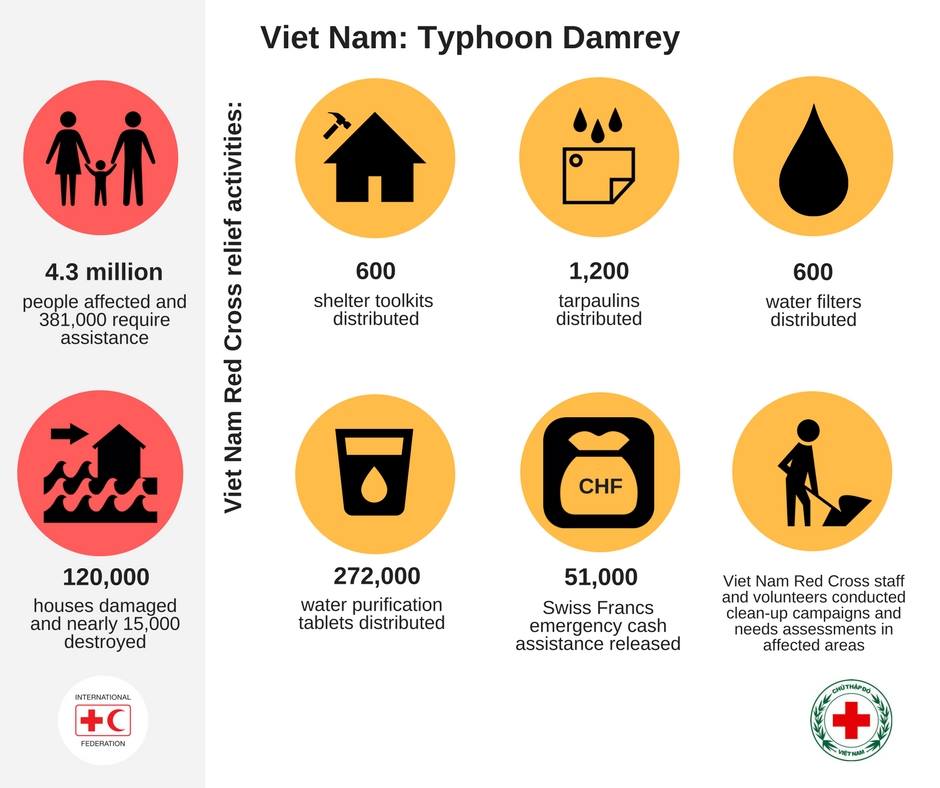
From International Federation of Red Cross and Red Crescent Societies – IFRC
Hiệp hôi Chữ Thập Đỏ và Trăng lưỡi liềm đỏ quốc tế tại Việt Nam,
Thiệt hại
4,3 triệu người bị ảnh hưởng bởi bão
381, 000 nghìn người cần hỗ trợ
120,000 nghìn ngôi nhà bị hỏng và gần 15,000 nghìn nhà bị phá huỷ
Cứu trợ từ Chữ Thập Đỏ
600 bộ, dựng lều và gia cố nơi ở
1,200 nhà bạt che mưa di động
600 lít nước lọc
272,000 viên lọc nước uống
51,000 Francs Thuỵ Sĩ
Hỗ trợ về người dọn dẹp, xây dựng, khắc phục hậu quả sau bão
Returning ISIS fighters: How should governments deal with them?
theconomist_ISIS fighters are returning home to Europe. In Britain, half of the 850 citizens known to have joined ISIS have already come back. As France marks the two-year anniversary of the deadliest terrorist attack on its soil, governments have to decide what to do with returning foreign fighters.
Tiếp tục đọc “Returning ISIS fighters: How should governments deal with them?”
Beyond recycling: solving e-waste problems must include designers and consumers
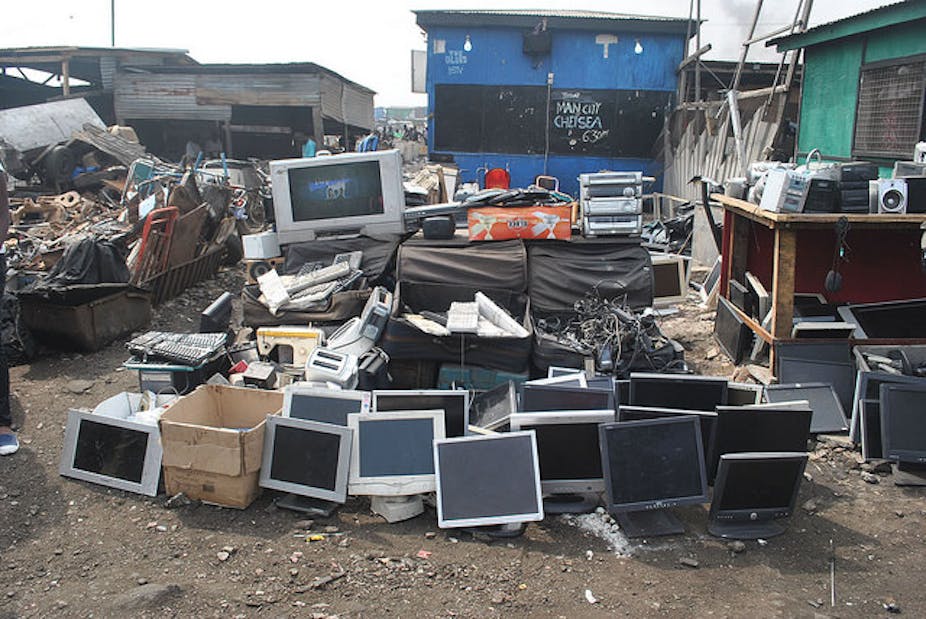
E-Waste in East and South-East Asia Jumps 63% in Five Years
-
2017•01•15 BONN
The volume of discarded electronics in East and South-East Asia jumped almost two-thirds between 2010 and 2015, and e-waste generation is growing fast in both total volume and per capita measures, new UNU research shows.
Driven by rising incomes and high demand for new gadgets and appliances, the average increase in e-waste across all 12 countries and areas analysed — Cambodia, China, Hong Kong, Indonesia, Japan, Malaysia, the Philippines, Singapore, South Korea, Taiwan, Province of China, Thailand and Vietnam — was 63% in the five years ending in 2015 and totalled 12.3 million tonnes, a weight 2.4 times that of the Great Pyramid of Giza.
China alone more than doubled its generation of e-waste between 2010 and 2015 to 6.7 million tonnes, up 107%. Tiếp tục đọc “E-Waste in East and South-East Asia Jumps 63% in Five Years”
Using Remote Sensing to Map Rice Paddy Drop in the Mekong Delta
Gislounge_The Mekong River Delta is an important water source flowing through South East Asia. Primarily feeding the rice fields of Vietnam, the Mekong River Delta has long been an area of great fertility due to water flow and silt build up. However, agricultural efforts in the area have shown a decline in production because of the weather effects of El Niño. This year’s El Niño has been particularly strong, causing droughts in South East Asia.
Satellites including Europe’s Sentinel-1A can now track the rise and fall of different agricultural products around the world. The satellite’s imagery showed that rice production in the Mekong Delta has decreased in the past year, threatening the livelihoods of local farmers as well as food security worldwide. Tiếp tục đọc “Using Remote Sensing to Map Rice Paddy Drop in the Mekong Delta”
 CVD
CVD 