Vietnam’s rice paddies offer Japan’s farmers chance to grow

asia.nikkei.com

Local cultivation in emerging Asian markets proves cheaper than exports

HIDEKI SHINOHARA, Nikkei staff writer

A woman wearing a traditional hat sits in a rice field outside Hoi An, Vietnam. © Reuters

NIIGATA, Japan — Japan’s rice farmers are venturing into the rest of Asia to grow their crops locally. Supported by an increase in the number of Japanese restaurants across the region, the farmers are teaming up with locals to apply their expertise, hoping to ride the strong brand power that Japonica rice enjoys.

The trend lets locals indulge their taste in high-quality Japanese rice without paying stratospheric prices for imported versions, as some wealthy Chinese are doing. Tiếp tục đọc “Vietnam’s rice paddies offer Japan’s farmers chance to grow”

$100m ADB Loan for China Everbright Waste to Energy Projects in Viet Nam

waste-management-world.com

China Everbright International Limited has secured a $100 million loan from the Asian Development Bank to develop a series of waste to energy plants in the Mekong Delta, Vietnam.

Deputy Director General of ADB’s Private Sector Operations Department Christopher Thieme (left) and China Everbright CEO Wang Tianyi (right) after the signing. Tiếp tục đọc “$100m ADB Loan for China Everbright Waste to Energy Projects in Viet Nam”

‘Daughter, I’ve wronged you’: Guilt and longing, as those torn apart by one-child policy search for each other

 (Updated: )

How can development cooperation address ocean plastic pollution?

23 January 2018

In the first weeks of 2018 there were (for me) unexpected announcements from both the EU and the UK Government on the urgent global issue of ocean plastic pollution. The EU intends to make all plastic packaging on the European market recyclable by 2030 and in her speech announcing the UK’s 25 Year Environment Plan, Prime Minister Theresa May committed the UK to eliminating all “avoidable plastic waste” by 2042. The Prime Minister also said it would direct UK aid to help developing nations reduce plastic waste, which could indicate a new direction for the UK’s and other countries’ aid programmes.

Tiếp tục đọc “How can development cooperation address ocean plastic pollution?”

Education and Skills for Inclusive Growth, Green Jobs and the Greening of Economies in Asia: Case Study Summaries of India, Indonesia, Sri Lanka and Viet Nam

© Asian Development Bank 2018. This book is an open access publication.

Download here https://www.adb.org/sites/default/files/publication/385041/education-skills-green-jobs.pdf

The green economy is a new economic paradigm which seeks to achieve economic development, while at the same time protecting the environment and achieving sustainable economic and social development. This requires transitioning to green jobs and green skills, and to creating new jobs in relation to the greening of workforces. Green jobs are relevant across all key sectors: agriculture, manufacturing, building, transport, tourism, and renewable energy. Skills acquisition and enhancement have great positive implications for all aspects of education and training, and for businesses.

Keywords Green jobs Green skills Green economy Green growth Sustainability Skills development priorities Waste management and recycling Renewable energy Skills acquisition and enhancement Skills toward sustainability Energy transition Smart cities Environmental goods and services Education and training

Đêm lạnh Sài Gòn, đủ kiểu ngủ ngoài trời của người vô gia cư

Trong lúc nhiều gia đình đang say giấc thì đâu đó tại những góc đường, trạm xe buýt, gầm cầu…, không ít người vô gia cư đang nằm co ro trong đêm lạnh giữa khuya Sài Gòn. Những ngày cuối năm, Sài Gòn lạnh và người ngoài đường thì co ro.
Ông Trần Văn Khỏi (Thái Bình) lang thang ở TP.HCM hơn 8 năm nay và đêm đêm ngủ trên cầu Calmette /// Ảnh: Lam Ngọc

 Ông Trần Văn Khỏi (Thái Bình) lang thang ở TP.HCM hơn 8 năm nay và đêm đêm ngủ trên cầu Calmette

ẢNH: LAM NGỌC
Khu vực trung tâm như quận 1, quận 3, quận 5… có số lượng người vô gia cư ngủ nhiều nhất. Ban ngày họ mưu sinh bằng đủ nghề như: Bán vé số, đạp xích lô, nhặt ve chai… tối đến thì bạ đâu là ngủ đó sau một ngày tất bật mưu sinh.

Tiếp tục đọc “Đêm lạnh Sài Gòn, đủ kiểu ngủ ngoài trời của người vô gia cư”

Người vô gia cư co ro giữa đêm đông Hà Nội

18/12/2017 13:40 GMT+7    ·    NGUYỄN KHÁNH

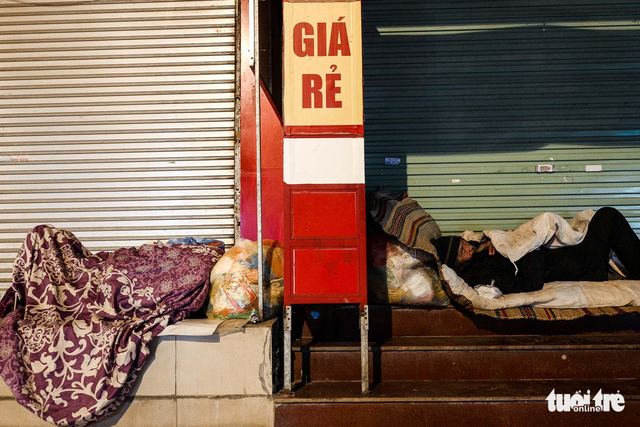
TTO – Hà Nội sau 0g đêm đã vắng, đêm đông còn vắng vẻ hơn. Ngoài đường lạnh lẽo, chỉ còn những công nhân và người vô gia cư ngủ co ro trên hè phố. Đêm qua, nhiệt độ Hà Nội đã xuống dưới 10 độ C.

Người vô gia cư co ro giữa đêm đông Hà Nội - Ảnh 1.

Hai người vô gia cư ngủ trước cửa một thềm nhà, họ phần lớn làm nghề nhặt rác, số khác làm nghề đánh giày

Tiếp tục đọc “Người vô gia cư co ro giữa đêm đông Hà Nội”

Environmental reporting in Vietnam often a comedy of errors – Điều tra tình trạng môi trường ở VN, những chuyện nực cười

Fifth Greater Mekong Subregion Environment Ministers’ Meeting

Chiang Mai, Thailand 30 January to 1 February 2018

Every 3 years the environment ministers from the six Greater Mekong Subregion (GMS) countries gather to review progress and set the agenda for environmental cooperation in the subregion under the GMS Economic Cooperation Program. Tiếp tục đọc “Fifth Greater Mekong Subregion Environment Ministers’ Meeting”

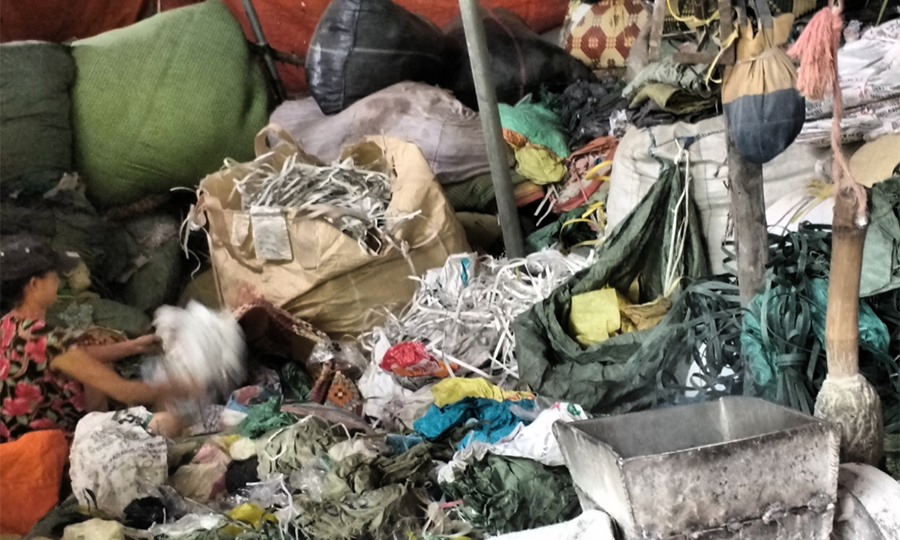
72 Hours in Vietnam: Observations from Craft Recycling Villages

oceanconservancy.org


© COURTESY OF ERIC DESROBERTS

India: 63 million women statistically ‘missing,’ 21 million unwanted

DW

The Indian government says sex-selective abortions and a neglect of girls have resulted in millions of statistically “missing” women. Despite the numbers, some gender equality indicators have improved for women.

A women-only train in West Bengal

An Indian government report presented to parliament on Monday has found that about 63 million women are statistically “missing” from India’s population, due to a preference for male children. Tiếp tục đọc “India: 63 million women statistically ‘missing,’ 21 million unwanted”

UNESCO Outstanding Universal Value: Phong Nha-Ke Bang National Park Vietnam

UNESCO

The Phong Nha-Ke Bang National Park, inscribed on the World Heritage List in 2003, covered 85,754 hectares. With this extension, the site covers a total surface area of 126,236 hectares (a 46 % increase) and shares a boundary with the Hin Namno Nature Reserve in the Peoples Democratic Republic of Laos. The Park’s landscape is formed by limestone plateaux and tropical forests. It features great geological diversity and offers spectacular phenomena, including a large number of caves and underground rivers. The site harbours a high level of biodiversity and many endemic species. The extension ensures a more coherent ecosystem while providing additional protection to the catchment areas that are of vital importance for the integrity of limestone landscapes.

Description is available under license CC-BY-SA IGO 3.0


Phong Nha-Ke Bang National Park © Evergreen
Outstanding Universal Value

Brief synthesis

Phong Nha-Ke Bang National Park is located in the middle of the Annamite Mountain Range in Quang Binh province, Viet Nam, and shares its boundary with the Hin Namno Nature Reserve in the Lao PDR to the west. The property comprises an area of 123,326 ha and contains terrestrial and aquatic habitats, primary and secondary forest, sites of natural regeneration, tropical dense forests and savanna and is rich in large, often spectacular and scientifically significant caves.
Tiếp tục đọc “UNESCO Outstanding Universal Value: Phong Nha-Ke Bang National Park Vietnam”

UNESCO đề nghị Việt Nam hủy bỏ vĩnh viễn dự án cáp treo vào Sơn Đoòng

Tại báo cáo thẩm định và bảo tồn 99 di sản của thế giới đang hiện diện ở các quốc gia thành viên năm 2017, UNESCO khẳng định hang Sơn Đoòng, nằm trong vườn quốc gia Phong Nha – Kẻ Bàng, là “Tài sản có giá trị độc đáo toàn cầu”- Outstanding Universal Value – và đề nghị Việt Nam hủy bỏ vĩnh viễn kế hoạch xây dựng cáp treo vào hang Sơn Đoòng. Cho đến nay, khuyến cáo đó của UNESCO vẫn còn nguyên hiệu lực.

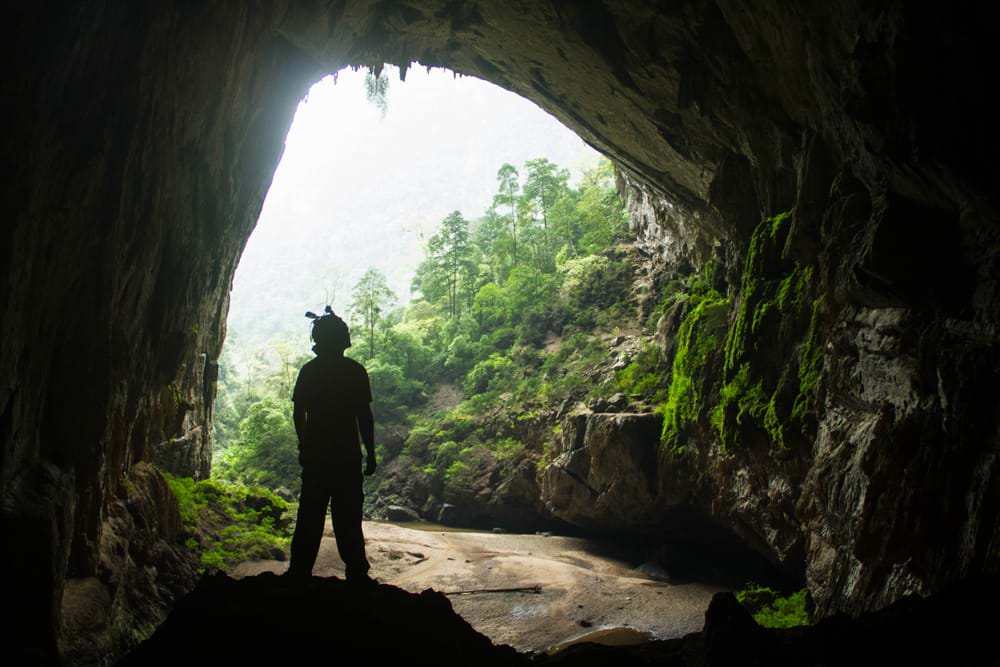
Cửa sau của hang Én, nơi dẫn tới hang Sơn Đoòng, theo hướng đi trekking (đi bộ dài ngày) đang được khai thác. Đây là nơi đã khảo sát cho dự án cáp treo tại vườn quốc gia Phong Nha – Kẻ Bàng.

UNESCO: cáp treo sẽ tác động tiêu cực đến Sơn Đoòng

Báo cáo và khuyến cáo của UNESCO trong tài liệu kiểm tra, thẩm định và bảo tồn 99 di sản của thế giới nằm tại các quốc gia thành viên, đã được công bố vào tháng 7.2017. Trong đó, Uỷ ban Di sản Thế giới thuộc UNESCO được yêu cầu xem lại các báo cáo về tình trạng bảo tồn các tài sản có trong tài liệu. Tiếp tục đọc “UNESCO đề nghị Việt Nam hủy bỏ vĩnh viễn dự án cáp treo vào Sơn Đoòng”

Indigenous Peoples & Local Communities Vital to the Global Environment

IPSnews

Katie Reytar and Peter Veit, World Resources Institute

Indigenous groups and local communities occupy about half the world’s land, but hold legal rights to only a fraction of it. Credit: Michele Solmi/Flickr

WASHINGTON DC, Jan 25 2018 (IPS) – Indigenous Peoples and local communities are some of the best environmental stewards. Their livelihoods and cultures depend on forests, clean water and other natural resources, so they have strong incentives to sustainably manage their lands.

LandMark, the first global platform to provide maps of land held by Indigenous Peoples and local communities, last month released new carbon storage, tree cover loss, natural resource concessions, dam locations and other data layers that shed light on the environment in which these lands exist. Now anyone, anywhere can view and analyze indigenous and local communities’ environmental contributions and identify threats to specific lands. Tiếp tục đọc “Indigenous Peoples & Local Communities Vital to the Global Environment”