On Oct. 13 of this year, the PRC state media outlet CPNN, reported that China is pulling ahead in advanced nuclear power technology development with the launch of the large-scale production “Hualong One” (also known as HPR1000). As it develops, China not only aims to tackle the transmission bottleneck in the south, but also to export to countries like Pakistan as the PRC’s “business card” to the world.
China’s dual goals of localization and export orientation have long defined its nuclear strategy. Led by state-owned giants such as the China National Nuclear Corporation (CNNC), Beijing has invested heavily in domestic innovation while aggressively expanding into overseas markets. Beijing has sought to expand its reactor sales to markets such as Argentina and the United Kingdom, while also securing control over upstream uranium resources. CNNC’s 2019 acquisition of Namibia’s Rössing Uranium Mine, one of the world’s largest open-pit uranium operations, underscored China’s growing dominance across the nuclear value.
Beijing’s policy support for state-owned enterprises has enabled it to build a vertically integrated nuclear industry, driving rapid advances in small modular reactors (SMRs), fourth-generation technologies, and nuclear fusion research (the Artificial Sun). Furthermore, intensifying US–China competition is reshaping global nuclear exports and deepening the geopolitical risks of dependence on Chinese nuclear systems.
Southeast Asia is facing one of its wettest seasons in recent memory, with record-breaking rain and floods — and a powerful weather combo is driving it.
Đã có quan đầu tỉnh nào hỏi dân xem họ có cần sự phát triển của thủy điện nhiều đến mức đó? Có công bộc nào lắng nghe nỗi lo xa gần của những người dân đang hằng ngày sống dưới các “quả bom nước”?
Người con gái bên chiếc xuồng chở thi thể người cha cùng di ảnh, chờ quan tài giữa mênh mông nước lũ ở xã Hòa Xuân Đông, Đông Hòa, Phú Yên cũ (nay thuộc Đắk Lắk), ngày 23.11. Khi lũ dữ bất ngờ tràn xuống, chị không kịp về nhà. Cha mẹ chị quyết ở lại với căn nhà, mảnh vườn bên cánh đồng mà họ đã mưu sinh trọn đời, và hai người bị tử nạn trong lũ lụt. Ảnh: Minh Hòa (Báo Tuổi Trẻ)
Sài Gòn đã mắc sai lầm lớn khi để nhà cao tầng mọc dọc hai bờ sông Sài Gòn. Đừng đi vào vết xe đổ đó. Hãy để sông Hàn là của tất cả mọi người (không phải của riêng người giàu) và tất cả mọi người (khắp thế giới) sẽ đến với you, Đà Nẵng.
Trục cao tầng góp phần thay đổi diện mạo hai bờ sông Hàn
Đà Nẵng đẩy mạnh tái thiết hai bờ sông Hàn với loạt dự án cao tầng, hạ tầng, củng cố định hướng phát triển trung tâm dịch vụ, tài chính và thị trường bất động sản cao cấp.
Hai bờ sông Hàn đang trở thành một trong những tâm điểm phát triển mới của Đà Nẵng, trong bối cảnh thành phố dịch chuyển từ mô hình đô thị du lịch sang trung tâm dịch vụ, thương mại và tài chính tầm khu vực. Loạt dự án căn hộ, khách sạn và thương mại quy mô lớn được triển khai, góp phần tạo nên trục cao tầng mới và định hình lại diện mạo đô thị.
It’s been called the world’s stinkiest fruit. But it’s deeply beloved by many.
Durian is a pungent, prickly fruit from Southeast Asia that has fascinated foreigners for centuries, and China is no exception.
China buys most of the world’s durian exports, a surge spurred over the past decade by social media and growing trade ties with durian-producing countries.
Both locals and Chinese are seeking to expand the booming durian industry across Southeast Asia.
But the prospect of high profits has also ignited tensions, resulting in land disputes and environmental concerns.
In the Philippines, a massive corruption scandal is triggering street protests and putting pressure on the government of Ferdinand Marcos Jr.
The population’s increasing exposure to typhoons, floods and rising sea-levels has seen the government allocate $9.5bn of taxpayer funds to more than 9,800 flood-control projects in the last three years.
But recent audits reveal widespread cases of structures being grossly incomplete or non-existent.
Multiple government officials are accused of pocketing huge kickbacks, funding lavish lifestyles.
101 East investigates how the most vulnerable are being flooded by corruption in the Philippines.
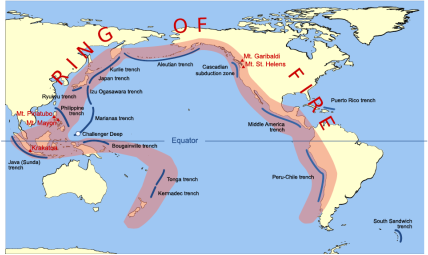
In the area you have selected (Vietnam) tsunami hazard is classified as medium according to the information that is currently available. This means that there is more than a 10% chance of a potentially-damaging tsunami occurring in the next 50 years. Based on this information, the impact of tsunami should be considered in different phases of the project for any activities located near the coast. Project planning decisions, project design, and construction methods should take into account the level tsunami hazard. Further detailed information should be obtained to adequately account for the level of hazard.
Pacific “Ring of Fire” (enlarged graphic). Source: Adapted from U.S. Geological SurveyDownload Image
Climate change impact: The areas at risk of tsunami will increase as global mean sea level rises. According to the IPCC (2013), global mean sea level rise depends on a variety of factors, and estimates for 2100 range from ~20 cm to nearly 1 m. However, regional changes in sea level are difficult to predict. Projects in low-lying coastal areas such as deltas, or in island states should be designed to be robust to projected increases in global sea level.
Having placed artificial intelligence at the centre of its own economic strategy, China is driving efforts to create an international system to govern the technology’s use.
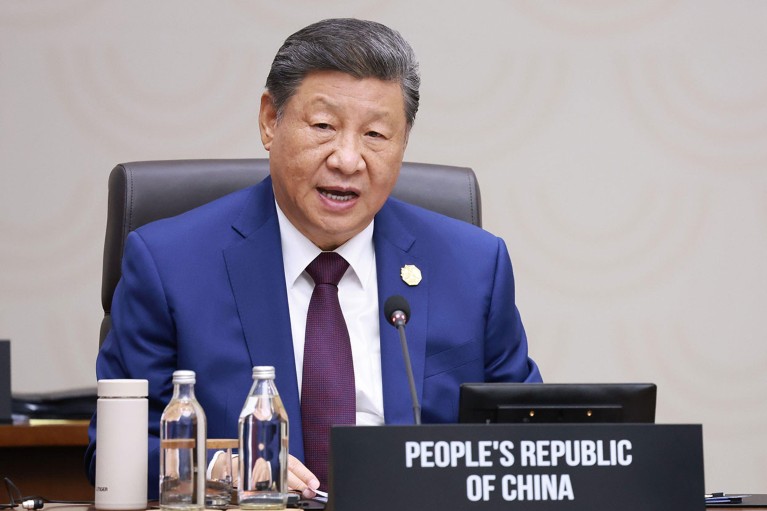
Chinese president Xi Jinping speaking at the 2025 Asia-Pacific Economic Cooperation meeting in Gyeongju, South Korea.Credit: Yonhap via AP/Alamy
Việc thành viên trong gia đình kiểm soát thu nhập khiến đối phương lệ thuộc về mặt vật chất, tinh thần bị tính là một trong 5 hành vi bạo lực kinh tế, có thể bị phạt 20-30 triệu đồng.
Đây là một trong những nội dung mới được nêu tại Nghị định 282/2025, quy định về xử phạt vi phạm hành chính trong ba lĩnh vực: an ninh, trật tự, an toàn xã hội; phòng, chống tệ nạn xã hội và phòng, chống bạo lực gia đình, hiệu lực từ 15/12.
Thousands of people march in the sidelines of the COP30 UN Climate Change Conference in Belém, Brazil on Nov. 15, 2025.Pablo Porciuncula—AFP via Getty Image
by Brian Mukhaya Brian Mukhaya is the Africa Program Manager at Clean Air Task Force.
Ten years after the landmark Paris Agreement, the world is still trying to solve two crises as if they were separate: climate change and economic development. That’s a dangerous illusion. Climate progress cannot succeed if billions of people remain in poverty, without electricity, stable food systems, or the means to build better lives. And development, if it ignores climate risk, is little more than a short-term fix that will collapse under the weight of future disasters.
I saw this tension firsthand at COP30 in Belém, Brazil, the annual UN climate summit. The energy there was unmistakable—a mixture of urgency and frustration. Delegates from across Africa reminded the world that promises made in Paris have not been kept. Wealthy nations pledged to support developing countries as they cut emissions and adapted to rising temperatures. Yet, a decade later, those commitments remain largely unfulfilled.
At COP29 in Baku last year, developed countries agreed to mobilize at least $300 billion annually by 2035 for developing countries’ climate action, part of a broader aspirational target of $1.3 trillion per year. While this represents a tripling of the previous $100 billion goal, representatives from developing countries remain skeptical. More fundamentally, the $300 billion commitment falls far short of actual needs. The Independent High-Level Expert Group on Climate Finance estimates that developing countries (excluding China) need approximately $2.7 trillion annually by 2030 to meet climate and nature-related goals. The gap between promise and reality remains vast—and widening
But money is only part of the problem. Even when funding arrives, it often misses the mark. A new analysis by the Clean Air Task Force looked at 52 African countries’ climate and development plans. It found that the two rarely intersect. Climate strategies focus on emissions and energy transitions, while national development plans emphasize job creation and economic growth—but without embedding climate targets. The result is a patchwork of policies that fail to deliver either lasting prosperity or real emissions cuts.
As Bill Gates noted in a recent memo, global climate policy increasingly risks sidelining development altogether. Today, more than 600 million Africans lack access to electricity, while 900 million do not have clean cooking technologies—conditions that undermine productivity, constrain public services, and contribute to preventable deaths.
Crucially, this should not be understood as an either/or dilemma. Wealthy nations already recognize that decarbonization must go hand in hand with economic growth to be politically viable at home. The same is true globally. Emerging and developing economies cannot be expected to choose between climate progress and economic progress. Insisting on a tradeoff between the two as a trade-off is both unrealistic and unjust.
When climate and development are treated as separate silos, everyone loses. Fragmented planning leads to inefficient allocation of scarce resources, missed opportunities for infrastructure investments with broad benefits, and policies that fail to produce either meaningful emissions reductions or durable socio-economic progress. Importantly, this is not a challenge restricted to Africa but a blind spot in international climate governance. Even wealthy countries are discovering that climate action divorced from economic realities is politically unsustainable. When climate action appears to threaten economic growth, job creation, or living standards, political support erodes quickly.
As negotiations in Belém draw to a close, one truth should be clear: climate and development are not competing agendas—they are the same story. Sustainable development is the foundation of lasting climate progress. And climate resilience is the only path to enduring prosperity. Any strategy that treats them separately is doomed to fail.
Development without climate action is a short-term fix. And climate action without development is an empty promise.
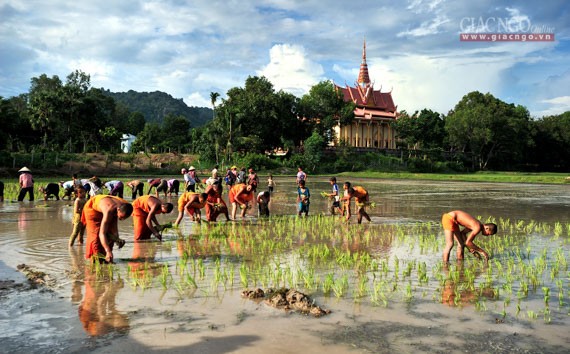
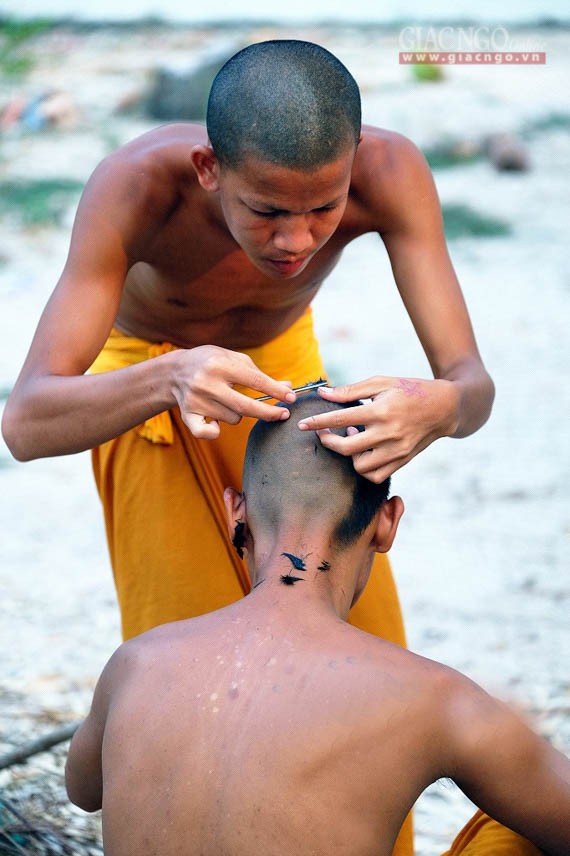
GN – Xuất gia báo hiếu là một nét đẹp truyền thống lâu đời của người Khmer Nam Bộ. Lễ nhập tu báo hiếu này thường được tổ chức vào khoảng thời gian trước hoặc sau Tết Chôl Chnăm Thmây.
Theo phong tục của người Khmer Nam Bộ, nam thanh niên 16 tuổi trở lên thường vào chùa xuất gia tu học từ một đến vài năm. Tuy nhiên, chuyện vào chùa tu là điều không bắt buộc, họ có thể tu vào lúc nào đó thích hợp và muốn tu một hay nhiều năm đều được.
Theo HT.Danh Lung, việc đi tu báo hiếu cho ông bà, cha mẹ là một nét đẹp trong cộng đồng Phật tử trẻ Khmer; bên cạnh đó, một điều không kém phần quan trọng, là chỉ những thanh niên từng tu tập ở chùa mới dễ có cơ hội… lấy vợ. Các cô gái và gia đình họ chỉ ưng những chàng trai đã từng trải nghiệm đời sống xuất gia.
, Hironori Kato baDepartment of Architecture and Civil Engineering, City University of Hong Kong, Tat Chee Avenue, Kowloon, Hong KongbDepartment of Civil Engineering, The University of Tokyo, 7-3-1, Hongo, Bunkyo-ku, Tokyo, 113-8656 Japan
Highlights • We examine the relationship between airport rail links and metropolitan productivity. • Cities with airport rail links are more productive than those without airport rail links. • Cities with shorter access time enabled by airport rail links are more productive. • Airport rail links should be discussed as a catalyst for wider economic development.
Thông Tấn Xã VN Baotintuc.vn Thứ Ba, 11/06/2013 21:15 |
Nghi Xuân – mảnh đất địa linh nhân kiệt, từ xa xưa đã sản sinh ra bao nhân tài cho đất nước, được ví là “cái nôi” văn hóa của quê hương Hà Tĩnh. Trên mảnh đất này, nhiều loại hình văn nghệ dân gian xuất phát từ lao động, sinh hoạt của nhân dân như: ca Trù, trò Kiều (có nơi gọi là chèo Kiều), hò Nghẹt… nhưng tiêu biểu nhất là trò Kiều vì nó đã đi vào lòng người và được nhân dân mến mộ từ bao đời nay.
Một cảnh diễn trò Kiều.
Theo ông Nguyễn Ban, hậu duệ chi ất đời thứ VI của Đại thi hào Nguyễn Du, nguyên trưởng phòng Văn hóa thông tin (cũ) huyện Nghi Xuân, người đã tốn nhiều công sức để khôi phục lại trò Kiều: Sau khi có Truyện Kiều, khoảng nửa thế kỷ sau, các loại hình văn nghệ dân gian dựa trên Truyện Kiều bắt đầu xuất hiện. Khoảng cuối thế kỷ XIX, ở vùng Bắc Nghệ An, Truyện Kiều được chuyển thể sang trò Kiều – sự kết hợp giữa hát tuồng và hát chèo Kiều kết hợp với diễn xuất, làm trò và các làn điệu khác như: dân ca, ví Dặm Nghệ Tĩnh, ca Huế, ca Trù…
So, where does this hidden labor take place? According to Casilli’s research, workers are in countries including Kenya, India, the Philippines, and Madagascar — regions with high levels of digital literacy, access to English- or French-speaking workers, and little in the way of labor protection or union representation.
Behind most of today’s AI models lies the labor of workers in the Global South, who are exposed to disturbing content and poor working conditions. This reality raises urgent questions about the transparency and ethics of AI development.
Picture working 10-hour days tagging distressing images to train an AI model — and getting paid not in money, but in a kilogram of sugar. This isn’t dystopian fiction, but reality for some of the workers behind today’s most advanced artificial intelligence.
While the development of AI is undoubtedly enhancing the lives of many by streamlining processes and offering efficient solutions, it also raises a pressing question: What is the true cost of AI, and who is paying for it?
Antonio Casilli, Professor of Sociology at Télécom Paris and Founder of DipLab, addressed this question during an Esade seminar on the promises and perils of the digitalization of work. The event was part of the kick-off for the DigitalWORK research project, which explores how digital technologies are transforming work and promoting fair, equitable and transparent labor conditions, with Anna Ginès i Fabrellas and Raquel Serrano Olivares (Universitat de Barcelona) as principal investigators.




.JPG)
 CVD
CVD 