How is China’s demand for durian changing Southeast Asia?

Al Jazeera English – 15-11-2025

It’s been called the world’s stinkiest fruit. But it’s deeply beloved by many.

Durian is a pungent, prickly fruit from Southeast Asia that has fascinated foreigners for centuries, and China is no exception.

China buys most of the world’s durian exports, a surge spurred over the past decade by social media and growing trade ties with durian-producing countries.

Both locals and Chinese are seeking to expand the booming durian industry across Southeast Asia.

But the prospect of high profits has also ignited tensions, resulting in land disputes and environmental concerns.

101 East investigates China’s durian obsession.
The human cost of the Philippines’ flood-control corruption scandal

Al Jazeera English – 29-11-2025

In the Philippines, a massive corruption scandal is triggering street protests and putting pressure on the government of Ferdinand Marcos Jr.

The population’s increasing exposure to typhoons, floods and rising sea-levels has seen the government allocate $9.5bn of taxpayer funds to more than 9,800 flood-control projects in the last three years.

But recent audits reveal widespread cases of structures being grossly incomplete or non-existent.

Multiple government officials are accused of pocketing huge kickbacks, funding lavish lifestyles.

101 East investigates how the most vulnerable are being flooded by corruption in the Philippines.

Tsunami Risk in Vietnam – Hazard level: Medium 

Think Hazard.org Global Facility for Disaster Reduction and Recovery (GFDRR)

In the area you have selected (Vietnam) tsunami hazard is classified as medium according to the information that is currently available. This means that there is more than a 10% chance of a potentially-damaging tsunami occurring in the next 50 years. Based on this information, the impact of tsunami should be considered in different phases of the project for any activities located near the coast. Project planning decisions, project design, and construction methods should take into account the level tsunami hazard. Further detailed information should be obtained to adequately account for the level of hazard.

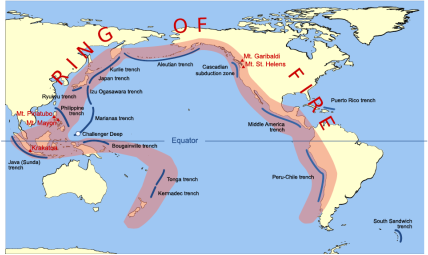
Pacific "Ring of Fire" (enlarged graphic). Source: Adapted from U.S. Geological Survey
Pacific “Ring of Fire” (enlarged graphic). Source: Adapted from U.S. Geological SurveyDownload Image

Climate change impact: The areas at risk of tsunami will increase as global mean sea level rises. According to the IPCC (2013), global mean sea level rise depends on a variety of factors, and estimates for 2100 range from ~20 cm to nearly 1 m. However, regional changes in sea level are difficult to predict. Projects in low-lying coastal areas such as deltas, or in island states should be designed to be robust to projected increases in global sea level.

Tiếp tục đọc “Tsunami Risk in Vietnam – Hazard level: Medium “

China wants to lead the world on AI regulation — will the plan work?

nature.com

Having placed artificial intelligence at the centre of its own economic strategy, China is driving efforts to create an international system to govern the technology’s use.

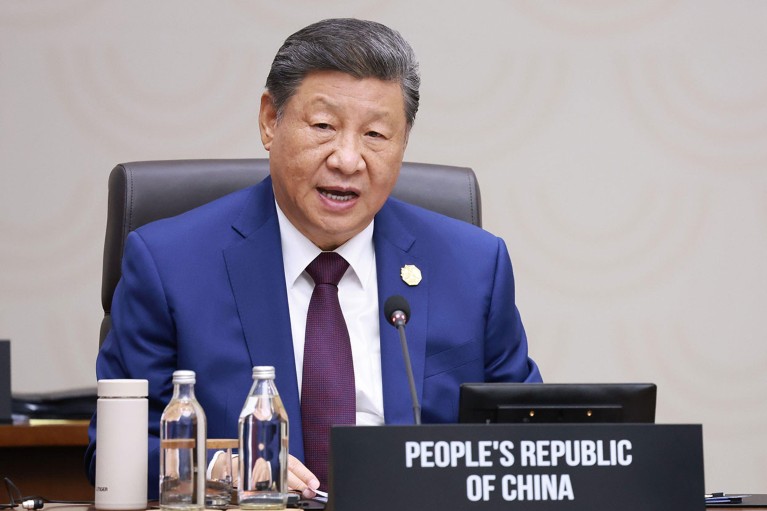
Chinese President Xi Jinping speaks at the APEC Economic Leaders' Meeting.
Chinese president Xi Jinping speaking at the 2025 Asia-Pacific Economic Cooperation meeting in Gyeongju, South Korea.Credit: Yonhap via AP/Alamy

Despite risks ranging from exacerbating inequality to causing existential catastrophe, the world has yet to agree on regulations to govern artificial intelligence. Although a patchwork of national and regional regulations exists, for many countries binding rules are still being fleshed out.

Tiếp tục đọc “China wants to lead the world on AI regulation — will the plan work?”