What are the High Seas (and why should we care?)

Mongbay.com Abhishyant Kidangoor 23 Oct 2024

High seas cover over half of our planet’s surface, and represent two-thirds of the entire ocean. They serve as a crucial habitat for countless marine species, many of which remain undiscovered. They also play a vital role in climate regulation. The high seas are also home to secret treasures that could potentially reshape medical science. Painkillers, antibiotics and many other drugs have been produced from genetic material found in the depths of the ocean.

Despite their immense ecological and medical importance, only 1% of these international waters are legally protected. Since they fall outside the jurisdiction of any country, high seas are not governed by anyone. This has led to patchy regulation and uncoordinated management, leaving them vulnerable to threats like overfishing, shipping traffic, and ocean acidification.

An international treaty aims to address these concerns. Last year, countries around the world agreed upon the Agreement on Marine Biodiversity of Areas Beyond National Jurisdiction (BBNJ Treaty) after decades of discussions and negotiations. The historic treaty aims to establish legal frameworks for the conservation and sustainable use of marine resources. The treaty has created a blueprint for countries that want to propose and create protected areas in the high seas. It tackles prior assessment of potentially damaging activities like deep sea mining while also trying to figure out a way to share and distribute marine resources in an equitable manner. Sixty countries will have to ratify the treaty before it goes into effect.

Watch this video to learn more about the high seas, the significance of the BBNJ treaty and the questions that remain unanswered

The Role of Traceability in Critical Mineral Supply Chains

Download report at IEA

As global demand for critical minerals grows, it will be important to anticipate and address the potential harms the mining and metals sector can have on societies, communities and the environment. Overlooking these risks can ultimately disrupt supply for clean energy technologies.

Traceability systems can, when used as part of a wider risk-based due diligence process, help meet emerging policy goals by providing ways to integrate data on origin, evolution, and ownership of minerals. Some traceability approaches can also provide a platform for embedding data on environmental, social and governance issues. To work effectively, however, traceability systems must be carefully designed – balancing standardisation and context, maintaining data quality, and adapting to varying supply chain complexities. They also require strong collaboration among companies, governments and civil society, backed by cost-sharing, reliable verification and secure data-sharing protocols. Above all, traceability should serve clear objectives rather than become an end in itself: policy makers and practitioners should adopt a measured approach, progressively deploying mechanisms where necessary while allowing for inclusive participation and access to markets and investment.

This report includes a practical eight-step roadmap, from setting policy objectives to building trust mechanisms, which can help ensure traceability systems are fit for purpose and aligned with the realities of global supply chains.

One year of global plastic waste visualized

voronoi.com

One year of global plastic waste visualized

The Data

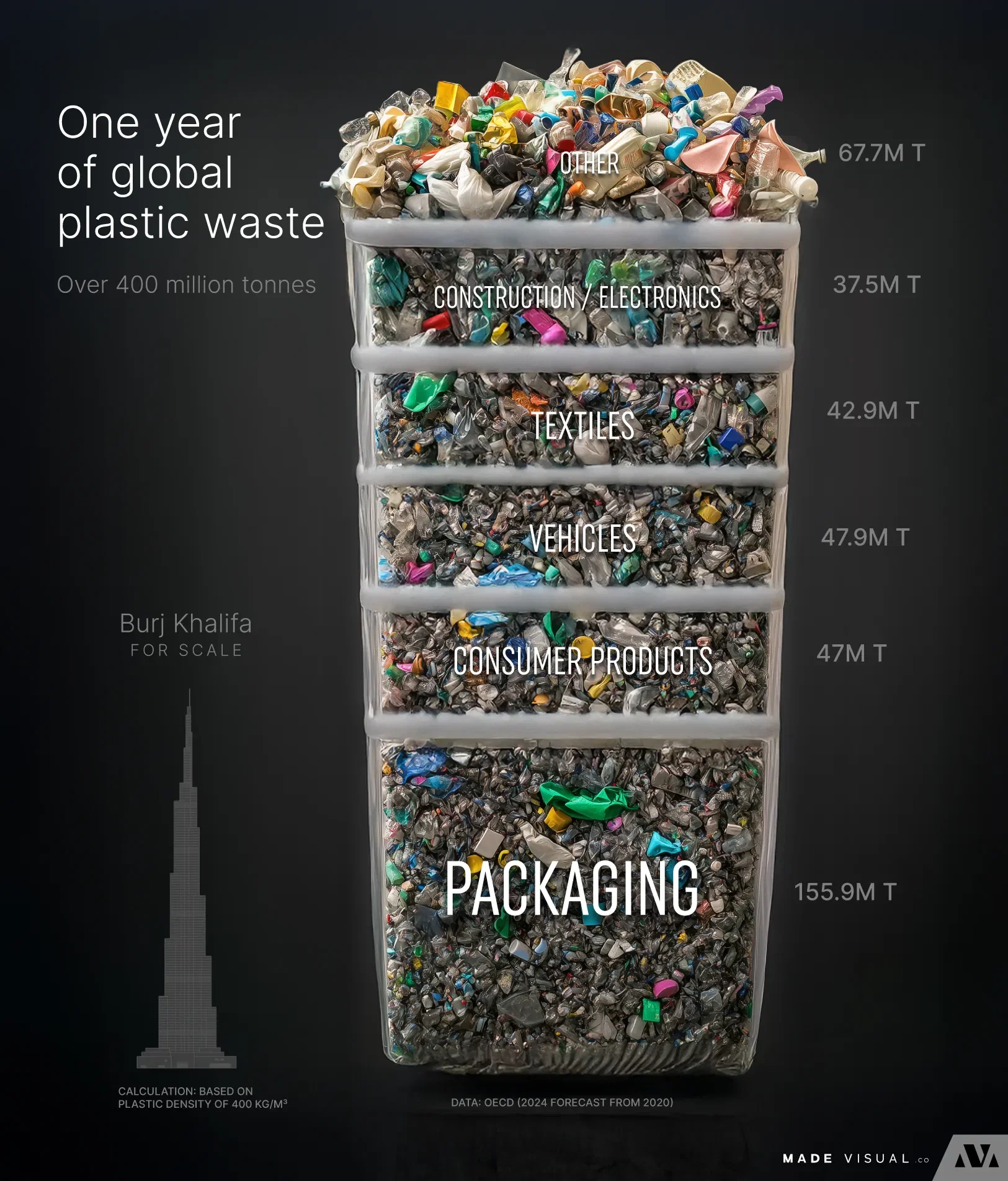
Over 400 million tonnes of plastic was projected to be wasted in 2024 according to an OECD report from 2020. Further, plastic waste is expected to nearly triple worldwide by 2060, with half of all waste expected to be in landfill while less than one-fifth of it will be recycled.

Unbelievably, if all this plastic waste were put in a kitchen bin and scaled up uniformly, this would double the height of the Burj Khalifa.

Dataset

CategoryWeight of Waste (Millions of Tonnes)
Other67.7
Construction/Electronics37.5
Textiles42.9
Vehicles47.9
Consumer Products47
Packaging155.9

Data sources

OECD, Statista

https://www.oecd.org/en/publications/policy-scenarios-for-eliminating-plastic-pollution-by-2040_76400890-en/full-report.html

https://www.statista.com/chart/32385/global-plastic-waste-production-by-application/

Thành viên tổ chức khủng bố ‘Chính phủ Quốc gia Việt Nam lâm thời’ bị bắt

VNE – Thứ sáu, 28/3/2025, 18:34 (GMT+7)

TP Huế – Nguyễn Xuân Bình, thành viên tổ chức khủng bố “Chính phủ Quốc gia Việt Nam lâm thời” bị cáo buộc chuẩn bị truyền đơn để rải vào dịp 30/4, nhằm lật đổ chính quyền.

Nguyễn Xuân Bình (trái) khi bị bắt giữ. Ảnh: Sông Hương

Ngày 28/3, Thượng tá Dương Văn Thoan, Phó giám đốc Công an thành phố Huế, cho biết cơ quan điều tra đã bắt tạm giam Bình, 49 tuổi, về hành vi Hoạt động nhằm lật đổ chính quyền nhân dân theo Điều 109 Bộ luật Hình sự.

Khám xét nơi ở của bị can, lực lượng chức năng thu giữ nhiều tài liệu, tang vật liên quan đến vụ án.

Tiếp tục đọc “Thành viên tổ chức khủng bố ‘Chính phủ Quốc gia Việt Nam lâm thời’ bị bắt”

It’s the world’s hottest car company. You can’t buy one in America

By John Liu and Hassan Tayir, CNN

 7 minute read 

Published 9:27 PM EDT, Wed March 26, 2025

BYD's logo is seen at a showroom in Warsaw, Poland on March 22, 2025.

BYD’s logo is seen at a showroom in Warsaw, Poland on March 22, 2025. Stringer/NurPhoto/Getty ImagesHong KongCNN — 

In the world of electric vehicles, there’s a Chinese company outdoing Elon Musk’s Tesla. And it’s just getting started.

BYD, the Shenzhen-based Chinese EV champion, eclipsed Tesla in annual sales last year. Last week, it unveiled a revolutionary battery charging technology that it says adds 250 miles of range in five minutes, outpacing Tesla’s Superchargers, which take 15 minutes to add 200 miles. And last month, BYD launched “God’s Eye,” an advanced driver-assistance system rivaling Tesla’s Full Self-Driving feature, at no extra cost for most of its cars.

Tiếp tục đọc “It’s the world’s hottest car company. You can’t buy one in America”

UN exposes companies involved in Israeli settlements

amnesty.uk.org

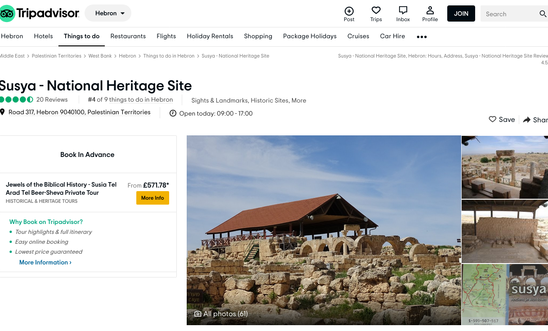
TripAdvisor listing of settler-managed historical sight on Palestinian land

TripAdvisor listing of settler-managed historical sight on Palestinian land

The image above is a TripAdvisor listing of a heritage site managed by settlers in the village of Susiya – on Palestinian land. The UN has released a list of over 100 other companies that also have business interests in Israeli settlements built on Palestinian land.

But why is this a problem?

Illegal Settlements

In 1967, Israel began the process of building settlements on occupied Palestinian territory.

Firstly, what is a settlement?

It is Israel’s building of villages, towns and cities on occupied Palestinian territory.

What makes them illegal?

The transfer of Israeli civilians to these settlements is illegal under international law. In fact it is a war crime according to the Rome Statute of the International Criminal Court.

Hundreds of thousands Displaced

Since 1948, hundreds of thousands of Palestinians had to flee their homes to escape violence or were forcibly removed. Not just their they lost their land and businesses too. Many are remain in refugee camps till this day. Here they have become parents and even grand parents.

Suffocating laws

Some Palestinians stayed behind and refused to give up their land. Their lives have been made impossible as consecutive governments have introduced discriminatory laws and policies, in the hope they will eventually leave. But as the settlements continue to expand some are still standing their ground.

What TripAdvisor doesn’t show you

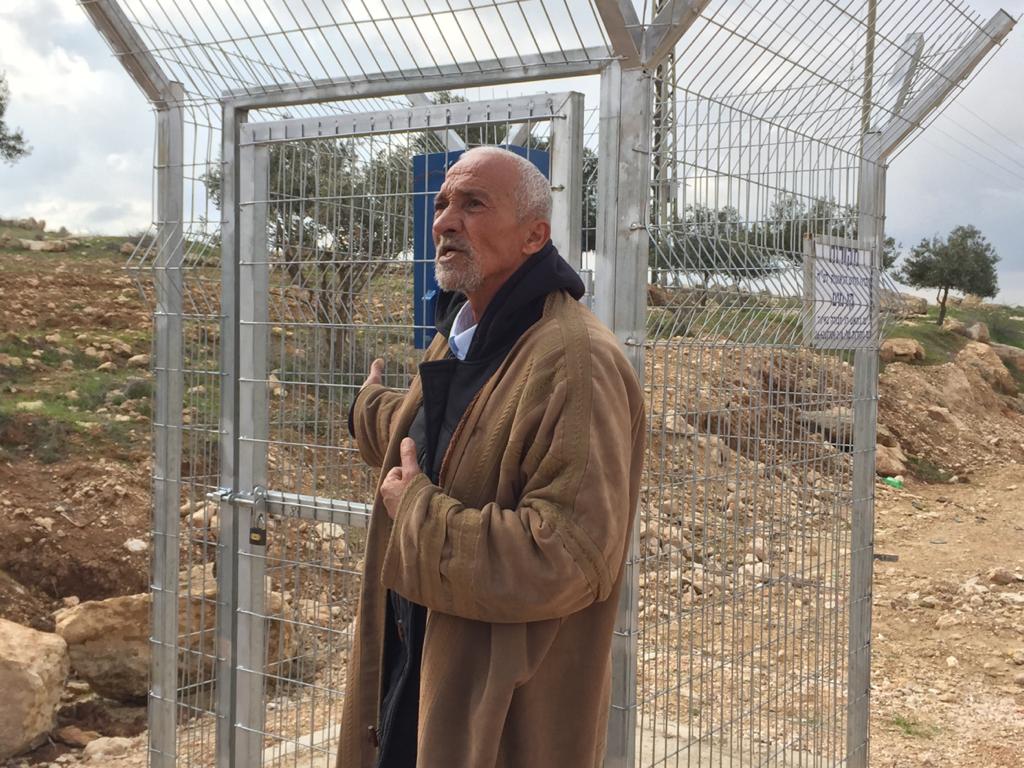
(A resident of Susiya shows us a water system installed on his land for the sole benefite of the nearby settlement)

The Palestinian village of Susiya, in the occupied West Bank is home to around 300 Palestinians. The village has a few tents and shacks, a couple of water cisterns and some sheep. There is no access to electricity or running water.

Tiếp tục đọc “UN exposes companies involved in Israeli settlements”

How U.S. Corporations sterilized thousands worldwide – No sperm, no kids

AJ+ – 14-3-2025

Tens of thousands of former farmworkers claim they’ve been rendered sterile by a highly toxic pesticide known as DBCP, unable to ever have children.

Though DBCP was banned by the U.S. government in the 70s, U.S. fruit companies continued to use it abroad in poorer countries with fewer regulations.

Decades later, these farmworkers are still fighting for justice, filing lawsuits against some of the world’s biggest corporations. Yara travels to Costa Rica to investigate one of the most devastating occupational health disasters in history.

Singapore: Investigating exploitation and abuse of young domestic workers

Al Jazeera English – 12-3-2025

There are more than 200,000 foreign domestic workers in Singapore.

Under the law, they have to be at least 23 years old.

But one NGO says it is seeing more and more minors at its shelter for abused maids.

Most of these girls come from Myanmar, where investigations reveal a web of deceit and corruption in the recruitment process, and immigration officials are regularly bribed to doctor birthdates on travel documents.

Because of their youth, the girls are often easy targets for abusive employers and sexual predators.

But just how bad is the problem and what is being done to remedy it? 101 East investigates.

Chihombori-Quao: USAID was ‘a wolf in sheep’s clothing’ in Africa

Al Jazeera English – 17-3-2025

Far from being a tragedy for Africa, the demise of the United States Agency for International Development (USAID) at the hands of President Donald Trump’s administration should be cause for celebration, argues Arikana Chihombori-Quao, the former ambassador of the African Union to the US.

Chihombori-Quao tells host Steve Clemons that USAID doesn’t have much to show for its decades of education and healthcare projects in Africa and often destabilised countries under the guise of environmental, human rights or social justice agendas.

And if the US is not interested in Africa, African leaders shouldn’t beg for better relations, she said. “It takes two to tango,” the former diplomat said.

Vietnam targets Chinese dolls over South China Sea ‘map’

South China Morning Post – 20-3-2025

Vietnam is stepping up inspections of a line of children’s toys over concerns that imagery on the face of one product resembles a map China uses to stake its claim to disputed areas in the South China Sea. The investigation was launched after local media reported that a version of widely sold Baby Three toys, many of which are made in China, featured a design that was viewed as similar to Beijing’s maritime map.

How the climate crisis fuels gender inequality

The climate crisis may be a collective problem, but its impacts do not fall equally. Women and girls often bear the heaviest burdens.

November 30, 2023

Editor’s note

This story is part of As Equals, CNN’s ongoing series on gender inequality. For information about how As Equals is funded and more, check out our FAQ.

Climate change acts as a threat multiplier, finding existing injustices and amplifying them. Women and girls already grapple with gender inequality, but when extreme weather devastates a community, the UN found that inequalities worsen: Intimate partner violence spikes, girls are pulled from school, daughters are married early, and women and girls forced from their homes face a higher risk of sexual exploitation and trafficking.

“When we look at who’s affected worse, who’s on the frontlines of the climate crisis, it’s primarily women — women in poor and vulnerable countries,” Selwin Hart, UN Special Adviser to the Secretary-General on Climate Action and Just Transition, told CNN. “And unfortunately, our policies or strategies are really not geared to address this challenge.”

To explore the complex links between gender and climate change, CNN worked with seven women photojournalists who spent time with women and girls in seven countries across the Global South to document the challenges they face.

This visual project gives a snapshot of the myriad ways the human-induced climate crisis is upending their lives, but also shows how they are fighting back. Every image shows both struggle and survival, the battle to live a decent life in a swiftly changing climate.

Girls’ education in Nigeria

The Center for Girls’ Education runs a series of programs in Nigeria to help girls stay in school. One in every five of the world’s children who are out of school is in Nigeria, according to UNICEF, and it is girls who are impacted the most.

Photographs by Taiwo Aina for CNN

More than 10 million children between 5 and 14 years old are absent from classrooms across Nigeria, according to UNICEF. For girls, the statistics are even bleaker: In states in the northeast and northwest of the country, fewer than half attend school.

This education crisis is the result of a tangle of factors, including poverty, geography and gender discrimination, the UN agency adds. But against the backdrop of these individual factors is the broader context of the climate crisis.

Nigeria is growing hotter and dryer, and extreme weather such as flash floods and landslides are becoming fiercer and more frequent. Climate disasters can make schools inaccessible and classrooms unsafe. Communities struggling to cope with extreme weather sometimes turn to their children to help or to earn extra money to support the family. And girls, whose attendance at school is already discouraged in some communities, are often most affected.

For every additional year the average girl attends school, her country’s resilience to climate disasters can be expected to improve by 3.2 points on an index that measures vulnerability to climate-related disasters, according to estimates from the Brookings Institution.

There are efforts to support girls’ education and equip them with the resources to cope with a fast-changing climate. The Center for Girls’ Education in the northern Nigerian city of Zaria runs programs to help girls stay in school and offers training on how to cope with the impacts of extreme weather.

“I feel when we give the girls education on climate change, how to mitigate it, it will go a long way in helping the girls in how to support themselves in times of difficulties, and even help them prepare for it,” said Habiba Mohammed, director of the Center for Girls’ Education.

Asiya Sa’idu, 17

Tiếp tục đọc “How the climate crisis fuels gender inequality”

Vietnam and China partner on wildlife-friendly traditional medicine practices


Mongabay.com

Vietnam and China, the two largest markets for traditional medicine (TM) that uses wild plants and animals, announced a new partnership in January to adopt practices that protect wildlife while preserving the countries’ cultural heritage.

The first-of-its-kind agreement involved leading TM associations from Vietnam and China — the Vietnam Oriental Traditional Medicine Association (VOTMA) and the China Association of Traditional Chinese Medicine (CATCM) — along with researchers, policymakers and pharmaceutical leaders. TRAFFIC, an international NGO monitoring illegal wildlife trade, facilitated it.

The partnership aims to explore “several sustainable practices to make traditional medicine more conservation-friendly,” said TRAFFIC Vietnam director Trinh Nguyen in a statement to Mongabay. She said these include encouraging practitioners to switch to legal, sustainable and cultivated plant-based alternatives, and eliminating illegal wildlife ingredients in prescriptions.

Historical TM practices in the two countries have incorporated wildlife-derived ingredients, including those from threatened species, such as tiger bonespangolin scalesrhino horns and bear bile. While many such ingredients are legal to trade inside China, the wildlife parts are often sourced from other countries to meet domestic demand. Many of the threatened species are, however, listed on CITES Appendix I, making the international trade in their parts illegal. As TM becomes popular globally, conservationists worry about its impact on wildlife.

Tiếp tục đọc “Vietnam and China partner on wildlife-friendly traditional medicine practices”

Plastic is choking the Mekong River

themekongeye.com By Anton L. Delgado 20 January 2025 at 10:54

Plastic is now ubiquitous in the Mekong, Asia’s Mother of Rivers, and experts and local people are struggling to contain the risks to human health, biodiversity and livelihoods

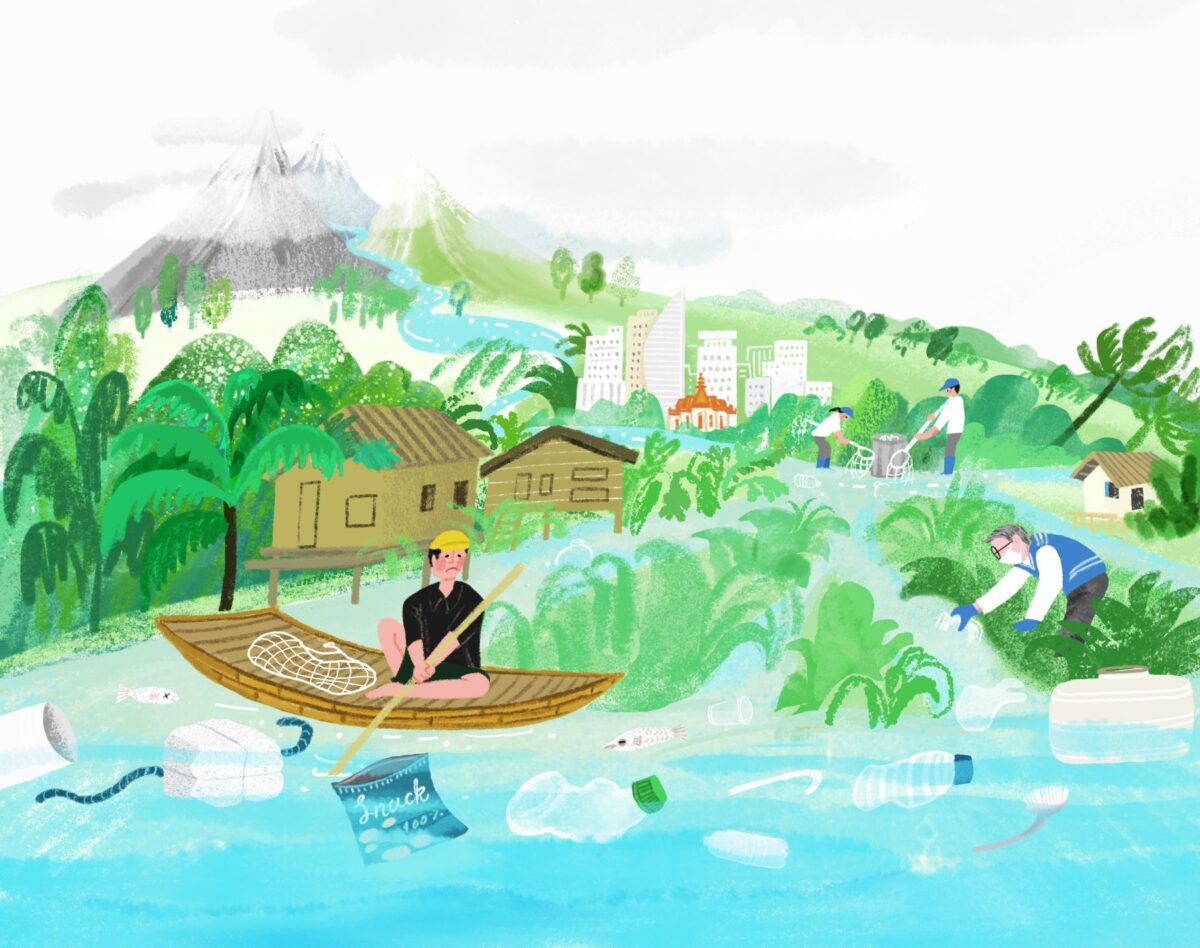
ILLUSTRATION: Sunhee Park / Dialogue Earth

On Sơn Island in Viet Nam’s Mekong Delta, Le Trung Tin scatters fish feed into his ponds, where dozens of snakehead fish leap through the surface in synchronized bursts. “I taught them how to do that,” he says proudly, tossing another handful of feed at his fish.

The scene looks idyllic, but Le’s fish farm is a reluctant response to an escalating crisis. For decades, he made his living fishing the Hậu River, a distributary of the Mekong. But in recent years, plastic waste clogged his nets and strangled the fish. “I had no choice but to stop,” he says. “Everything was tangled – trash, nets, even the fish themselves. It was hopeless.”

Now, Le relies on enclosed ponds using filtered water to keep his fish alive. “I built this ecological environment free of plastic waste, chemical spills and [protected it from] extreme weather,” he says.

https://player.vimeo.com/video/1037846174?dnt=1&app_id=122963VIDEO: Anton L. Delgado/Dialogue Earth

Le’s experience reflects the wider challenges facing the Mekong. Stretching over 4,300 kilometres from the Tibetan Plateau to the South China Sea, the river supports nearly 70 million people and some of the world’s most biodiverse ecosystems. Yet, it is one of the most plastic-polluted rivers in the world and among the 10 rivers in Asia that carry the vast majority of plastic to the sea. The Mekong dumps – by some estimates – tens of thousands of tonnes each year into the ocean, with plastic waste accumulating along its banks, tributaries and lakes.

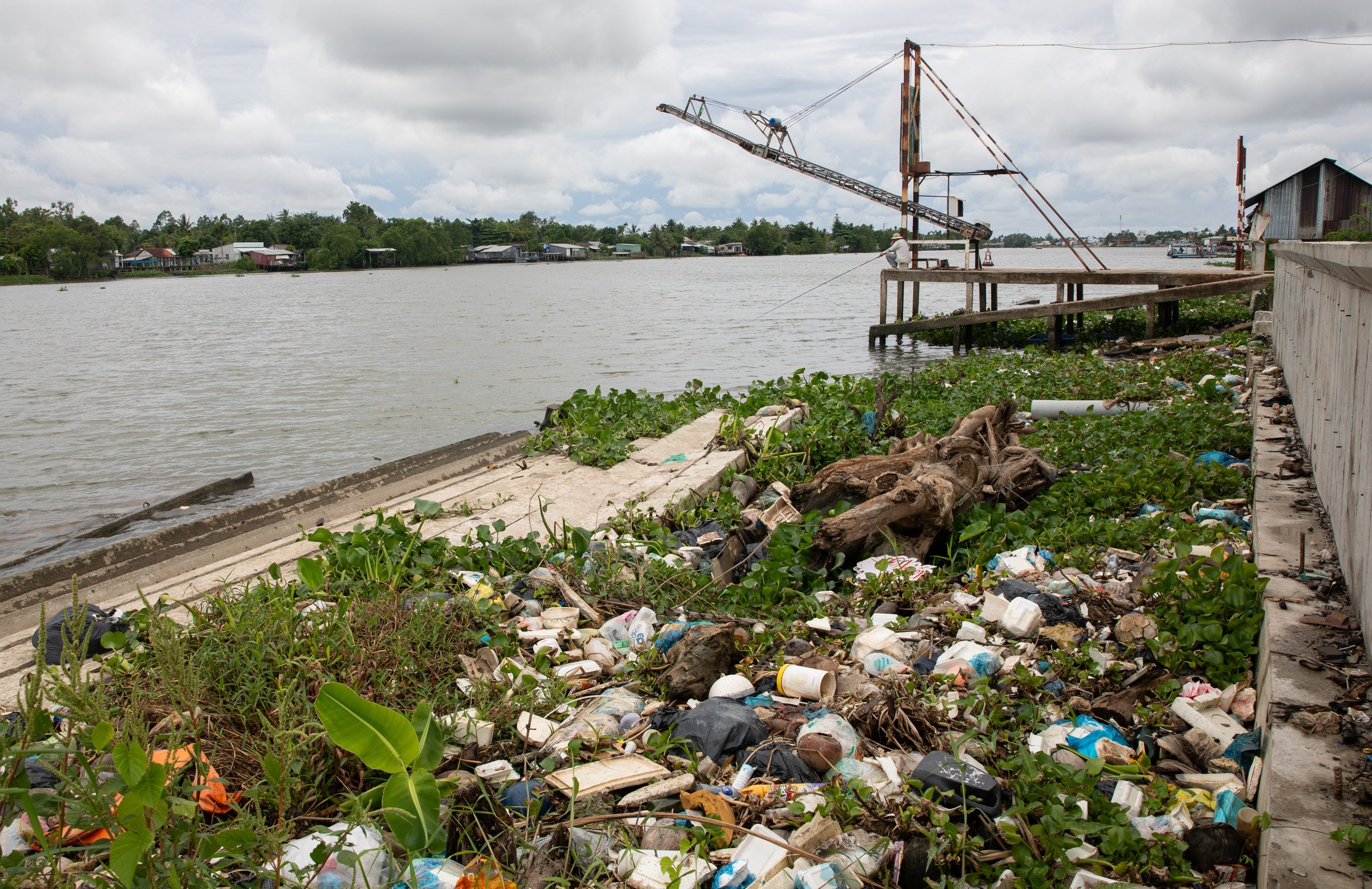
Plastic enters the Mekong in myriad ways – agricultural runoff, unregulated dumping and a flood of single-use packaging from upstream countries like China and Myanmar. It accumulates in hotspots like Tonle Sap Lake in Cambodia and the wetlands of Vietnam’s Mekong Delta, where this plastic waste threatens biodiversity, food security and human health.

Plastics and other waste scattered along the riverbank
Plastics and other waste accumulate along the riverbank near the city of Can Tho in Vietnam’s Mekong Delta region. PHOTO: Anton L. Delgado / Dialogue Earth

Tiếp tục đọc “Plastic is choking the Mekong River”