The world is reducing its reliance on fossil fuels – except for in three key sectors

theguardian.com

Dramatic changes in energy industry and EVs reducing fossil fuel use, but shipping, aviation and industry a long way from net zero

@olliemilmanFri 9 Feb 2024 12.00 GMT

Humanity has made some uneven progress in reducing our addiction to fossil fuels – but there remain three areas of our lives in which we are notably not on track to kick the habit over the next 30 years, according to a new analysis.

Record levels of investment in clean energy (solar has been called the cheapest source of electricity in history by the International Energy Agency) and a decline in coal-powered generation means less and less of the world’s power will come from fossil fuels between now and 2050, the analysis from Rhodium shows.

Similarly, the blossoming electric vehicle market is going to drive down emissions from cars and trucks, with global oil consumption for on-road vehicles set to drop by 50% over the next three decades, the forecast finds.

But even with these dramatic changes reshaping two of the world’s hungriest consumers of fossil fuels, emissions are still a long way from hitting net zero by 2050, as scientists say they must if dangerous global heating – spurring worsening heatwaves, floods, droughts and more – is to be avoided.https://interactive.guim.co.uk/uploader/embed/2024/02/archive-zip/giv-13425ZCBwhBxEyLin/

A major reason for this is the stubborn, ongoing carbon pollution from three areas: aviation, shipping and industry.

.https://interactive.guim.co.uk/uploader/embed/2024/02/archive-zip/giv-13425v3zDOTaHHQGz/

There is currently no widespread alternative to jet fuel or ship diesel, meaning steady or even rising fossil fuel use as developing countries’ economies grow. A range of industrial processes – such as cement-making and the production of plastic – will collectively fail to meaningfully cut carbon-intensive fuels by 2050, too.

“We’ve made a lot of progress in the last few years – wind and solar are really poster children of success and electric vehicles are at a turning point now,” said Hannah Pitt, associate director at Rhodium, which made the projections based on anticipated policies until 2050.

“That makes up a good chunk of emissions but there is much less progress in other sectors. With aviation and shipping, there’s just not as much innovation and no clear cost-effective alternatives to fossil fuels.

“And then we have industrial processes that make up a huge fraction of emissions and each require their own tools and innovations to bring that down, and emissions are staying stubbornly high.”

All told, global fossil fuel use will likely flatten or decline by mid-century before starting to grow again due to rising energy demand in various parts of the world, according to the report’s projections. Gas will lead the way, rising significantly in use even as oil and coal decline.https://interactive.guim.co.uk/uploader/embed/2024/02/archive-zip/giv-13425v3zDOTaHHQGz/

Pitt said we are still a long way from breaking our dependence on fossil fuels in everything from switching on a light at home, to driving a car, to getting an Amazon package delivered, to flying to a holiday destination.

“The success with renewables and EVs shows it can be done, but it really will take a lot of different policies and innovations. There’s no one solution,” said Pitt.

“This is a good reminder that climate change touches every piece of our economies, and it needs solutions to each of those areas. There is a lot of work to do.”

International business in Russia risks slipping from compliance to complicity

businesshumanrights.org

Moscow City Towers on the bank of Moskva River

On 21 September, 2022, an IT specialist with the Austrian Raiffeisen Bank, Timur Izmailov, was leading a normal life in Moscow. Three weeks later Izmailov found himself serving as a soldier in Russia’s 27th motorized rifle brigade near the Ukrainian city of Svatove, when he was eventually killed by mortar fire. How does a 33-year-old techie make his way from his cubicle to the frontline of an unprovoked war in a neighbouring democratic state?

Timur’s journey began on 24 February, 2022, when President Vladimir Putin ordered the all-out military invasion of Ukraine in continuation of a war started in 2014. The response was immediate. The Ukrainian people and their leadership — with the support of the democratic allies — have defended themselves against armed aggression despite gross human rights violations.

Western sanctions imposed on Russia created an extremely hostile commercial environment for companies such as Raiffeisen to continue their operations in the aggressor state. Many international firms pulled out, announcing plans to leave or suspend activity in Russia. But many more international companies continue to operate and pay taxes, thus contributing to the occupation of Ukraine and undermining the financial support provided to Ukraine by their own governments.

On 21 September 2022, President Vladimir Putin issued the mobilization decree that obliged companies to immediately assist in conscripting soldiers and help equip the Russian army. The results of this piece of legislation were immediately felt by many, including Timur Izmailov. Raiffeisen’s attempts to shield their staff from the draft failed.

How do bank employees in other countries feel knowing this is happening to their colleagues in Russia? How does a client of Raiffeisen based in Vienna feel, knowing the employees of his bank might soon become soldiers sent to the battlefield to kill innocent civilians in Ukraine?

An additional stopover on the companies’ journey from compliance to complicity happened last July, when Putin signed a new law allowing the government to impose special economic measures to support “counter-terrorism and other operations outside of Russia”. Once introduced, such measures would require companies to provide goods and services in support of these operations and impose significant penalties for failing to do so. In accordance with the law of 7 October 2022, the Russian subsidiary of Raiffeisen Bank International is now obliged to provide loan payment holidays to the troops fighting in Ukraine. Moreover, the bank is required to write off the entire debt in case of a soldier’s death. This legal requirement concerns other financial institutions that still operate in Russia, namely Intesa Sanpaolo, OTP Bank, ING Bank, Credit Agricole, Citibank, Credit Europe Bank and UniCredit.

This loan relief scheme has already triggered criticism from Ukraine’s central bank, as well as from investors concerned about reputational impact. The requirement for banks to grant payment holidays to soldiers “illustrates the dangers of operating in jurisdictions where companies can…be forced into actions that go directly against their corporate values,” said Eric Christian Pederson of Nordea Asset Management. “We feel that it is right for companies to withdraw from Russia, given its unprovoked attack on Ukraine,” he added.

Tiếp tục đọc “International business in Russia risks slipping from compliance to complicity”

First they came…- Martin Niemöller

Friedrich Gustav Emil Martin Niemöller (14 January 1892 – 6 March 1984) was a German theologian and Lutheran pastor. He is best known for his opposition to the Nazi regime during the late 1930s and for his widely quoted 1946 “First they came …

In Germany they first came for the Communists,
and I didn’t speak up because I wasn’t a Communist.
Then they came for the Jews,
and I didn’t speak up because I wasn’t a Jew.
Then they came for the trade unionists,
and I didn’t speak up because I wasn’t a trade unionist.
Then they came for the Catholics,
and I didn’t speak up because I was a Protestant.
Then they came for me
and by that time no one was left to speak up.

Visitors stand in front of the quotation from Martin Niemöller that is on display in the Permanent Exhibition of the United States ... [LCID: img4857]

Museum visitors in front of the Martin Niemöller quotation

Visitors stand in front of the quotation from Martin Niemöller that is on display in the Permanent Exhibition of the United States Holocaust Memorial Museum. Niemöller was a Lutheran minister and early Nazi supporter who was later imprisoned for opposing Hitler’s regime.

“Tiếng Việt từ TK 17: các cách dùng trống một, giữ/cầm canh, nhà điếm/ dỏ, trắc ảnh, thì – giờ” (phần 42)


      Nguyễn Cung Thông

Phần này bàn về các cách dùng trống một, trống hai, giữ canh, cầm canh, nhà điếm, tuần điếm từ thời LM de Rhodes và các giáo sĩ Tây phương sang Á Đông truyền đạo, cũng như các cách nói liên hê như đêm năm canh. Đây là lần đầu tiên cách dùng này hiện diện trong tiếng Việt qua dạng con chữ La Tinh/Bồ (chữ quốc ngữ), điều này cho ta dữ kiện để xem lại một số cách đọc chính xác hơn cùng với các dạng chữ Nôm cùng thời hay sau đó. Phần sau bàn thêm về chữ thì và các dạng biến âm đã có từ TK 17 như giờ, giây …

Tài liệu tham khảo chính của bài viết này là các tài liệu chữ Nôm của LM Maiorica, các bản chép tay của LM Philiphê Bỉnh (sđd) và bốn tác phẩm của LM de Rhodes soạn: (a) cuốn Phép Giảng Tám Ngày (viết tắt là PGTN), (b) Bản Báo Cáo vắn tắt về tiếng An Nam hay Đông Kinh (viết tắt là BBC), (c) Lịch Sử Vương Quốc Đàng Ngoài 1627-1646 và (d) từ điển Annam-Lusitan-Latinh (thường gọi là Việt-Bồ-La, viết tắt là VBL) có thể tra tự điển này trên mạng, như trang http://books.google.fr/books?id=uGhkAAAAMAAJ&printsec=frontcover#v=onepage&q&f=false.

Các chữ viết tắt khác là Nguyễn Cung Thông (NCT), Hán Việt (HV), Việt Nam (VN), ĐNA (Đông Nam Á), TQ (Trung Quốc), LM (Linh Mục), CG (Công Giáo), PG (Phật Giáo), TVGT (Thuyết Văn Giải Tự/khoảng 100 SCN), NT (Ngọc Thiên/543), ĐV (Đường Vận/751), NKVT (Ngũ Kinh Văn Tự/776), LKTG (Long Kham Thủ Giám/997), QV (Quảng Vận/1008), TV (Tập Vận/1037/1067), TNAV (Trung Nguyên Âm Vận/1324), CV (Chính Vận/1375), TVi (Tự Vị/1615), VB (Vận Bổ/1100/1154), VH (Vận Hội/1297), LT (Loại Thiên/1039/1066), CTT (Chính Tự Thông/1670), TViB (Tự Vị Bổ/1666), TTTH (Tứ Thanh Thiên Hải), KH (Khang Hi/1716), P (tiếng Pháp), A (tiếng Anh), L (tiếng La Tinh), VNTĐ (Việt Nam Tự Điển/Hội Khai Trí Tiến Đức), TNNL (Thiên Nam Ngữ Lục) …v.v… Kí viết là ký (tên người, tên sách) và trang/cột/tờ của VBL được trích lại từ bản La Tinh để người đọc tiện tra cứu thêm. Tương quan Hán Việt ghi nhận trong bài không nhất thiết khẳng định nguồn gốc của các từ liên hệ (có gốc Việt cổ hay Hán cổ).

What is the conventional notation for these logic statements?

math.stackexchange

When I studied chemical engineering I often found the need to rewrite lecture notes, handouts and books in order to gain a thorough understanding of the subject I was reading. As much as time permitted I used to draw mindmaps of the reading material combining the symbols on the left in the image below:

The first ones are probably known, but some of these may need some explanation. I will list all of them with my own explantions to make clear what I mean.

  1. B is a part of A. B is a subset of A. B is a property of A.
  2. B is partly a part of A. B is a almost a subset of A. B is to a very small degree a property of A.
  3. A equals B. A and B are the same thing.
  4. B is a consequence of A. If A happens then B happens as a consequence.
  5. A becomes B. First there is only A, later there is only B.
  6. This describes a process or a verb. A is put into B. Example: A reactant (A) is fed into a reactor (B).
  7. A affects property B and causes a decrease, and B is a property of some other object as drawn in 1.
  8. A affects property B and causes an increase, and B is a property of some other object as drawn in 1.
  9. A intends to cause B to come into existance. Example: A company (A) strives to create profit (B).
  10. A strives/wants/intends to become B. Example: One strives to keep the concentration of reactant (A) in a reactor to be 0.1 mol/liter (B).

What are the conventional mathematical names and symbols used to denote these relations above?

Answer

Toàn cảnh làn sóng biểu tình của người nông dân trên khắp châu Âu

baotintuc – Thứ Sáu, 09/02/2024 07:45

Nông dân châu Âu đang tổ chức các cuộc biểu tình trên khắp châu lục với máy kéo, máy cày làm tắc nghẽn đường phố và các cửa khẩu, bất mãn trước các chính sách nông nghiệp của khối liên minh.

Đường phố Montoyer (Brussels, Bỉ) bị máy kéo chặn trong cuộc biểu tình của nông dân vào ngày 1/2. Ảnh: Getty

“Chúng tôi đã không còn thể kiếm sống bằng nghề của mình nữa”, một người nông dân tại Pháp nói với phóng viên CNN.

Trong khi một số cuộc biểu tình căng thẳng nhất diễn ra ở Pháp, tình hình tương tự cũng diễn ra ở nhiều quốc gia bao gồm Italy, Tây Ban Nha, Romania, Ba Lan, Hy Lạp, Đức, Bồ Đào Nha và Hà Lan.

Tiếp tục đọc “Toàn cảnh làn sóng biểu tình của người nông dân trên khắp châu Âu”

Corn in peril: Viet Nam’s Hmong struggle to save indigenous seeds

Mekongeye.com

By Khang A Tủa and Alex Nguyễn 29 January 2024 at 18:36 (Updated on 30 January 2024 at 10:29)

After decades of pursuing development goals, Hmong people in northern Viet Nam face a battle to preserve disappearing indigenous corn

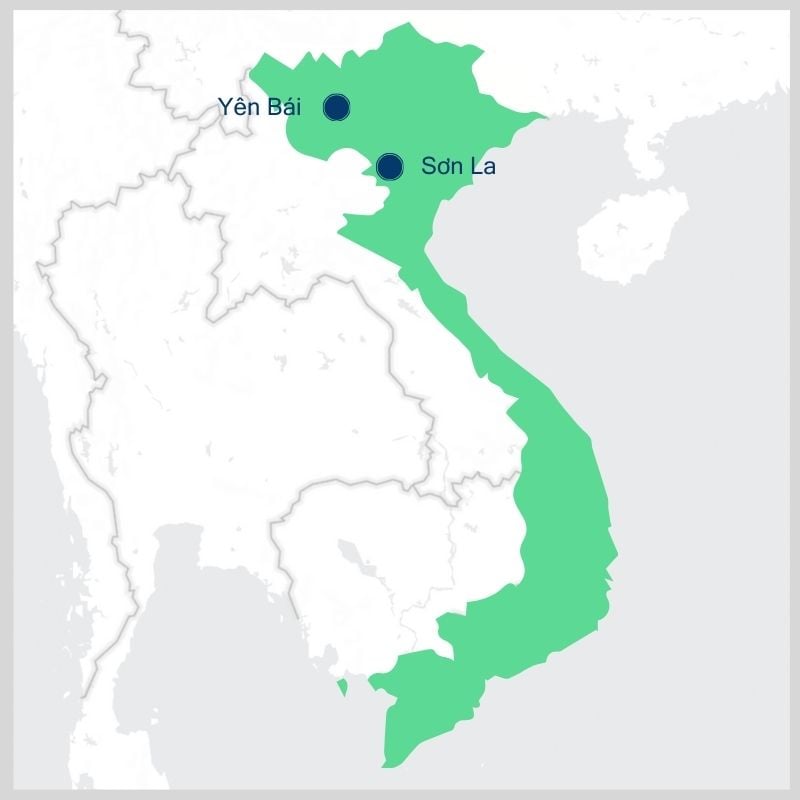
Cúa bua (in Vietnamese), or quav npua (in Hmong) , an indigenous corn variety in Chế Cu Nha, Mù Cang Chải district, Yên Bái province.

YÊN BÁI & SƠN LA, VIET NAM – Early one winter morning, Khang Chờ Dê of Chế Cu Nha hamlet in Yên Bái province was woken by loud knocking on his door. Sào, his relative, needed some red corn kernels, an indigenous crop used by Hmong people in northern Viet Nam for spiritual offerings to ward off bad luck.

The son of a shaman, Dê understood the importance of red corn in ritual practices. He quickly took some kernels from his kitchen, wrapped them up neatly and handed them to his relative.

Back in bed, the 46-year-old farmer pondered the scarcity of the indigenous cúa bua (in Vietnamese), or quav npua (in Hmong)corn seeds in Chế Cu Nha, his family’s ancestral home. For generations, indigenous corn crops have been essential to Hmong spiritual and cultural traditions, as well as helping to strengthening their autonomy in agricultural cultivation.

Source: Mapbox
Tiếp tục đọc “Corn in peril: Viet Nam’s Hmong struggle to save indigenous seeds”

Oil firms forced to consider full climate effects of new drilling, following landmark Norwegian court ruling

theconversation.com Published: January 31, 2024 12.02pm GMT

Norway’s district court in Oslo recently made a decision on fossil fuels that deserves the attention of every person concerned about climate change.

This ruling, which compels energy firms to account for the industry’s entire carbon footprint, could change the way oil and gas licenses are awarded in Norway – and inspire similar legal challenges to fossil fuel production in other countries.

The court ruled that three petroleum production licenses, held by energy companies including Equinor and Aker BP, were invalid largely due to the lack of consideration that had been given to so-called “downstream emissions”. That is, emissions from burning the petroleum that these firms would extract from the North Sea (also called scope 3 emissions).

This case is a big win for environmental campaigners who have tried to make oil and gas companies account for the emissions that come from burning their products. Similar efforts have been defeated in legal challenges elsewhere over the last few years.

Our mission is to share knowledge and inform decisions.

About us

Tiếp tục đọc “Oil firms forced to consider full climate effects of new drilling, following landmark Norwegian court ruling”

Getting Them On Board: Partners and Avenues for European Engagement in Indo-Pacific Maritime Security

The Hague Centre for Strategic Studies

January 30, 2024 Download PDF

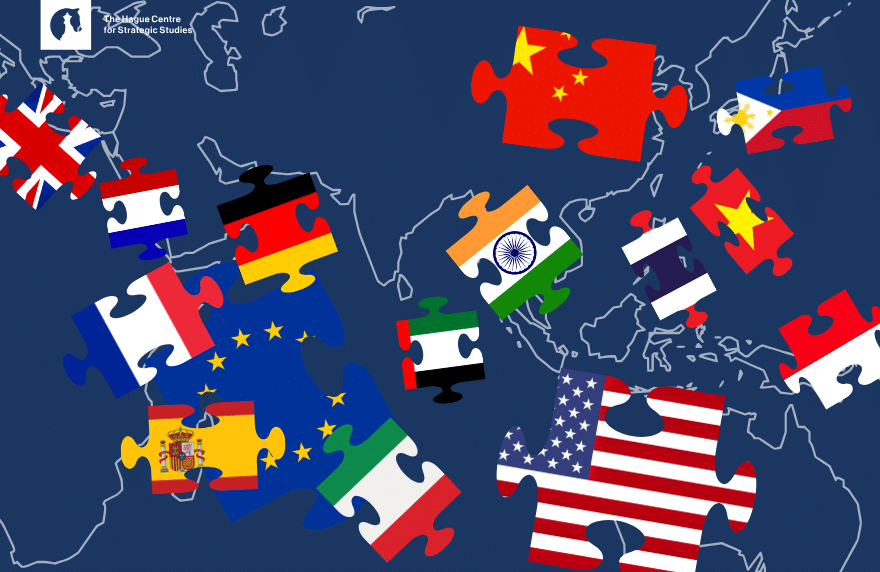
How should Europe strengthen its engagement with the Indo-Pacific? While the continent is highly dependent on trade from the region, it has limited capabilities to protect its interests in the face of growing Sino-American competition. This new HCSS report by Paul van Hooft, Benedetta Girardi and Alisa Hoenig examines how European states can engage in the Indo-Pacific by deepening cooperation with regional powers.

The Indo-Pacific comprises many actors, which are positioned along key chokepoints and share geopolitical and geoeconomic interests in protecting crucial sea lines of communication with Europe. This report does two things to establish pathways for deeper European engagement with Indo-Pacific states:

  • Based on relevance for maritime security and political affinity with European countries, it assesses the suitability of regional states as partners. Besides the usual suspects Australia, Japan and South Korea, it identifies an “inbetweener” group of countries, with whom cooperation can be fruitful but is not guaranteed, and states with whom engagement is unlikely to yield beneficial results.
  • It then zooms in on the “inbetweeners” to determine pathways for deepening ties. By comparing bilateral relations between different European and Indo-Pacific states along security, trade and investment, and capacity-building and infrastructure, the authors identify relative strengths and weaknesses of European states. Finally, they also contrast Europe’s involvement with that of China and the United States.

Based on the analysis, the report recommends to strengthen European collaboration with more ambivalent Indo-Pacific states, with a focus on trade and investment and capacity-building in the short- to medium-term.

This report is published by the HCSS Europe and the Indo-Pacific Hub (EIPH), and part of the series Guarding the Maritime Commons.

Authors: Benedetta Girardi, Paul van Hooft and Alisa Hoenig. Contributors: Giovanni Cisco.

The research for and production of this report has been conducted within the PROGRESS research framework agreement. Responsibility for the contents and for the opinions expressed, rests solely with the authors and does not constitute, nor should be construed as, an endorsement by the Netherlands Ministries of Foreign Affairs and Defence.

Japanese trading giant Itochu to cut ties with Israeli defense firm over Gaza war

By Juliana Liu and Chie Kobayashi, CNN

Published 2:57 AM EST, Tue February 6, 2024

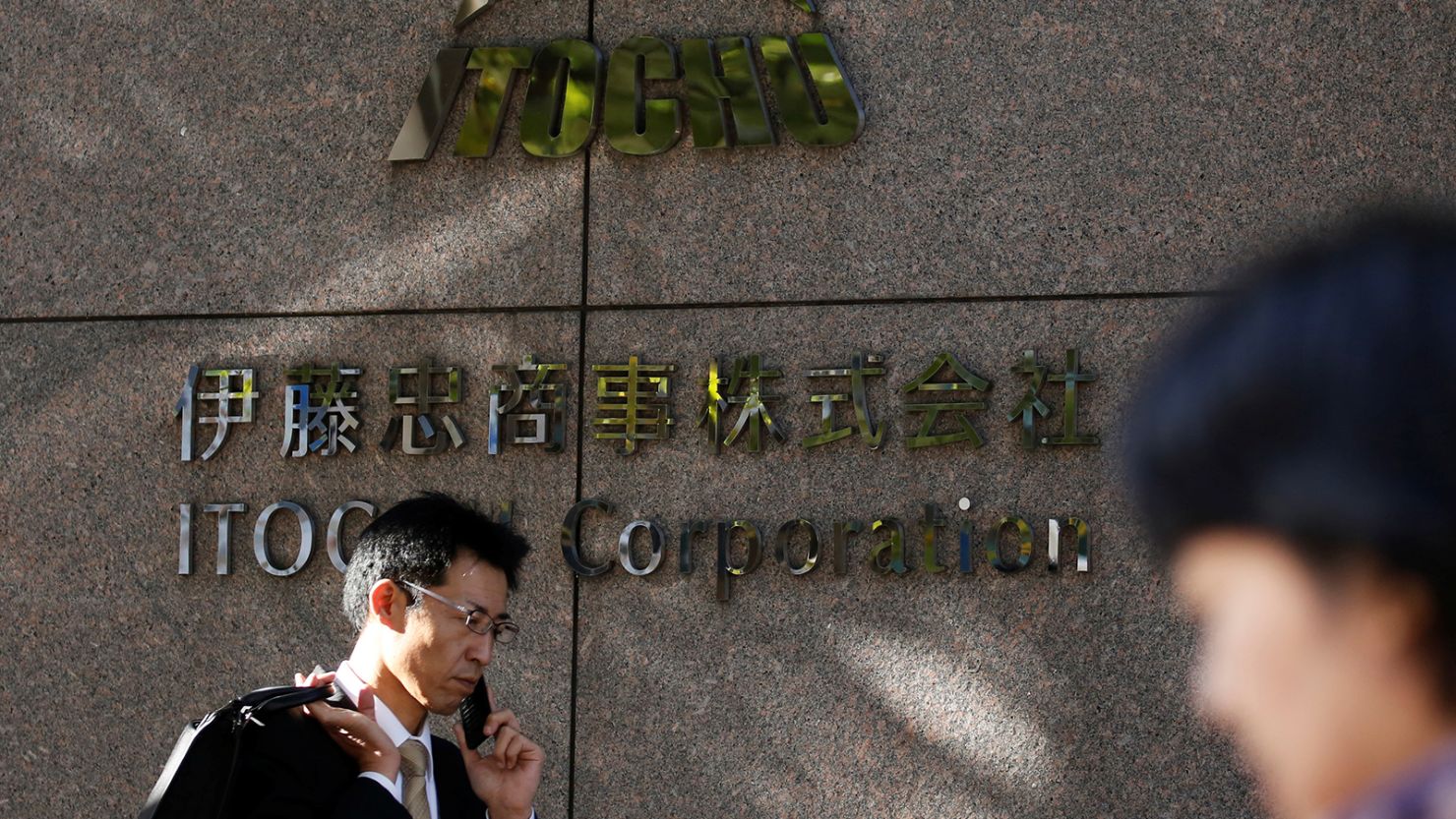
Itochu is one of Japan's biggest trading houses and is based in Tokyo.

Itochu is one of Japan’s biggest trading houses and is based in Tokyo. Toru Hanai/ReutersHong Kong/TokyoCNN — 

One of Japan’s biggest trading firms, Itochu, has decided to end its partnership with a major Israeli defense company due to the war in Gaza.

The sprawling conglomerate, best known outside Japan for its Family Mart chain of convenience stores, said its aviation unit will cut ties with Elbit Systems, which bills itself as Israel’s largest defense contractor, by the end of February.

The decision was made following a January ruling by the International Court of Justice (ICJ) — the top court of the United Nations — and guidance given by Japan’s Foreign Ministry to observe the court’s findings in “good faith,” a spokesperson for Itochu told CNN on Tuesday.

Last month, the ICJ ordered Israel to prevent genocide against Palestinians in Gaza, but stopped short of calling for Israel to suspend its military campaign in the war-torn enclave, as South Africa, which had filed the case to the court, had requested.

The court said Israel must “take all measures” to limit the death and destruction caused by its military campaign, prevent and punish incitement to genocide and ensure access to humanitarian aid

Itochu’s announcement was first made Monday by Tsuyoshi Hachimura, the company’s chief financial officer, during an earnings presentation.

Itochu Aviation, Elbit Systems and Nippon Aircraft Supply signed a cooperation agreement in March 2023, months before war broke out between Israel and Gaza.

Itochu, which reported revenues of $104 billion in 2023, has faced small-scale, student-led protests in Tokyo against its partnership with Elbit since January. Its Family Mart chain has also been the target of calls for boycotts in Muslim-majority Malaysia over the agreement.

Hachimura sought to explain the deal on Monday, telling investors: “The partnership was based on a request from the Japan’s Defense Ministry for the purpose of importing defense equipment for the Self-Defense Force necessary for Japan’s security.”

During a November earnings call, Elbit CEO Bezhalel Machlis said the company had “ramped up production” to support the Israel Defense Forces, which uses its services “extensively.”

— CNN’s Hanako Montgomery and Heather Chen contributed reporting.

Hành trình 5.500 dặm vượt Thái Bình Dương bằng bè luồng

Chủ nhật, 11/2/2024, 00:00 (GMT+7) VNEXPRESS

THANH HÓA Trên chiếc bè như thời cổ đại, ông Lương Viết Lợi và đoàn thám hiểm vượt 5.500 dặm, đối diện nhiều cạm bẫy, hiểm nguy giữa đại dương mênh mông.

Mùa hè năm 1993, ông Lợi được nhà thám hiểm Tim Severin (1940-2020, người Ireland) lựa chọn để thực hiện hải trình dự kiến dài khoảng 6.400 dặm, tương đương 10.000 km vượt Thái Bình Dương từ Hong Kong đến Mỹ. Mục đích của chuyến đi là muốn kiểm nghiệm lý thuyết cách đây khoảng 2.000 năm những người châu Á đã tới châu Mỹ trên chiếc bè mảng đơn sơ.

Chiếc mảng Từ Phúc trên biển Thái Bình Dương. Ảnh: Tư liệu
Chiếc mảng Từ Phúc trên biển Thái Bình Dương. Ảnh: Tư liệu

Ngày 17/5/1993, sau ba tuần chuẩn bị và chạy thử ở ven biển Hong Kong, đoàn thám hiểm xuất phát từ cảng Aberdeen, gần đảo Po Ti (hay Bồ Đài) ở phía nam Hong Kong. “Trừ Lợi, tất cả chúng tôi đều cảm thấy như dân tập sự khi nhổ neo, giương buồm và bắt đầu ra khơi…”, Tim kể trong cuốn The China Voyage (Chuyến du hành Trung Hoa).

Tiếp tục đọc “Hành trình 5.500 dặm vượt Thái Bình Dương bằng bè luồng”

5 budget-friendly getaways near Saigon to escape Tet crowds

VNE – By Bich Phuong   February 6, 2024 | 01:28 pm GMT+7

Within 300 kilometers of Ho Chi Minh City, these five getaways present an opportunity to escape the Tet crowds, offering a retreat to the beach, camping, or mountain trekking.

From Ho Chi Minh City, numerous natural attractions await, from national parks and streams to waterfalls. Nguyen Quang, owner of a campsite, notes that the cost of these trips is just under VND3 million ($122) per person, spanning a three-day schedule, offering relaxation from the hustle and bustle of the city.

Here are 5 budget-friendly destinations that Quang recommended for nature travelers looking to steer clear of the crowds at the start of the year.

1. Bu Gia Map National Park in Binh Phuoc Province

Bu Gia Map National Park, spanning over 25,000 hectares in Phu Nghia Commune, Bu Gia Map District, Binh Phuoc Province is just 190 kilometers and a 4-5 hour drive from Ho Chi Minh City.

Bu Gia Map national park is filled with tall trees and meandering streams. Photo by VnExpress/Vo Thi Hong
Tiếp tục đọc “5 budget-friendly getaways near Saigon to escape Tet crowds”

Nga, trừng phạt và mâu thuẫn giữa hai bờ Đại Tây Dương

ANTG – Thứ Hai, 05/02/2024, 08:27

Châu Âu chìm trong khủng hoảng năng lượng. Các công ty châu Âu đang dần chuyển hướng sang Mỹ. Người Mỹ thì lợi dụng điều này để bán khí thiên nhiên hóa lỏng (LNG) cho châu Âu với giá cao.

Không còn lựa chọn nào khác, châu Âu đang bắt đầu xây dựng các bến cảng lớn để tiếp nhận hàng từ Mỹ. Thế nhưng, sau đó, Mỹ tuyên bố đình chỉ các dự án LNG và sẽ không cung cấp cho châu Âu trong những năm tới.

Tổng thống Mỹ Joe Biden ngày 26/1 công bố lệnh tạm dừng xây dựng các kho cảng xuất khẩu LNG mới. Theo dữ liệu do tổ chức quốc tế Cedigaz công bố, trong năm 2023, Mỹ là nước xuất khẩu LNG hàng đầu thế giới. Theo Nhà Trắng, khoảng một nửa lượng xuất khẩu LNG vào năm 2023 được xuất khẩu sang châu Âu, do lục địa này đã chấm dứt việc nhập khẩu khí đốt của Nga kể từ khi nổ ra cuộc xung đột tại Ukraine.

Một cảng xuất khẩu khí thiên nhiên hóa lỏng ở Mỹ.

Tiếp tục đọc “Nga, trừng phạt và mâu thuẫn giữa hai bờ Đại Tây Dương”

ICJ phán quyết tạm thời vụ kiện Nam Phi – Israel

ANTG – Thứ Hai, 05/02/2024, 12:50

Tòa án Công lý quốc tế (ICJ) vừa đưa ra một quyết định liên quan vụ kiện của Nam Phi đối với Israel về tội “diệt chủng” khi tiến hành hoạt động quân sự chống lực lượng Hamas ở Dải Gaza, gây ra cái chết cho hàng chục ngàn thường dân Palestine vô tội.

Các thẩm phán Tòa ICJ đưa ra phán quyết.

Tuy nhiên, ICJ cũng mở cho Israel một lối thoát “cửa hậu” bằng cách không đáp ứng hoàn toàn yêu cầu của Nam Phi là buộc Israel ngừng bắn ngay lập tức mà chỉ yêu cầu Israel “đảm bảo rằng hành động quân sự tại Gaza là không diệt chủng”.

Tiếp tục đọc “ICJ phán quyết tạm thời vụ kiện Nam Phi – Israel”

Lifting of trade embargo paved the way for terrific Việt Nam-US advances

VNN – February 04, 2024 – 15:36

The US lifting the embargo on Việt Nam was considered to mark a new chapter in the diplomatic history of the two countries.

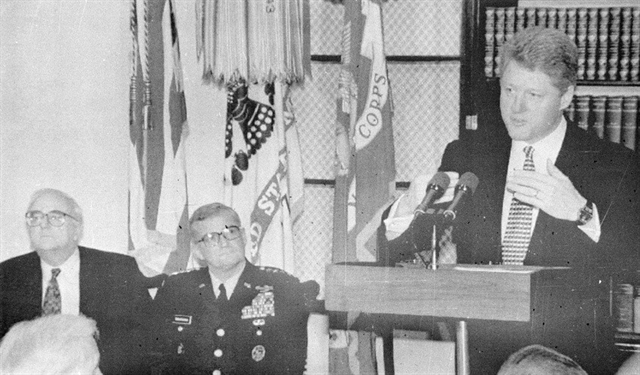
From right: US President Bill Clinton, Chairman of Joint Chiefs John Shalikashvili, and Secretary of Defense Leslie Aspin, Jr at a press conference on dropping the 19-year ban on US trade with Việt Nam on February 3,1994. — AFP/VNA Photo

HÀ NỘI — US Ambassador to Việt Nam Marc Knapper affirmed that the lifting of the trade embargo by US President Bill Clinton 30 years ago paved the way for terrific advances in bilateral trade and economic relations between Việt Nam and the US.

He made the statement on the occasion of the 30th anniversary of the US lifting the embargo on Việt Nam (1994-2024). The event was considered to mark a new chapter in the diplomatic history of the two countries.

Tiếp tục đọc “Lifting of trade embargo paved the way for terrific Việt Nam-US advances”