What’s behind China’s mysterious wave of childhood pneumonia?

nature.com

Scientists expected a surge in respiratory disease, but what is happening in China is unusual.
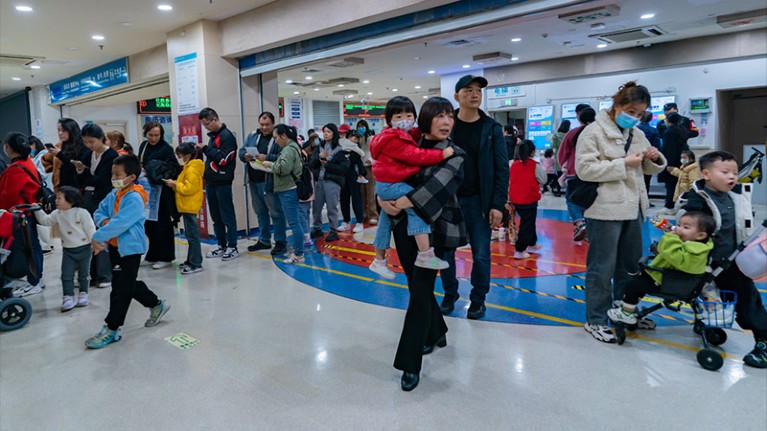
Many adults and children, a lot of them wearing masks, in a hospital waiting room.
Parents wait for their children to be treated for respiratory disease in Chongqing, China.Credit: Costfoto/NurPhoto via Getty

China is grappling with a surge in respiratory illnesses, including pneumonia, in children. The World Health Organization (WHO) said last week that common winter infections — rather than any new pathogens — are behind the spike in hospitalizations. A surge of infections was expected in the country this winter, China’s first without COVID-19 restrictions since the pandemic began in 2020. What is unusual, say epidemiologists, is the high prevalence of pneumonia in China. When COVID-19 restrictions were eased in other countries, influenza and respiratory syncytial virus (RSV) drove most spikes in illness.

The WHO requested information, including laboratory results and data on recent trends in the spread of respiratory illnesses, from China’s health authorities last week. This followed reports from the media and the Program for Monitoring Emerging Diseases — a publicly available system run by the International Society for Infectious Diseases — about clusters of “undiagnosed pneumonia”.

In a 23 November statement, the WHO said that China’s health authorities have attributed the rise in hospitalizations since October to known pathogens, such as adenoviruses, influenza virus and RSV, which tends to cause only mild, cold-like symptoms. However, an increase in children being admitted to hospital since May, particularly in northern cities such as Beijing, is mainly due to Mycoplasma pneumoniae, a bacterium that infects the lungs. It is a common cause of ‘walking pneumonia’, a form of the disease that is usually relatively mild and doesn’t require bed rest or hospitalization, but that is hitting children hard this year.

Benjamin Cowling, an epidemiologist at the University of Hong Kong, is not surprised by the wave of illness. “This is a typical ‘winter surge’ in acute respiratory infections,” he says. “It is happening slightly earlier this year, perhaps because of increased population susceptibility to respiratory infections resulting from three years of COVID measures.”

A familiar pattern

Tiếp tục đọc “What’s behind China’s mysterious wave of childhood pneumonia?”

Trung Quốc: Chính quyền địa phương, bất động sản và shadow banking

TS. Phạm Sỹ Thành (*) – Chủ Nhật, 27/08/2023

(KTSG) – Tốc độ tăng giá nhà luôn gần như gấp đôi tốc độ tăng trưởng thu nhập bình quân đầu người của Trung Quốc trong vòng 20 năm qua, nó cũng tăng gấp tám lần mức độ tăng trưởng của đô thị hóa. Nhưng khi các chính sách siết chặt tài chính với tên gọi “ba lằn ranh đỏ” được công bố vào năm 2021, cộng với thời gian dài phong tỏa để thực hiện chính sách zero-Covid, các trục trặc đã xuất hiện. Rất nhanh chóng, phản ứng domino xảy ra giữa các công ty bất động sản và lan sang ngân hàng bóng mờ (shadow banking).

Tiếp tục đọc “Trung Quốc: Chính quyền địa phương, bất động sản và shadow banking”

Thị trường chứng khoán Việt Nam khó vượt cận biên: Hệ lụy đánh quả…

Huy Nam – Thứ Hai, 27/11/2023

Kinh tế Sài Gòn Online – Hệ lụy đánh quả hay tình trạng tranh thủ thời vụ là thực trạng nghĩ ngắn và đánh ngắn làm cho thị trường khó lớn lên, khó vượt ngưỡng cận biên, và thường tạo ra các biến động giật cục. Tình trạng này có thể thấy khi doanh nghiệp IPO “ôm” ngay cục tiền lớn như của riêng để sử dụng tùy tiện, khi người đầu tư trên sàn thử vận may chơi lớn margin (giao dịch bảo chứng) hoặc “đánh cược” đơn giản với CW (covered warrants/chứng quyền có đảm bảo)… Cùng với các luật và lệ kém tương thích, các biểu hiện đánh quả “chưa đi đã chạy” này không là cách giúp hoạt động đầu tư và thị trường phát triển căn cơ.

Tiếp tục đọc “Thị trường chứng khoán Việt Nam khó vượt cận biên: Hệ lụy đánh quả…”

Châu Âu: Làn sóng di cư tiếp tục đẩy phong trào cực hữu lên cao

ANTG – Thứ Tư, 29/11/2023, 15:35

Tình trạng di cư gia tăng trên khắp châu Âu, bao gồm cả sự gia tăng lớn nhất về số người xin tị nạn kể từ cuộc khủng hoảng di cư 2015-2016, đang thúc đẩy sự ủng hộ đối với các đảng cực hữu chống nhập cư, từ đó có khả năng định hình lại nền chính trị châu Âu trong nhiều năm tới.

Từ điểm nhấn mới nhất tại Hà Lan…

Sự ủng hộ dành cho đảng theo chủ nghĩa dân tộc ủng hộ đường lối cứng rắn hơn chống nhập cư đang tăng mạnh trong các cuộc thăm dò dư luận ở châu Âu gần đây. Và, những đảng này cũng đã tham gia vào chính phủ  ở các nước, từ Italy cho đến Phần Lan, khi mối lo ngại về tốc độ tăng trưởng kinh tế chậm chạp cũng như ảnh hưởng từ cuộc xung đột tại Ukraine và Trung Đông gia tăng.

Chính trị gia cực hữu Geert Wilders bày tỏ sự vui mừng khi đảng của ông giành thắng lợi trong cuộc bầu cử Quốc hội Hà Lan. Ảnh: BBC

Tiếp tục đọc “Châu Âu: Làn sóng di cư tiếp tục đẩy phong trào cực hữu lên cao”

Nhiều nước đối mặt khó khăn nguồn cung lương thực

ANTG – Thứ Hai, 21/08/2023, 08:30

Cuộc chiến ở Ukraine đặt ra mối đe dọa nghiêm trọng đối với an ninh lương thực toàn cầu. Nga và Ukraine, thường được coi là “vựa lúa mỳ” của thế giới, nằm trong số những nhà sản xuất và xuất khẩu ngũ cốc và hạt có dầu quan trọng nhất.

Là nạn nhân trực tiếp của sự gián đoạn trong chuỗi cung ứng toàn cầu, các quốc gia phụ thuộc nhiều nhất vào nhập khẩu nông sản từ Nga và Ukraine đang phải đối mặt với những khó khăn thực sự về nguồn cung thực phẩm.

Với “Lục địa Đen”, cuộc chiến ở Ukraine đã đe dọa trực tiếp tới an ninh lương thực.

Tiếp tục đọc “Nhiều nước đối mặt khó khăn nguồn cung lương thực”

All the Metals We Mined in One Visualization

 visualcapitalist.com November 15, 2023 By Bruno Venditti

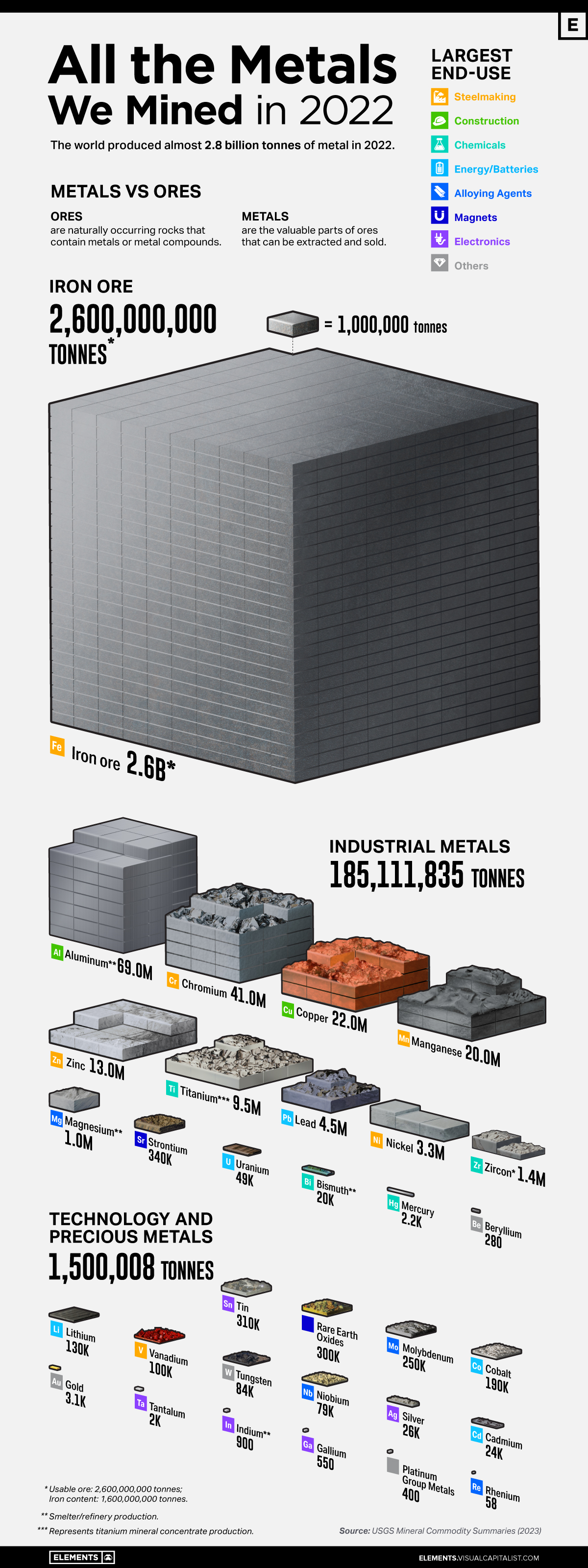
All the metals we mined

Metals are a big part of our daily lives, found in every building we enter and all devices we use.

Today, major industries that directly consume processed mineral materials contribute 14% of the United States economy.

The above infographic visualizes all 2.8 billion tonnes of metals mined in 2022 and highlights each metal’s largest end-use using data from the United States Geological Survey (USGS).

Iron Ore Dominance

Iron ore dominates the metals mining landscape, comprising 93% of the total mined. In 2022, 2.6 billion tonnes of iron ore were mined, containing about 1.6 billion tonnes of iron.

Metal/OreQuantity Mined in 2022 (tonnes)% of Total
Iron ore2,600,000,00093.3%
Industrial metals185,111,8356.6%
Technology and Precious Metals1,500,0080.05%
Total2,786,611,843100%

Percentages may not add up to 100 due to rounding.

Iron ores are found in various geologic environments, such as igneous, metamorphic, or sedimentary rocks, and can contain over 70% iron, with many falling in the 50-60% range.

Combined with other materials like coke and limestone, iron ore is primarily used in steel production. Today, almost all (98%) iron ore is dedicated to steelmaking.

The ore is typically mined in about 50 countries, but Australia, Brazil, China, and India are responsible for 75% of the production.

Because of its essential role in infrastructure development, iron ore is one of the most crucial materials underpinning urbanization and economic growth.

Industrial Metals

Industrial metals occupy the second position on our list, constituting 6.6% of all metals mined in 2022. These metals, including copper, aluminum, lead, and zinc, are employed in construction and industrial applications.

Tiếp tục đọc “All the Metals We Mined in One Visualization”