‘Too big to fail’: How USAID’s $9.5B supply chain vision unraveled

devex.com

Ten years ago, USAID unveiled the largest contract in its history, aimed at transforming health supply chains in lower-income countries. It has not gone according to plan.

By Michael IgoeBen StocktonMisbah Khan // 09 November 2023

Illustration by: Michelle Kondrich for TBIJ/Devex

Within its first two years of operation, the largest-ever project funded by the United States Agency for International Development was in crisis.

Money Matters

Funding insights, analysis, and news, including practical business adviceSubscribe now

The $9.5 billion initiative is led by U.S. contractor Chemonics International. Its aim was to transform global health supply chains — the sprawling system of procurement and transport that delivers lifesaving products including HIV/AIDS drugs, mosquito nets, and contraceptives to millions around the globe.

The supply chain project serves as the backbone for the U.S. government’s most celebrated global health programs, including the HIV/AIDS initiative credited with saving 25 million lives. But this project aimed to go one step further, by improving supply chains in lower-income countries to the point that they could be managed by the countries themselves.

If successful, said one USAID official, the agency would never have to fund another project like it again. But a decade later, that has not come to pass.

Tiếp tục đọc “‘Too big to fail’: How USAID’s $9.5B supply chain vision unraveled”

Nội chiến Myanmar trước ngã ba đường

CAND – Thứ Hai, 27/11/2023, 08:20

Gần hai năm rưỡi trôi qua kể từ khi quân đội Myanmar (Tatmadaw) tiến hành đảo chính lật đổ chính phủ dân sự dưới sự lãnh đạo của bà Aung San Suu Kyi, đất nước Myanmar chìm trong những cuộc giao tranh đẫm máu giữa Tatmadaw và Lực lượng phòng vệ nhân dân (PDF). Kết quả là đến nay, nhiều vùng lãnh thổ rộng lớn đã nằm trong tay PDF…

Một người lính PDF với trang bị hiện đại.

Tiếp tục đọc “Nội chiến Myanmar trước ngã ba đường”

Infrastructure, planning and market keys to develop LNG power

VNN – November 23, 2023 – 07:46

HÀ NỘI — Infrastructure, planning and a market mechanism were among key issues that must be addressed in order to develop a market for liquefied natural gas (LNG) in Việt Nam, heard participants at a conference on LNG on Wednesday in Hà Nội.

Thị Vải Terminal, an LNG storage facility in the southern province of Bà Rịa-Vũng Tàu. — VNA/VNS Photo

Deputy head of the Electricity and Renewable Energy Department under the Ministry of Industry and Trade (MoIT) Bùi Quốc Hùng said the importation of LNG must follow international trade standards and regulations while Việt Nam is still lacking in many key areas including design, construction, and operation of infrastructure for LNG imports. 

Tiếp tục đọc “Infrastructure, planning and market keys to develop LNG power”

Human rights top of agenda in Việt Nam

VNN – November 23, 2023 – 17:16

What is more impressive is that some EM groups with a population of fewer than 1,000 have had a say in the legislative body.

EM deputies from Cao Bằng Province in their meeting with the president in 2022. — VNA/VNS Photo Thống Nhất

HÀ NỘI — Ethnic minorities’ (EM) representation in the National Assembly (NA) is a fundamental tenet of Việt Nam’s political doctrine; the country has spared no effort in ensuring they are presented from the top.

Tiếp tục đọc “Human rights top of agenda in Việt Nam”

Volunteers Battle Fiery Infernos In World’s Most Densely Populated City, Manila

In Metro Manila, Philippines, an increase in devastating fires has put volunteer firefighters at the front lines, battling blazes in some of the city’s most vulnerable neighbourhoods. These are the lives of Danie Cabillo, Joanna Mandap (who runs a female dominant fire brigade), and Marvin Bustamante – and their families, as we unmask the emotional complexities and high-risk conditions associated with their heroic roles. From facing life-or-death scenarios that test their limits, these are stories of sacrifice, courage, and triumph – where every second is a battle against time.

 00:00 Introduction

02:29 Civilian firefighters face dangers from fires – and people

06:07 How to establish a fire volunteer team

08:45 Female-led fire brigade challenges stereotypes

17:10 Teamwork strategies with other brigades and residents

23:46 Volunteers rely on donations and their own income to keep operations running

29:45 Training community residents to be first responders

31:55 Keeping a cool head to fight fires

33:36 Devastating damage caused by fire

38:22 Do they ever feel like giving up?

42:26 Working alongside official government fire responders

Medical Misogyny: Why Are Women Overlooked In Healthcare Systems Globally?

Many of the world’s healthcare systems are male-centred, rooted in patriarchal concepts and gender bias. From women’s access to healthcare being contingent on the willingness or financial capability of male relatives, to the exclusion of women in clinical trials, to the dismissal of women’s medical concerns and decisions about their own health and bodies, misogyny is prevalent in modern medicine, often resulting in misdiagnoses and even death. The issue of what’s now called obstetric violence has emerged, as more female patients speak out about their mistreatment and abuse by medical practitioners, particularly around the vulnerable time of childbirth.

The World Health Organization describes obstetric violence as “abuse, disrespect and mistreatment in childbirth that result in violations of women’s dignity by health professionals”.

But while awareness of medical misogyny is growing, many cultural, social, and legal barriers prevent its complete eradication.

00:00 Introduction

00:53 Indian women’s limited access to healthcare

07:12 Gender disparity in UK medical research

14:56 The rise of obstetric violence

Why India’s Election Is A Dangerous Time For Lower Castes

Imagine sporting a fancy moustache and taking a walk with your girlfriend in the evening. But if you happen to be in Barwa village in Rajasthan, there’s a very good chance that you may be killed. That’s what happened to Jitendra Meghwal when he was ambushed by two men on motorcycles last year. His crime? Sporting facial hair as a lower caste Dalit. As India heads towards next year’s general election, caste prejudice has become a hot-button topic. The recent Bihar caste census shows the inequality faced by the lower caste, threatening Prime Minister Modi’s agenda.

In the 75th year since caste discrimination was outlawed in India, Insight examines why this issue continues to persist. 00:00 Introduction

04:04 The Hindu caste system and discrimination

10:24 Crimes against Dalits on the rise

14:31 Petty restrictions on Dalits

19:02 An army to champion lower caste rights

20:41 A killing over sweets

27:41 Caste discrimination in the workplace

32:57 Has education helped?

35:25 Attacked over a moustache

38:55 Vying for Dalit votes as election approaches

44:27 Can India achieve caste equality?

How Do Governments Combat Climate Change?

cfr.org

In this free resource, explore seven ways countries are responding to a changing environment, from cap and trade policies to clean energy standards.

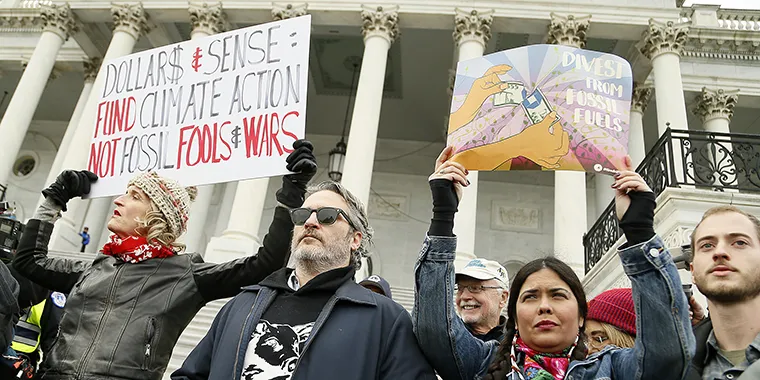
Actor Joaquin Phoenix (center) stands with protestors waiting to be arrested on the steps of the U.S. Capitol Building during a climate change protest and rally on Capitol Hill on January 10, 2020 in Washington, D.C.

Source: Paul Morigi/Getty ImagesSHARE

Teaching Resources—Climate Change: Policy (including lesson plan with slides)
Higher Education Discussion Guide

Have you ever brought a reusable tote bag to the grocery store? Or refilled a water bottle rather than buying a disposable one? Do you separate your recycling from your trash? 

If you answered yes to any of those questions, you’re not alone. In the United States, more than half of all adults claim to have taken some action to protect the environment. But will individual actions be enough to address the massive, transnational challenge of climate change? Unfortunately, no.

Tiếp tục đọc “How Do Governments Combat Climate Change?”