Phát hiện ô nhiễm môi trường, hãy gọi ngay: 086.900.0660

11:26, 31/10/2017 (GMT+7)

(TN&MT) – Ngày 30/10, Tổng cục Môi trường (Bộ TN&MT) đã công bố đường dây nóng cấp trung ương để tiếp nhận phản ánh, kiến nghị về ô nhiễm môi trường theo số điện thoại 086.900.0660

baotainguyenmoitruong_Theo đó, khi phát hiện những hành vi xả chất thải gây ô nhiễm môi trường; các vụ việc ô nhiễm, suy thoái môi trường, người dân có thể gọi ngay đến Đường dây nóng của Tổng cục môi trường theo số 086.900.0660

Đường dây nóng 086.900.0660 sẽ tiếp nhận thông tin phản ánh, kiến nghị về ô nhiễm môi trường liên tục 24/24 giờ trong ngày và 7 ngày trong tuần (bao gồm cả ngày nghỉ, ngày lễ).

Phát hiện ô nhiễm môi trường, hãy gọi ngay: 086.900.0660

Tiếp tục đọc “Phát hiện ô nhiễm môi trường, hãy gọi ngay: 086.900.0660”

SÁNG TẠO TRONG DẠY VÀ HỌC (cho bậc đại học)


Chào các bạn,

Bài chia sẻ này là kết hợp những kinh nghiệm của mình và báo cáo trong một tập huấn mà mình có được tham dự về Innovation in Learning and Teaching – Sáng tạo trong dạy và học, một điểm mà giáo dục đại học Việt Nam còn phải nỗ lực cố gắng rất nhiều.

Mình tham dự của GS Richard Felder, North Carolina State University. Giáo sư có vài chục năm kinh nghiệm về sáng tạo trong phương pháp dạy học, đặc biệt là cho khối ngành công nghệ kỹ thuật. GS Richard Felder thường được các trường đại học công nghệ hàng đầu ở Châu Á mời đến giảng dạy về phương pháp giảng dạy trong giáo dục bậc đại học.

Sáng tạo trong dạy và học là những điều cực kỳ thiết yếu không chỉ cho các giáo viên mà cho tất cả các học sinh, sinh viên. Và một trong điểm sáng tạo đó là cần phải hiểu cách học và dạy của mình ra sao – teaching and learning style của mình ra sao để phát huy và cùng hỗ trợ nhau phát triển. Tiếp tục đọc “SÁNG TẠO TRONG DẠY VÀ HỌC (cho bậc đại học)”

Trump’s new Cold War alliance in Asia is dangerous

Washington Post

November 14

U.S. President Donald Trump and Japanese Prime Minister Shinzo Abe pose after signing hats reading “Donald and Shinzo make alliance even greater.” Kawagoe, Japan, Nov. 5. (Franck Robichon/EPA-EFE/REX/Shutterstock)

Gurpreet S. Khurana, who first used the term “Indo-Pacific” a decade ago, is a maritime strategist and executive director of the National Maritime Foundation in New Delhi.

NEW DELHI — On his recent tour of Asia, U.S. President Donald Trump offered the world a first glance into his formative geopolitical strategy. Both in Vietnam at the Asia-Pacific Economic Cooperation summit and at his earlier meeting with Prime Minister Shinzo Abe in Japan, he spoke of the “Indo-Pacific” instead of the “Asia-Pacific,” the term used most often by previous American administrations. Tiếp tục đọc “Trump’s new Cold War alliance in Asia is dangerous”

Why eating insects makes sense – Tại sao nên ăn Côn trùng – một nguồn thực phẩm thay thế cho thit


Published on Sep 25, 2014

The world’s population is projected to reach 11 billion by the end of the century. Feeding that many people will be a challenge, and it is further complicated by the impact of climate change on agriculture. That is why some people advocate an unusual way to boost the food supply and feed people sustainably: by eating less meat, and more insects.

About 2 billion people already eat bugs. Mexicans enjoy chili-toasted grasshoppers. Thais tuck into cricket stir-fries and Ghanians snack on termites. Insects are slowly creeping onto Western menus as novelty items, but most people remain squeamish. Yet there are three reasons why eating insects makes sense.

First, they are healthier than meat. There are nearly 2,000 kinds of edible insects, many of them packed with protein, calcium, fibre, iron and zinc. A small serving of grasshoppers can contain about the same amount of protein as a similar sized serving of beef, but has far less fat and far fewer calories.

Second, raising insects is cheap, or free. Little technology or investment is needed to produce them. Harvesting insects could provide livelihoods to some of the world’s poorest people.

Finally, insects are a far more sustainable source of food than livestock. Livestock production accounts for nearly a fifth of all greenhouse-gas emissions – that’s more than transport. By contrast, insects produce relatively few greenhouse gases, and raising them requires much less land and water. And they’ll eat almost anything.

Despite all this, most Westerners find insects hard to swallow. One solution is to use protein extracted from bugs in other products, such as ready meals and pasta sauces. Not having to look at the bugs, and emphasising the environmental benefits, might make the idea of eating insects a bit more palatable. For more video content from The Economist visit our website: http://econ.st/1ytKwbp

Bộ trưởng Công an: ‘Chặn Internet thì ta không chơi được với ai’

Thượng tướng Tô Lâm nói dòng chảy thông tin giống như hệ tuần hoàn của cơ thể con người, “phải làm sao để không bị nghẽn mạch”.

VNexpress_Chiều 13/11, Quốc hội thảo luận ở tổ về dự án Luật An ninh mạng. Thượng tướng Tô Lâm – Bộ trưởng Công an, cho biết Bộ được phân công chủ trì soạn thảo dự luật này và đã rất thận trọng trong thực hiện, vì đây là nội dung liên quan đến quyền tự do, dân chủ của nhân dân.

“Đây cũng là vấn đề rất khó, không chỉ Việt Nam mà với thế giới”, Bộ trưởng nói.

Tiếp tục đọc “Bộ trưởng Công an: ‘Chặn Internet thì ta không chơi được với ai’”

UN chief raises alarm over Rohingya in speech before Suu Kyi

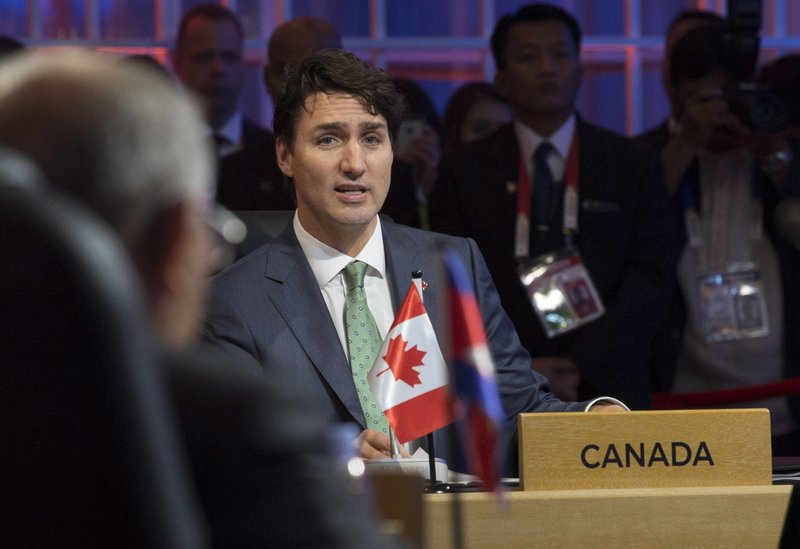
MANILA, Philippines (AP) — The United Nations chief expressed alarm over the plight of Rohingya Muslims in remarks before Myanmar’s Aung San Suu Kyi and other leaders from a Southeast Asian bloc that has refused to criticize her government over the crisis.

U.N. Secretary-General Antonio Guterres said late Monday that the unfolding humanitarian crisis can cause regional instability and radicalization. He met with leaders from the Association of Southeast Asian Nations on the sidelines of its summit in Manila.

“I cannot hide my deep concern with the dramatic movement of hundreds of thousands of refugees from Myanmar to Bangladesh,” Guterres told the ASEAN leaders. Suu Kyi sat close to him but looked mostly at a wall screen showing the U.N. leader. Tiếp tục đọc “UN chief raises alarm over Rohingya in speech before Suu Kyi”

Vietnam Typhoon Damrey, International Red Cross response – Bão Damrey, con số và ứng phó của Chữ thập đỏ Quốc tế

From International Federation of Red Cross and Red Crescent Societies – IFRC

Hiệp hôi Chữ Thập Đỏ và Trăng lưỡi liềm đỏ quốc tế tại Việt Nam,

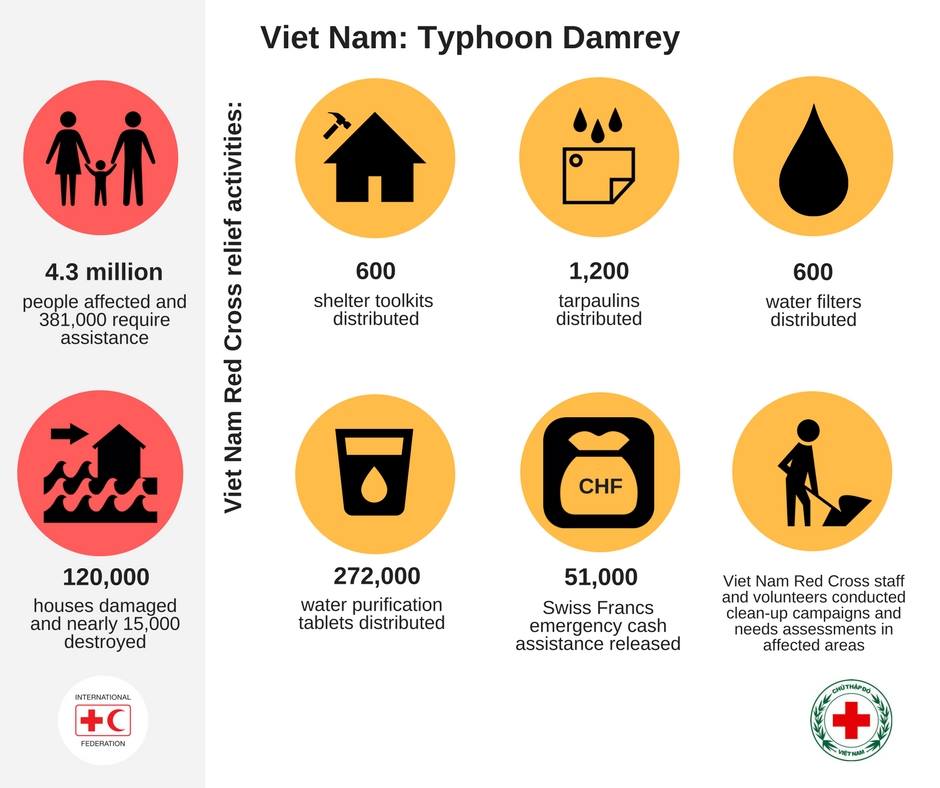
Thiệt hại

4,3 triệu người bị ảnh hưởng bởi bão

381, 000 nghìn người cần hỗ trợ

120,000 nghìn ngôi nhà bị hỏng và gần 15,000 nghìn nhà bị phá huỷ

Cứu trợ từ Chữ Thập Đỏ

600 bộ, dựng lều và  gia cố nơi ở

1,200 nhà bạt che mưa di động

600 lít nước lọc

272,000 viên lọc nước uống

51,000 Francs Thuỵ Sĩ

Hỗ trợ về người dọn dẹp, xây dựng, khắc phục hậu quả sau bão

Returning ISIS fighters: How should governments deal with them?

theconomist_ISIS fighters are returning home to Europe. In Britain, half of the 850 citizens known to have joined ISIS have already come back. As France marks the two-year anniversary of the deadliest terrorist attack on its soil, governments have to decide what to do with returning foreign fighters.

Tiếp tục đọc “Returning ISIS fighters: How should governments deal with them?”

Beyond recycling: solving e-waste problems must include designers and consumers

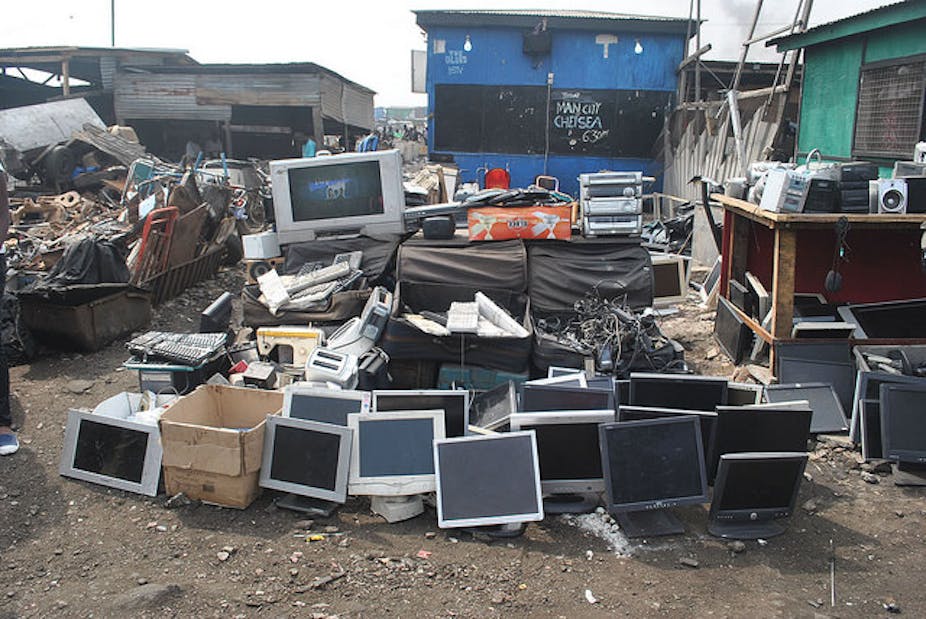
theconversation_Agbogbloshie, an area in the city of Accra Ghana, is usually portrayed as an e-waste dump. A more accurate picture would include the repair and refurbishment economy. Agbogbloshie Makerspace Platform

Tiếp tục đọc “Beyond recycling: solving e-waste problems must include designers and consumers”

E-Waste in East and South-East Asia Jumps 63% in Five Years

  • 2017•01•15     BONN

    unu.edu

    The volume of discarded electronics in East and South-East Asia jumped almost two-thirds between 2010 and 2015, and e-waste generation is growing fast in both total volume and per capita measures, new UNU research shows.

    Driven by rising incomes and high demand for new gadgets and appliances, the average increase in e-waste across all 12 countries and areas analysed — Cambodia, China, Hong Kong, Indonesia, Japan, Malaysia, the Philippines, Singapore, South Korea, Taiwan, Province of China, Thailand and Vietnam — was 63% in the five years ending in 2015 and totalled 12.3 million tonnes, a weight 2.4 times that of the Great Pyramid of Giza.

    China alone more than doubled its generation of e-waste between 2010 and 2015 to 6.7 million tonnes, up 107%. Tiếp tục đọc “E-Waste in East and South-East Asia Jumps 63% in Five Years”

Using Remote Sensing to Map Rice Paddy Drop in the Mekong Delta

Gislounge_The Mekong River Delta is an important water source flowing through South East Asia. Primarily feeding the rice fields of Vietnam, the Mekong River Delta has long been an area of great fertility due to water flow and silt build up. However, agricultural efforts in the area have shown a decline in production because of the weather effects of El Niño. This year’s El Niño has been particularly strong, causing droughts in South East Asia.

Satellites including Europe’s Sentinel-1A can now track the rise and fall of different agricultural products around the world. The satellite’s imagery showed that rice production in the Mekong Delta has decreased in the past year, threatening the livelihoods of local farmers as well as food security worldwide. Tiếp tục đọc “Using Remote Sensing to Map Rice Paddy Drop in the Mekong Delta”

Why Alibaba Founder Jack Ma Is Cozying Up With China’s Cops

By Scott Cendrowski

October 26, 2016

fortune_Eight months after Apple CEO Tim Cook staged a very public spat with U.S. law officials over accessing users’ private data, Alibaba executive chairman Jack Ma is moving in the opposite direction. Sort through our country’s data, he told Chinese law officials last Friday, it can help pinpoint terrorist activity. Tiếp tục đọc “Why Alibaba Founder Jack Ma Is Cozying Up With China’s Cops”

Electronic waste still cannot be recycled in Vietnam

Last update 07:10 | 14/11/2017
VietNamNet Bridge – The ‘mountain of electronic waste’ in Vietnam is receiving an additional 100,000 tons of waste each year. 

vietnam economy, business news, vn news, vietnamnet bridge, english news, Vietnam news, news Vietnam, vietnamnet news, vn news, Vietnam net news, Vietnam latest news, Vietnam breaking news, e-waste, recycling, input materials

The recycling activities carried out in Vietnam are just preliminary treatment, as the country still cannot make refined materials for production.

Thirty years ago, TV sets were luxury products for Vietnamese. But now, one family may own 2-3 TV sets and change TVs once every several years. This has resulted in an increasingly high volume of electronic waste. Tiếp tục đọc “Electronic waste still cannot be recycled in Vietnam”

Vietnam sea poisoned by economic, tourism activities

Last update 07:10 | 13/11/2017
VietNamNet Bridge – A conflict exists between the protection of fishery resources and the development of tourism and other business fields.vietnam economy, business news, vn news, vietnamnet bridge, english news, Vietnam news, news Vietnam, vietnamnet news, vn news, Vietnam net news, Vietnam latest news, Vietnam breaking news, MPA, Hon Mun, coral reefs
The Ministry of Agriculture and Rural Development (MARD) has warned that the fishing output has exceeded the permitted limit by 30 percent, especially aquatic creatures of the bottom layer. While the average permitted exploitation limit is 2.45 million tons a year, the total exploitation output has reached 3.1 million tons. Tiếp tục đọc “Vietnam sea poisoned by economic, tourism activities”