
Thẻ: War crime
Gaza boycotts batter American fast-food chains in Malaysia, Indonesia
Starbucks, KFC, Pizza Hut, and McDonald’s suffer sales slumps as Gaza war boycotts continue across Asia, boosting local and Palestinian brands
 "Fast food")
Gaza boycotts batter fast-food chains Starbucks, KFC, Pizza Hut, and McDonald’s and other US brands in Malaysia and Indonesia | Photo: PexelsVasudha Mukherjee New Delhi
In Malaysia and Indonesia, some of the biggest names in fast food — Starbucks, KFC, Pizza Hut, and McDonald’s — are still struggling to recover from the financial hit caused by boycotts sparked by the war in Gaza, according to a report by Nikkei Asia.
Steep sales drops for US fast food chains in Malaysia
In Malaysia, Starbucks operator Berjaya Food reported an 18 per cent year-on-year revenue drop in early 2024, with net losses widening to 37.2 million ringgit (US $9 million). Its share price has fallen another 15 per cent this year. The chain has leaned on heavy localisation efforts — drinks curated by Malaysian baristas, locally designed merchandise, and menu items by a popular local chef — but store managers expect the total number of outlets to shrink from 350 to under 300 by 2026.
QSR Brands, which runs KFC and Pizza Hut, swung from a pre-tax profit of 49.6 million ringgit in 2023 to a 66.2 million ringgit loss in 2024. It has cut prices, pizzas as low as 5 ringgit, stressed its halal credentials, and hired more local staff to appeal to customers.
Tiếp tục đọc “Gaza boycotts batter American fast-food chains in Malaysia, Indonesia”
Is it too late for Gaza’s Children
| Thomson Reuter Foundation | |
| By Sadiya Ansari | Contributor | |
| This newsletter contains images that may be disturbing. Harrowing images of malnourished children in Gaza have intensified international pressure on Israel to increase humanitarian aid to the enclave.This week, Hamas-run health authorities in Gaza said that 93 children were among the 180 people who have already died from hunger-related causes. These deaths come on top of more than 60,000 Palestinians, mostly civilians, the health authorities in Gaza say have been killed since Israel launched its military offensive in the strip in October 2023. Almost 470,000 people in Gaza are enduring famine-like conditions, according to the World Health Organization (WHO), with 90,000 women and children in need of specialist nutrition treatments. WHO chief Tedros Adhanom Ghebreyesus described the situation as “mass starvation” that was “man-made”, laying the blame squarely at the Israeli blockade.While Israel has denied a policy of starvation, it controls most aspects of how food reaches and is distributed in Gaza. This includes access into Gaza, transport logistics and who is permitted to distribute aid. Today we’ll unpack the policy on aid entering the territory. 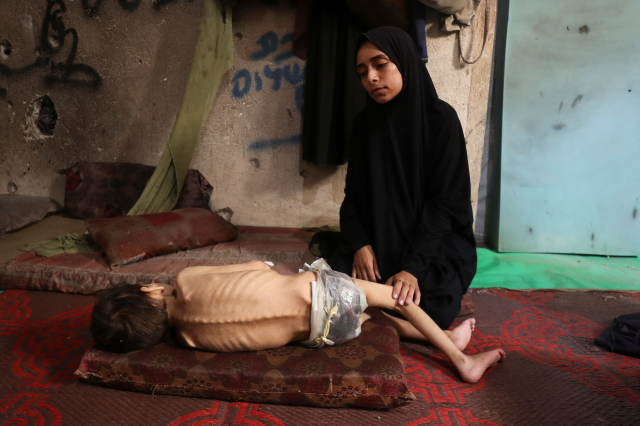 A Palestinian mother sits next to her malnourished son, at a school where they shelter amid a hunger crisis, in Gaza City, July 24, 2025. REUTERS/Mahmoud Issa A Palestinian mother sits next to her malnourished son, at a school where they shelter amid a hunger crisis, in Gaza City, July 24, 2025. REUTERS/Mahmoud IssaThe policy Israel controls access into Gaza, including for humanitarian organisations, as a result of a blockade by land, air and sea<a | |
Gaza hunger crisis: Desperate crowds storm US aid distribution site in Rafah as operation collapses
May 27, 2025 #Palestine #Israel #Gaza
Chaotic scenes unfolded in Rafah, southern Gaza, as Palestinians rushed a US aid distribution site in Tal as-Sultan, prompting American security personnel to fire warning shots. Israeli forces reportedly intervened remotely to disperse crowds. Israeli Army radio cited security sources distancing Israel from the incident while confirming US contractors regained control. The aid was distributed by the Gaza Humanitarian Foundation, a controversial organisation established after Israel blocked UN access in March. Footage shows desperate civilians amid strict aid restrictions. The foundation’s private contractor-led operations have drawn criticism for lacking UN neutrality protocols. This incident highlights escalating tensions over aid delivery in the besieged enclave.
Al Jazeera’s correspondents are tracking developments across key locations, including Hind Khoudary and Hani Mahmoud in Gaza, and Kristen Saloomey at the United Nations in New York. We’re also joined by analysts and experts: Tamer Qarmout, Associate Professor of Public Policy at the Doha Institute for Graduate Studies, speaking from Doha; Ahmed Bayram, Middle East Spokesperson for the Norwegian Refugee Council, joining us from Amman; and Chris Gunness, former Chief Spokesperson for the United Nations Relief and Works Agency for Palestine Refugees, speaking from London.
From Gaza to Vietnam, what is the value of a photo?
Two maimed children, two iconic images – and no end to barbarity in sight.
- Belén Fernández Al Jazeera columnist Published On 30 Apr 202530 Apr 2025

This month, Palestinian photographer Samar Abu Elouf won the 2025 World Press Photo of the Year award for her image titled Mahmoud Ajjour, Aged Nine, taken last year for The New York Times.
Ajjour had both of his arms blown off by an Israeli strike on the Gaza Strip, where Israel’s ongoing genocide has now killed at least 52,365 Palestinians since October 2023. In the award-winning photograph, the boy’s head and armless torso are cast in partial shadow, his gaze nevertheless intense in its emptiness.
Tiếp tục đọc “From Gaza to Vietnam, what is the value of a photo?”
International business in Russia risks slipping from compliance to complicity

On 21 September, 2022, an IT specialist with the Austrian Raiffeisen Bank, Timur Izmailov, was leading a normal life in Moscow. Three weeks later Izmailov found himself serving as a soldier in Russia’s 27th motorized rifle brigade near the Ukrainian city of Svatove, when he was eventually killed by mortar fire. How does a 33-year-old techie make his way from his cubicle to the frontline of an unprovoked war in a neighbouring democratic state?
Timur’s journey began on 24 February, 2022, when President Vladimir Putin ordered the all-out military invasion of Ukraine in continuation of a war started in 2014. The response was immediate. The Ukrainian people and their leadership — with the support of the democratic allies — have defended themselves against armed aggression despite gross human rights violations.
Western sanctions imposed on Russia created an extremely hostile commercial environment for companies such as Raiffeisen to continue their operations in the aggressor state. Many international firms pulled out, announcing plans to leave or suspend activity in Russia. But many more international companies continue to operate and pay taxes, thus contributing to the occupation of Ukraine and undermining the financial support provided to Ukraine by their own governments.
On 21 September 2022, President Vladimir Putin issued the mobilization decree that obliged companies to immediately assist in conscripting soldiers and help equip the Russian army. The results of this piece of legislation were immediately felt by many, including Timur Izmailov. Raiffeisen’s attempts to shield their staff from the draft failed.
How do bank employees in other countries feel knowing this is happening to their colleagues in Russia? How does a client of Raiffeisen based in Vienna feel, knowing the employees of his bank might soon become soldiers sent to the battlefield to kill innocent civilians in Ukraine?
An additional stopover on the companies’ journey from compliance to complicity happened last July, when Putin signed a new law allowing the government to impose special economic measures to support “counter-terrorism and other operations outside of Russia”. Once introduced, such measures would require companies to provide goods and services in support of these operations and impose significant penalties for failing to do so. In accordance with the law of 7 October 2022, the Russian subsidiary of Raiffeisen Bank International is now obliged to provide loan payment holidays to the troops fighting in Ukraine. Moreover, the bank is required to write off the entire debt in case of a soldier’s death. This legal requirement concerns other financial institutions that still operate in Russia, namely Intesa Sanpaolo, OTP Bank, ING Bank, Credit Agricole, Citibank, Credit Europe Bank and UniCredit.
This loan relief scheme has already triggered criticism from Ukraine’s central bank, as well as from investors concerned about reputational impact. The requirement for banks to grant payment holidays to soldiers “illustrates the dangers of operating in jurisdictions where companies can…be forced into actions that go directly against their corporate values,” said Eric Christian Pederson of Nordea Asset Management. “We feel that it is right for companies to withdraw from Russia, given its unprovoked attack on Ukraine,” he added.
Tiếp tục đọc “International business in Russia risks slipping from compliance to complicity”Why Gaza’s dead children could be Biden’s legacy
AJ+ – 19-11-2023
That’s the verdict of co-founder of The Intercept Jeremy Scahill, who looked back into U.S. President Joe Biden’s political career and identified the key moments where he defended Israel’s alleged war crimes, from back in the 1980s to present day.
Biden has been in public office for 50 years, and during that time he has been one of Israel’s biggest defenders, even when the country has killed civilians.
Scahill argues that U.S. weapons and money have enabled Israel’s attacks on Gaza and that the more than 4,700 children killed “should be a permanent stain” on Biden’s legacy.
Commission of Inquiry finds further evidence of war crimes in Ukraine
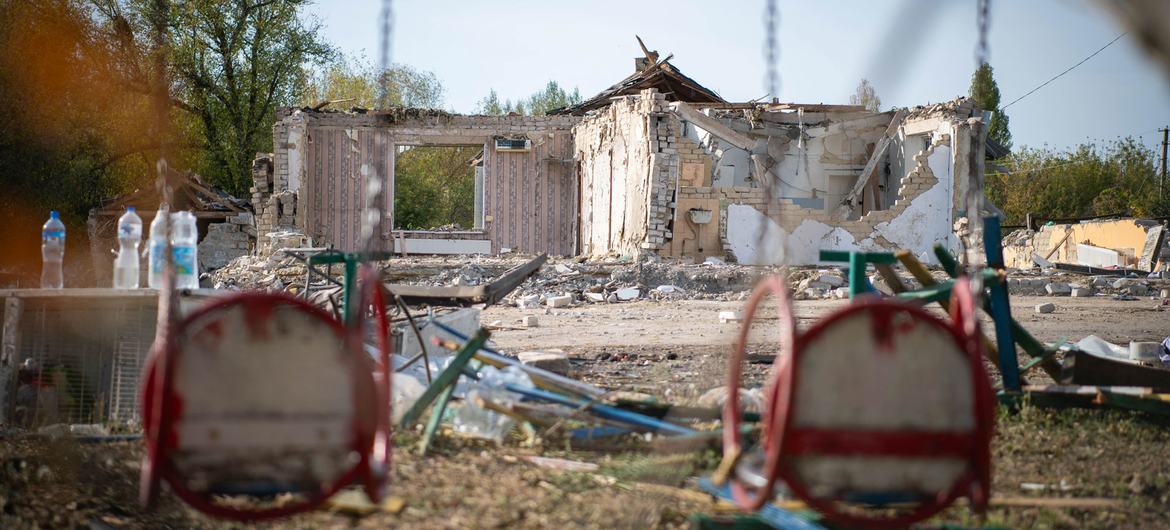
© Yevhen Nosenko
A playground lies in ruins near in the village of Groza in eastern Ukraine.
A new UN report has found continued evidence of war crimes and human rights violations committed by Russian authorities in Ukraine, including torture, rape and the deportation of children.
Tiếp tục đọc “Commission of Inquiry finds further evidence of war crimes in Ukraine”The ICC issued arrest warrants on Friday for Putin and Russian official Maria Lvova-Belov
Russia scoffs but Putin could stand trial for alleged war crimes, ICC chief prosecutor says
By Caitlin Hu, CNN
Updated 9:03 PM EDT, Fri March 17, 2023

ICC chief prosecutor reacts to Putin arrest warrant
The International Criminal Court’s chief prosecutor believes Russian President Vladimir Putin could stand trial for alleged crimes committed during Russia’s war in Ukraine, he told CNN on Friday, despite Moscow’s arguments that it is not subject to the court’s decisions.
In an interview with CNN’s Clarissa Ward, Chief Prosecutor Karim Khan pointed to historic trials of Nazi war criminals, former Yugoslavian President Slobodan Milošević, and former Liberian leader Charles Taylor, among others.
“All of them were mighty, powerful individuals and yet they found themselves in courtrooms,” he said.
Tiếp tục đọc “The ICC issued arrest warrants on Friday for Putin and Russian official Maria Lvova-Belov”Russian missiles rain down on Ukraine towns on Christmas Day
EURACTIV.com with Reuters 26 Dec 2022

People from the collective ‘Kyivska Kolyada’ ride in the train after singing Christmas carols and collect money for the Ukrainian army at a metro station in Kyiv, Ukraine, 25 December 2022. 2022 is the first year Orthodox churches were allowed to hold a Christmas prayer service on 24 December. Traditionally, the Orthodox church celebrates Christmas on 6 January. [EPA-EFE/OLEG PETRASYUK]
Russian forces bombarded scores of towns in Ukraine on Christmas Day as Russian President Vladimir Putin said he was open to negotiations, a stance Washington has dismissed as posturing because of continued Russian attacks.
Russia on Sunday launched more than 10 rocket attacks on the Kupiansk district in the Kharkiv region, shelled more than 25 towns along the Kupiansk-Lyman frontline, and in Zaporizhzhia hit nearly 20 towns, said Ukraine’s top military command.
Russia’s defence ministry said on Sunday that it had killed about 60 Ukrainian servicemen the previous day along the Kupiansk-Lyman line of contact and destroyed numerous pieces of Ukrainian military equipment.
Reuters was not able to independently verify the reports.
Putin’s 24 February invasion of Ukraine – which Moscow calls a “special military operation” – has triggered the biggest European conflict since World War Two and confrontation between Moscow and the West since the 1962 Cuban Missile Crisis.
Despite Putin’s latest offer to negotiate, there is no end in sight to the 10-month conflict.
“We are ready to negotiate with everyone involved about acceptable solutions, but that is up to them – we are not the ones refusing to negotiate, they are,” Putin told Rossiya 1 state television in an interview broadcast on Sunday.
An adviser to Ukrainian President Volodymyr Zelenskyy said Putin needed to return to reality and acknowledge it was Russia that did not want talks.
“Russia single-handedly attacked Ukraine and is killing citizens,” the adviser, Mykhailo Podolyak, tweeted. “Russia doesn’t want negotiations, but tries to avoid responsibility.”
Russian attacks on power stations have left millions without electricity, and Zelenskyy said Moscow would aim to make the last few days of 2022 dark and difficult.
“Russia has lost everything it could this year. … I know darkness will not prevent us from leading the occupiers to new defeats. But we have to be ready for any scenario,” he said in an evening video address on Christmas Day.
Ukraine has traditionally not celebrated Christmas on 25 December, but 7 January, the same as Russia. However, this year some Orthodox Ukrainians decided to celebrate the holiday on 25 December and Ukrainian officials, starting with Zelenskyy and Ukraine’s prime minister, issued Christmas wishes on Sunday.
The Kremlin says it will fight until all its territorial aims are achieved, while Kyiv says it will not rest until every Russian soldier is ejected from the country.
Asked if the geopolitical conflict with the West was approaching a dangerous level, Putin on Sunday said: “I don’t think it’s so dangerous.”
Kyiv and the West say Putin has no justification for what they cast as an imperial-style war of occupation.
Blasts at Engels airbase
Blasts were heard at Russia’s Engels air base, hundreds of kilometres (miles) from the Ukraine frontlines, Ukrainian and Russian media reported on Monday.
Russia’s governor of Saratov region, home to the Engels air-base, said law enforcement agencies were checking information about “an incident at a military facility”.
“There were no emergencies in residential areas of the (Engels) city,” Roman Busargin, the governor of the region, said on the Telegram messaging app. “Civil infrastructure facilities were not damaged.”
The air base, near the city of Saratov, about 730 km (450 miles) southeast of Moscow, was hit on 5 December in what Russia said were Ukrainian drone attacks on two Russian air bases that day. The strikes dealt Moscow a major reputational blow and raised questions about why its defences failed, analysts said.
Ukraine has never publicly claimed responsibility for attacks inside Russia, but has said, however, that such incidents are “karma” for Russia’s invasion.
UN: 2022 tough for gender-based violence in Ukraine, Iran, Afghanistan and Europe
By Sofia Stuart Leeson | EURACTIV.com
22 Dec 2022 (updated: 22 Dec 2022)

epa10363106 Pro-government supporters, including families of killed Iranian soldiers, protest against the UN and western countries in front of the United Nation office in Tehran, Iran, 13 December 2022. EPA-EFE/ABEDIN TAHERKENAREH
2022 has been a year where high-profile international cases of violence against women, such as in Iran, Ukraine, and Afghanistan, have made headlines, but this is just part of a trend that permeates every aspect of society, according to United Nations (UN) officials interviewed by EURACTIV.
UN Women Brussels Director Dagmar Schumacher and the UN’s Director in Brussels Camilla Bruckner sat down with EURACTIV to discuss progress in Europe and the situation for women outside of the Union following the 16 Days of Activism against Gender-Based Violence.
Tiếp tục đọc “UN: 2022 tough for gender-based violence in Ukraine, Iran, Afghanistan and Europe”
Russia using rape as ‘military strategy’ in Ukraine: UN envoy
By Philip Wang, Tim Lister, Josh Pennington and Heather Chen, CNN
Updated 2:35 AM EDT, Sat October 15, 2022
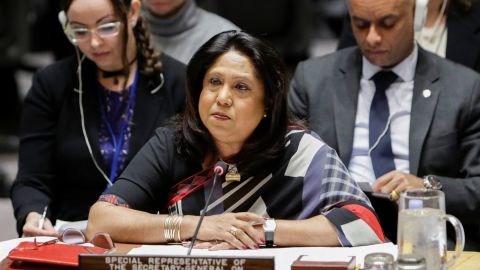
Pramila Patten, Special Representative of the UN Secretary-General on Sexual Violence in Conflict, at a Security Council meeting in New York in 2018.Xinhua/ShutterstockCNN —
Russia is using rape and sexual violence as part of its “military strategy” in Ukraine, a UN envoy said this week.
The claim follows data released by a panel of UN experts recently that verified “more than a hundred cases” of rape or sexual assault incidents reported in Ukraine since February.
“When you hear women testify about Russian soldiers equipped with Viagra, it’s clearly a military strategy,” Pramila Patten, UN Special Representative on Sexual Violence in Conflict, said in an interview with AFP on Thursday.
Tiếp tục đọc “Russia using rape as ‘military strategy’ in Ukraine: UN envoy”
Sahel (Africa) violence could drive more refugees toward Europe
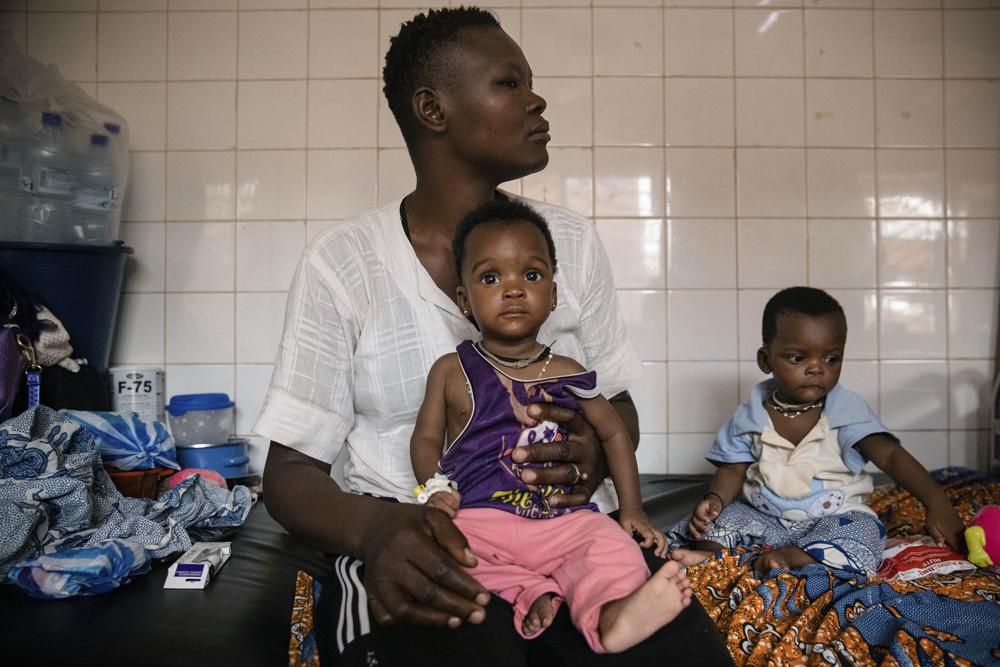
GENEVA (AP) — The head of the U.N. refugee agency says “Europe should be much more worried” that more people from Africa’s Sahel region could seek to move north to escape violence, climate crises like droughts and floods and the impact of growing food shortages caused by Russia’s invasion of Ukraine.Filippo Grandi, the U.N. High Commissioner for Refugees, called for more efforts to build peace in the world as conflicts and crises like those in Ukraine, Venezuela, Myanmar, Syria and beyond have driven over 100 million people to leave their homes — both within their own countries and abroad.
UNHCR, the U.N.’s refugee agency, on Thursday issued its latest “Global Trends” report, which found over 89 million people had been displaced by conflict, climate change, violence and human rights abuses by 2021. The figure has since swelled after at least 12 million people fled their homes in Ukraine to other parts of the country or abroad following Russia’s Feb. 24 invasion.
This year, the world is also facing growing food insecurity — Ukraine is a key European breadbasket and the war has greatly hurt grain exports
The African Union, whose continent relies on imports of wheat and other food from Ukraine, has appealed for help to access grain that is blocked in Ukrainian silos and unable to leave Ukrainian ports amid a Russian naval blockade in the Black Sea.
Ukraine’s ‘Nuremberg Moment’ Amid Flood of Alleged Russian War Crimes
So many crimes are being documented that they need a new court.
By Robbie Gramer, a diplomacy and national security reporter at Foreign Policy, and Amy Mackinnon, a national security and intelligence reporter at Foreign Policy.

JUNE 10, 2022, 3:48 PM
As Russia continues its assault on Ukraine, top Biden administration officials are working behind the scenes with the Ukrainian government and European allies to document a tsunami of war crimes allegedly committed by Russian forces.
Putin’s War
How the world is dealing with Russia’s invasion of Ukraine.
But the sheer volume of the documented war crime cases could be too overwhelming for Ukraine’s justice system as well as for the International Criminal Court (ICC), raising questions of how many cases will be brought to trial and how many accused Russian war criminals could ultimately face justice.
Tiếp tục đọc “Ukraine’s ‘Nuremberg Moment’ Amid Flood of Alleged Russian War Crimes”
Russian troops use rape as ‘an instrument of war’ in Ukraine, rights groups allege
By Tara John, Oleksandra Ochman and Sandi Sidhu, CNN
Updated 0420 GMT (1220 HKT) April 22, 2022

Karina Yershova, right, is pictured with her grandmother in an undated photograph provided by the family.
Lviv, Ukraine (CNN)When Russian troops invaded Ukraine and began closing in on its capital, Kyiv, Andrii Dereko begged his 22-year-old stepdaughter Karina Yershova to leave the suburb where she lived.
But Yershova insisted she wanted to remain in Bucha, telling him: “Don’t talk nonsense, everything will be fine — there will be no war,” he said.
With her tattoos and long brown hair, Yershova stood out in a crowd, her stepfather said, adding that despite living with rheumatoid arthritis, she had a fiercely independent spirit: “She herself decided how to live.”
Yershova worked at a sushi restaurant in Bucha, and hoped to earn her university degree in the future, Dereko said: “She wanted to develop herself.”
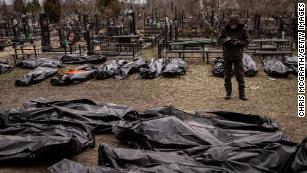
Unclaimed and unidentified: Bucha empties its mass graves 03:24
As Russian soldiers surrounded Bucha in early March, Yershova hid in an apartment with two other friends. On one of the last occasions Dereko and his wife, Olena, heard from Yershova, she told them she had left the apartment to get food from a nearby supermarket.
Tiếp tục đọc “Russian troops use rape as ‘an instrument of war’ in Ukraine, rights groups allege”
 CVD
CVD 