Adoption Fraud Separated Generations of South Korean Children From Their Families, AP Finds

Pbs.org

Robert Calabretta holds his baby photo from before he was adopted out of South Korea to a family in the United States, Thursday, Feb. 15, 2024, at his apartment in New York.

Robert Calabretta holds his baby photo from before he was adopted out of South Korea to a family in the United States, Thursday, Feb. 15, 2024, at his apartment in New York. (AP Photo/David Goldman)

In partnership with AP: September 19, 2024 by Kim Tong-hyung Claire Galofaro

SEOUL, South Korea (AP) — As the plane descended into Seoul, Robert Calabretta swaddled himself in a blanket, his knees tucked into his chest like a baby in the womb. A single tear ran down his cheek.

The 34-year-old felt like a newborn — he was about to meet his parents for the first time since he was 3 days old.

Most of his life, he thought they’d abandoned him for adoption to the United States. When he finally found them, he learned the truth: The origin story on his adoption paperwork was a lie. Instead, he said, his parents were told in 1986 that their infant was very sick and they thought he had died.

“I am so sorry,” his birth father had written when they found each other, his words interrupted by fits of weeping. “I miss you. How did you endure this cruel world?”

Robert Calabretta sits for a portrait at the restaurant where he works, Thursday, Feb. 15, 2024, in New York. Most of his life, Calabretta thought his parents abandoned him for adoption to the United States. When he finally found them, he learned the truth: The origin story on his adoption paperwork was a lie. Instead, he said, his parents were told in 1986 that their infant was very sick and they thought he had died. (AP Photo/David Goldman)

Robert Calabretta sits for a portrait at the restaurant where he works, Feb. 15, 2024, in New York. (AP Photo/David Goldman)

Calabretta is among a growing and vocal community of victims of an adoption system they accuse of searching out children for would-be parents, rather than finding parents for vulnerable children — sometimes with devastating consequences only surfacing today.

South Korea’s government, Western countries and adoption agencies worked in tandem to supply some 200,000 Korean children to parents overseas, despite years of evidence they were being procured through questionable or downright unscrupulous means, an investigation led by The Associated Press found. Those children grew up and searched for their roots — and some realized they are not who they were told.

Their stories have sparked a reckoning that is rocking the international adoption industry, which was built in South Korea and spread around the world. European countries have launched investigations and halted international adoption. The South Korean government has accepted a fact-finding commission under pressure from adoptees, and hundreds have submitted their cases for review.
Tiếp tục đọc “Adoption Fraud Separated Generations of South Korean Children From Their Families, AP Finds”

Watch The British-Soviet Invasion of Iran (1941)

briliantmap.com

The Anglo-Soviet invasion of Iran (Operation Countenance) occurred in August 1941, during World War II.

The invasion was carried out jointly by the United Kingdom and the Soviet Union, aiming primarily to secure Iranian territory against Axis influence and protect critical supply routes.

Here’s a comprehensive overview:

Lead-Up and Reasons

Strategic Importance:

  • Iran had a strategically critical position, particularly as a transportation corridor between the Allies and the Soviet Union.
  • Iranian infrastructure, notably the Trans-Iranian Railway, offered a route for delivering vital supplies from the Allies (mostly Britain and the U.S.) to the USSR following Germany’s invasion (Operation Barbarossa) in June 1941.

Iranian Position and Axis Influence:

  • Although officially neutral, the Iranian ruler Reza Shah Pahlavi sympathized with Germany, partially due to historical rivalry with Britain and Russia.
  • Germany had established substantial diplomatic and commercial influence in Iran, with many German nationals working in strategic industries, raising fears of espionage and sabotage among the Allies.

Diplomatic Tensions:

  • Britain and the Soviet Union demanded Iran expel German nationals perceived as threats; Iran hesitated or refused, increasing Allied suspicions and tension.

Invasion: Operation Countenance

Date and Execution:

Began on August 25, 1941, when British forces advanced from the south and west, while Soviet forces attacked from the north.

Rapid military operations overwhelmed Iran’s defenses, which were relatively weak and poorly equipped compared to the invading powers.

Key Events:

  • British forces captured key oil fields in Khuzestan (Abadan), securing critical petroleum resources.
  • Soviet troops quickly took control of northern provinces, including major cities such as Tabriz and Mashhad.
  • Air and naval superiority allowed quick suppression of Iranian resistance.

Iranian Response: The Iranian army, despite fighting briefly in several locations, was rapidly overwhelmed, with significant casualties but limited overall resistance.

Tehran quickly realized the futility of resistance and began negotiations.

Tiếp tục đọc “Watch The British-Soviet Invasion of Iran (1941)”

Exploited in Russia: African women forced to make drones

DW.com June 14, 2025

They hoped for a better career but ended up in Russia’s war factories. A new study reveals how young women, mainly from Africa, have been being exploited. Some of those affected have shared their stories with DW.

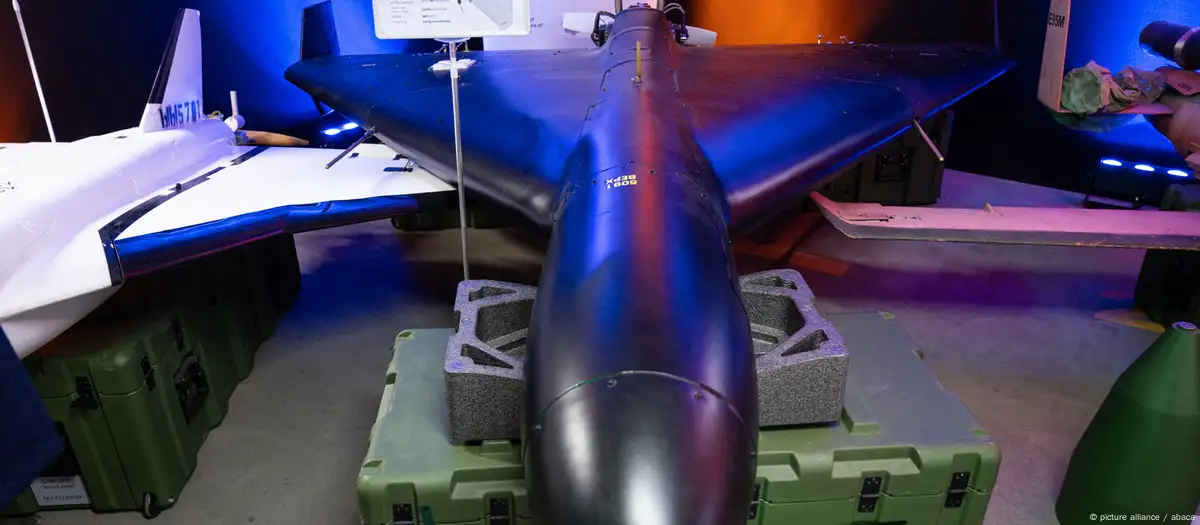
The Alabuga production facility manufactures Geran-2 combat drones based on the Iranian Shahed-136 modelImage: picture alliance / abaca

“I like Russia, its language and culture,” Aminata, 20, told DW. She wants to leave her home country of Sierra Leone in a few weeks to pursue an apprenticeship around 7,000 kilometers (4,300 miles) away in Russia.

Tiếp tục đọc “Exploited in Russia: African women forced to make drones”

Number of internally displaced people tops 80 million for first time

“Internal displacement refers to the forced movement of people within the country they live in.” 

Internal-displacement.org

     –  83.4 million people were living in internal displacement at the end of 2024, more than twice as many as only six years ago (2018).

     –  90 per cent had fled conflict and violence. In Sudan, conflict led to 11.6 million internally displaced people (IDPs), the most ever for one country. Nearly the entire population of the Gaza Strip remained displaced at the end of the year.

     –  Disasters triggered nearly twice as many movements in 2024 as the annual average over the past decade. The 11 million disaster displacements in the United States were the most ever recorded for a single country. 

GENEVA, Switzerland – The number of internally displaced people (IDPs) reached 83.4 million at the end of 2024, the highest figure ever recorded, according to the Global Report on Internal Displacement 2025 published today by the Internal Displacement Monitoring Centre (IDMC). This is equivalent to the population of Germany, and more than double the number from just six years ago.  

“Internal displacement is where conflict, poverty and climate collide, hitting the most vulnerable the hardest,” said Alexandra Bilak, IDMC director“These latest numbers prove that internal displacement is not just a humanitarian crisis; it’s a clear development and political challenge that requires far more attention than it currently receives.”

Tiếp tục đọc “Number of internally displaced people tops 80 million for first time”

Vietnam artist in race to ensure ‘heroic mothers’ not forgotten

Hoạ sĩ Đặng Ái Việt Hành trình khắc hoạ hơn 3000 chân dung Mẹ Việt Nam Anh Hùng

Reuters.com By Minh Nguyen March 29, 2023 4:39 PM GMT+7

CAO LANH CITY, Vietnam, March 29 (Reuters) – On her trusty motorcycle, Vietnamese artist Dang Ai Viet travels around the Southeast Asian country in a quest to ensure that the thousands of women who suffered the loss of two or more loved ones during the Vietnam War are not forgotten.

The 75-year-old has painted the portraits of 2,765 of the women, who are part of a group known in Vietnam as “heroic mothers”, in recognition of their sacrifice during the war that ended in 1975.

The Reuters Tariff Watch newsletter is your daily guide to the latest global trade and tariff news. Sign up here.

Tiếp tục đọc “Vietnam artist in race to ensure ‘heroic mothers’ not forgotten”

From Gaza to Vietnam, what is the value of a photo?

Two maimed children, two iconic images – and no end to barbarity in sight.

Mahmoud Ajjour, nine (left), who was injured during an Israeli attack on Gaza City in March 2024, finds refuge and medical help in Doha, Qatar, on June 28, 2024 [Samar Abu Elouf, for The New York Times] Kim Phuc, nine (right) is seen running down Route 1 near Trang Bang after a South Vietnamese plane accidentally dropped its flaming napalm on its own troops and civilians, on June 8, 1972. The terrified girl ripped off her burning clothes while fleeing [Nick Ut/AP]

This month, Palestinian photographer Samar Abu Elouf won the 2025 World Press Photo of the Year award for her image titled Mahmoud Ajjour, Aged Nine, taken last year for The New York Times.

Ajjour had both of his arms blown off by an Israeli strike on the Gaza Strip, where Israel’s ongoing genocide has now killed at least 52,365 Palestinians since October 2023. In the award-winning photograph, the boy’s head and armless torso are cast in partial shadow, his gaze nevertheless intense in its emptiness.

Tiếp tục đọc “From Gaza to Vietnam, what is the value of a photo?”

Viet Thanh Nguyen on 50 Years After Vietnam War

We mark 50 years since the end of the U.S. war on Vietnam with the acclaimed Vietnamese American writer Viet Thanh Nguyen. On April 30, 1975, North Vietnamese troops took control of the South Vietnamese capital of Saigon as video of U.S. personnel being airlifted out of the city were broadcast around the world. Some 3 million Vietnamese people were killed in the U.S. war, along with about 58,000 U.S. soldiers. Hundreds of thousands of Lao, Hmong and Cambodians also died, and the impact of the war is still being felt in Vietnam and the region.

Nguyen says while the Vietnam War was deeply divisive in the United States during the 1960s and ’70s, American interference in Southeast Asia goes back to President Woodrow Wilson in 1919, when he rejected Vietnamese demands for independence from France. “And from that mistake, we’ve had a series of mistakes over the past century, mostly revolving around the fact that the United States did not recognize Vietnamese self-determination,” says Nguyen.

We Are Here Because You Are There”: Viet Thanh Nguyen on How U.S. Foreign Policy Creates Refugees

Pulitzer Prize-winning Vietnamese American writer Viet Thanh Nguyen discusses why he chooses to use the term “refugee” in his books, and speaks about his own experience as a refugee. His new novel tells the story of a man who arrives in France as a refugee from Vietnam, and explores the main character’s questioning of ideology and different visions of liberation. Titled “The Committed,” the book is a sequel to “The Sympathizer,” which won the Pulitzer Prize for Fiction in 2016. Nguyen says his protagonist is “a man of two faces and two minds” whose ability to see beyond Cold War divisions makes him the perfect figure to satirize the facile stories people tell themselves about the world. “He’s always going beyond the surface binaries to look underneath.” Nguyen is the chair of English and professor of English and American studies and ethnicity at the University of Southern California. His other books include “The Refugees” and the edited collection “The Displaced: Refugee Writers on Refugee Lives.”

Viet Thanh Nguyen Interview: The Vietnam War Refugee Experience Behind The Sympathizer

Pulitzer Prize-winning author Viet Thanh Nguyen reflects on his childhood as a refugee in America, his writing career, and family: from the trauma of displacement to the healing found in fatherhood and literature. Nguyen shares how these experiences have shaped his life and work, from his novel The Sympathizer to his commentary on war, cultural identity, and American life.

00:00 Introduction to Viet Thanh Nguyen and The Sympathizer

00:49 Refugee journey, family separation, and overcoming trauma

03:43 Humor, cultural expectations, and Vietnamese Catholic roots 05:29 Cultural identity, rebellion, and hidden writing career

07:14 Family relationships, cultural silence, and lessons in parenting 09:35 Impact of fatherhood, learning from children, and rediscovering play

12:13 Art, personal identity, and American cultural values 14:49 Vietnamese American identity, racism, and vision for the future

17:27 Teaching about war, challenges of digital information overload

20:31 Apocalypse Now, self identity struggles, and power of storytelling

24:41 Vietnam War legacy, draft-era resistance vs. modern volunteer military

26:47 Family history, generational trauma, and refugee story from Vietnam

29:48 Writing, fatherhood, and healing

This is the moment of Truth. History will judge us all.

U.N. secretary general: I repeat my call for a humanitarian ceasefire in the Middle East, the unconditional release of all hostages, and the delivery of life-saving supplies at the scale needed. Everyone must assume their responsibilities. This is a moment of truth. History will judge us all.

Nobel Foundation withdraws invitation to Russia, Belarus and Iran to attend ceremonies

APnews.com

FILE - The Nobel laureates and the royal family of Sweden during the Nobel Prize award ceremony at the Concert Hall in Stockholm, Saturday Dec. 10 2022. The Nobel Foundation has withdrawn its invitation for representatives of Russia, Belarus and Iran to attend this year’s Nobel Prize award ceremonies after the decision to invite them “provoked strong reactions.” Saturday's U-turn came after several Swedish lawmakers said they would boycott this year’s Nobel Prize award ceremonies. (Pontus Lundahl/TT via AP, File)

FILE – The Nobel laureates and the royal family of Sweden during the Nobel Prize award ceremony at the Concert Hall in Stockholm, Saturday Dec. 10 2022. The Nobel Foundation has withdrawn its invitation for representatives of Russia, Belarus and Iran to attend this year’s Nobel Prize award ceremonies after the decision to invite them “provoked strong reactions.” Saturday’s U-turn came after several Swedish lawmakers said they would boycott this year’s Nobel Prize award ceremonies. (Pontus Lundahl/TT via AP, File)

Updated 4:44 AM GMT+7, September 3, 2023Share

STOCKHOLM (AP) — The Nobel Foundation on Saturday withdrew its invitation for representatives of Russia, Belarus and Iran to attend this year’s Nobel Prize award ceremonies after the decision announced a day earlier “provoked strong reactions.”

Several Swedish lawmakers said Friday they would boycott this year’s Nobel Prize award ceremonies in the Swedish capital, Stockholm, after the private foundation that administers the prestigious awards changed its position from a year earlier and invited representatives of the three countries to attend, saying it “promotes opportunities to convey the important messages of the Nobel Prize to everyone.”

Some of the lawmakers cited Russia’s war on Ukraine and the crackdown on human rights in Iran as reasons for their boycott. Belarusian opposition figure Sviatlana Tsikhanouskaya on Friday called on the Swedish Nobel Foundation and the Norwegian Nobel Committee not to invite representatives of Belarusian President Alexander Lukashenko’s “illegitimate regime to any events.”

Tiếp tục đọc “Nobel Foundation withdraws invitation to Russia, Belarus and Iran to attend ceremonies”

War Propaganda

historians.org

From What Is Propaganda? (1944) By Ralph D. Casey (Published July 1944)

The Nazis prepared for war from the moment Hitler came into power in 1933. In the feverish building up of German striking power, they had the support of the professional military men. The Nazis not only produced the weapons of war; they geared their economy for the strain of a future conflict. They carried on political intrigues to promote their purposes. Their propaganda machine had long been a going concern when Hitler felt ready to strike at Poland, the first step in an ambitious plan to lay the world at his feet.

Military, economic, political, and propaganda weapons were forged for the fray. Britain and France and, soon after, other peaceful nations were compelled to forge them to resist the Nazi onrush.

Today’s war is four-dimensional. It is a combination of military, economic, political, and propaganda pressure against the enemy. An appeal to force alone is not regarded as enough, in the twentieth century, to win final and lasting victory. War is fought on all four fronts at once—the military front, the economic front, the political front, and the propaganda front.

To understand how this four-dimensional warfare has come about, we have to look at history. We have to go back to the rise of nationalism in the eighteenth century.

Before the American and French revolutions took place at the end of the eighteenth century, many armies fought in the pay of monarchies, such as the Bourbons, Hapsburgs, and Hohenzollerns, or of individual leaders. They were mercenary armies. They did not fight for patriotic motives. They did not fight for causes. They fought because fighting was their business. No fight, no pay!

Tiếp tục đọc “War Propaganda”

Word war: In Russia-Ukraine war, information became a weapon

APnews.com

By DAVID KLEPPERFebruary 23, 2023

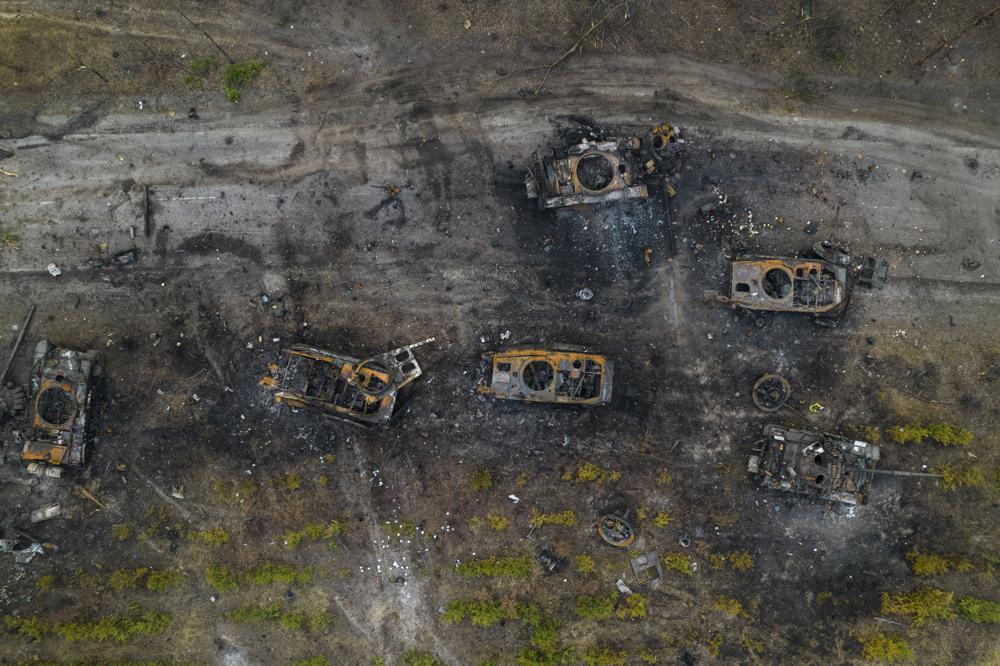
FILE - Destroyed Russian armored vehicles sit on the outskirts of Kyiv, Ukraine, March 31, 2022. In the year since Russia invaded Ukraine, disinformation and propaganda have emerged as key weapons in the Kremlin's arsenal. (AP Photo/Rodrigo Abd, File)

FILE – Destroyed Russian armored vehicles sit on the outskirts of Kyiv, Ukraine, March 31, 2022. In the year since Russia invaded Ukraine, disinformation and propaganda have emerged as key weapons in the Kremlin’s arsenal. (AP Photo/Rodrigo Abd, File)

WASHINGTON (AP) — Russia’s invasion of Ukraine is the deadliest conflict in Europe since World War II, and the first to see algorithms and TikTok videos deployed alongside fighter planes and tanks.

The online fight has played out on computer screens and smartphones around the globe as Russia used disinformation, propaganda and conspiracy theories to justify its invasion, silence domestic opposition and sow discord among its adversaries.

Now in its second year, the war is likely to spawn even more disinformation as Russia looks to break the will of Ukraine and its allies.

MORE WAR COVERAGE

Tiếp tục đọc “Word war: In Russia-Ukraine war, information became a weapon”

A Human Approach to World Peace

The 14th Dalai Lama of Tibet

When we rise in the morning and listen to the radio or read the newspaper, we are confronted with the same sad news: violence, crime, wars, and disasters. I cannot recall a single day without a report of something terrible happening somewhere. Even in these modern times it is clear that one’s precious life is not safe. No former generation has had to experience so much bad news as we face today; this constant awareness of fear and tension should make any sensitive and compassionate person question seriously the progress of our modern world.
 
It is ironic that the more serious problems emanate from the more industrially advanced societies. Science and technology have worked wonders in many fields, but the basic human problems remain. There is unprecedented literacy, yet this universal education does not seem to have fostered goodness, but only mental restlessness and discontent instead. There is no doubt about the increase in our material progress and technology, but somehow this is not sufficient as we have not yet succeeded in bringing about peace and happiness or in overcoming suffering.
 
We can only conclude that there must be something seriously wrong with our progress and development, and if we do not check it in time there could be disastrous consequences for the future of humanity. I am not at all against science and technology – they have contributed immensely to the overall experience of humankind; to our material comfort and well-being and to our greater understanding of the world we live in. But if we give too much emphasis to science and technology we are in danger of losing touch with those aspects of human knowledge and understanding that aspire towards honesty and altruism.
 
Science and technology, though capable of creating immeasurable material comfort, cannot replace the age-old spiritual and humanitarian values that have largely shaped world civilization, in all its national forms, as we know it today. No one can deny the unprecedented material benefit of science and technology, but our basic human problems remain; we are still faced with the same, if not more, suffering, fear, and tension. Thus it is only logical to try to strike a balance between material developments on the one hand and the development of spiritual, human values on the other. In order to bring about this great adjustment, we need to revive our humanitarian values.
 
I am sure that many people share my concern about the present worldwide moral crisis and will join in my appeal to all humanitarians and religious practitioners who also share this concern to help make our societies more compassionate, just, and equitable. I do not speak as a Buddhist or even as a Tibetan. Nor do I speak as an expert on international politics (though I unavoidably comment on these matters). Rather, I speak simply as a human being, as an upholder of the humanitarian values that are the bedrock not only of Mahayana Buddhism but of all the great world religions. From this perspective I share with you my personal outlook – that:

Tiếp tục đọc “A Human Approach to World Peace”

Gas: a history of Energy Security in the EU. And what’s next post-Russia?

February 14, 2023 by James Kneebone

energypost.eu

The security of supply of gas has been the hottest topic of the last 12 months since Russia invaded Ukraine. James Kneebone at the Florence School of Regulation (FSR) has written an explainer that lays out the EU’s history of dealing with energy security, going back to the 1990s. Because the EU has a single market for natural gas and widely shared value chains (pipelines, LNG terminals, storage, etc.), impacts are felt across the bloc. But that interconnectedness is also a strength and the basis for ensuring security across the region. Kneebone also details the updated regulations that are behind the drive to build in new capacity and obligations for solidarity between Member States. It means that today, the coordination and cooperation for allocating resources and delivering better energy security are stronger than ever.

What is security of supply?  

The European Environment Agency (EEA) define security of energy supply as “…the availability of energy at all times in various forms, in sufficient quantities, and at reasonable and/or affordable prices.” In the context of gas security of supply specifically, the concept refers to the provision of gaseous energy, namely ‘natural gas’[1].

What does a security of supply risk look like?  

Tiếp tục đọc “Gas: a history of Energy Security in the EU. And what’s next post-Russia?”

The Nord Stream gas pineline leaks the worst ever greenhouse gas event? Why it happened and what are the damages to the climate?

*Nord Stream is a network of natural gas pipelines run under the Baltic Sea from Russia to Germany

Nord Stream gas leaks may be biggest ever, with warning of ‘large climate risk’

theguardian.com

‘Colossal amount’ of leaked methane, twice initial estimates, is equivalent to third of Denmark’s annual CO2 emissions or 1.3m cars

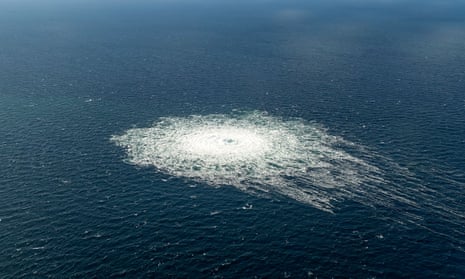
gas leak bubbling to surface of Baltic Sea
Scientists estimate the leaks could release up to 400,000 tonnes of methane into the atmosphere. Photograph: Danish Defence/AFP/Getty

Seascape: the state of our oceans is supported by

Scientists fear methane erupting from the burst Nord Stream pipelines into the Baltic Sea could be one of the worst natural gas leaks ever and pose significant climate risks.

Neither of the two breached Nord Stream pipelines, which run between Russia and Germany, was operational, but both contained natural gas. This mostly consists of methane – a greenhouse gas that is the biggest cause of climate heating after carbon dioxide.

Tiếp tục đọc “The Nord Stream gas pineline leaks the worst ever greenhouse gas event? Why it happened and what are the damages to the climate?”