Southeast Asia’s Geopolitical Centrality and the U.S.-Japan Alliance

JUN 11, 2015

CSIS – Building on a careful analysis of Southeast Asia’s recent history, politics, economics, and place within the Asia Pacific, this report looks forward two decades to anticipate the development of trends in the region and how they will impact the U.S.-Japan alliance. How will Southeast Asian states come to grips with the political and economic rise of China? How will they modernize their military forces and security relationships, and what role can the United States and Japan play? How will they manage their disputes in the South China Sea, and how will they pursue greater regional integration? These questions will prove critical in understanding Southeast Asia’s role in the Asia Pacific, and in the U.S.-Japan alliance, in the decades ahead.

Publisher CSIS/Rowman & Littlefield
ISBN 978-1-4422-4086-5 (pb); 978-1-4422-4087-2 (eBook)


Australia Has a Larger Role to Play in the South China Sea

by  • June 4, 2015

Both the tone and substance of South China Sea discussions in Australian policy circles has undergone an important shift in recent months. What was previously a second-tier security concern to be watched closely and engaged diplomatically, but at a safe distance, has become a heated discussion about concrete responses. Australian policymakers are as concerned as anyone about China’s breakneck land reclamation in the Spratly Islands and the threats, both legal and military, they pose to the global commons. Australian officials and thinkers are seriously considering options to contest Chinese assertiveness, in tandem with the United States and other partners, which would have seemed distant possibilities a year ago. Tiếp tục đọc “Australia Has a Larger Role to Play in the South China Sea”

China Unlikely to Halt Island Construction in Disputed Sea

War, blocked shipping lanes among scenarios for South China Sea, State report says

The alleged on-going reclamation of Subi Reef by China is seen from Pag-asa Island in the Spratly Islands in the South China Sea, western Palawan Province, Philippines / AP

The alleged on-going reclamation of Subi Reef by China is seen from Pag-asa Island in the Spratly Islands in the South China Sea, western Palawan Province, Philippines / AP

BY:
June 9, 2015 5:00 am

Freebeacon – China will continue building islands in the disputed waters of the South China Sea but a major conflict in the region over the dispute is unlikely, according to a State Department security report.

“Beijing will continue to develop contested territories in the South China Sea,” says the internal report by the Overseas Security Advisory Council (OSAC). “Unlike fishing boats or patrol vessels, infrastructure investments, such as land reclamation and the construction of runways and lighthouses, signal a more permanent presence.” Tiếp tục đọc “China Unlikely to Halt Island Construction in Disputed Sea”

Trung Quốc bành trướng trên Biển Đông, ngư dân Philippines đành treo lưới

08/06/2015 09:50

(TNO) Trung Quốc chiếm bãi cạn Scarborough và tăng cường hoạt động xây dựng đảo nhân tạo trái phép trên Biển Đông đã cản trở hoạt động của ngư dân Philippines. Nhiều người đành phải neo tàu, gác lưới tìm công việc khác.

Trung Quốc bành trướng trên Biển Đông, ngư dân Philippines đành treo lưới - ảnh 1

Ngư dân Philippines đi về tay không sau khi đến gần khu vực bãi cạn Scarborough
và bị Trung Quốc dùng vòi rồng và súng xua đuổi – Ảnh: Reuters
Trong nhiều năm qua, Biển Đông là nơi chia sẻ ngư trường của các ngư dân trong khu vực. Tàu cá các nước qua lại tấp nập, ngư dân dừng tàu chia sẻ với nhau những điếu thuốc hay khoai tây hoặc tán gẫu, theo bài viết trên tờ The Washington Post (Mỹ) ngày 6.6.

Tiếp tục đọc “Trung Quốc bành trướng trên Biển Đông, ngư dân Philippines đành treo lưới”

ASEAN must take a collective stance on the South China Sea

4 June 2015

Author: Vignesh Ram, Manipal University

 
EAF – The South China Sea dispute has become the new normal in ASEAN meetings. The dispute, with its overlapping claims on various land features in the South China Sea, has started to figure as the most important territorial disputes in Asia, one that risks becoming a major power confrontation in the region. With this in mind, ASEAN must take a collective stand on the South China Sea.

Beijing deployed the Haiyang Shiyou oil rig 981 in May 2015 close to the Paracel Islands, triggering a furious reaction in Hanoi and the most serious uptick in tensions in the waters in years. (Photo: AAP) Tiếp tục đọc “ASEAN must take a collective stance on the South China Sea”

Chinese vessels threaten Vietnamese rescuers on mission near Paracel Island

By Nguyen Tu, Thanh Nien News

DA NANG – Tuesday, June 02, 2015 15:06

A Vietnamese sailor was transferred to the rescue boat coded SAR 412 on Monday. Photo: Nguyen Tu

Vietnamese rescuers on mission to save a fisherman near Hoang Sa (Paracel) Islands were threatened by Chinese vessels and asked to change their course Monday, the Vietnam Maritime Search and Rescue Coordination Center (MRCC) said.

Last Friday afternoon, a Vietnamese fishing boat with 45 crew members was traveling some 410 nautical miles off the central city of sDa Nang when a sailor named Ngoc suffered chest pains. Tiếp tục đọc “Chinese vessels threaten Vietnamese rescuers on mission near Paracel Island”

Sabah’s Shadow on the South China Sea

• By Jay L. Batongbacal I May 27, 2015

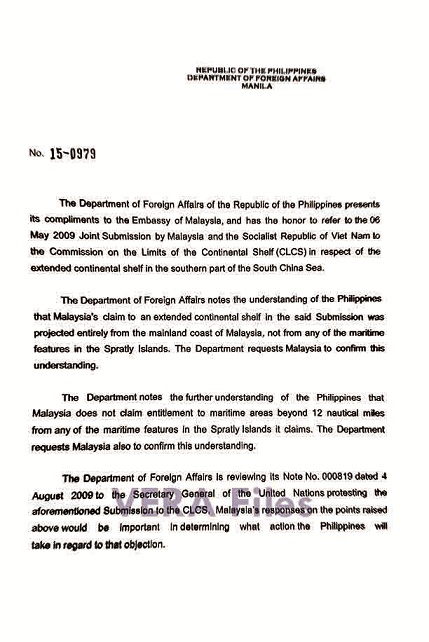
cogitasia – Philippine media went into a minor frenzy with the startling news that Manila purportedly offered Kuala Lumpur a quid pro quo in March: dropping the Philippine claim to North Borneo (Malaysia’s Sabah State) in exchange for Malaysian support for Manila’s arbitration case over the South China Sea. The media reports were quickly denied by the Philippines Department of Foreign Affairs, which noted the total absence of any reference to such a deal in the note that set off the firestorm. Recently, President Benigno Aquino III had to reiterate that his administration was not dropping the claim, prompting Malaysia to summon the Philippine Charge d’Affaires. Tiếp tục đọc “Sabah’s Shadow on the South China Sea”

Enter Science & China’s Blue Economy in the South China Sea’s Policy Discussion

by  • June 2, 2015 •

By James Borton

Source: Vladimir Varfolomeev's flickr photostream, used under a creative commons license.

cogitasia – The role of marine science and the emergence of China’s blue economy helped frame a new narrative on the South China Sea’s policy debate, as shown at a CSIS discussion on May 21titled “The Convergence of Marine Science and Geopolitics in the South China Sea.” Two of the panelists John McManus from the University of Miami’s Rosentiel School of Marine & Atmospheric Science and Kathleen Walsh from the U.S. Naval War College agree that the South China Sea is not simply a sovereignty dispute but is likely to be recognized as one of the most significant environmental issues of the 21st century. Tiếp tục đọc “Enter Science & China’s Blue Economy in the South China Sea’s Policy Discussion”

In defense of facts in the South China Sea

AMTI – Secretary of Defense Ash Carter’s address at this weekend’s Shangri-La Dialogue was generally well received by conference attendees and Asia-security watchers. A few critics have argued that Carter was “just talk.” What none have noted, however, is the fact that the Secretary’s remarks were the latest installation in a series of moves by the administration to articulate a fact-based approach to the South China Sea. This approach is a nuanced one and does not necessarily constitute a “strategy” for countering China’s recent moves. It is, however, a wise way to engage two key audiences to whom Carter was speaking at Shangri-La: other states in the region and China itself. Let me explain.

Tiếp tục đọc “In defense of facts in the South China Sea”

Images show Vietnam South China Sea reclamation but not as vast as China’s actions

The Telegraph

Images show Vietnam South China Sea reclamation but not as vast as China’s actions

The expansion of the land area of Vietnamese-controlled Sand Cay and West London Reef in the Spratly is shown in satellite images from Washington’s Centre for Strategic and International Studies

Tiếp tục đọc “Images show Vietnam South China Sea reclamation but not as vast as China’s actions”

Vietnam acquires land attack missiles for its submarines

CSIS
May 14, 2015

Vietnam acquires land attack missiles for its submarines. Vietnam is set to operate 50 Russian-made submarine-based land attack missiles that are capable of striking the Chinese mainland as well as Chinese ports and other facilities in the South China Sea, according to an April 30 Reuters report. Vietnam expert Carl Thayer said the purchase signaled a “massive shift” in Vietnam’s deterrence tactics. The new missiles, 28 of which have been delivered over the past two years, will bolster the threat of Vietnam’s new fleet of Kilo-class submarines.

Viet Nam’s Sovereignty Over Hoang Sa And Truong Sa Archipelagoes


PREFACE

BTOViet Nam has more than 3,000 coastal islands and two offshore archipelagoes, namely Hoang Sa archipelago and Truong Sa archipelago. The closest point of Hoang Sa archipelago is 120 nautical miles from the east of Quang Ngai. Meanwhile, the closest point of Truong Sa archipelago is about 250 nautical miles to the east of Cam Ranh Bay, Nha Trang city, Khanh Hoa province.

These two archipelagoes are the inseparable part of Viet Nam’s territory. The State of Viet Nam has already exercised the sovereignty over the two archipelagoes for hundred of years. The sovereignty of Viet Nam over Hoang Sa and Truong Sa archipelagoes is in full accordance with international law and supported by numerous legal and historical evidences.

With a view to helping the readers have a better understanding of the process of establishing and exercising Viet Nam’s sovereignty over these two archipelagoes, the National Political Publishing House publishes “Viet Nam’s Sovereignty over Hoang Sa and Truong Sa Archipelagoes.” Tiếp tục đọc “Viet Nam’s Sovereignty Over Hoang Sa And Truong Sa Archipelagoes”