Chihombori-Quao: USAID was ‘a wolf in sheep’s clothing’ in Africa

Al Jazeera English – 17-3-2025

Far from being a tragedy for Africa, the demise of the United States Agency for International Development (USAID) at the hands of President Donald Trump’s administration should be cause for celebration, argues Arikana Chihombori-Quao, the former ambassador of the African Union to the US.

Chihombori-Quao tells host Steve Clemons that USAID doesn’t have much to show for its decades of education and healthcare projects in Africa and often destabilised countries under the guise of environmental, human rights or social justice agendas.

And if the US is not interested in Africa, African leaders shouldn’t beg for better relations, she said. “It takes two to tango,” the former diplomat said.

Impact of Trump 2.0 on Southeast Asia’s Energy Geopolitics

Fulcrum.sg Published 3 Mar 2025 Mirza Sadaqat Huda

Trump’s rent-seeking foreign policy pertaining to energy and critical minerals will force Southeast Asian countries to do what they least desire: making a choice between China and the US.

The Trump administration’s insular and rent-seeking foreign policy will significantly alter the geopolitics of energy transition in Southeast Asia. This will manifest in two ways. First, the potential cessation of US involvement in the region’s energy sector will heighten fears of China’s dominance in energy infrastructure projects — including the ASEAN Power Grid (APG). Second, Trump’s intentions of using critical minerals as a bargaining chip for providing military assistance, if applied to the ASEAN region, will impact the regional vision for sustainable mineral development.

The shutting down of the United States Agency for International Development (USAID), an important player in the energy sector, will intensify existing fears of China’s dominance in electricity transmission and generation. As shown in Table 1, China provided approximately US$534 million in aid to the region’s energy sector in 2022, accounting for more than a quarter of the total share. Comparatively, the US provided only US$23.7 million, or 1 per cent of total energy-related aid to Southeast Asia. In addition, the China Southern Power Grid Company and State Grid Corporation of China own and operate significant portions of the national grids in Laos and the Philippines, respectively.

China Leads in Energy Aid

Table 1 Energy-related aid to Southeast Asia 2022 (excerpt) (USD, in %)

Donor Amount Contribution
China 534 million 26
ADB 368 million 18
Germany 274 million 13
Canada 231 million 11
South Korea 211 million 10
Japan 167 million 8
World Bank 90.0 million 4
EU Institutions 42.3 million 2
France 42.2 million 2
AIIB 34.8 million 2
United States 23.7 million 1

The table is modified from Lowy Institute’s (2024) Southeast Asia Aid Map.

Tiếp tục đọc “Impact of Trump 2.0 on Southeast Asia’s Energy Geopolitics”

The National Security Imperative of USAID’s Food Security Programs

Climateandsecurity.org

As of today, the Trump Administration has paused two essential US global food security initiatives, Feed the Future and the Famine Early Warning Systems Network (FEWS NET). Created in reaction to the 2007-8 global food crisis and resulting instability, Feed the Future is a marquee US government food security program and tool for implementing the bipartisan Global Food Security Act, working in 20 countries to build a more resilient food system and supporting agricultural innovation at 17 US universities. Operating since 1985, FEWS NET provides rigorous analysis and forecasting of acute food insecurity to inform US and other humanitarian responses in 30 countries.

These programs make invaluable contributions to US national security and global stability. For example, Feed the Future builds resilience in five countries where the US National Intelligence Estimate on climate change assesses “building resilience…would probably be especially helpful in mitigating future risks to US interests.” In Central America, where drought during growing seasons has driven increased migration to the United States, Honduran Feed the Future beneficiaries report a 78% lower intent to migrate than the wider population. Meanwhile, FEWSNET’s data and analysis more quickly and efficiently direct US humanitarian support in reaction to conflict, economic shocks, and extreme weather, including in regions where the US military is deployed. 

Both programs have historically received consistent bipartisan support. Speaking at the launch of a new Feed the Future initiative last year, Senator John Boozman (R-AR) noted, “food security is national security.” Another Feed the Future supporter, Representative Tracey Mann (R-KS 1st District), has highlighted the value of his district’s Feed the Future Innovation Lab and stated that global food security programs have “an especially strong return on investment because they support American agriculture producers today, while greatly reducing the need for conflict or war-related dollars spent tomorrow” and are “a way to stop wars before they start.” As Executive Director of the World Food Program (2017-2023), former South Carolina Governor and Representative David Beasely testified to the Senate that “Investments in early warning systems like USAID’s Famine Early Warning System…allow humanitarian partners to project and respond in real time to potential emergencies….Without this capacity to forecast food insecurity, the cost of humanitarian intervention is much greater, both in dollars and lives lost.”

Last year, dozens of national security leaders, including the former commanders of Indo-Pacific Command (INDOPACOM), Africa Command (AFRICOM), and Central Command (CENTCOM), endorsed the Council on Strategic Risks’ The Feeding Resilience Plan: Safeguarding US National Security at the Crossroads of Food and Climate Change. The report makes recommendations to US policymakers to better anticipate, prevent, and respond to food- and climate-driven national security threats, including to:

  • “Support long-term resilience building in vulnerable countries by sustaining and expanding Feed the Future,” noting it and similar programs “bolster vulnerable countries’ ability to withstand food shocks and forestall security threats or need for costly US assistance,” and
  • “Expand on USAID’s FEWS NET to include longer-term food insecurity warnings” and to have security and defense agencies better “integrate FEWSNET projections with processes to forecast political instability and conflict.”

Amid multiplying threats from instability, extreme weather, and geopolitical competition, these recommendations remain critical today, and highlight the important national security benefits of capabilities like Feed the Future and FEWS NET.  

USAID Provides Critical Benefits to US National Security

Councilonstrategicrisks.org February 4, 2025

Center for Climate and Security, CSR Blog


The Trump Administration’s effort to try to shut down USAID and pause all foreign aid directly harms US national security, including by interrupting critical investments into resilience, adaptation, conflict prevention, and peacebuilding. In 2021, 79 senior national security leaders, including 8 retired 4-star generals and admirals, a former Director of National Intelligence, and a former Director of the Central Intelligence Agency, signed the Challenge Accepted report, which argued that USAID investments in resilience and adaptation were critical to preventing instability and conflict and maintaining the US competitive edge with China. 

In the Indo-Pacific, USAID investments in disaster response and resilience pay dividends in strengthening relationships with allies and partners critical to that competition with China. Take Papua New Guinea as an example, where the US signed a new security pact in 2022, gaining exclusive access to develop and operate out of PNG bases. As Admiral Sam Locklear, former head of US INDOPACOM, and Erin Sikorsky, Director of CCS, wrote, “To sustain and maintain this presence, the United States will need access to reliable energy sources, clean, fresh water, and an economically vibrant, healthy local population.” Those functions are all supported by USAID efforts, such as the $3.5 million in disaster response funds the agency allocated to PNG in 2024. 

Meanwhile, in the Sahel region of Africa, USAID investments in climate adaptation and resilience help prevent extremist and terrorist group recruitment in communities affected by climate hazards.  For example, the Resilience in the Sahel Enhanced (RISE) program funded by USAID aims to break cycles of crisis in the region that enable groups like Boko Haram and ISIS-W to thrive. AS US AFRICOM Commander Michael Langley noted in testimony to Congress, international aid and development programs “attack the roots of terrorism and tyranny more than bullets and air strikes ever will.”

Further, as we outlined in this article last week, USAID programs focused on agriculture resilience have helped curb irregular migration from Honduras to the United States by helping local farmers weather risk and stay in the country. Upstream investments before crises hit cost significantly less than waiting until such challenges become full-blown crises. 

The bottom line is that addressing critical, bipartisan national security priorities requires a robust 3D approach to US foreign policy—defense, diplomacy, and development. Anything less is short-sighted and puts the country at risk. CCS Advisory Board member and former commander of US Central Command General Anthony Zinni (USMC, Ret.) has endorsed CCS recommendations to expand USAID work on climate and food security. He said as Co-Chair of the US Global Leadership Coalition’s National Security Advisory Council, “a freeze on all U.S. foreign assistance – at a time when our rivals are playing to win – takes the U.S. off the playing field and diminishes U.S. strength around the world.”

Swapping gas for batteries

USAID – Wednesday, December 18, 2024

Language

How USAID Supports Vietnam’s Journey to Net Zero

With over 70 million scooters and motorcycles on the roads in Vietnam, over 90% of households own one, two wheelers in Vietnam are ubiquitous. They form the backbone of the shipping sector, easily navigating the chaotic traffic and narrow back alleys to deliver goods. However, this contributes to air that is clouded with exhaust for Vietnamese citizens.

Emissions in Vietnam have multiplied fivefold in the last 20 years. As pollution worsened, the demand for electric vehicles (EV) skyrocketed. Vietnam is now home to the third largest two-wheeler EV market in the world—but the sector still lags far behind that of the gasoline-powered two wheelers. Improved government policies and a two wheel EV ecosystem are needed to support Vietnam’s EV shift, reduce emissions, and clean up its air.

Tiếp tục đọc “Swapping gas for batteries”

‘Too big to fail’: How USAID’s $9.5B supply chain vision unraveled

devex.com

Ten years ago, USAID unveiled the largest contract in its history, aimed at transforming health supply chains in lower-income countries. It has not gone according to plan.

By Michael IgoeBen StocktonMisbah Khan // 09 November 2023

Illustration by: Michelle Kondrich for TBIJ/Devex

Within its first two years of operation, the largest-ever project funded by the United States Agency for International Development was in crisis.

Money Matters

Funding insights, analysis, and news, including practical business adviceSubscribe now

The $9.5 billion initiative is led by U.S. contractor Chemonics International. Its aim was to transform global health supply chains — the sprawling system of procurement and transport that delivers lifesaving products including HIV/AIDS drugs, mosquito nets, and contraceptives to millions around the globe.

The supply chain project serves as the backbone for the U.S. government’s most celebrated global health programs, including the HIV/AIDS initiative credited with saving 25 million lives. But this project aimed to go one step further, by improving supply chains in lower-income countries to the point that they could be managed by the countries themselves.

If successful, said one USAID official, the agency would never have to fund another project like it again. But a decade later, that has not come to pass.

Tiếp tục đọc “‘Too big to fail’: How USAID’s $9.5B supply chain vision unraveled”

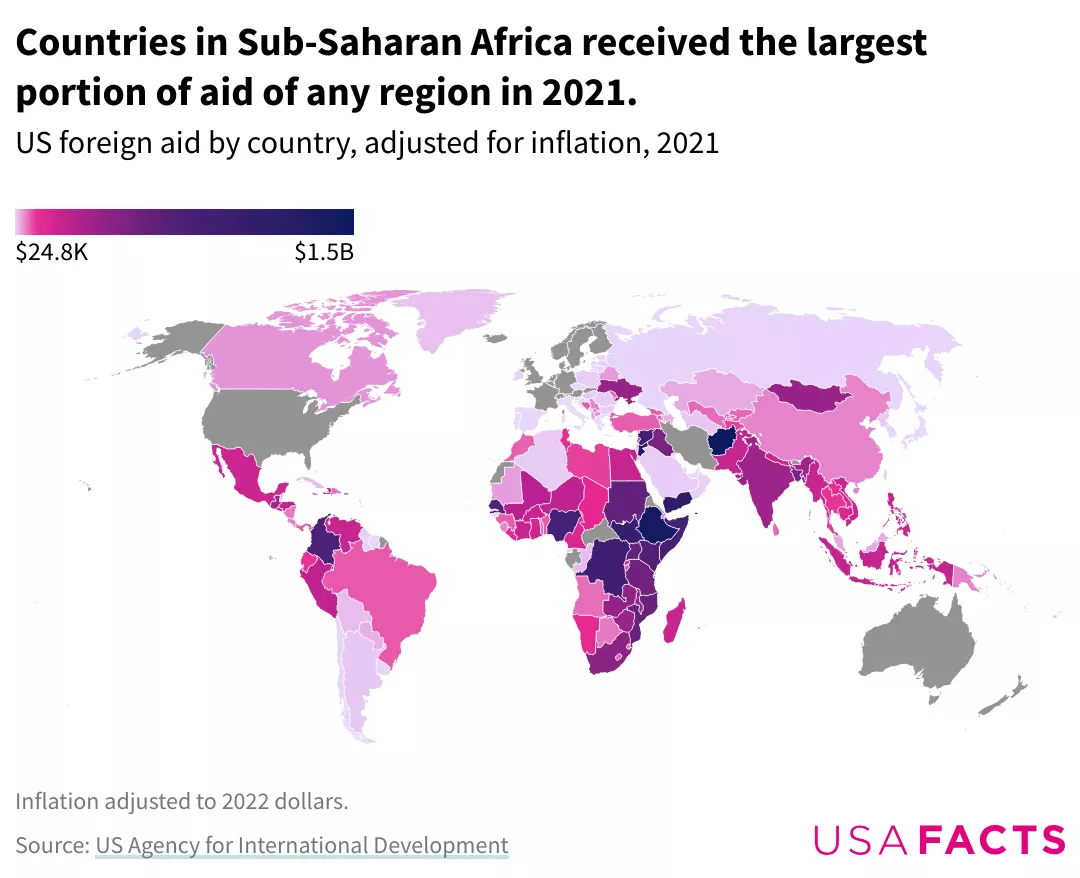
Which Countries Receive the Most Foreign Aid from the U.S.?

visualcapitalist.com

Source: US Agency for International Development  Get the data  Embed  Download image  Download SVG

Which Countries Receive the Most Foreign Aid From the U.S.?

The United States provided more than $50 billion in aid to over 150 countries and territories, regional funds, and NGOs in 2021.

Each year, Congress appropriates foreign assistance based on national security, commercial, and humanitarian interests.

In this map, USAFacts uses data from the U.S. Agency for International Development (USAID) to highlight the countries that received the largest portion of aid.

ADVERTISEMENT

Food Assistance and the War on Drugs

In 2021, the U.S. directed its aid towards nations grappling with internal conflicts and humanitarian crises.

Tiếp tục đọc “Which Countries Receive the Most Foreign Aid from the U.S.?”

Digital Growth and Financial Inclusion in Southeast Asia

Digital Growth and Financial Inclusion in Southeast Asia | Center for  Strategic and International Studies

May 13, 2021 CSIS

By Karen Lee and Diego Lingad

On April 12, 2021, Grab announced that it would list on the NASDAQ stock market after a landmark merger, catapulting the Singapore-based tech company into the global spotlight. For Southeast Asian citizens, however, Grab is a household name. Beginning as a ride-hailing app in 2012, Grab’s services have expanded beyond transportation to include food delivery and digital payments. Although “superapps” (apps that offer multiple digital services on a single platform) in Southeast Asia have been lauded for their efforts to promote greater financial inclusion, their ability to scale sustainably is less certain. Risks include underprepared national cybersecurity frameworks and a persistent digital divide that has improved slightly during the Covid-19 pandemic. These risks offer an area for the United States government and development finance institutions to encourage the secure and sustainable growth of fintech in the region. 

Tiếp tục đọc “Digital Growth and Financial Inclusion in Southeast Asia”

USAID tập huấn cách sử dụng điện thoại di động để hoạt động chi trả phí bảo vệ rừng minh bạch, an toàn và nhanh chóng hơn

USAID – Thứ Sáu, 9 October, 2020

Chị Điểu Thị Trang – Dự án Rừng và Đồng bằng (VFD) do USAID tài trợ

Chị Điểu Thị Trang là người dân tộc Châu Mạ sinh ra và trưởng thành ở khu vực Cát Tiên, tỉnh Lâm Đồng, Tây Nguyên, Việt Nam. Từ khi còn nhỏ đến nay đã kết hôn và có hai con, nguồn thu nhập của chị Trang và gia đình vẫn dựa vào rừng Cát Tiên.

Nhằm giảm phụ thuộc vào rừng và khuyến khích thành viên các cộng đồng sống dựa vào rừng tham gia vào hoạt động bảo vệ rừng bền vững tại nơi sinh sống, năm 2010 Chính phủ Việt Nam đã đưa vào triển khai hệ thống chi trả dịch vụ môi trường rừng (PFES). Theo quy định của hệ thống này, các công ty thủy điện sẽ trả cho thành viên các cộng đồng sống dựa vào rừng, giống như gia đình chị Trang, tiền bảo vệ các lưu vực sông để đảm bảo các công ty này có nguồn cung nước ổn định cho hoạt động sản xuất điện.

Đối với trường hợp của chị Trang, gia đình chị đã nhận gần 1.100 đô la (tương đương khoảng 24 triệu đồng) mỗi năm thông qua hệ thống PFES cho việc bảo vệ và chăm sóc các khu rừng tại Cát Tiên.

Tiếp tục đọc “USAID tập huấn cách sử dụng điện thoại di động để hoạt động chi trả phí bảo vệ rừng minh bạch, an toàn và nhanh chóng hơn”

USAID hỗ trợ huy động sự tham gia ủng hộ của các trưởng bản đối với các quỹ cộng đồng do phụ nữ quản lý nhằm mục tiêu xóa đói giảm nghèo và cải thiện sinh kế

usaid.gov – Thứ Ba, 22 December, 2020

Ông Vì Văn Hạnh, Trưởng bản LùnDự án Rừng và Đồng bằng Việt Nam (VFD) của USAID

Ông Vì Văn Hạnh – Trưởng bản Lùn, tỉnh Sơn La. Ngôi làng của ông cũng giống như các ngôi làng khác ở tỉnh Sơn La đều chịu chung tình trạng thiếu thốn cơ sở hạ tầng, ít cơ hội sinh kế và nghèo khó. Do người dân chuyển sang khai thác rừng để kiếm sống đã làm gia tăng áp lực và khiến các khu rừng rơi vào nguy cơ bị khai thác quá mức.

Để giải quyết được thách thức kép vừa bảo tồn rừng vừa đem đến các cơ hội thu nhập, Chính phủ Việt Nam đã phát triển và thực hiện hệ thống Chi trả dịch vụ môi trường rừng (DVMTR). Thông qua chính sách này, các doanh nghiệp thủy điện và người sử dụng dịch vụ rừng ở hạ nguồn sẽ chi trả cho các cộng đồng ở thượng nguồn phí bảo vệ rừng và lưu vực sông để tránh mất rừng và thoái hóa rừng, đảm bảo cho các công ty có nguồn cung nước ổn định để sản xuất điện.

Tiếp tục đọc “USAID hỗ trợ huy động sự tham gia ủng hộ của các trưởng bản đối với các quỹ cộng đồng do phụ nữ quản lý nhằm mục tiêu xóa đói giảm nghèo và cải thiện sinh kế”

Cải thiện môi trường kinh doanh

Ngôn ngữ:English | Vietnamese

USAID đang hỗ trợ nâng cao năng lực kết nối của các doanh nghiệp nhỏ và vừa Việt Nam.

USAID đang hỗ trợ nâng cao năng lực kết nối của các doanh nghiệp nhỏ và vừa Việt Nam.Nguyễn Thạc Phương/USAID

USAID – Việt Nam đã có những bước phát triển vượt bậc trên hành trình phát triển trong 30 năm qua. Với những cải cách kinh tế quan trọng được khởi xướng vào năm 1986 nhằm hướng tới định hướng thị trường có điều tiết, Việt Nam đã chuyển đổi từ một trong những quốc gia nghèo nhất thế giới thành một quốc gia có thu nhập trung bình thấp. Mục tiêu cuối cùng của Chính phủ Việt Nam là phát triển từ quốc gia thu nhập trung bình thấp thành quốc gia có mức thu nhập trung bình cao vào năm 2035. Để duy trì xu hướng tăng trưởng ấn tượng, đồng thời tránh bẫy thu nhập trung bình, Việt Nam phải giải quyết những thách thức chính bao gồm chính sách và quản trị nhà nước về kinh tế, cơ sở hạ tầng và nhu cầu năng lượng, tăng cường khả năng cạnh tranh của khu vực tư nhân và phát triển năng lực của lực lượng lao động.

Tiếp tục đọc “Cải thiện môi trường kinh doanh”

National forest service payment mechanism generates 120 million USD annually

The Payment for Forest Environmental Services (PFES) system implemented at national scale under an USAID project now generates approximately 120 million USD annually to finance the management of approximately 6 million hectares of Vietnam’s forests.

VNA Thursday, April 22, 2021 21:26 

National forest service payment mechanism generates 120 million USD annually hinh anh 1

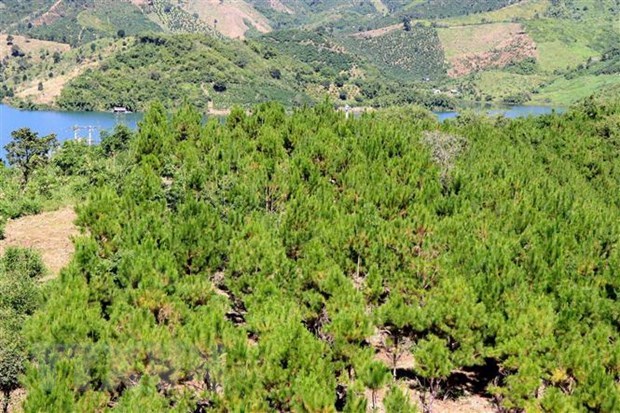
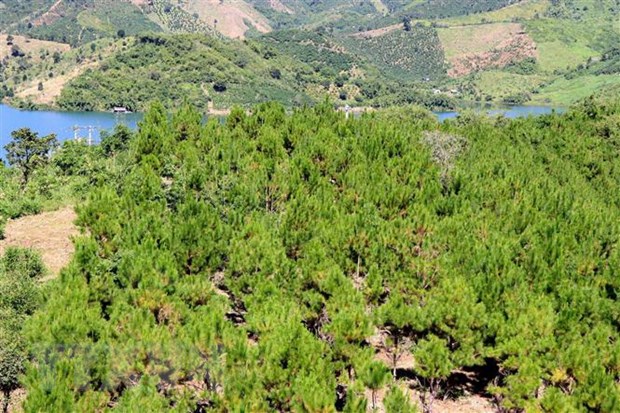
Friday, December 18, 2020 19:05Pine trees planted in the Ta Dung National Park in the Central Highlands province of Dak Nong (Photo: VNA)

Lam Dong (VNA) – The Payment for Forest Environmental Services (PFES) system implemented at national scale under an USAID project now generates approximately 120 million USD annually to finance the management of approximately 6 million hectares of Vietnam’s forests.

Tiếp tục đọc “National forest service payment mechanism generates 120 million USD annually”

USAID helps Vietnam strengthen e-Government capacity

14/10/2020    10:11 GMT+7 vietnamnet

USAID helps Vietnam strengthen e-Government capacity

USAID helps Vietnam strengthen e-Government capacity hinh anh 1
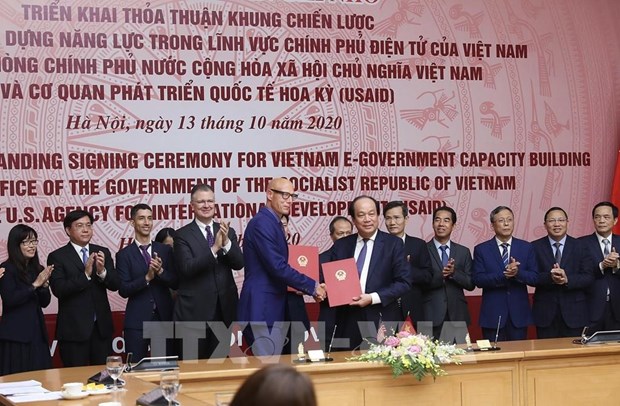
At the signing ceremony (Photo: VNA)

A memorandum of understanding (MoU) to this effect was signed by Minister-Chairman of the Government Office Mai Tien Dung and USAID Acting Director Bradley Bessire in Hanoi on October 13.

Tiếp tục đọc “USAID helps Vietnam strengthen e-Government capacity”

Clean Cities, Blue Ocean – USAID call for grant application

Clean Cities, Blue Ocean

Status: Active

Issue: Ocean Plastic Pollution

Country: Dominican Republic, Indonesia, Maldives, Peru, Philippines, Sri Lanka, Vietnam

Region: Asia, Latin America and the Caribbean

Key Document(s):

CCBO Dominican Republic Fact Sheet

CCBO Maldives Fact Sheet

CCBO Peru Fact Sheet

CCBO the Philippines Fact Sheet

CCBO Sri Lanka Fact Sheet

CCBO Vietnam Fact Sheet

CCBO-APS-Philippines Q&A

CCBO Program Fact Sheet

CCBO-APS-PhilippinesShare:FacebookTwitterEmail

Overview

Clean Cities, Blue Ocean (CCBO) is USAID’s flagship program for combatting ocean plastic pollution. The program works globally to target ocean plastics directly at their source, focusing on rapidly urbanizing areas that contribute significantly to the estimated eight million metric tons of plastic that flow into the ocean each year.

Tiếp tục đọc “Clean Cities, Blue Ocean – USAID call for grant application”