I suggest you visit China. It reversed my preconception. I am from Norway, North Europe. A rather modern and advanced society.
On my first visit to the US over 20 years ago, I was surprised at how backward and old fashioned it was. Movies had let me to believe it was the epitome of modern society. I visited several states on the East/South-East. Very backwards digitally. Terrible infrastructure. Unwalkable. Dirty. Hard to find quality restaurants outside of big cities. Dead city centres in medium sized cities.
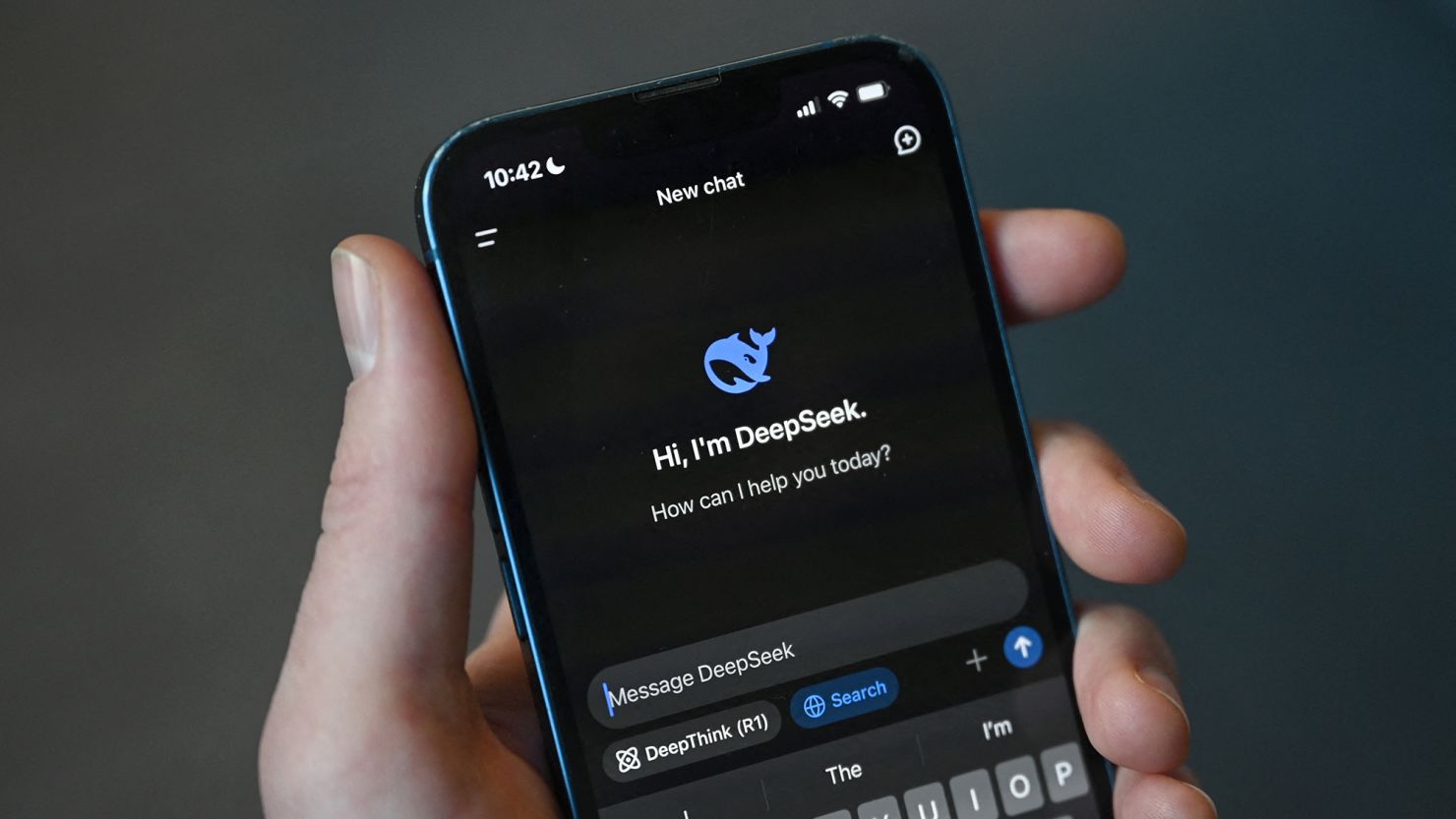
This photo illustration shows the DeepSeek app on a mobile phone in Beijing this month. Greg Baker/AFP/Getty ImagesHong KongCNN —
Previously little-known Chinese startup DeepSeek has dominated headlines and app charts in recent days thanks to its new AI chatbot, which sparked a global tech sell-off that wiped billions off Silicon Valley’s biggest companies and shattered assumptions of America’s dominance of the tech race.
But those signing up for the chatbot and its open-source technology are being confronted with the Chinese Communist Party’s brand of censorship and information control.
Ask DeepSeek’s newest AI model, unveiled last week, to do things like explain who is winning the AI race, summarize the latest executive orders from the White House or tell a joke and a user will get similar answers to the ones spewed out by American-made rivals OpenAI’s GPT-4, Meta’s Llama or Google’s Gemini.
In this image made from a video provided by the National Task Force for the West Philippine Sea (NTF-WPS), a Chinese coast guard vessel, left, fires a powerful water cannon on a Philippine bureau of fisheries vessel near a disputed shoal in the South China Sea Wednesday Dec. 4, 2024. (National Task Force for the West Philippine Sea via AP)Read More
2 of 2 |
In this image taken from a video provided by National Task Force for the West Philippine Sea (NTF-WPS), a Chinese coast guard vessel, right, fires a powerful water cannon on a Philippine bureau of fisheries vessel near a disputed shoal in the South China Sea Wednesday, Dec. 4, 2024. (NTF-WPS via AP)Read More
By DIDI TANGUpdated 6:55 AM GMT+7, December 6, 2024 AP
WASHINGTON (AP) — The U.S. severely lags behind China in shipbuilding capacity, lawmakers and experts have warned, as the Biden administration tries to build up the country’s ability to develop and produce weapons and other defense supplies to fend off war.
Speaking at a congressional hearing Thursday, Rep. John Moolenaar, the Republican chair of the House Select Committee on the Chinese Communist Party, said the country lacks the capacity to “deter and win a fight” with China and called for action.
“Bold policy changes and significant resources are now needed to restore deterrence and prevent a fight” with China, Moolenaar said.
The post-Cold War era is over and a dangerous new era of great power competition has begun.
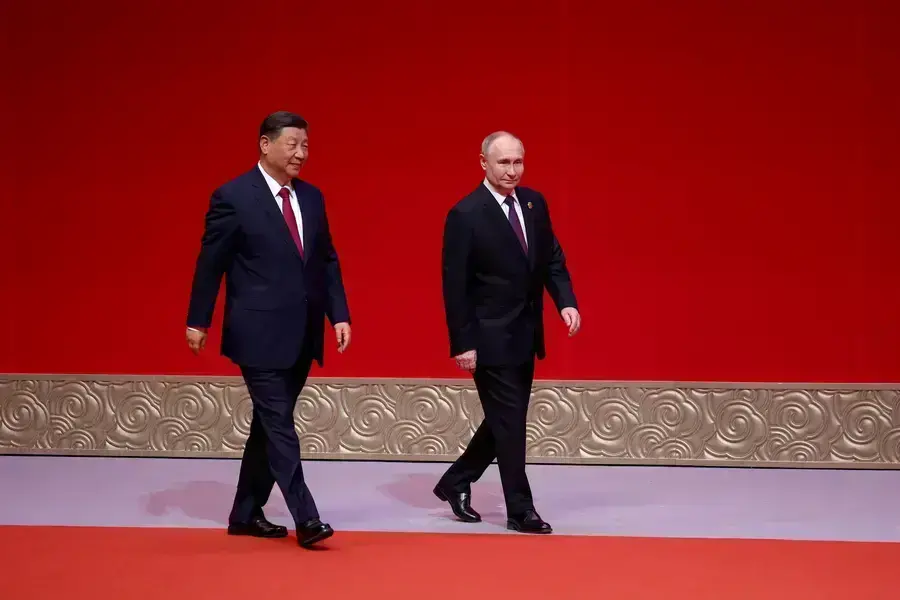
Russian President Vladimir Putin and Chinese President Xi Jinping attend the gala event celebrating 75th anniversary of China-Russia relations in Beijing, China, on May 16, 2024. Alexander Ryumin/Pool via REUTERS
David Sanger, the White House and national security correspondent for the New York Times, sits down with James M. Lindsay to discuss how the post-Cold War ended and why the new era of geopolitical rivalry began.
Here are four highlights from their conversation:
1.) The post-Cold War era is over. The United States no longer enjoys its unipolar moment. Following the collapse of the Soviet Union in 1991 and through the 2000s, the United States and the West made a series of misjudgments about where Russia and China were headed. They assumed that Russia and China would want to become more integrated into the U.S.-led world order. David acknowledged that Russian President Vladimir Putin stated explicitly in 2007 that he would do the contrary, while China’s ambitions were unclear initially. David said, “this was a failure of imagining a world in which these powers wanted to return to a past era of greatness and weren’t going to sit still for a unipolar world, run out of Washington under Washington values
In his first appearance before Congress on Thursday, TikTok CEO Shou Chew was grilled by lawmakers who expressed deep skepticism about his company’s attempts to protect US user data and ease concerns about its ties to China.
It was a rare chance for the public to hear from the Chew, who offers very few interviews. Yet his company’s app is among the most popular in America, with more than 150 million active users.
Here are the biggest takeaways from Thursday’s hearing.
Washington has already made up its mind about TikTok
The hearing, which lasted for more than five hours, kicked off with calls from a lawmaker to ban the app in the United States and remained combative throughout. It offered a vivid display of the bipartisan push to crack down on the popular short-form video app and the company’s uphill battle to improve relations with Washington.
Washington Republican Rep. Cathy McMorris Rodgers, the chair of the House Energy and Commerce Committee, opened Thursday’s hearing by telling Shou: “Your platform should be banned.”
Chew used his testimony to stress TikTok’s independence from China and play up its US ties. “TikTok itself is not available in mainland China, we’re headquartered in Los Angeles and Singapore, and we have 7,000 employees in the U.S. today,” he said in his opening remarks.
“Still, we have heard important concerns about the potential for unwanted foreign access to US data and potential manipulation of the TikTok US ecosystem,” Chew said. “Our approach has never been to dismiss or trivialize any of these concerns. We have addressed them with real action.”







 CVD
CVD 