Fast and dubious: How electric cars are tiring the Mekong – Xe điện phát triển nóng đang bào mòn Mê Kông

mekongeye.com

This five-part series explores how the acceleration of electric vehicle adoption could increase the demand for rubber—a commodity that has historically driven deforestation and land grabbing across the Mekong region. Experts say the EV transition will boost rubber demand, as EVs need specialized tires that can bear heavier vehicle weight and high torque.

This matters to the Mekong region. Our data analysis shows that Cambodia, Laos, Myanmar, Thailand, and Viet Nam together supply nearly 50% of the world’s natural rubber. About 70% of global rubber goes into tires. Without effective traceability in place, deforestation and land conflicts, many of which are ongoing and affecting the lives and livelihoods of local communities—are unlikely to be solved.

Story by Mekong Eye’s investigation team
This series was produced in partnership with Earth Journalism Network and the Pulitzer Center

Electric vehicles (EVs) are on the rise — from Bangkok to Hanoi to Vientiane — promising a cleaner future as part of the global shift to clean energy, with more than 17 million electric cars sold worldwide in 2024.

But there is still a cost to pay for these ‘green cars’. With their heavier battery weight and higher torque, EVs wear out their tires faster than gasoline-powered cars, and therefore consume more tires throughout their lifetime.

In every tire is natural rubber, the key raw material that ensures durability, elasticity and strength.

The growing demand for EV tires has had significant implications for the Mekong region — Cambodia, Laos, Myanmar, Thailand and Viet Nam — which produces about 50% of the world’s natural rubber and hosts major plants for multinational tire manufacturers and EV makers.

Tiếp tục đọc “Fast and dubious: How electric cars are tiring the Mekong – Xe điện phát triển nóng đang bào mòn Mê Kông”

Bangkok sinkhole: Thai MRT authority takes responsibility, will inspect all tunnels on same line

straitstimes.com

A tunnel collapse opened up a sinkhole more than 18m deep along a Bangkok road early on Sept 24.

A tunnel collapse opened up a sinkhole more than 18m deep along a Bangkok road early on Sept 24.

PHOTO: REUTERS Published Sep 25, 2025, 11:42 AM

BANGKOK – The Mass Rapid Transit Authority of Thailand (MRTA) has taken responsibility for the massive sinkhole dozens of metres deep in front of Vajira Hospital in Bangkok.

The location falls under Contract 1, which covers the design and construction of the tunnel and underground stations along the Taopoon-National Library section, involving a distance of 4.8km and worth 19.43 billion baht (S$778 million).

The contractor for this section is the CKST-PL joint venture, comprising CH Karnchang and Sino-Thai Engineering and Construction.

Tiếp tục đọc “Bangkok sinkhole: Thai MRT authority takes responsibility, will inspect all tunnels on same line”

Sân bay Long Thành nhìn từ bài học vắng khách ở bến xe Miền Đông mới

vnexpress.net

Chuyên gia lo ngại sân bay Long Thành vắng vẻ như bến xe Miền Đông mới do thiếu kết nối giao thông, đường sá chưa thuận tiện cho khách

Bến xe Miền Đông hoạt động tại TP HCM từ trước năm 1975 với tên gọi xa cảng Miền Đông, ban đầu nằm trên đường Lê Hồng Phong (giáp quận 5 và 10 cũ), đến 1981 dời về phường 26, quận Bình Thạnh cũ. Suốt nhiều năm, đây là bến xe lớn nhất thành phố, luôn đông đúc dịp cuối tuần, lễ, Tết. Tuy nhiên, do nằm ở nội đô, khu vực xung quanh thường xuyên quá tải, kẹt xe nghiêm trọng trên các tuyến quốc lộ 13, Nguyễn Xí, Đinh Bộ Lĩnh.

Để giảm ùn tắc và ô nhiễm, năm 2016 TP HCM quyết định xây bến mới, trong định hướng chuyển đầu mối vận tải này ra ngoại thành. Bến Miền Đông mới được xây dựng trên diện tích 16 ha tại quận 9 cũ với tổng vốn 4.000 tỷ đồng, khả năng phục vụ hơn 7 triệu lượt khách mỗi năm, trở thành bến xe liên tỉnh lớn nhất nước.

Tiếp tục đọc “Sân bay Long Thành nhìn từ bài học vắng khách ở bến xe Miền Đông mới”

UK v Japan High Speed Rail In 1963 vs 2025

briliantmap.com Last Updated: March 24, 2025 

UK v Japan High Speed Rail In 1963 vs 2025

The map above shows the huge difference in the size of the UK vs Japan’s highspeed rail networks in 1963 compared to 2025.

The UK’s Stockton and Darlington Railway (25 miles; 40km long) opened in 1825 as the first passenger railway anywhere in the world.

And according to the Institution of Civil Engineers

“Allowing for stops, the first train to run on the S&DR averaged a speed of 8mph (13km/h) on its inaugural journey.”

It also cost £5.1m (in today’s money) and took only 3 years to complete.

Thus 2025, is the 200th anniversary of the existence of passenger rail.

At that time, the Tokugawa shogunate (Edo period) still ruled Japan, which remained more or less closed off to the rest of the world. And wouldn’t start opening up until it was forced to do so by the Americans from 1853.

Japan wouldn’t open it’s first railway line from Tokyo to Yokohama until 1872 almost 50 years after the UK.

Read more at https://brilliantmaps.com

Competitive market key to expanding Electric Vehicle charging network

renewableenergymagazine.com

Electric vehicle (EV) charging stations will better serve EV owners if lawmakers and regulators enable a level playing field for competitive providers, concludes a new report entitled “Serving Customers Best: The Benefits of Competitive Electric Vehicle Charging Stations.”
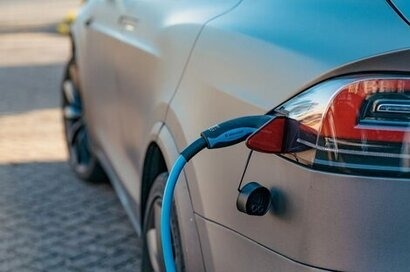
New report finds competitive market key to expanding EV charging network

Courtesy of Ernest Ojeh, Unsplash.

The 52-page report addresses a key aspect of the clean energy transition, finding that utility ownership of EV charging stations is generally not in the public interest and that allowing monopoly utilities to own charging stations will deliver less efficient, lower-quality service and choice to EV owners. This will result in unfair cost shifting to other electricity consumers.

“Regulators and legislators will serve the EV charging public best if they provide for a competitive and nondiscriminatory environment for public charging stations” said Rob Gramlich, President of Grid Strategies and one of the four co-authors of the study. “We should enable the market to work if we want to build-out EV charging infrastructure and give drivers the best prices and services possible along the way.”

The report stresses that extending the monopoly position of utilities into the EV charging sector would hurt the EV charging public and, by extension, the overall effort to electrify transportation.

Frank Lacey, a co-author, emphasises a key finding in the study: “Regulators should proclaim EV charging to be a competitive service and then focus on policies to support the development of the charging network. Competition in charging will lead to the best results for the build-out of EV charging, for consumer pricing of electricity, and for service of EV drivers. The time to make these policy choices is now, before charging becomes monopolised.”

The report makes the following recommendations:

Regulated Rate Policies – Regulators need to consider the impact of regulated rates and rate design on EV charging stations and station owners.

Utility Ownership – Regulators should ban or disfavor utility ownership of charging stations.

Distribution Planning – Regulators should support an increased focus on planning using state-of-the-art tools and should allow for proactive, rather than reactive, development of the distribution systems.

Interconnection Policies – Regulators should support the development of dedicated interconnection personnel, work with utilities to standardise and streamline timelines and processes, allow more flexible policies with respect to inventory and supply chain issues, and ensure that nonutility owners of charging stations receive fair and equal service from the utility when developing charging stations.

Private Sector Access – Regulators should work with utilities to develop, train, and certify third parties to work with private investors to build out the distribution network, where feasible.

Cost Allocation – Regulators should create cost-allocation policies fair to all parties to recover the costs of developing the infrastructure required for robust EV charging.

Meeting Public Need at the Lowest Cost – If a public need arises, regulators should look for solutions other than a utility to meet the need.

Divestiture of utility-owned charging stations – Regulators should have utilities sell any utility-owned EV charging stations to nonutility entities.

The report was sponsored by the National Association of Convenience Stores (NACS), which represents a business sector with considerable investment in robust distribution and service networks designed to meet the motoring public’s needs. Convenience stores sell an estimated 80 percent of the fuels purchased by drivers.

For additional information:

Grid Strategies

Report: “Serving Customers Best: The Benefits of Competitive Electric Vehicle Charging Stations.”

Why Investors Should Consider Vietnam’s Electric Vehicle Market

 June 29, 2021 Posted byVietnam Briefing Written byPritesh Samuel Reading Time:6 minutes

  • Vietnam’s electric vehicle market remains in its infancy, but there are plenty of opportunities as we are likely to see a paradigm shift from gasoline to electric-powered vehicles.
  • With a rising population and an expanding middle class, consumers are increasingly aware of the environment, fuel efficiency, and increasing pollution levels in cities.
  • Vietnam Briefing outlines the opportunities in Vietnam’s electric vehicle market despite the slow progress till date.

The electric vehicle market in Vietnam has not garnered as much attention compared to other countries in the region and globally, but this doesn’t mean that opportunities are not there. Electric vehicles are an irreversible trend and will be the future as governments move towards clean energy and consider the environment. This means that investors that are interested can set up the groundwork including production facilities, supply chains, and manpower to prepare for this future shift.

With a population of more than 96 million, about half of Vietnam’s population owns motorcycles, while car ownership is at a ratio of 23 per 1,000 people. Major cities such as Hanoi and Ho Chi Minh City are gridlocked with motorbikes on streets, alleys, and even sidewalks. This in turn has resulted in increased pollution and congestion. Hanoi and Ho Chi Minh City have ranked high in pollution levels globally several times. A poll by IQAir listed Vietnam as the 15th most polluted country in the world.

Tiếp tục đọc “Why Investors Should Consider Vietnam’s Electric Vehicle Market”

Vehicles providing transport services will have yellow licence plates

Update: July, 11/2020 – 08:25 VNS

Share facebookChia sẻ bài viết lên TwitterShare google+|


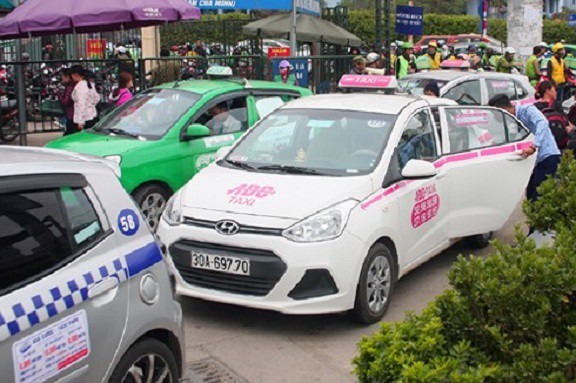
Taxi is one of the transport vehicles that must change from white licence plates to yellow ones. — Photo vov.vn

HÀ NỘI — All vehicles providing cargo and passenger transportation services must change from white licence plates to yellow ones with black letters and numbers from August 1, according to the Traffic Police Department under the Ministry of Public Security. Tiếp tục đọc “Vehicles providing transport services will have yellow licence plates”

Addressing climate change in transport

This report is the product of a collaborative effort by the Vietnamese Ministry of Transport’s Department for the Environment, the World Bank and the Deutsche Gesellschaft für Internationale Zusammenarbeit GmbH (GIZ) on behalf of the German Federal Ministry of Environment, Nature Conservation and Nuclear Safety (BMU). It also marks three years of cooperation between the Ministry of Transport and the German Government-funded “Advancing Transport Climate Strategies” project, which has focused on providing support for the systematic assessment and reduction of greenhouse gas (GHG) emissions in the transport sector.
Volume 1: Pathway to Low Carbon-Transport

Volume 2: Pathway-to-Resilient-Transport

Global energy storage market to surge to 15 GW by 2024

Tiếp tục đọc “Global energy storage market to surge to 15 GW by 2024”

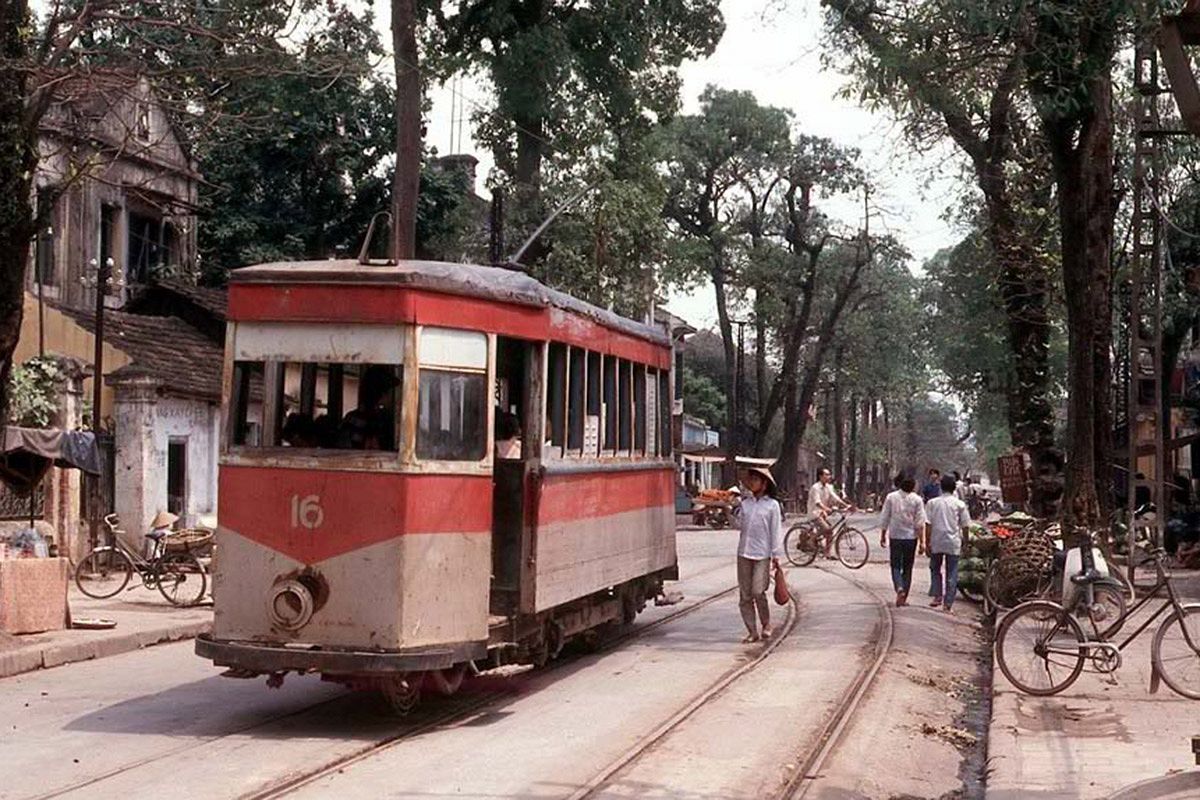
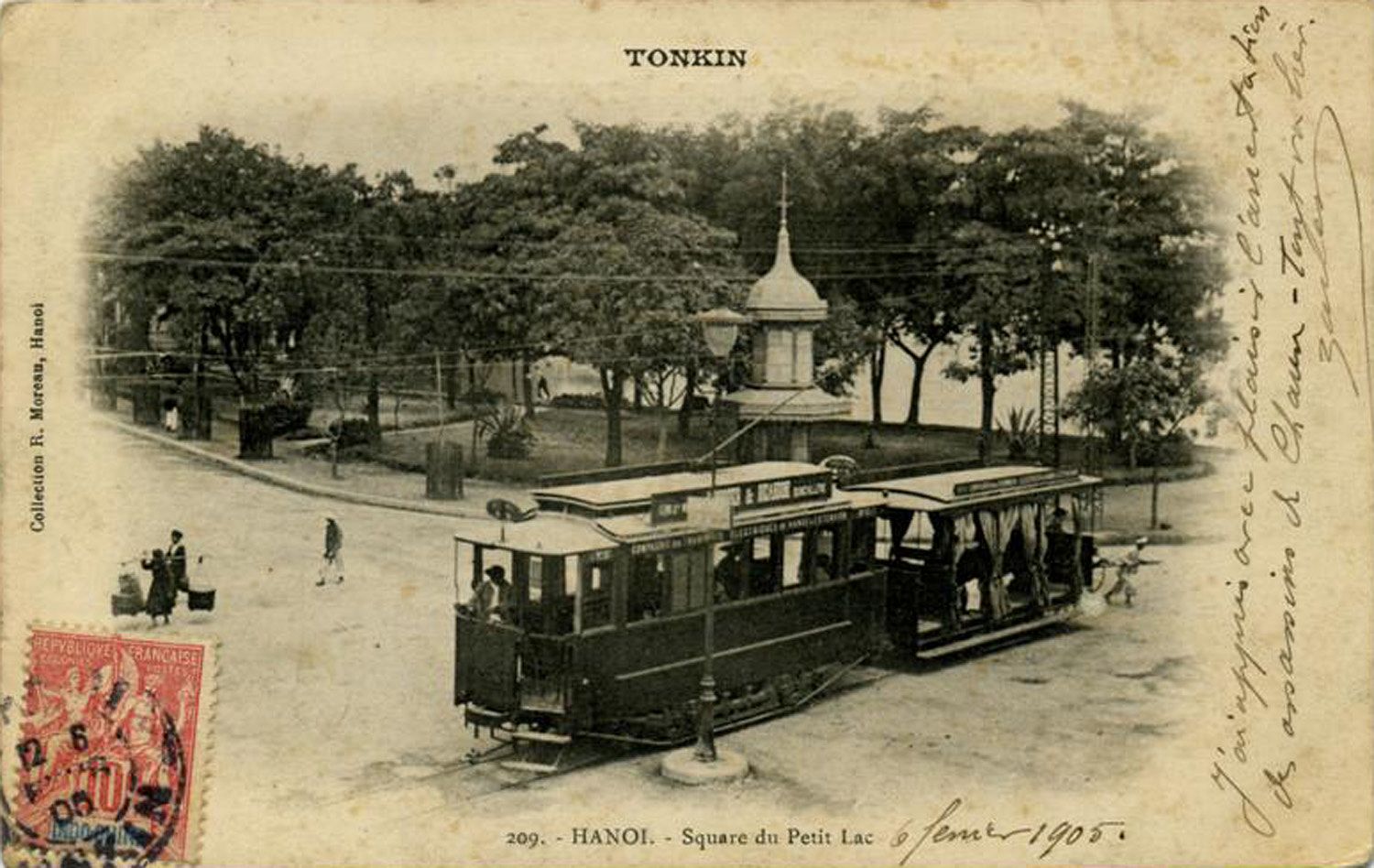
The History of Hanoi’s Lost Tramway Network

When they first drew up plans for a citywide tramway network in 1894, it seemed as though the Hanoi authorities would follow Saigon’s example by opting for steam traction. Yet, by the time government approval was forthcoming in 1899, advances in technology made it possible to construct the entire system as a state-of-the-art, one-meter gauge electric tramway.

In 1900, the Compagnie des Tramways Électriques d’Hanoï et Extensions (CTEH) was to set up to build the first two tramway lines, which were jointly inaugurated in November 1901. Tiếp tục đọc “The History of Hanoi’s Lost Tramway Network”

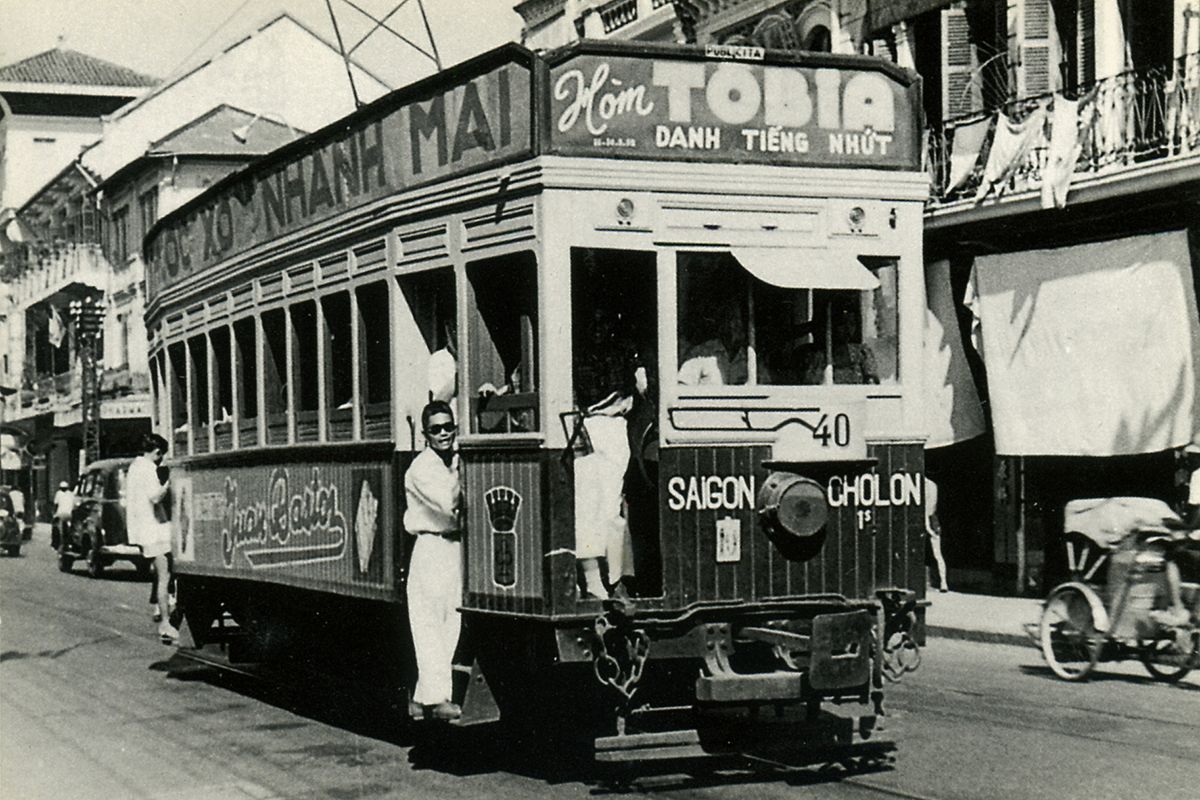
A Throwback to Saigon’s Original Tramway Network

As ever-increasing levels of traffic congestion and air pollution turn many of Ho Chi Minh City’s road junctions into choking bottlenecks, many hopes are pinned on plans to construct a new urban railway network in the southern metropolis. Yet urban railways are hardly a new concept in this city, which was once home to one of Southeast Asia’s largest urban tramway networks.

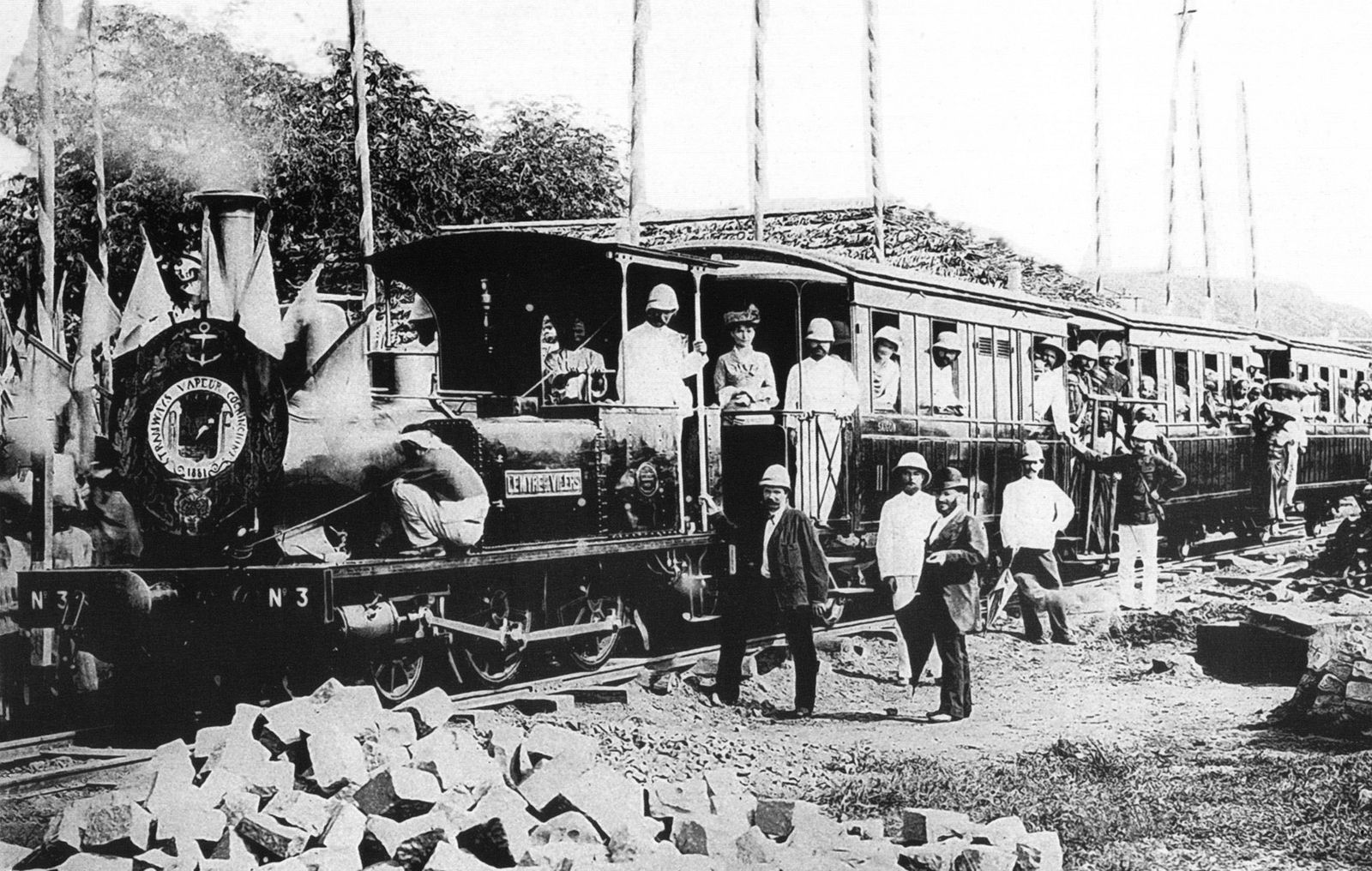
Indochina’s first mechanized rail-guided transportation system was the one-meter gauge Saigon–Cho Lon “high road” steam tramway, operated by the Societe Generale des Tramways a Vapeur de Cochinchine (SGTVC) and opened to the public on December 27, 1881.

Tiếp tục đọc “A Throwback to Saigon’s Original Tramway Network”

Korean bank pledges $233mn loan for Ho Chi Minh City airport metro

TUOI TRE NEWS

Updated : 05/29/2017 16:10 GMT + 7

The Export-Import Bank of Korea (KEXIM) has promised to provide US$233.3 million in official development assistance (ODA) for Ho Chi Minh City to build a metro line connecting to Tan Son Nhat International Airport.

Metro line 4 b-1 will run over two kilometers from the Lang Cha Ca Intersection to Tan Son Nhat Airport in Tan Binh District, Ho Chi Minh City.

Construction of the metro line has been approved by Deputy Prime Minister Pham Binh Minh on the proposal of the Ministry of Planning and Investment. Tiếp tục đọc “Korean bank pledges $233mn loan for Ho Chi Minh City airport metro”

Hy vọng cho Hà Nội? Hệ thống xe buýt mới có thể giảm ô nhiễm…nếu có đủ người sử dụng

English: Hope for Hanoi? New bus system could cut pollution … if enough people use it

Từ toà nhà cao ốc văn phòng tại Hà Nội, anh Trần Dũng hầu như không thể nhìn thấy đường chân trời của thành phố đằng sau lớp khói bụi dày đặc. Trước khi rời công sở, anh chuyên viên trợ lý này kiểm tra phần ứng dụng AirVisual để đọc mức ô nhiễm không khí, ứng dụng cung cấp số đo chỉ số PM2.5 tại thời gian thực – PM2.5 là các hạt bụi nhỏ li ti có trong khói bụi mà có thể huỷ hoại cổ họng và phổi của con người.

Traffic jam in Hanoi

Những hàng dài xe máy và ô tô là nguyên nhân chính gây ô nhiễm không khí ở Hà Nội

Chỉ số PM2.5 thường dao động từ 100 đến 200 microgram mỗi mét khối – mức độ này thường được xếp vào loại “không tốt cho sức khoẻ” mà được toàn cầu đã công nghận. Nhưng vào ngày 19/12 năm rồi, nó đạt đến “mức độ  nguy hiểm” ở mức 343 microgram/m3, cao hơn cả ở Bắc Kinh.

Bị sốc khi đọc được con số này, anh Dũng đã chia sẻ ảnh chụp màn hình với bạn bè trên Facebook, anh viết: “Tôi không thể tin vào mắt mình. Các bạn bảo trọng!” Tiếp tục đọc “Hy vọng cho Hà Nội? Hệ thống xe buýt mới có thể giảm ô nhiễm…nếu có đủ người sử dụng”

Kiểm toán 27 dự án BOT, giảm gần 100 năm thu phí!

22/02/2017 09:08 GMT+7

TTO – Kiểm toán Nhà nước (KTNN) cho biết nhiều dự án trong số 27 dự án kiểm toán phải giảm 5-7 năm thu phí. Tổng cộng tất cả các dự án, giảm tới gần 100 năm thu phí.

Kiểm toán 27 dự án BOT, giảm gần 100 năm thu phí!
Trạm thu phí BOT của Tập đoàn Đức Long Gia Lai đặt trên quốc lộ 14 đầu vào cửa phía Nam TP Pleiku (Gia Lai) thuộc dự án nâng cấp mở rộng quốc lộ 14 từ km1610 đến cầu 110 (Gia Lai). Dự án này được đề nghị giảm 7 năm, 2 tháng, 27 ngày thu phí – Ảnh: T.B.D.

Thông tin trên được KTNN báo cáo với đoàn giám sát của Ủy ban Thường vụ Quốc hội về việc thực hiện chính sách, pháp luật về đầu tư và khai thác các công trình giao thông theo hình thức BOT ngày 21-2. Tiếp tục đọc “Kiểm toán 27 dự án BOT, giảm gần 100 năm thu phí!”