Hà Nội – Nhà vệ sinh công cộng đứng áp chót thế giới

  • Báo DT – Cảnh nhếch nhác của hàng loạt nhà vệ sinh công cộng tại Hà Nội
  • Báo LĐ – Điều Hà Nội cần làm ngay sau lời kêu gọi khách sạn, hộ dân mở nhà vệ sinh miễn phí

***

Cảnh nhếch nhác của hàng loạt nhà vệ sinh công cộng tại Hà Nội

DT – Nguyễn Hải – Thành Đông  07/03/2025 – 05:30

(Dân trí) – Thiếu nước, mất điện, hỏng cửa, bong tróc, hoen gỉ… là thực trạng chung của hàng loạt nhà vệ sinh công cộng tại Hà Nội.

Những năm gần đây, vấn đề nhà vệ sinh công cộng tại (NVSCC) tại Hà Nội và các thành phố lớn luôn thu hút sự quan tâm đông đảo của người dân. Tại Hà Nội, NVSCC mới chỉ đáp ứng được một phần nhu cầu nhưng chưa đảm bảo, nhiều địa điểm xuống cấp nghiêm trọng, bong tróc, hoen gỉ phần kết cấu gây ảnh hưởng nghiêm trọng đến cảnh quan đô thị.

Mới đây, Chủ tịch UBND TP Hà Nội Trần Sỹ Thanh chỉ đạo các quận, huyện, thị xã trên địa bàn tiếp tục tuyên truyền, vận động chủ các nhà hàng, khách sạn, trung tâm thương mại, siêu thị,… tự nguyện phối hợp, cam kết mở cửa phục vụ, giải quyết nhu cầu vệ sinh cá nhân của du khách, nhân dân trên địa bàn miễn phí.

Theo khảo sát của phóng viên Dân trí, ở những điểm thường tập trung đông người tại quận trung tâm của Hà Nội như Đống Đa, Hoàn Kiếm, Hai Bà Trưng,… đã cơ bản có NVSCC nhưng hầu hết xuống cấp, thiếu trang thiết bị. Thậm chí có những NVSCC đã xây dựng cách đây 50-60 năm nên nhiều đồ đạc, trang bị đã hư hỏng.

Tiếp tục đọc “Hà Nội – Nhà vệ sinh công cộng đứng áp chót thế giới”

Toilet Gods and Demons in Japan

toilet-guru.com

In Japanese folklore there are both toilet gods and toilet demons. The toilet gods are household deities, the toilet demons are water demons. Let’s look at the gods first, then the demons.

Toilet Gods

There is only very limited livestock on Japan farms. Human waste has traditionally been collected in cesspits and used as fertilizer. This meant that there was a risk of falling into a cesspit and possibly drowning. Protection was needed against this dreadful fate. Also, since the collected waste was used for fertilizer, the toilet was connected with fertility in general.

The kawaya no-kami or toilet god was asked for help. Special rituals at the new year asked for the kawaya no-kami to bring a good harvest. Keeping the toilet clean was thought to lead to more attractive children.

The specific name and rituals associated with the toilet god vary with location. The name is Takagamisama around Nagano, Setchinsan in Hiroshima, Kamu-taka on Ishigaki Island, Sechinbisan in Ōita, and Usshimasama in Ehime. In some places the family sit in front of the toilet on a straw mat and eat a rice cake, in other places they would put an offering of food into the toilet.

In far northern Japan the Ainu people believed that their toilet god, the Rukar Kamuy, would be the first deity to provide help in times of danger. The Rukar Kamuy is one of many Kamuy or household gods. There is Apasamn Kamuy the husband and wife god and goddess who keep evil spirits out of the house entrance. Cisepannokianpa Kamuy and Cisepennokianpa Kamuy, the husband and wife god and goddess of the eaves of the roof, protect the house from earthquakes and typhoons. Cisekor Kamuy, a male god, sits in the east corner of the house and watches over everything. He is the husband of Apehuci Kamuy, the goddess of fire. Colpep Kamuy is the god of containers, thanks are given to this god when containers are retired.

Tiếp tục đọc “Toilet Gods and Demons in Japan”

World toilet day: In Praise of Toilets

ipsnews.net

A Dalit woman stands outside a dry toilet located in an upper caste villager’s home in Mainpuri, in the northern Indian state of Uttar Pradesh. Credit: Shai Venkatraman/IPS - World Day raises awareness of all these 3.6 billion people living without access to safely managed sanitation, posing dangerous health problems - Close to 4 billion people –or about half of the world’s total population of 8 billion– still live without access to a safe toilet and other sanitation facilities - 2022 World Toilet Day focuses on another invisible fact: the grave impacts of such a sanitation crisis on groundwater, which is the source of up to 99% of the world’s fresh water

A Dalit woman stands outside a dry toilet located in an upper caste villager’s home in Mainpuri, in the northern Indian state of Uttar Pradesh. Credit: Shai Venkatraman/IPS

MADRID, Nov 14 2022 (IPS) – For those who have it, a toilet is that ‘thing’ in the bathroom, next to the bidet, the hand-washing sink with hot and cold water faucets, and the bathtub.

Given their ‘unprestigious’ function, some billionaires, in particular in the Gulf oil-producer kingdoms, fancy to pose their buttocks on a solid-gold toilet. Once they are there, why not also solid-gold faucets?

Many others prefer a more comfortable use of their toilets, thus endowing them with both automatic heating and flushing. And anyway, being given-for-granted, nobody would give a thought to the high importance of all these ‘things’.

The other side of the coin shows an entirely different picture. A shocking one by the way.

Billions of humans without one

And it is a fact that close to 4 billion people –or about half of the world’s total population of 8 billion– still live without access to a safe toilet and other sanitation facilities.

Nearly a full decade ago, the international community, represented in the United Nations General Assembly, decided to declare 19 November every single year, as a world day to address such a staggering problem.

Tiếp tục đọc “World toilet day: In Praise of Toilets”

Nước sạch vẫn chưa đến được với trên 30 triệu người dân nông thôn

TRỌNG TÙNG19-12-2020 11:21

Kinhtedothi – Đây là thông tin được đề cập đến trong báo cáo kết quả thực hiện Chiến lược quốc gia về cấp nước sạch cho môi trường nông thôn được Chính phủ phê duyệt tại Quyết định số 104/2000/QĐ-TTg ngày 25/8/2000.


Hàng triệu trẻ em vẫn chưa được tiếp cận các công trình cấp nước sạch. Ảnh minh họa.

Qua gần 20 năm thực hiện, Chiến lược đã giúp 88,5% người dân ở nông thôn được sử dụng nước hợp vệ sinh và 51% người dân được sử dụng nước sạch. Ngoài ra còn có 75,2% người dân nông thôn có nhà tiêu hợp vệ sinh. 

Tiếp tục đọc “Nước sạch vẫn chưa đến được với trên 30 triệu người dân nông thôn”

Thay đổi nhỏ, tác động lớn: Cải thiện nước sạch và vệ sinh cho trẻ em ở An Giang

Nguyễn Thanh Hiền

UNICEF Việt Nam\Trương Việt Hùng

UNICEF – 21 Tháng 3 2019

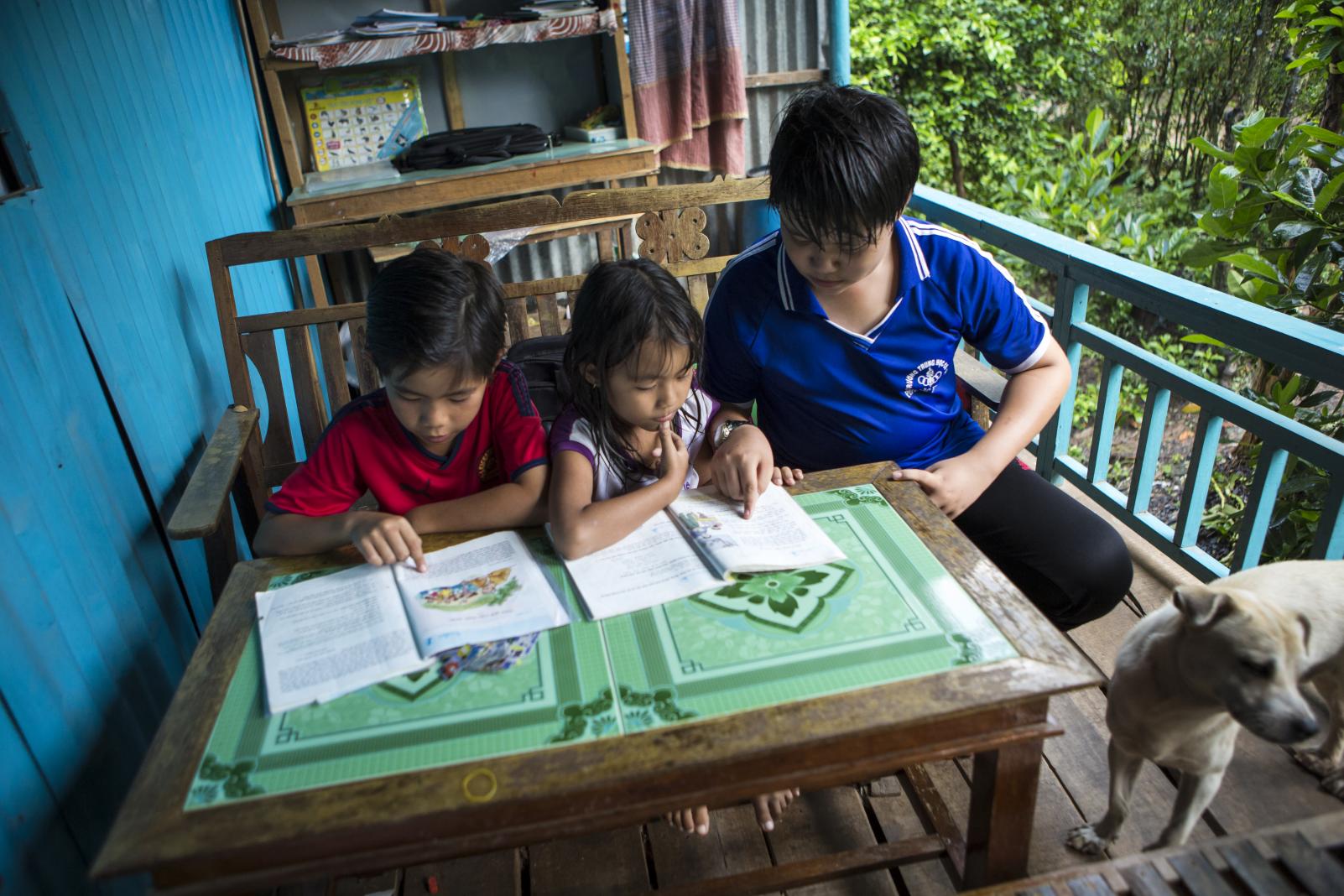
Trần Anh Bảo và Trần Anh Kha phấn khởi, tự hào khi kể chuyện về một điều mới mẻ trong gia đình mình mà nhiều người trong chúng ta có thể nghĩ là rất bình thường. Hai anh em sống ở tỉnh An Giang, một tỉnh ở vùng đồng bằng sông Cửu Long. Hai cậu bé tươi cười, phấn khởi, khoe với chúng tôi nhà vệ sinh và nhà tắm mới xây. Trong căn nhà khiêm tốn của gia đình, công trình vệ sinh mới này có ý nghĩa rất lớn với hai Anh Bảo, Anh Kha, em gái Kim Ngân và ông bà. Từ nay, gia đình của các em đã có thể đánh bay nguy cơ nhiễm bệnh và giữ gìn sức khỏe nhờ có công trình nước sạch và vệ sinh mới. Tiếp tục đọc “Thay đổi nhỏ, tác động lớn: Cải thiện nước sạch và vệ sinh cho trẻ em ở An Giang”