The gap in global standards – World Development Report 2025

STANDARDS FOR DEVELOPMENT

worldbank.org

Rising Standards Reshape the Global Economy

International standards are proliferating, delivering major benefits to wealthy nations and big multinationals while leaving many developing countries behind, a new World Bank report shows. 

Main Messages

  • Standards are the hidden foundations of prosperity. They are the shared rules that make plugs fit sockets, medicines work safely, and digital systems connect seamlessly. Standards embody collective knowledge, build trust, and enable economies to function efficiently. When they fail, markets fragment; when they work, prosperity follows.
  • For low- and middle-income countries, standards have never mattered more. Nearly 90 percent of world trade is now shaped by nontariff measures, most linked to standards. From digital systems for payment to charging stations for electric vehicles, new technologies can deliver economywide benefits only when standards exist. Mastering them can enhance national competitiveness and protect against technological, financial, and environmental risks.
  • Standards are a versatile tool of economic policy.Governments can use voluntary standards to drive innovation and give technical guidance on compliance with regulations. They can also make them mandatory when uniform compliance is necessary to protect health, safety, or the environment. In addition, governments can deploy standards as an instrument of industrial policy without reference to specific technologies or firms.
  • Ambition must match capacity.Countries should follow a trajectory that takes into account their stage of economic development, first adapting international standards to local realities when needed, then aligning with them as institutions mature, and actively participating in authoring standards in priority areas as capabilities grow. Rwanda’s Zamukana Ubuziranenge (“Grow with Standards”) program exemplifies this path, helping micro, small, and medium enterprises progress step by step towards compliance with international standards.
  • Investing in quality-enhancing infrastructure makes standards work well. The system of testing, certification, metrology, and accreditation in a country is what makes standards effective. Such systems are expensive to build and easy to neglect. Countries should start with public provision of quality-enhancing services in key sectors, then gradually open these services up to private participation. In many places, capacity gaps are stark: Ethiopia has fewer than 100 accredited auditors for compliance with standards of the International Organization for Standardization (ISO), compared with 12,000 in Germany.
  • To make standards a springboard for development, countries should do the following:
    • Create incentives for firms to upgrade the quality of their exports rather than imposing unrealistic mandates.
    • Adapt and sequence standards to align with the national capacity to enforce them.
    • Participate actively in international forums for setting standards.
    • Invest in and share quality infrastructure resources regionally.
  • The global community, for its part, must do the following:
    • Support participation by low- and middle-income countries in developing international standards and design tiered standards that reflect diverse capacities among countries.
    • Deepen regulatory cooperation and reduce fragmentation.
    • Develop credible standards for emerging technologies and actions to prevent or mitigate climate change.
    • Expand research and data on the economic and social impacts of standards.
  • Standards matter for development. Countries that take them seriously are getting ahead. Countries that ignore them risk falling behind.

➜ Download Main Messages: English | عربي | Español | Français | Português | Pусский | 中文

China wants to lead the world on AI regulation — will the plan work?

nature.com

Having placed artificial intelligence at the centre of its own economic strategy, China is driving efforts to create an international system to govern the technology’s use.

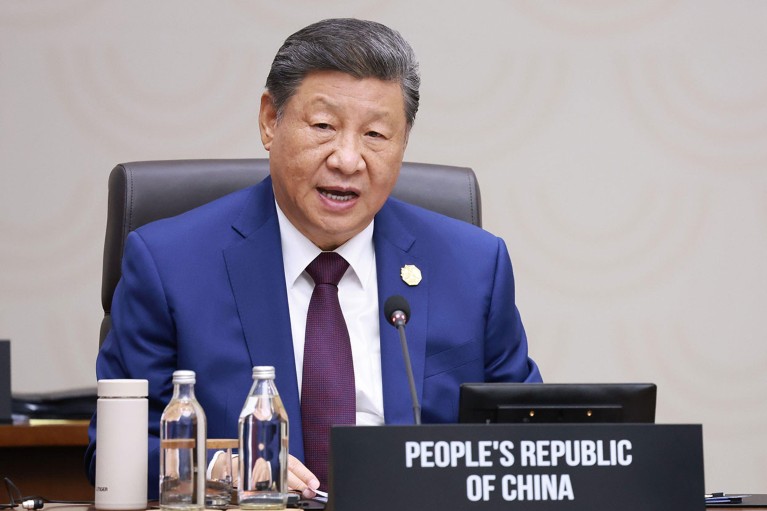
Chinese President Xi Jinping speaks at the APEC Economic Leaders' Meeting.
Chinese president Xi Jinping speaking at the 2025 Asia-Pacific Economic Cooperation meeting in Gyeongju, South Korea.Credit: Yonhap via AP/Alamy

Despite risks ranging from exacerbating inequality to causing existential catastrophe, the world has yet to agree on regulations to govern artificial intelligence. Although a patchwork of national and regional regulations exists, for many countries binding rules are still being fleshed out.

Tiếp tục đọc “China wants to lead the world on AI regulation — will the plan work?”

The cost of human labor behind AI development

Digital sweatshops of the Global South

So, where does this hidden labor take place? According to Casilli’s research, workers are in countries including Kenya, India, the Philippines, and Madagascar — regions with high levels of digital literacy, access to English- or French-speaking workers, and little in the way of labor protection or union representation. 

Do Better Team

Behind most of today’s AI models lies the labor of workers in the Global South, who are exposed to disturbing content and poor working conditions. This reality raises urgent questions about the transparency and ethics of AI development.

Picture working 10-hour days tagging distressing images to train an AI model — and getting paid not in money, but in a kilogram of sugar. This isn’t dystopian fiction, but reality for some of the workers behind today’s most advanced artificial intelligence. 

While the development of AI is undoubtedly enhancing the lives of many by streamlining processes and offering efficient solutions, it also raises a pressing question: What is the true cost of AI, and who is paying for it? 

Antonio Casilli, Professor of Sociology at Télécom Paris and Founder of DipLab, addressed this question during an Esade seminar on the promises and perils of the digitalization of work. The event was part of the kick-off for the DigitalWORK research project, which explores how digital technologies are transforming work and promoting fair, equitable and transparent labor conditions, with Anna Ginès i Fabrellas and Raquel Serrano Olivares (Universitat de Barcelona) as principal investigators. 

AI isn’t autonomous, it’s human-powered

Tiếp tục đọc “The cost of human labor behind AI development”

How many data centers are there in the USA

Businss Insider

Satellite images show how data centers are changing America’s landscape

Business insider

Suburban homes next to data centers
Data centers across the street from residential housing are not an uncommon scene in Virginia. 
  • There are over a thousand planned or existing data centers across the US, according to a BI investigation.
  • Major tech companies are racing to construct even more as the AI boom continues. But at what cost?
  • Satellite images show where these facilities are cropping up and why they’re a nuisance to many.

Build, baby, build. That’s the mantra behind the AI boom sweeping America.

This year, alone, Amazon, Meta, Microsoft, and Google are projected to spend about $320 billion in capex, mostly for AI infrastructure, according to an analysis of financial statements by Business Insider.

At the heart of this AI infrastructure growth are data centers that house the specialized hardware and high-speed networking equipment, driving the intensive computations behind large language models. However, AI needs more.

Because AI learns by processing increasingly large amounts of data, improving it requires more computational power, which in turn necessitates more data centers.

A BI investigation found 1,240 data centers across America are already built or approved for construction by the end of 2024.

Tiếp tục đọc “How many data centers are there in the USA”

Remote Sensing for Climate-Sensitive Infectious Diseases

NASA Earth Data

This ARSET training covers general approaches to apply satellite remote sensing data when studying or forecasting climate-sensitive infectious diseases.

Description

Climate-sensitive vector-borne diseases such as malaria impact millions of people each year, causing more than 700,000 deaths annually, according to the World Health Organization (WHO). Satellite remote sensing data can provide valuable insights for monitoring conditions which support disease vectors. In this training, participants will learn the basic principles of how satellite remote sensing data can be applied to track climate-sensitive vector-borne disease outbreaks and provide early warnings for potential outbreaks. Participants will learn about general approaches to apply satellite remote sensing data when studying or forecasting climate-sensitive infectious diseases. These will be illustrated with a case study example in the forecasting of malaria. Participants will also become familiar with some of the common, freely available NASA remote sensing datasets used in these applications, as well as where and how to access them and how to decide which datasets are fit for their purpose.

Part 1: How Remote Sensing Can be Used to Study Climate-Sensitive Infectious Diseases

  • Identify environmental variables and conditions that can be observed from space which are relevant to climate-sensitive infectious disease outbreaks.
  • Identify how satellite observations can improve the assessment and forecasting of climate-sensitive infectious disease outbreaks.
  • List the steps of a conceptual framework for incorporating remote sensing data into the study of climate-sensitive infectious diseases.
  • Recognize several remote sensing datasets commonly used to study and forecast climate sensitive infectious diseases, along with their key attributes such as resolution, coverage, latency, and uncertainty.
  • Select appropriate remote sensing datasets for studying climate-sensitive infectious diseases based on the disease characteristics, region of interest, and relevant environmental parameters.
  • Examine common benefits and challenges of using remote sensing data for studying climate-sensitive infectious diseases.

Host: Assaf Anyamba

Guest Instructors: Tatiana Loboda

Materials

Part 2: Case Study in the Use of Remote Sensing to Study Climate-Sensitive Infectious Diseases

  • Identify environmental variables and conditions relevant to malaria that can be observed from space.
  • Recognize why the remote sensing datasets used in this case study were chosen, based on their key attributes.
  • Recognize the steps taken for accessing and preparing remote sensing data for use in this case study.
  • Identify the steps used by the EPIDEMIA system for integrating remote sensing data.
  • Examine the benefits and challenges of using remote sensing data for tracking and forecasting malaria in Ethiopia, and how these were addressed through the case study.
  • Examine the primary outcomes of the case study and ways its approach might be expanded in the future.

Host: Assaf Anyamba

Guest Instructors: Michael Wimberly

Materials

What happens when you say “Hello” to ChatGPT?

The Hidden Behemoth Behind Every AI Answer

Billions of daily queries are reshaping energy and infrastructure

IEEE.org

Such a simple query might seem trivial, but making it possible across billions of sessions requires immense scale. While OpenAI reveals little information about its operations, we’ve used the scraps we do have to estimate the impact of ChatGPT—and of the generative AI industry in general.

This article is part of The Scale Issue.

OpenAI’s actions also provide hints. As part of the United States’ Stargate Project, OpenAI will collaborate with other AI titans to build the largest data centers yet. And AI companies expect to need dozens of “Stargate-class” data centers to meet user demand.

ChatGPT uses 8.5 Wh/day per user in 2025, equal to running a 10W LED bulb for 1 hour.

Estimates of ChatGPT’s per-query energy consumption vary wildly. We used the figure of 0.34 watt-hours that OpenAI’s Sam Altman stated in a blog post without supporting evidence. It’s worth noting that some researchers say the smartest models can consume over 20 Wh for a complex query. We derived the number of queries per day from OpenAI’s usage statistics below. illustrations: Optics Lab

ChatGPT uses 850 MWh daily, equaling 14,000 EV charges for 2.5 billion global queries.

OpenAI says ChatGPT has 700 million weekly users and serves more than 2.5 billion queries per day. If an average query uses 0.34 Wh, that’s 850 megawatt-hours; enough to charge thousands of electric vehicles every day.

ChatGPT's 912B queries yearly need 310 GWh, equal to powering 29,000 US homes.

2.5 billion queries per day adds up to nearly 1 trillion queries each year—and ChatGPT could easily exceed that in 2025 if its user base continues to grow. One year’s energy consumption is roughly equivalent to powering 29,000 U.S homes for a year, nearly as many as in Jonesboro, Ark.

AI queries need 15 TWh/year, equal to two nuclear reactors\u2019 output.

Though massive, ChatGPT is just a slice of generative AI. Many companies use OpenAI models through the API, and competitors like Google’s Gemini and Anthropic’s Claude are growing. A report from Schneider Electric Sustainability Research Institute puts the overall power draw at 15 terawatt-hours. Using the report’s per-query energy consumption figure of 2.9 Wh, we arrive at 5.1 trillion queries per year.

Generative AI queries projected to reach 120 trillion annually by 2030.

AI optimists expect the average queries per day to jump dramatically in the next five years. Based on a Schneider Electric estimate of overall energy use in 2030, the world could then see as many as 329 billion prompts per day—that’s about 38 queries per day per person alive on planet Earth. (That’s assuming a global population of 8.6 billion in 2030, which is the latest estimate from the United Nations.) As unrealistic as that may sound, it’s made plausible by plans to build AI agents that work independently and interact with other AI agents.

Diagram of 38 Stargate-class data centers with racks of GPUs and construction needed.

The Schneider Electric report estimates that all generative AI queries consume 15 TWh in 2025 and will use 347 TWh by 2030; that leaves 332 TWh of energy—and compute power—that will need to come online to support AI growth. That implies the construction of dozens of data centers along the lines of the Stargate Project, which plans to build the first ever 1-gigawatt facilities. Each of these facilities will theoretically consume 8.76 TWh per year—so 38 of these new campuses will account for the 332 TWh of new energy required.

Graphic: 347 TWh requires 44 nuclear reactors with icons of cooling towers.

While estimates for AI energy use in 2030 vary, most predict a dramatic jump in consumption. The gain in energy consumption will be driven mostly by AI inference (the power used when interacting with a model) instead of AI training. This number could be much lower or much higher than the Schneider Electric estimate used here, depending on the success of AI agents that can work together—and consume energy—independent of human input.

Báo cáo tội phạm Crypto 2025 – The 2025 Crypto Crime Report

How crypto is scaling traditional crime types, like drug trafficking, money laundering, and fraud.

Download repport https://go.chainalysis.com/2025-Crypto-Crime-Report.html

Ransomware 

Darknet Markets 

Market Manipulation 

Scams 

Stolen Funds 

Extremism 

Organized Crime

Báo cáo tội phạm mạng hoạt động ở Đông Nam Á – Compound crime: Cyber scam operations in Southeast Asia

Repurposed hotels, casinos, and private compounds across Cambodia, Laos, Myanmar and the Philippines have become centres of global fraud. These compounds are operated by organized criminal networks that exploit hundreds of thousands of people, many of whom are trafficked and forced to perpetrate online scams. Victims include not only those defrauded online but also the scam workers themselves, subjected to threats, violence, sexual exploitation and extreme working conditions. 

The report details how cyber scams —including ‘pig-butchering’ romance-investment scams, crypto fraud, impersonation and sextortion— now generate tens of billions of dollars annually.  

Download report https://globalinitiative.net/analysis/compound-crime-cyber-scam-operations-in-southeast-asia/

Thống kê và xu hướng tội pham Crypto 2025 – Crypto Crime Report: 2025 Statistics & Trends

Crypto crime is escalating fast and shifting in form. In 2024 alone, $51 billion flowed into illicit wallets, with $40 billion laundered and over $2 billion stolen outright. Bitcoin is no longer king in the shadows; stablecoins now dominate criminal crypto flows. This report breaks down who’s losing money, how it’s being funneled, and why tracking these shifts is critical. The insights ahead reveal patterns that can help spot emerging threats and shape stronger policy.

How much cryptocurrency has been stolen in the world

How many Bitcoins have been stolen?
How much Ethereum was stolen?
How much Solana has been stolen?
The biggest crypto rug pulls
Cryptocurrency money laundering statistics
The biggest crypto scams in history
Insights & Implications:
Methodology:
References:

Download report https://coinledger.io/research/crypto-crime-report

Vì sao băng nhóm tội phạm Crypto ở Đông Nam Á nở rộ –  Why scam gangs in Southeast Asia are a growing global threat

Griffith.edu.au May 19, 2025 By Dr Hai Thanh Luong

From fake job offers to cryptocurrency fraud and online romance scams, Southeast Asia has become a global hub for transnational scam operations. 

These aren’t isolated crimes, they are organised, cross-border and industrial-scale criminal enterprises that exploit vulnerable people and expose the limits of international law enforcement.

New research shows this surge in scams represents more than just a regional issue. It’s a transnational emergency, and it demands an urgent, coordinated response.

Why Southeast Asia?

Several factors have turned Southeast Asia into a hotbed for scam syndicates. 

The collapse of rule of law in parts of Myanmar has created ungoverned spaces where criminal operations flourish. 

Meanwhile, countries like Cambodia, Laos and the Philippines offer a fertile environment for transnational crime due to weak governance, corruption, and limited oversight.

These scam centres don’t just target foreign victims. They also lure and trap workers—many of them young people from poorer nations—under the false promise of legitimate employment. Once inside, many are subjected to forced labour, abuse and trafficking.

This has become a humanitarian crisis as scam compounds across Southeast Asia have held thousands of people against their will, forcing them to commit fraud under threat of violence.

The rise of digital technologies has only made these operations harder to trace and easier to scale. From encrypted messaging to unregulated cryptocurrency, scam networks have globalised rapidly, while enforcement efforts remain stuck behind borders.

Why national responses aren’t working

One of the key challenges in confronting this crisis is the fragmented nature of law enforcement. 

Scams that begin in one country can target victims in another, while using platforms, payment systems, and communication tools hosted across multiple jurisdictions.

But many national police forces are not equipped to act beyond their borders. And transnational criminal syndicates have exploited the lack of international coordination to operate with relative impunity.

Even where political will exists, legal mismatches and diplomatic bottlenecks prevent timely investigations, arrests or prosecutions. 

Countries tend to focus inward, launching isolated crackdowns that fail to dismantle the broader networks.

This mismatch between the global nature of the threat and the localised nature of responses is precisely what allows these scams to thrive.

What needs to happen

To seriously confront this growing criminal economy, regional governments must prioritise coordinated responses, cross-border investigations, and robust intelligence sharing.

This includes:

  • Building shared databases and real-time intelligence channels to track trends, suspects and operations;
  • Developing harmonised legal tools to enable prosecutions and asset recovery across jurisdictions;
  • Working with tech and financial platforms to shut down scam infrastructure;
  • Protecting and rehabilitating victims, particularly those trafficked into scam compounds.

ASEAN, Interpol, and UNODC all have a role to play. But meaningful cooperation remains patchy, slow and overly politicised. Tackling scams as a global crisis, not just a regional one, will require serious investment and political leadership.

A crisis we can’t ignore

Scams are often dismissed as digital annoyances or consumer issues. 

The response to this crisis cannot be local, slow or siloed. The fight against transnational scams cannot be won in isolation. 

Only by working together can states dismantle the criminal networks exploiting the region’s vulnerabilities.

But what we are seeing in Southeast Asia is a complex ecosystem of transnational organised crime, often underpinned by exploitation and violence.

Billions of dollars are being stolen. Thousands of people are being trafficked and abused. And public trust in digital systems is eroding as scams become more sophisticated.

“Một loại ung thư” – UN cảnh báo tập đoàn tội phạm mạng Châu Á mở rộng khắp thế giới – ‘A cancer’: UN warns Asia-based cybercrime syndicates expanding worldwide

Al Jazeera

Agency says gangs caused $37bn in losses in Asia as they gain new footholds in Africa, South America, and Middle East.

Tiếp tục đọc “Vì sao băng nhóm tội phạm Crypto ở Đông Nam Á nở rộ –  Why scam gangs in Southeast Asia are a growing global threat”

Shipping data: UNCTAD releases new seaborne trade statistics

UNCTAD.org 23 April 2025

Maritime transport moves over 80% of goods traded worldwide. Country-level seaborne trade data is vital for shaping better transport, trade and investment policies.

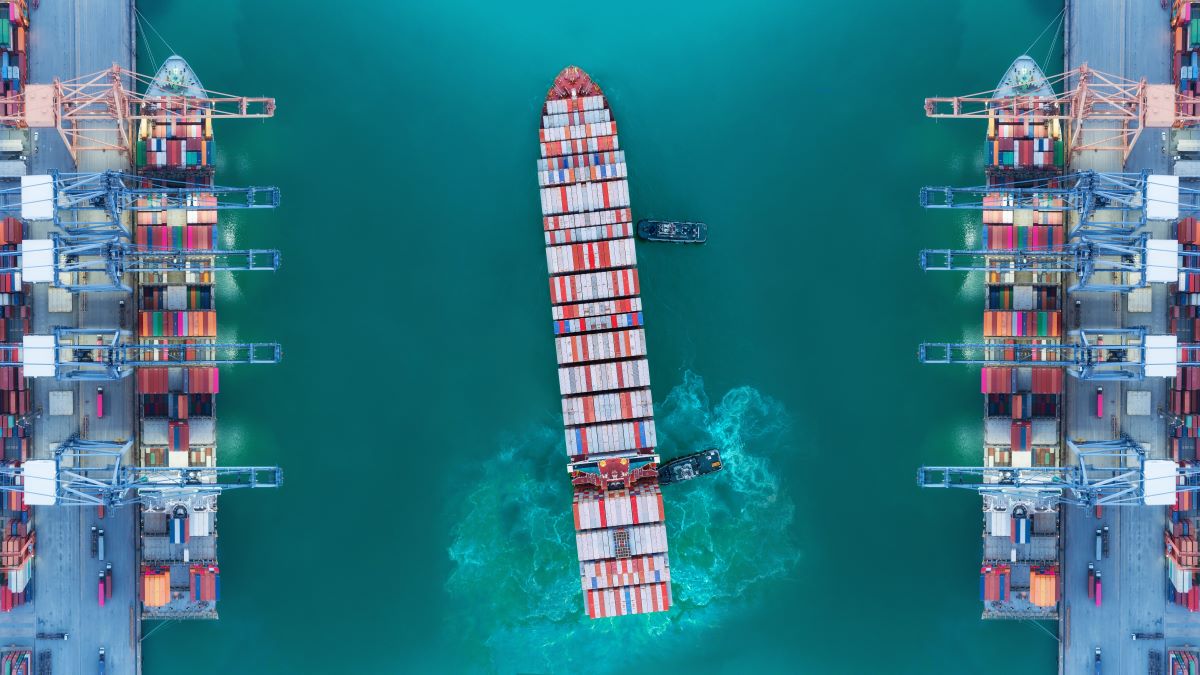
An aerial view of a container vessel leaving port
Default image copyright and description© Shutterstock/Studio conept

UN Trade and Development (UNCTAD) released on 15 April new seaborne trade dataFor the first time, the dataset includes country-level statistics.

Maritime transport is the backbone of global trade, moving over 80% of goods traded worldwide by volume. It connects global value chains, carrying raw materials and semi-processed goods to production hubs and delivering finished products to consumers. These flows are vital for industrialization, economic growth and job creation.

Seaborne trade has evolved over the decades, shaped by containerization, the rise of developing economies and shifting production and consumption patterns. Today, digitalization, geopolitics and the push for sustainability and climate resilience are redefining the sector.

A clearer picture of who ships what – and how much

Reliable, up-to-date country-level data is key to understanding trade flows and guiding better transport and trade policies and investment decisions.

Built from official trade data reported by governments to UN Comtradethe new dataset offers a more accurate and comparable view of global maritime cargo movements, helping countries to:

  • Monitor trade performance and competitiveness.
  • Assess integration into global supply chains and trade networks.
  • Inform port and transport infrastructure investment decisions.
  • Track progress on Sustainable Development Goal 9.1.2 to develop quality, reliable, sustainable and resilient infrastructure – for which maritime freight and port cargo volumes are indicators.

Data highlights developing countries’ rising share of maritime trade

Historically, developing countries served mainly as loading hubs – major exporters of raw materials but marginal importers of manufactured goods. But this has evolved since the 1970s, driven by structural changes such as the oil crises, trade liberalization, increased private sector participation in port operations, the rise of container shipping and reforms to liner shipping alliances.

The shift accelerated in the early 2000s as developing countries increased trade among themselves – including in raw materials, oil and manufactured goods. Their share of global maritime freight rose from 38% in 2000 to 54% in 2023. The surge was led by Asia, with China driving much of the growth.

Read full article here https://unctad.org/news/shipping-data-unctad-releases-new-seaborne-trade-statistics

A Human Approach to World Peace

The 14th Dalai Lama of Tibet

When we rise in the morning and listen to the radio or read the newspaper, we are confronted with the same sad news: violence, crime, wars, and disasters. I cannot recall a single day without a report of something terrible happening somewhere. Even in these modern times it is clear that one’s precious life is not safe. No former generation has had to experience so much bad news as we face today; this constant awareness of fear and tension should make any sensitive and compassionate person question seriously the progress of our modern world.
 
It is ironic that the more serious problems emanate from the more industrially advanced societies. Science and technology have worked wonders in many fields, but the basic human problems remain. There is unprecedented literacy, yet this universal education does not seem to have fostered goodness, but only mental restlessness and discontent instead. There is no doubt about the increase in our material progress and technology, but somehow this is not sufficient as we have not yet succeeded in bringing about peace and happiness or in overcoming suffering.
 
We can only conclude that there must be something seriously wrong with our progress and development, and if we do not check it in time there could be disastrous consequences for the future of humanity. I am not at all against science and technology – they have contributed immensely to the overall experience of humankind; to our material comfort and well-being and to our greater understanding of the world we live in. But if we give too much emphasis to science and technology we are in danger of losing touch with those aspects of human knowledge and understanding that aspire towards honesty and altruism.
 
Science and technology, though capable of creating immeasurable material comfort, cannot replace the age-old spiritual and humanitarian values that have largely shaped world civilization, in all its national forms, as we know it today. No one can deny the unprecedented material benefit of science and technology, but our basic human problems remain; we are still faced with the same, if not more, suffering, fear, and tension. Thus it is only logical to try to strike a balance between material developments on the one hand and the development of spiritual, human values on the other. In order to bring about this great adjustment, we need to revive our humanitarian values.
 
I am sure that many people share my concern about the present worldwide moral crisis and will join in my appeal to all humanitarians and religious practitioners who also share this concern to help make our societies more compassionate, just, and equitable. I do not speak as a Buddhist or even as a Tibetan. Nor do I speak as an expert on international politics (though I unavoidably comment on these matters). Rather, I speak simply as a human being, as an upholder of the humanitarian values that are the bedrock not only of Mahayana Buddhism but of all the great world religions. From this perspective I share with you my personal outlook – that:

Tiếp tục đọc “A Human Approach to World Peace”

From dispensing toilet paper to shaming jaywalkers, China powers up on facial recognition

Channelnewsasia

The country has one of the world’s most powerful facial recognition systems, which is being used in various ways, but concerns have been raised, as the programme Why It Matters finds out.

Even as Facebook’s #10yearchallenge sparks concerns that the social media giant is mining data for facial recognition AI, China’s facial recognition systems are already a reality in everyday life. Why It Matters host Joshua Lim finds out how public restrooms use it to prevent people from taking too much toilet paper; and how jaywalkers are identified, then publicly shamed on a digital billboard.
Tiếp tục đọc “From dispensing toilet paper to shaming jaywalkers, China powers up on facial recognition”

Early days of internet offer lessons for boosting 3D printing


theconversation – Even in its relative infancy, 3D printing has created an enormous list of possibilities: dental aligners to straighten your teeth, unique toys for your children, inexpensive custom prosthetics for people with limb deficiencies, and restoring lost or destroyed cultural artifacts. It can also be used to create untraceable firearms and an endless supply of copyright infringements.

3D printing AR-15 components worries policymakers. Shanrilivan

Just as when the internet developed, 3D printing is opening doors to amazing opportunities and benefits – as well as some undeniable dangers. Also called “additive manufacturing,” 3D printing’s enabling of truly decentralized, democratized innovation will challenge Tiếp tục đọc “Early days of internet offer lessons for boosting 3D printing”

Is 3-D Printing the Key to Cheap Carbon-Fiber Parts?

Technologyreview – Someday, carbon fiber might live up to its hype and make all of our cars and airplanes more lightweight and efficient. Today, though, parts made of the material are very expensive, and are used mainly in race cars, high-end sports cars, and new jetliners. Some entrepreneurs are now betting that the key to making carbon-fiber parts much cheaper and more widely used is 3-D printing technology.

The three objects, made by MarkForged, show different points in the printing process. The finished part is a component of a race car spoiler.
The Mark One printer lays down polymer and carbon fiber layers.

The benefits of carbon fiber are so great—parts made of it can be as strong as aluminum ones while weighing less—that “anyone who can afford it” is already using it in aerospace and automotive applications, says Greg Mark, CEO and founder of the Cambridge, Massachusetts-based startup MarkForged. But it’s too expensive for the mainstream, and a big reason for that is the way it’s made: a complicated, labor- and time-intensive process with many steps that must be done by hand (see “Where’s the Affordable Carbon-Fiber Automobile?”). Mark says the new process his company has developed is as simple as designing the part on the computer, pushing a button, and retrieving the part several hours later.

Top: An automotive cold air intake made by Impossible Objects.
Bottom: A drone propeller made via the process Impossible Objects has developed.

The ability to print carbon-fiber parts will make 3-D printing much more useful for many industries, according to Robert Swartz, chairman, founder, and chief technology officer for Chicago-based startup Impossible Objects. Most of the plastic parts made using existing 3-D printing technologies don’t perform well enough to be used, say, in a drone. “There’s a real need for functionality,” says Swartz, and that requires better materials. Tiếp tục đọc “Is 3-D Printing the Key to Cheap Carbon-Fiber Parts?”