New research analyzing more than 3,000 tropical forest sites reveals that areas with fewer seed-dispersing animals store up to four times less carbon than forests with healthy wildlife populations.
The study found that 81% of tropical trees rely on animals to disperse their seeds, establishing an ancient partnership now threatened by human activities such as deforestation, road construction, and hunting.
Researchers mapped global “seed dispersal disruption” and found it explains a 57% reduction in carbon storage potential across proposed forest restoration areas.
Al JazeeraSeveral delegates express dismay at the failure to break a deadlock at the sixth round of talks in under three years.
Piles of plastic waste at a recycling plant in Erftstadt, Germany [File: Jana Rodenbusch/Reuters]
Published On 15 Aug 2025
Global talks to develop a landmark treaty to tackle plastic pollution have once again failed to reach an agreement, despite efforts late into the night to strike a deal.
Delegates at a closing meeting of the Intergovernmental Negotiating Committee (INC) in Geneva on Friday spoke of their dismay at the failure to break a deadlock at the sixth round of talks in under three years, as countries remained deeply divided over the scope of any treaty.
“South Africa is disappointed that it was not possible for this session to agree a legally binding treaty and positions remain far apart,” its delegate told a closing meeting.
Cuba’s delegate said that negotiators had “missed a historic opportunity but we have to keep going and act urgently”, the AFP news agency reported.
mekongeye.com Produced in partnership with the Putlizer Center
Long-term intensive chemical use in Laos’ banana farms has degraded the country’s once-fertile soil, and it may take nearly half a century to restore it.
Laos’ fertile soil and its proximity to China have created ideal conditions for banana cultivation to meet the surging demand from Chinese consumers.
This fruit frenzy has attracted Chinese companies to seek farmland in Laos, a landlocked country that has embraced a “green agriculture” approach to combat poverty.
With government approval, the sector has expanded, offering jobs, infrastructure development, and revenue from land once considered undervalued.
However, an investigation by Mekong Eye and the Rainforest Investigations Network (RIN) reveals that the fruit plantation boom has left a legacy of soil degradation and uncertain livelihoods for many local farmers.
OUDOMXAY & BOKEO, LAOS – Northern Laos is experiencing soil degradation after years of monocropping and widespread chemical use on banana farms operated by Chinese entrepreneurs.
Thiep doesn’t remember the name of the Chinese fruit company that leased his family’s land, only that it was one of the first to arrive in his northern Lao village in 2007.
After a decade of monocropping bananas, the company left and then returned the land to his family. But in the interim, the earth had changed in ways Thiep and his household couldn’t have anticipated.
“The soil is unusually hard and dry, not like it used to be. We had to replace the plow with a stronger one just to break the ground,” Thiep recalled.
His family members invested extra effort into its first rice crop after reclaiming the plotland. That year, they enjoyed a bumper harvest that was more than they had before the arrival of the Chinese company. But it was the last time they saw such abundance.
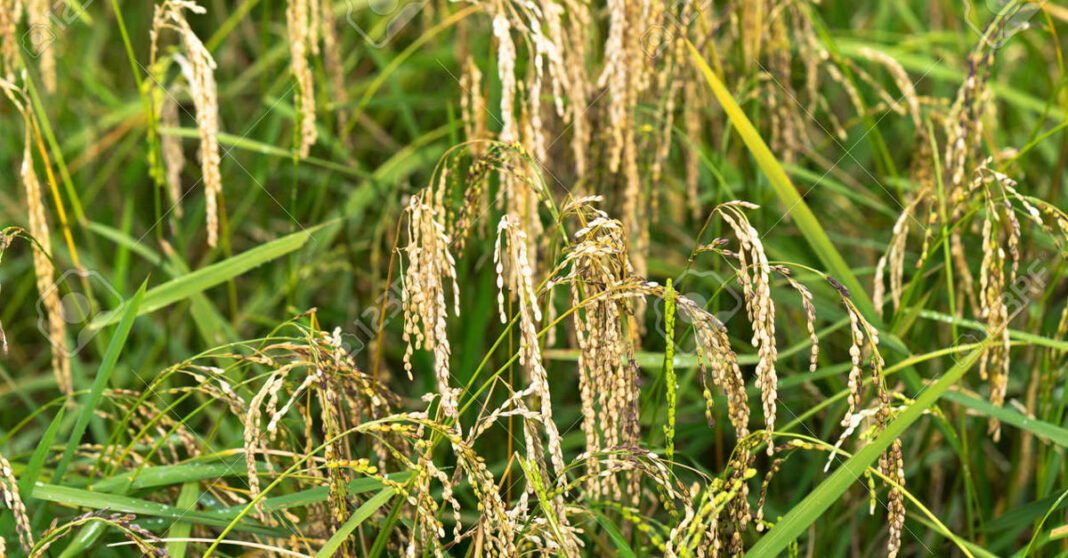
“The yield kept decreasing after that,” Thiep said, planting seedlings in the flooded paddy. “Before we leased it out, this plot produced 60 bags of rice. Now it’s down to 30, not enough for the family to eat.”
Nearly two decades ago, Chinese entrepreneurs, attracted by geographic proximity, blanketed northern Laos with banana plantations.
Exporting bananas to China quickly became an economic mainstay, replacing the long reliance on subsistence rice farming. The plantations not only created local jobs but also increased income for households leasing their land to companies.
But investment capital is bittersweet: it may have provided the region with a ladder out of the depths of poverty, but it has ushered in new perils.
Some local workers have reportedly fallen ill or died after pesticide spraying on farms.
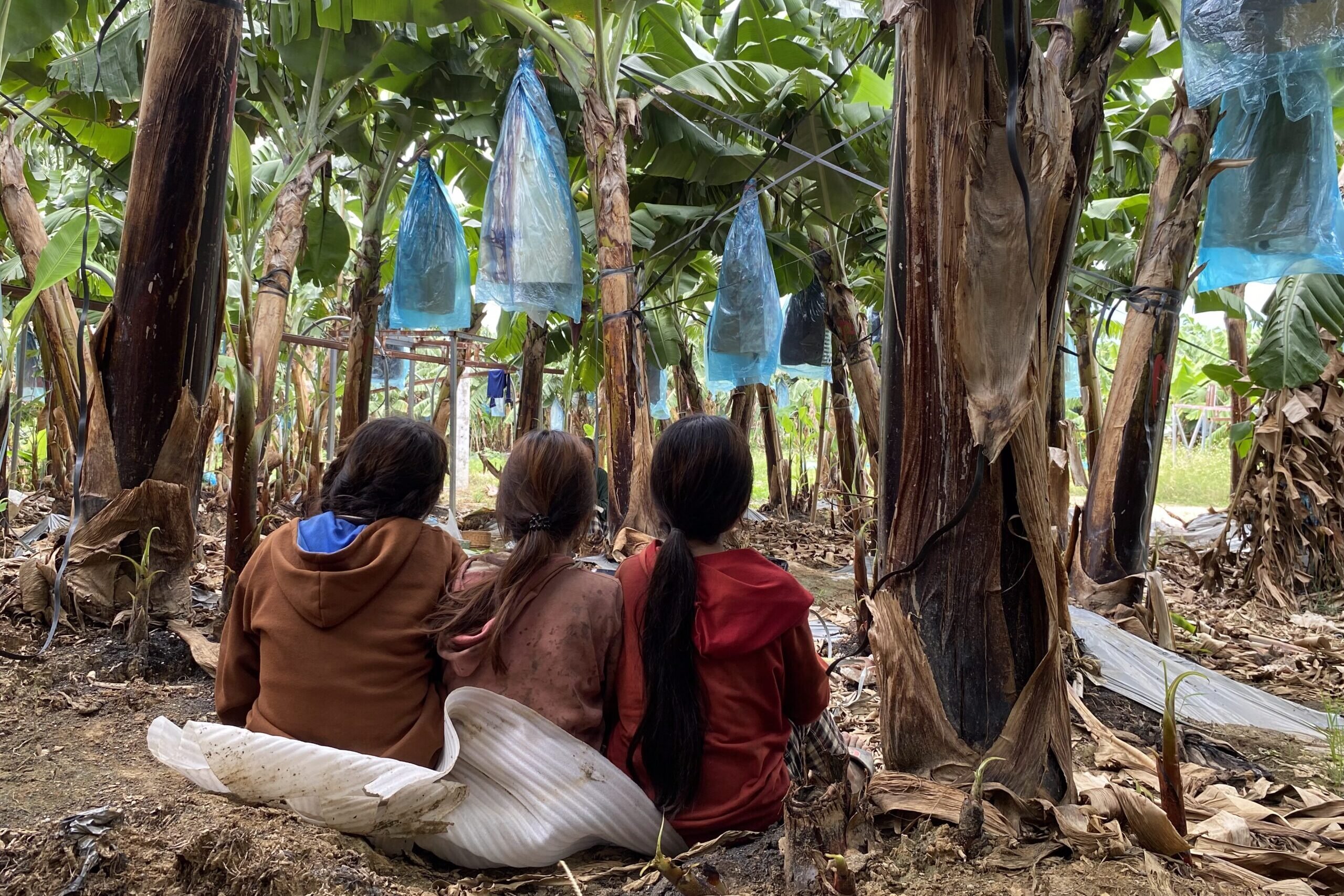
Young Hmong workers rest after long hours of labor on a banana plantation in Oudomxay province, northern Laos. Many, including children under 15, face direct exposure to hazardous agricultural chemicals used in the plantations.
A 2017 study, conducted with the Lao government’s involvement, found that agricultural chemicals – used intensively and without consistent management on banana plantations – had poisoned rivers and soil, and harmed the health of residents and plantation workers.
Among the chemicals identified were paraquat – a highly toxic herbicide banned in several countries, including Laos and China – and chlorothalonil, a hazardous substance banned in the EU in 2020 due to its potential to pollute groundwater and cause cancer.
Facing the issue, an official from the Ministry of Industry and Commerce verbally stated in early 2017 that the Prime Minister’s Office had ordered a ban on all commercial banana cultivation, according to the Laos News Agency. However, our reporter was unable to find any official orders on public platforms dating back to 2016.
As global supply chains pivot towards low-emissions production, Australia will need to lead, or risk being left behind. The country’s challenge is not a lack of technology, capital, or ambition. It’s a gap in policy architecture. Without bankable demand, Australia’s most promising clean commodity projects – green iron, sustainable aviation fuel, and clean ammonia – remain stuck at the starting line.
To meet that challenge, we propose a new demand-side policy model: the Clean Commodities Trading Initiative (CCTI) – a flagship example of green energy statecraft. At its heart is a new tool for national transformation: Clean Commodity Credits that reward innovation and emissions savings.
A market-friendly mechanism to kickstart large-scale clean production.
Green energy statecraft is a strategic approach to governance that uses the clean energy transition to simultaneously advance a nation’s economic, environmental, social, and geostrategic goals. Unlike conventional industry policy, which focuses on domestic market corrections, statecraft treats clean energy as key to national security and prosperity – used to build alliances, secure supply chains, boost productivity, and shape global rules.
The European Union, China, Japan, and South Korea are all pursuing variations of green energy statecraft. Australia must do the same – on its own terms, with tools suited to its advantages, institutions, and budget.
Microplastics have permeated the region’s food chain, hitting countries like Indonesia and the Philippines the hardest. The programme Insight looks at the health risks and what is being done to boot plastic from our plates.
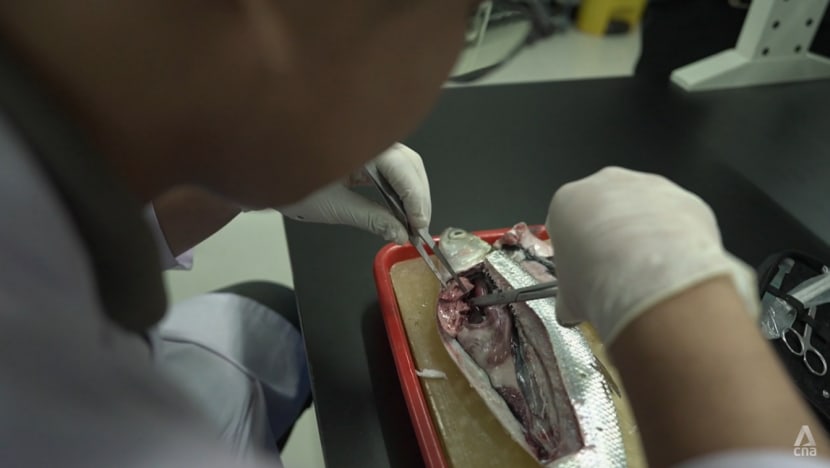
A study found that in nearly 94 per cent of fish sampled from Jakarta Bay, their gills and guts were laced with microplastics.
JAKARTA and MANILA: Milkfish — grilled, fried or floating in fragrant soup — is a staple on Indonesian dining tables. Its flesh is tender, its flavour delicately sweet.
What has no taste, however, would be the microplastics inside its body.
A study last year found that in nearly 94 per cent of fish sampled from Jakarta Bay, their gills and guts were laced with these toxic fragments, each no larger than five millimetres.
“If the microplastics are absorbed by fish and then consumed by humans, it means they’ll accumulate in humans,” warns Widodo Setiyo Pranowo, principal investigator at Indonesia’s National Research and Innovation Agency. “That’s dangerous.”
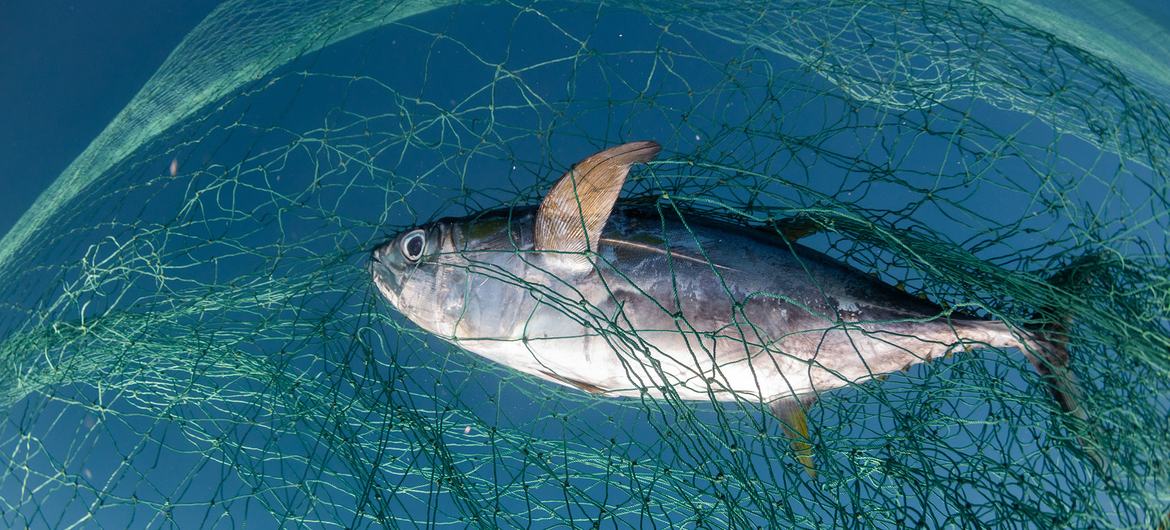
At the Third UN Ocean Conference in Nice, the “catch of the day” wasn’t a seabass or a red mullet – it was a figure: 35 per cent. That’s the share of global fish stocks now being harvested unsustainably, according to a new UN report released Wednesday.
As yachts bobbed gently and delegates streamed by in a rising tide of lanyards and iPads at Port Lympia, Nice’s historic harbor, that statistic sent a ripple through the conference’s third day – a stark reminder that the world’s oceans are under growing pressure from overfishing, climate change and unsustainable management.
World leaders have renewed calls for a global moratorium on deep-sea mining at the 2025 U.N. Ocean Conference (UNOC) in Nice, France, as the U.S. moves to mine the deep sea in international waters under its own controversial authority.
Four additional countries have joined the coalition of nations calling for a moratorium, precautionary pause, or ban on deep-sea mining, bringing the total number to 37.
The U.S., which did not have an official delegation at UNOC, is pushing forward with its plans to mine in international waters — a decision that has drawn criticism from the international community.
Southern China is facing a surge in agricultural pests migrating from neighboring Southeast Asian countries, including Laos, Myanmar, and Cambodia. This pest migration, driven by climate-related factors, poses a growing threat to regional food security.
A recent study highlights the role of extreme weather in this phenomenon. Researchers found that the ongoing El Niño event, marked by unusually warm ocean temperatures in the Equatorial Pacific, is contributing to hotter and more humid conditions, which are ideal for pest breeding.
In addition to favorable breeding conditions, strong seasonal winds are carrying these pests into Southern China, facilitating their rapid spread and increasing the risk of crop damage.
While wind is a major factor in their movement, scientists note that insect migration is also influenced by environmental stressors such as extreme heat, drought, and the presence of predators.
Insects migrate in response to immediate environmental cues, the study explains. They may move to escape harsh conditions, find food, avoid overcrowding, or locate new habitats suitable for reproduction.
The problem isn’t confined to China. In Laos, climate change is also taking a toll. The country has experienced record-breaking heatwaves, reaching 43.2 degrees Celsius in 2024, along with persistent water shortages and weakened agricultural infrastructure.
These factors have led to crop failures, livestock losses, and growing food insecurity. An estimated 82 percent of households lack access to safe water, compounding the crisis for rural communities.
Globally, climate change is expected to worsen food insecurity. Rising temperatures and shifting rainfall patterns are already making it more difficult to grow crops in traditional farming regions.
By 2100, nearly 30 percent of the world’s food crops may be exposed to climate conditions they have never encountered before. While much of the focus is on staple crops like rice and wheat, many other plants grown in equatorial regions could also suffer under the changing climate.
As of today, the Trump Administration has paused two essential US global food security initiatives, Feed the Future and the Famine Early Warning Systems Network (FEWS NET). Created in reaction to the 2007-8 global food crisis and resulting instability, Feed the Future is a marquee US government food security program and tool for implementing the bipartisan Global Food Security Act, working in 20 countries to build a more resilient food system and supporting agricultural innovation at 17 US universities. Operating since 1985, FEWS NET provides rigorous analysis and forecasting of acute food insecurity to inform US and other humanitarian responses in 30 countries.
These programs make invaluable contributions to US national security and global stability. For example, Feed the Future builds resilience in five countries where the US National Intelligence Estimate on climate change assesses “building resilience…would probably be especially helpful in mitigating future risks to US interests.” In Central America, where drought during growing seasons has driven increased migration to the United States, Honduran Feed the Future beneficiaries report a 78% lower intent to migrate than the wider population. Meanwhile, FEWSNET’s data and analysis more quickly and efficiently direct US humanitarian support in reaction to conflict, economic shocks, and extreme weather, including in regions where the US military is deployed.
Both programs have historically received consistent bipartisan support. Speaking at the launch of a new Feed the Future initiative last year, Senator John Boozman (R-AR) noted, “food security is national security.” Another Feed the Future supporter, Representative Tracey Mann (R-KS 1st District), has highlighted the value of his district’s Feed the Future Innovation Lab and stated that global food security programs have “an especially strong return on investment because they support American agriculture producers today, while greatly reducing the need for conflict or war-related dollars spent tomorrow” and are “a way to stop wars before they start.” As Executive Director of the World Food Program (2017-2023), former South Carolina Governor and Representative David Beasely testified to the Senate that “Investments in early warning systems like USAID’s Famine Early Warning System…allow humanitarian partners to project and respond in real time to potential emergencies….Without this capacity to forecast food insecurity, the cost of humanitarian intervention is much greater, both in dollars and lives lost.”
Last year, dozens of national security leaders, including the former commanders of Indo-Pacific Command (INDOPACOM), Africa Command (AFRICOM), and Central Command (CENTCOM), endorsed the Council on Strategic Risks’ The Feeding Resilience Plan: Safeguarding US National Security at the Crossroads of Food and Climate Change. The report makes recommendations to US policymakers to better anticipate, prevent, and respond to food- and climate-driven national security threats, including to:
“Support long-term resilience building in vulnerable countries by sustaining and expanding Feed the Future,” noting it and similar programs “bolster vulnerable countries’ ability to withstand food shocks and forestall security threats or need for costly US assistance,” and
“Expand on USAID’s FEWS NET to include longer-term food insecurity warnings” and to have security and defense agencies better “integrate FEWSNET projections with processes to forecast political instability and conflict.”
Amid multiplying threats from instability, extreme weather, and geopolitical competition, these recommendations remain critical today, and highlight the important national security benefits of capabilities like Feed the Future and FEWS NET.
The challenge of our generation: Avert dangerous global warming – invest in social cohesion and wellbeing of people – build local, national, and transnational alliances for transformative change towards sustainability
1. We can reach the goals of the Paris Agreement – but ambitious action is needed now! Climate change is a threat to humanity. Irreversible Earth systems changes need to be avoided. This is a civilisational challenge which requires unprecedented joint action around the globe. We are under huge time pressure. Global CO2 emissions must decline to zero by mid-century in order to achieve the ambitious Paris goal, aimed at stabilising the global mean temperature well below 2 degrees C, and if possible at 1.5 degrees C. This translates into a stylised “carbon law”, whereby emissions must be halved every decade in analogy to the Moore’s law of semiconductors. We have the resources and the technology to achieve this, but do we have the political will and the resolve? Recent developments, such as the declaration by the US President to withdraw from the Paris Agreement, can be interpreted as a major setback. At the same time, they may inspire counter-movements, strengthening the determination to vigorously combat climate change. In particular, OECD countries and emerging economies should make commitments within the G 20 and within their national policies to ensure the achievement of global decarbonisation by the middle of the century. Tiếp tục đọc “The Climate – Justice – Cooperation Nexus: 10 Cornerstones of the Great Transformation towards Sustainability”→



 CVD
CVD 