Imagine the escalating conflict between the US, Israel and Iran unfolding in a world powered mostly by wind, solar and batteries rather than oil and gas.
In today’s fossil-fuelled economy, markets react to Iran’s attacks on oil and gas facilities in the Gulf and the threat to close the strait of Hormuz. Oil prices jump. Governments brace for inflation. Around a fifth of the world’s traded oil passes through the narrow corridor, linking the Gulf states to the wider world. When tensions rise there, energy markets react instantly.
But in a world where most energy is generated domestically from renewables, would the same threat trigger the same global shock? Would instability in the Gulf still lead to more expensive food and fuel across the world? Or would the economic aftershocks look very different?
To understand what’s at stake, we need to first look at how today’s energy system is structured.
The strait of Hormuz is the narrow point between the Persian Gulf and the open ocean. AustralianCamera / shutterstock
A system built on chokepoints
For about a century, the global economy has depended on fossil fuels produced by a few producers in the Middle East. Chokepoints like the strait of Hormuz carry enormous strategic weight.
“Steady and pragmatic decarbonisation, rapid clean-energy expansion combined with cautious emission targets, continued coal use to protect energy security and industrial growth.”
China’s leadership has published a draft of its 15th five-year plan setting the strategic direction for the nation out to 2030, including support for clean energy and energy security.
The plan sets a target to cut China’s “carbon intensity” by 17% over the five years from 2026-30, but also changes the basis for calculating this key climate metric.
BloombergNEF’s Energy Transition Investment Trends reviews annual investment figures in the global energy transition, including spending to deploy clean technologies, investment in the clean energy supply chain, equity investment in climate-tech companies, and debt issuance for energy transition purposes.
All four of these indicators moved upward in a year marked by trade disruptions and geopolitical tension, showcasing the energy transition’s resilience.
Walmart, the biggest single buyer of goods in the world, has lowered its emissions intensity and sent emissions-reducing ripples throughout its global supply chain. Joe Raedle/Getty Images
The Trump administration has given corporations plenty of convenient excuses to retreat from their climate commitments, with its moves to withdraw from the Paris Agreement, roll back emissions regulations, and scale back clean-energy incentives.
Visions of planting walls of trees to block the expansion of the desert have long been promoted but never realized. The green wall myth persists today even though it is premised on outdated understandings of desertification. We review the history of the idea of green walls and focus on two sets of contemporary initiatives to assess their outcomes: peri-Saharan programs (Algeria’s Green Dam and Great Green Wall in sub-Saharan Africa) and China’s Three Norths Shelterbelt Program. This review reveals a mixed record of technical success with low rates of the establishment of monocultures of fast-growing trees vulnerable to disease. While there is evidence for reduced wind erosion in some areas, afforestation is also associated with reduced soil moisture and lowering of water tables. Social impacts include increased water scarcity for people and livestock in some cases, and resource enclosures that particularly work against pastoralist livelihoods.
Green walls refer to continuous bands of planted trees stretching across single or multiple countries in dryland regions. As socioecological projects, green walls invoke powerfully attractive images of maintaining life over the assumed sterility of the desert through human ingenuity and effort. A wall of planted trees is envisioned to hold back an expansionary desert from degrading the productivity of the lands behind the wall. Despite the persistent discursive power of this image, its scientific foundation rests on now discredited understandings of desertification.1Desertification, scientifically understood as land degradation due to human mismanagement, is less a regional phenomenon across a broad front than a highly localized phenomenon in areas of greater and more persistent human pressures. The power of the green wall vision is illustrated by its persistent use in promotions of a diverse array of dryland afforestation initiatives with different afforestation patterns (e.g., shelterbelts, scattered woodlots and larger afforested blocks, and agroforestry) and goals (ecological rehabilitation, carbon sequestration, and improved climate resilience). In short, green wall rhetoric mobilizes support and empowers certain actors rather than describing actual dryland afforestation practices.2This article focuses on the vision, practices, and effects of these programs.
This review was written during a period of global enthusiasm for trees and mobilization for mass afforestation, with the World Economic Forum’s Trillion Trees initiative the most prominent example (https://www.1t.org/) but also a wide range of other afforestation efforts across the globe (3). While the arborocentrism of this moment has a long history (see below), concerns about climate change and an interest in increasing the sequestration of industrial carbon has led to a rapid rise of tree planting initiatives. The world’s drylands could be seen as “empty” and thus important “untapped” landscapes to store carbon. Through a consideration of the empirical record of green wall programs, this article outlines reasons to be cautious. Trees are often not suited for the arid zones where they are planted and, even if they are established, may have negative ecological and social impacts (4). By ignoring the need for ecological and social monitoring of afforestation impacts, green wall enthusiasm has often worked to hide the mixed record of these initiatives.
As the name suggests, liquefied natural gas (LNG) involves turning gas into liquid form — a process known as liquefaction. Liquefaction does not alter the chemical makeup of gas, which is comprised of mostly methane plus varying amounts of different impurities, but it does make it denser. This enables ships and other carriers to move more gas over oceans between locations that lack direct pipeline connectivity.
The world is facing an unprecedented housing crisis. According to the latest UN-Habitat estimates, 318 million people are homeless, while 2.8 billion people—over a third of the global population—lack access to adequate housing. Behind these stark figures lie deep inequalities that undermine social progress and human dignity.
Adequate housing is more than shelter, it is a foundation for stability, health, education, and opportunity. Without a safe and secure home, individuals are more vulnerable to poverty, exclusion, and poor health outcomes. Homelessness also carries a heavy social cost, eroding trust, cohesion, and the potential for societies to thrive.
The housing challenge is global but manifests differently across contexts. In rapidly urbanizing regions, millions live in informal settlements or slums, where basic services are scarce and conditions unsafe. Today, 1.1 billion people live in such informal settlements, with 90 percent concentrated in Africa and Asia. Conflict, economic inequality, climate change, and natural disasters are major drivers of displacement and housing insecurity, pushing millions into precarious living conditions.
The urgency of the crisis was underlined at the UN-Habitat Assembly in Nairobi (29–30 May 2025), where Member States adopted the UN-Habitat Strategic Plan for 2026–2029. The plan places affordable housing, secure land tenure, and access to basic services at the heart of global priorities. Leaders called for bold and coordinated action, stressing that housing must be treated as a human right and a cornerstone of sustainable development.
The right to adequate housing is embedded in international human rights instruments and explicitly tied to the 2030 Agenda for Sustainable Development. Goal 11 commits the international community to make cities and human settlements inclusive, safe, resilient, and sustainable. Addressing homelessness and housing insecurity is therefore essential to achieving the SDGs and ensuring that no one is left behind.
Tackling homelessness and inadequate housing requires integrated strategies at local, national, and global levels:
Scaling up affordable housing initiatives through innovative financing, public-private partnerships, and policy reforms.
Expanding social protection systems to prevent families from falling into homelessness.
Investing in resilient housing solutions to adapt to the realities of climate change and disasters.
Strengthening community-based models such as cooperatives and housing associations that empower people to participate in shaping their own futures.
Homelessness is not inevitable. With coordinated action and commitment, the global community can reverse these trends. As the world prepares for the Second World Summit for Social Development in Doha, 4-6 November 2025, the message is clear: accelerating social progress requires that every person has access to a safe, secure, and dignified place to call home.
International standards are proliferating, delivering major benefits to wealthy nations and big multinationals while leaving many developing countries behind, a new World Bank report shows.
Main Messages
Standards are the hidden foundations of prosperity. They are the shared rules that make plugs fit sockets, medicines work safely, and digital systems connect seamlessly. Standards embody collective knowledge, build trust, and enable economies to function efficiently. When they fail, markets fragment; when they work, prosperity follows.
For low- and middle-income countries, standards have never mattered more. Nearly 90 percent of world trade is now shaped by nontariff measures, most linked to standards. From digital systems for payment to charging stations for electric vehicles, new technologies can deliver economywide benefits only when standards exist. Mastering them can enhance national competitiveness and protect against technological, financial, and environmental risks.
Standards are a versatile tool of economic policy.Governments can use voluntary standards to drive innovation and give technical guidance on compliance with regulations. They can also make them mandatory when uniform compliance is necessary to protect health, safety, or the environment. In addition, governments can deploy standards as an instrument of industrial policy without reference to specific technologies or firms.
Ambition must match capacity.Countries should follow a trajectory that takes into account their stage of economic development, first adapting international standards to local realities when needed, then aligning with them as institutions mature, and actively participating in authoring standards in priority areas as capabilities grow. Rwanda’s Zamukana Ubuziranenge (“Grow with Standards”) program exemplifies this path, helping micro, small, and medium enterprises progress step by step towards compliance with international standards.
Investing in quality-enhancing infrastructure makes standards work well. The system of testing, certification, metrology, and accreditation in a country is what makes standards effective. Such systems are expensive to build and easy to neglect. Countries should start with public provision of quality-enhancing services in key sectors, then gradually open these services up to private participation. In many places, capacity gaps are stark: Ethiopia has fewer than 100 accredited auditors for compliance with standards of the International Organization for Standardization (ISO), compared with 12,000 in Germany.
To make standards a springboard for development, countries should do the following:
Create incentives for firms to upgrade the quality of their exports rather than imposing unrealistic mandates.
Adapt and sequence standards to align with the national capacity to enforce them.
Participate actively in international forums for setting standards.
Invest in and share quality infrastructure resources regionally.
The global community, for its part, must do the following:
Support participation by low- and middle-income countries in developing international standards and design tiered standards that reflect diverse capacities among countries.
Deepen regulatory cooperation and reduce fragmentation.
Develop credible standards for emerging technologies and actions to prevent or mitigate climate change.
Expand research and data on the economic and social impacts of standards.
Standards matter for development. Countries that take them seriously are getting ahead. Countries that ignore them risk falling behind.
In the area you have selected (Vietnam) tsunami hazard is classified as medium according to the information that is currently available. This means that there is more than a 10% chance of a potentially-damaging tsunami occurring in the next 50 years. Based on this information, the impact of tsunami should be considered in different phases of the project for any activities located near the coast. Project planning decisions, project design, and construction methods should take into account the level tsunami hazard. Further detailed information should be obtained to adequately account for the level of hazard.
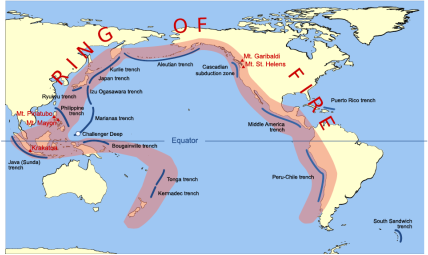
Pacific “Ring of Fire” (enlarged graphic). Source: Adapted from U.S. Geological SurveyDownload Image
Climate change impact: The areas at risk of tsunami will increase as global mean sea level rises. According to the IPCC (2013), global mean sea level rise depends on a variety of factors, and estimates for 2100 range from ~20 cm to nearly 1 m. However, regional changes in sea level are difficult to predict. Projects in low-lying coastal areas such as deltas, or in island states should be designed to be robust to projected increases in global sea level.
Thousands of people march in the sidelines of the COP30 UN Climate Change Conference in Belém, Brazil on Nov. 15, 2025.Pablo Porciuncula—AFP via Getty Image
by Brian Mukhaya Brian Mukhaya is the Africa Program Manager at Clean Air Task Force.
Ten years after the landmark Paris Agreement, the world is still trying to solve two crises as if they were separate: climate change and economic development. That’s a dangerous illusion. Climate progress cannot succeed if billions of people remain in poverty, without electricity, stable food systems, or the means to build better lives. And development, if it ignores climate risk, is little more than a short-term fix that will collapse under the weight of future disasters.
I saw this tension firsthand at COP30 in Belém, Brazil, the annual UN climate summit. The energy there was unmistakable—a mixture of urgency and frustration. Delegates from across Africa reminded the world that promises made in Paris have not been kept. Wealthy nations pledged to support developing countries as they cut emissions and adapted to rising temperatures. Yet, a decade later, those commitments remain largely unfulfilled.
At COP29 in Baku last year, developed countries agreed to mobilize at least $300 billion annually by 2035 for developing countries’ climate action, part of a broader aspirational target of $1.3 trillion per year. While this represents a tripling of the previous $100 billion goal, representatives from developing countries remain skeptical. More fundamentally, the $300 billion commitment falls far short of actual needs. The Independent High-Level Expert Group on Climate Finance estimates that developing countries (excluding China) need approximately $2.7 trillion annually by 2030 to meet climate and nature-related goals. The gap between promise and reality remains vast—and widening
But money is only part of the problem. Even when funding arrives, it often misses the mark. A new analysis by the Clean Air Task Force looked at 52 African countries’ climate and development plans. It found that the two rarely intersect. Climate strategies focus on emissions and energy transitions, while national development plans emphasize job creation and economic growth—but without embedding climate targets. The result is a patchwork of policies that fail to deliver either lasting prosperity or real emissions cuts.
As Bill Gates noted in a recent memo, global climate policy increasingly risks sidelining development altogether. Today, more than 600 million Africans lack access to electricity, while 900 million do not have clean cooking technologies—conditions that undermine productivity, constrain public services, and contribute to preventable deaths.
Crucially, this should not be understood as an either/or dilemma. Wealthy nations already recognize that decarbonization must go hand in hand with economic growth to be politically viable at home. The same is true globally. Emerging and developing economies cannot be expected to choose between climate progress and economic progress. Insisting on a tradeoff between the two as a trade-off is both unrealistic and unjust.
When climate and development are treated as separate silos, everyone loses. Fragmented planning leads to inefficient allocation of scarce resources, missed opportunities for infrastructure investments with broad benefits, and policies that fail to produce either meaningful emissions reductions or durable socio-economic progress. Importantly, this is not a challenge restricted to Africa but a blind spot in international climate governance. Even wealthy countries are discovering that climate action divorced from economic realities is politically unsustainable. When climate action appears to threaten economic growth, job creation, or living standards, political support erodes quickly.
As negotiations in Belém draw to a close, one truth should be clear: climate and development are not competing agendas—they are the same story. Sustainable development is the foundation of lasting climate progress. And climate resilience is the only path to enduring prosperity. Any strategy that treats them separately is doomed to fail.
Development without climate action is a short-term fix. And climate action without development is an empty promise.
Almost exactly 10 years ago, a remarkable thing happened in a conference hall on the outskirts of Paris: After years of bitter negotiations, the leaders of nearly every country agreed to try to slow down global warming in an effort to head off its most devastating effects.
The core idea was that countries would set their own targets to reduce their climate pollution in ways that made sense for them. Rich, industrialized nations were expected to go fastest and to help lower-income countries pay for the changes they needed to cope with climate hazards.
So, has anything changed over those 10 years? Actually, yes. Quite a bit, for the better and the worse. For one thing, every country remains committed to the Paris Agreement, except one. That’s the United States.
Forests directly cool the planet, like natural evaporative air conditioners. So what happens when you cut them down?
In tropical countries such as Indonesia, Brazil and the Congo, rapid deforestation may have accounted for up to 75% of the observed surface warming between 1950 and 2010. Our new research took a closer look at this phenomenon.
Using satellite data over Indonesia, Malaysia and Papua New Guinea, we found deforestation can heat a local area by as much as 4.5°C, and can even raise temperatures in undisturbed forests up to 6km away.
More than 40% of the world’s population live in the tropics and, under climate change, rising heat and humidity could push them into lethal conditions. Keeping forests intact is vital to protect those who live in and around them as the planet warms.
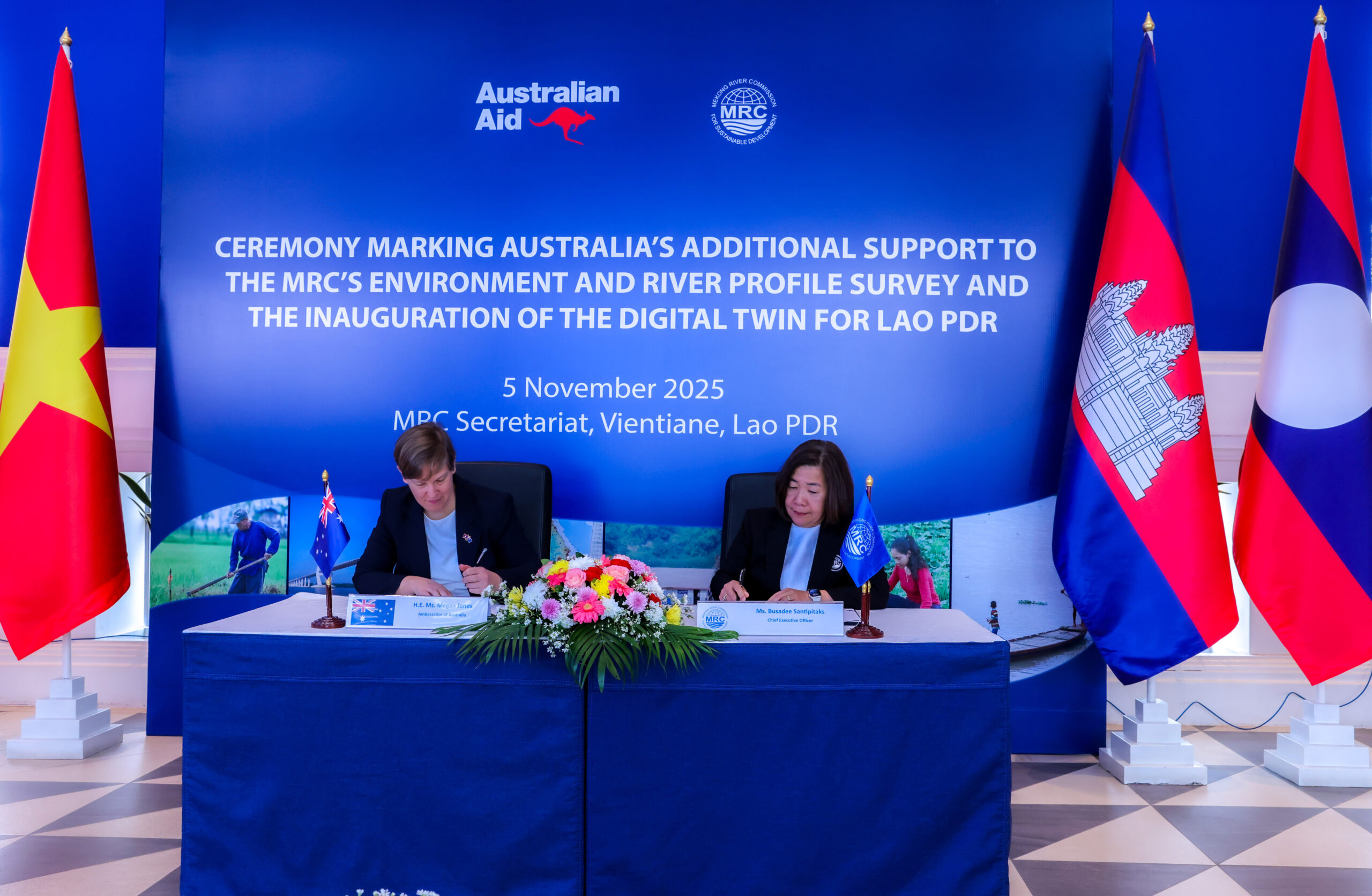
Vientiane, Lao PDR, 6 November 2025 – The Mekong River Commission (MRC) and the Government of Australia have reinforced their long-standing partnership through additional Australian support and the use of new digital innovations to enhance water monitoring and management in the Mekong region.
At a ceremony held today at the MRC Secretariat in Vientiane, Australia formalised an additional USD 1.71 million to support the MRC’s Environment and River Profile Survey, a key program that helps the MRC to enhance monitoring of river conditions, improve forecast changes, and better assess the health of the basin. This ensures the MRC can continue gathering and analysing data effectively that inform decisions on the river’s management and protection.
Australia’s support for the Environment and River Profile Survey builds on its core support to the MRC under the Mekong-Australia Partnership, which seeks to strengthen water security, economic resilience and sustainable growth in the sub-region. “Australia is proud to support this project as it will benefit the MRC, its member countries, and the river’s communities, economy, and environment” said H.E. Ms Megan Jones, Australian Ambassador to Lao PDR.
Joining the event was His Excellency Dr Linkham Douangsavanh, Minister of Agriculture and Environment of Lao PDR. Together with the MRC and Australia, he witnessed the formal launch of a new “Digital Twin” platform, a real-time modelling tool that integrates hydrological, meteorological and spatial data to help visualise how changes in rainfall, flow or land-use could affect communities and ecosystems.
“With this Digital Twin platform, we are giving our communities and partners a window into the river’s future,” said Dr Douangsavanh. “When we see what may come, we can plan better, respond faster and protect the peoples and their livelihoods and nature that depend so much on the Mekong.”
“Today we harness new digital capabilities and advanced capabilities so that we can ensure shared benefits for the sustainable development of the Mekong River Basin. The MRC is grateful for this timely support from Australia that has allowed this to happen,” said H.E. Ms Busadee Santipitaks, Chief Executive Officer of the MRC Secretariat.
About the Mekong River Commission
The MRC is an intergovernmental organisation established in 1995 to boost regional dialogue and cooperation in the Lower Mekong River Basin. Based on the Mekong Agreement among Cambodia, Lao PDR, Thailand, and Viet Nam, the MRC serves as both a regional platform for water diplomacy and a knowledge hub – to manage water resources and support sustainable development of the region.
The five Mekong countries lost nearly 1 million hectares (2.5 million acres) of tree cover in 2024, with nearly a quarter of which was primary forest, and more than 30% of losses occurring inside protected areas.
Cambodia and Laos saw some of the highest levels of loss inside protected areas, driven by logging, plantations and hydropower projects, though both countries recorded slight declines from 2023.
In Myanmar, conflict has complicated forest governance, with mining and displacement contributing to losses, though overall deforestation fell slightly compared to the previous year.
Thailand and Vietnam bucked the regional trend, with relatively low forest losses in protected areas, supported by logging bans, reforestation initiatives, and stricter law enforcement.
See All Key Ideas
BANGKOK — The Mekong countries of Cambodia, Laos, Myanmar, Thailand and Vietnam lost a combined area of tree cover of nearly a million hectares in 2024, or an area almost the size of Lebanon. That’s according to Mongabay’s analysis* of satellite data published by the Global Land Analysis and Discovery (GLAD) laboratory at the University of Maryland, in partnership with Global Forest Watch (GFW).
GFW data show 991,801 hectares (2.45 million acres) of tree cover were lost in 2024, including nearly 220,000 hectares (544,000 acres) of primary forest, across the five Mekong countries. More than 30% of tree cover loss recorded in 2024 occurred inside protected areas, although across the region, the rate of deforestation — both within protected areas and outside of them — slowed slightly from 2023. Despite this, the drivers of deforestation vary somewhat from country to country, and last year’s losses still reflect a grim trajectory for forests in the Mekong region.
The economies of almost all Mekong countries are heavily reliant on agriculture, with forests cleared for both agribusiness-run plantations or subsistence farming plots. But research indicates the conversion of forest to croplands has resulted in increasingly unpredictable weather patterns and subsequently poorer agricultural yields.
Such a simple query might seem trivial, but making it possible across billions of sessions requires immense scale. While OpenAI reveals little information about its operations, we’ve used the scraps we do have to estimate the impact of ChatGPT—and of the generative AI industry in general.
OpenAI’s actions also provide hints. As part of the United States’ Stargate Project, OpenAI will collaborate with other AI titans to build the largest data centers yet. And AI companies expect to need dozens of “Stargate-class” data centers to meet user demand.
Estimates of ChatGPT’s per-query energy consumption vary wildly. We used the figure of 0.34 watt-hours that OpenAI’s Sam Altman stated in a blog post without supporting evidence. It’s worth noting that some researchers say the smartest models can consume over 20 Wh for a complex query. We derived the number of queries per day from OpenAI’s usage statistics below. illustrations: Optics Lab
OpenAI says ChatGPT has 700 million weekly users and serves more than 2.5 billion queries per day. If an average query uses 0.34 Wh, that’s 850 megawatt-hours; enough to charge thousands of electric vehicles every day.
2.5 billion queries per day adds up to nearly 1 trillion queries each year—and ChatGPT could easily exceed that in 2025 if its user base continues to grow. One year’s energy consumption is roughly equivalent to powering 29,000 U.S homes for a year, nearly as many as in Jonesboro, Ark.
Though massive, ChatGPT is just a slice of generative AI. Many companies use OpenAI models through the API, and competitors like Google’s Gemini and Anthropic’s Claude are growing. A report from Schneider Electric Sustainability Research Institute puts the overall power draw at 15 terawatt-hours. Using the report’s per-query energy consumption figure of 2.9 Wh, we arrive at 5.1 trillion queries per year.
AI optimists expect the average queries per day to jump dramatically in the next five years. Based on a Schneider Electric estimate of overall energy use in 2030, the world could then see as many as 329 billion prompts per day—that’s about 38 queries per day per person alive on planet Earth. (That’s assuming a global population of 8.6 billion in 2030, which is the latest estimate from the United Nations.) As unrealistic as that may sound, it’s made plausible by plans to build AI agents that work independently and interact with other AI agents.
The Schneider Electric report estimates that all generative AI queries consume 15 TWh in 2025 and will use 347 TWh by 2030; that leaves 332 TWh of energy—and compute power—that will need to come online to support AI growth. That implies the construction of dozens of data centers along the lines of the Stargate Project, which plans to build the first ever 1-gigawatt facilities. Each of these facilities will theoretically consume 8.76 TWh per year—so 38 of these new campuses will account for the 332 TWh of new energy required.
While estimates for AI energy use in 2030 vary, most predict a dramatic jump in consumption. The gain in energy consumption will be driven mostly by AI inference (the power used when interacting with a model) instead of AI training. This number could be much lower or much higher than the Schneider Electric estimate used here, depending on the success of AI agents that can work together—and consume energy—independent of human input.







 CVD
CVD 