
Rafi · Lives in IndonesiaUpdated 4y
I will mention 7 major ethnic groups which have the largest population in ASEAN (at least according to my knowledge). Which are:
1. Javanese, Mostly found in: Indonesia: Around 108 million people
Conversations on Vietnam Development

Rafi · Lives in IndonesiaUpdated 4y
I will mention 7 major ethnic groups which have the largest population in ASEAN (at least according to my knowledge). Which are:
1. Javanese, Mostly found in: Indonesia: Around 108 million people
CNBC.com Published Sun, Feb 1 2026
Key Points

Amber Casino and former scam center, owned by Chen Zhi, a Chinese businessman who was deported to China, is seen in Sihanoukville, Cambodia, on Jan. 18, 2026.
Anadolu | Anadolu | Getty Images
Chinese-language money laundering networks funneled an estimated $16.1 billion in illicit funds through cryptocurrency transactions in 2025, according to a report released Tuesday by blockchain data analysis firm Chainalysis.
These networks, known as CLMNs, accounted for roughly one-fifth of the illicit cryptocurrency ecosystem in 2025, which Chainalysis valued at over $82 billion.
The criminal networks primarily operate through various channels and chat groups on the messaging platform Telegram, where launderers advertise their services to prospective customers. These postings often include pictures showing heaps of cash and public testimonials as proof of liquidity and service quality, according to the report.
These Telegram-based channels, known as “guarantee” platforms, function as marketing hubs or informal escrow services that connect vendors with prospective clients. While the platforms do not control the underlying transactions, Chainalysis said they are the main conduits through which illicit deals are arranged.
eastasiaforum.org Published: 22 December 2025
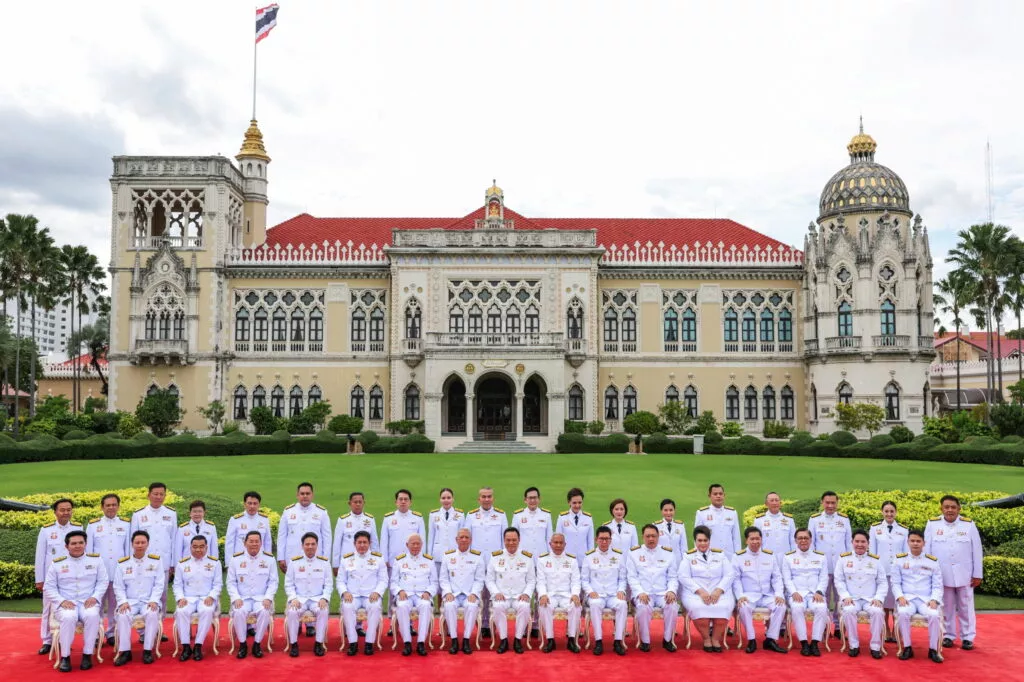
Thailand is confronting a convergence of economic and political pressures that threaten to lock in prolonged stagnation caused by weak growth, demographic decline and low productivity. Decades of political instability, repeated intervention by unelected ‘tutelary’ powers and the blocking of reformist forces have undermined policy continuity, discouraged investment and diverted spending away from long-term growth drivers like education and public investment. Renewed border tensions with Cambodia and looming elections now compound these structural weaknesses, leaving Thailand trapped in a cycle of political uncertainty and economic underperformance that erodes its regional standing.
With growth barely above 2 per cent, a looming demographic crisis and an immigration regime unsuited to offsetting future workforce challenges, Thailand is in urgent need of pro-growth, pro-productivity reforms and public investment despite its strained public finances. These challenges are par for the course in any rich post-industrial country — but for a middle-income country in today’s international environment, they’re all the more daunting.

Lucia Millar, Lives in Asia 3y
Question: Do the Vietnamese think their country is in Northeast Asia (East Asia) and not Southeast Asia?
Answer: The majority of the Vietnamese know their country has frequently joined the Southeast Asian game “Seagame”. Recently, Vietnam become a host of the 31st Seagame in Hanoi City.
Vietnam’s supporters in the Hanoi Seagame 31
Tiếp tục đọc “Do the Vietnamese think their country is in Northeast Asia (East Asia) and not Southeast Asia?”

Studied at Universitas Islam Indonesia7y
>Are Vietnamese considered East or Southeast Asians?
Geographically yes it is in Southeast Asia but culturally not Southeast Asians. Why? It’s not like other southeast Asian who have strong Indian influences. Vietnamese culture is close to Chinese and other East Asians furthermore they have just ruled their southeast asia’s territory in the past 200 years after defeated Cham. Meanwhile others (Southeast Asians) have been settled for thousands year and create distinct culture in this region apart from South Asia and East Asia.
Burmese (Myanmar), Indonesians, Malaysians, Bruneians, Thais, Cambodians, Laotians are Indianized countries who shared similarities. Take a look on their traditional clothes and lets compare to this Vietnamese
Vietnam

I see Asia as a collective rather than individual countries
I would say that each major country in Southeast Asia has some unique history and is little known for something.
Vietnam-Former communist powerhouse that defied the USA in the famed first Vietnam war. Today, Vietnam is still one of the largest nation in SEA with much economic potential.
Tiếp tục đọc “Which country is the most well-known in Southeast Asia?”This five-part series explores how the acceleration of electric vehicle adoption could increase the demand for rubber—a commodity that has historically driven deforestation and land grabbing across the Mekong region. Experts say the EV transition will boost rubber demand, as EVs need specialized tires that can bear heavier vehicle weight and high torque.
This matters to the Mekong region. Our data analysis shows that Cambodia, Laos, Myanmar, Thailand, and Viet Nam together supply nearly 50% of the world’s natural rubber. About 70% of global rubber goes into tires. Without effective traceability in place, deforestation and land conflicts, many of which are ongoing and affecting the lives and livelihoods of local communities—are unlikely to be solved.
Part 1: Mekong’s ‘white gold’ rush amid a global EV boom
Part 2: Cash from rubber comes at the cost of Laos’ forests
Part 3: In Cambodia, our land became their rubber plantation
Part 4: Myanmar’s upland plantations worsen border floods
Part 5: Mekong’s push for responsible rubber and tire production
Story by Mekong Eye’s investigation team
This series was produced in partnership with Earth Journalism Network and the Pulitzer Center
Electric vehicles (EVs) are on the rise — from Bangkok to Hanoi to Vientiane — promising a cleaner future as part of the global shift to clean energy, with more than 17 million electric cars sold worldwide in 2024.
But there is still a cost to pay for these ‘green cars’. With their heavier battery weight and higher torque, EVs wear out their tires faster than gasoline-powered cars, and therefore consume more tires throughout their lifetime.
In every tire is natural rubber, the key raw material that ensures durability, elasticity and strength.
The growing demand for EV tires has had significant implications for the Mekong region — Cambodia, Laos, Myanmar, Thailand and Viet Nam — which produces about 50% of the world’s natural rubber and hosts major plants for multinational tire manufacturers and EV makers.
Southeast Asia is facing one of its wettest seasons in recent memory, with record-breaking rain and floods — and a powerful weather combo is driving it.
vtv.vn 08/10/2025 08:26 GMT+7
VTV.vn – Nghiên cứu mới do Đại học Leeds (Anh) cho biết hoạt động phá rừng ở Đông Nam Á đang gây ra số ca tử vong liên quan đến nắng nóng cao nhất trong các vùng nhiệt đới.

(Ảnh minh họa: The Nation)
Theo báo cáo được công bố trên tạp chí Nature Climate Change, mỗi năm có khoảng 15.680 người dân nông thôn ở Đông Nam Á tử vong do các biến chứng liên quan đến nắng nóng trầm trọng hơn bởi phá rừng, so với 9.890 người ở châu Phi nhiệt đới và 2.520 người ở châu Mỹ.
Trong giai đoạn 2001 – 2020, Đông Nam Á đã mất khoảng 490.000 km² thảm thực vật, trong khi khu vực Trung và Nam Mỹ mất tới 760.000 km² rừng nhiệt đới. Tuy nhiên, theo Tiến sĩ Carly Reddington, tác giả chính của nghiên cứu, mật độ dân số cao khiến số ca tử vong do nắng nóng ở Đông Nam Á lớn hơn đáng kể. Mặc dù ở Nam Mỹ, diện tích rừng bị mất nhiều hơn, nhưng ít người sinh sống tại các khu vực này.
Nghiên cứu cũng ghi nhận rằng trong 20 năm qua, biến đổi khí hậu kết hợp với phá rừng đã làm nhiệt độ trung bình ở Đông Nam Á tăng thêm 0,72°C. Các khu rừng không chỉ hấp thụ khí CO₂ mà còn giúp làm mát tự nhiên – tán cây tạo bóng râm, còn lá cây bốc hơi nước, làm giảm nhiệt độ xung quanh. Khi rừng bị chặt hạ, hiệu ứng làm mát này biến mất, khiến mặt đất khô, tối màu và hấp thụ nhiệt mạnh hơn, dẫn tới “nhiệt độ địa phương tăng cao, đôi khi còn vượt cả mức nóng lên toàn cầu”, bà Reddington giải thích.
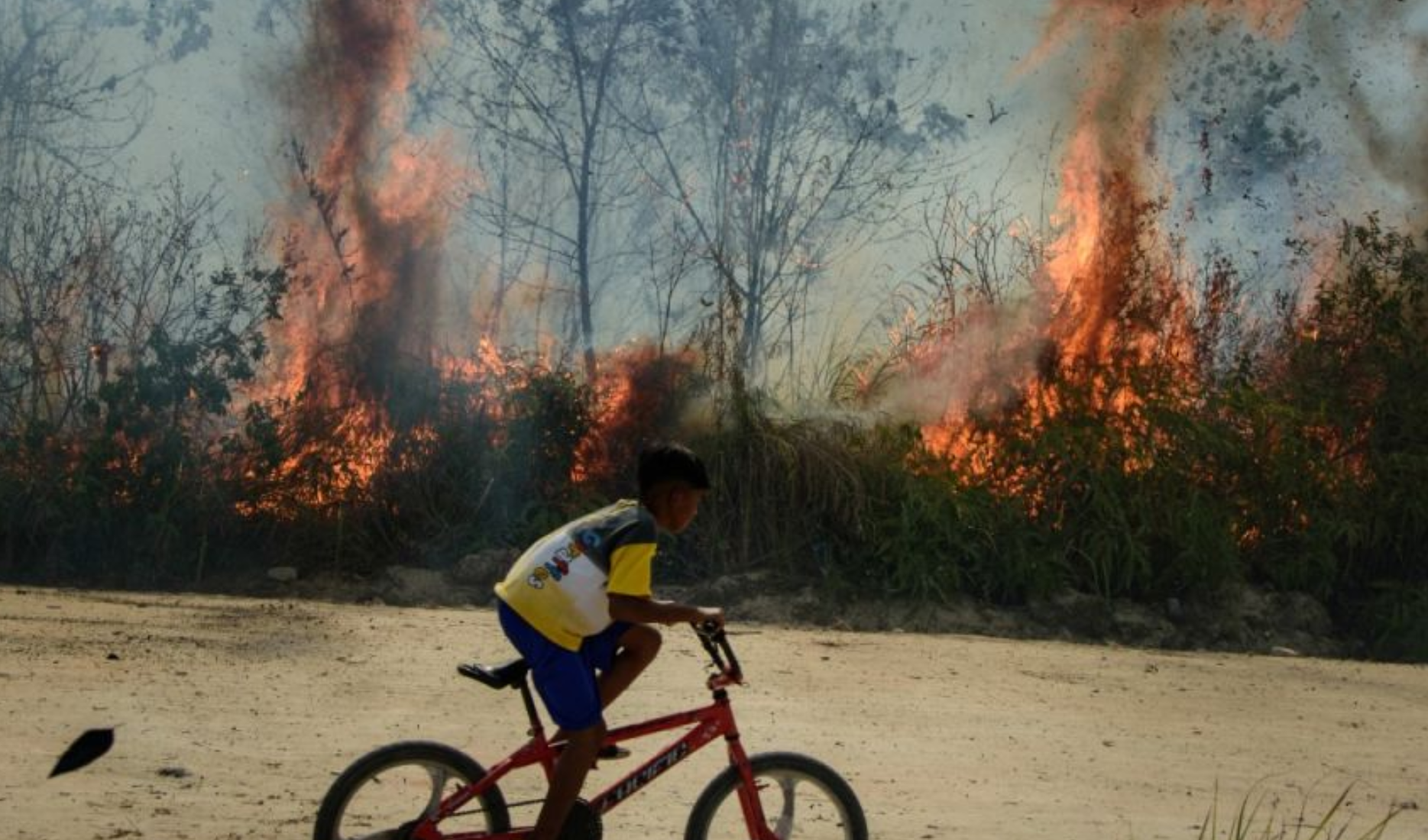
Nhóm nghiên cứu đã kết hợp dữ liệu vệ tinh với hồ sơ y tế để ước tính mối liên hệ giữa phá rừng, nhiệt độ và tử vong do nắng nóng. Họ nhận thấy các cộng đồng nghèo, dân tộc thiểu số và người lao động ngoài trời là những nhóm chịu ảnh hưởng nặng nề nhất, do hạn chế về cơ sở hạ tầng, dịch vụ y tế và khả năng tiếp cận các biện pháp làm mát.
Một nghiên cứu trước đó tại Berau (Đông Kalimantan, Indonesia) cho thấy phá rừng trong giai đoạn 2002 – 2018 đã gây ra hơn 100 ca tử vong do nắng nóng mỗi năm, đồng thời rút ngắn thời gian làm việc an toàn trong ngày tới 20 phút.
Tiến sĩ Reddington nhấn mạnh: “Phá rừng nhiệt đới không chỉ là vấn đề môi trường, nó đang trực tiếp đe dọa sức khỏe con người, đặc biệt ở những cộng đồng ít khả năng thích ứng. Bảo vệ rừng không chỉ cứu hành tinh mà còn cứu mạng sống”.
Các chuyên gia y tế và khí hậu trong khu vực, như Phó giáo sư Kimberly Fornace (Đại học Quốc gia Singapore) và Giáo sư Winston Chow (Đại học Quản lý Singapore), đều đồng tình rằng để giảm thiểu hậu quả do chặt, phá rừng, cần tăng cường nghiên cứu y tế địa phương, cảnh báo sớm nắng nóng và đầu tư vào tái trồng rừng.
Griffith.edu.au May 19, 2025 By Dr Hai Thanh Luong
From fake job offers to cryptocurrency fraud and online romance scams, Southeast Asia has become a global hub for transnational scam operations.
These aren’t isolated crimes, they are organised, cross-border and industrial-scale criminal enterprises that exploit vulnerable people and expose the limits of international law enforcement.
New research shows this surge in scams represents more than just a regional issue. It’s a transnational emergency, and it demands an urgent, coordinated response.
Several factors have turned Southeast Asia into a hotbed for scam syndicates.
The collapse of rule of law in parts of Myanmar has created ungoverned spaces where criminal operations flourish.
Meanwhile, countries like Cambodia, Laos and the Philippines offer a fertile environment for transnational crime due to weak governance, corruption, and limited oversight.
These scam centres don’t just target foreign victims. They also lure and trap workers—many of them young people from poorer nations—under the false promise of legitimate employment. Once inside, many are subjected to forced labour, abuse and trafficking.
This has become a humanitarian crisis as scam compounds across Southeast Asia have held thousands of people against their will, forcing them to commit fraud under threat of violence.
The rise of digital technologies has only made these operations harder to trace and easier to scale. From encrypted messaging to unregulated cryptocurrency, scam networks have globalised rapidly, while enforcement efforts remain stuck behind borders.
One of the key challenges in confronting this crisis is the fragmented nature of law enforcement.
Scams that begin in one country can target victims in another, while using platforms, payment systems, and communication tools hosted across multiple jurisdictions.
But many national police forces are not equipped to act beyond their borders. And transnational criminal syndicates have exploited the lack of international coordination to operate with relative impunity.
Even where political will exists, legal mismatches and diplomatic bottlenecks prevent timely investigations, arrests or prosecutions.
Countries tend to focus inward, launching isolated crackdowns that fail to dismantle the broader networks.
This mismatch between the global nature of the threat and the localised nature of responses is precisely what allows these scams to thrive.
To seriously confront this growing criminal economy, regional governments must prioritise coordinated responses, cross-border investigations, and robust intelligence sharing.
This includes:
ASEAN, Interpol, and UNODC all have a role to play. But meaningful cooperation remains patchy, slow and overly politicised. Tackling scams as a global crisis, not just a regional one, will require serious investment and political leadership.
Scams are often dismissed as digital annoyances or consumer issues.
The response to this crisis cannot be local, slow or siloed. The fight against transnational scams cannot be won in isolation.
Only by working together can states dismantle the criminal networks exploiting the region’s vulnerabilities.
But what we are seeing in Southeast Asia is a complex ecosystem of transnational organised crime, often underpinned by exploitation and violence.
Billions of dollars are being stolen. Thousands of people are being trafficked and abused. And public trust in digital systems is eroding as scams become more sophisticated.
Agency says gangs caused $37bn in losses in Asia as they gain new footholds in Africa, South America, and Middle East.
There is a human trafficking crisis in Southeast Asia. The UN estimates that 120,000 people have been trafficked to scam centres in Myanmar and another 100,000 in Cambodia. Many of them are brought through the border with Thailand. The victims are often forced to work as scammers, defrauding billions of dollars from unsuspecting targets across the world. These scam syndicates have been linked to the Chinese mafia as well as local rebels in Myanmar.
How do these scam centres operate? Who are the trafficking victims and how did they end up in this predicament? How is Thailand’s economy suffering from these trafficking networks, and what is being done to stamp them out? Insight investigates.
00:00 Introduction
01:22 Chinese victim in Myanmar’s scam factory
03:34 Why Southeast Asia is breeding ground for scams
06:23 High-profile kidnap of Chinese actor
07:52 Why war-torn Myanmar attracts scam kingpins
13:26 Changing demographic of trafficked victims 15:23 What happens inside scam centres
23:47 The voluntary scammers
25:21 How scams work
29:34 Romance gone wrong
34:49 China’s role in scam crackdown
37:21 What’s Thailand doing to fight scammers
Indonesia received the most funding from China over the last decade, according to a new report by Zero Carbon Analytics. But uncertainties caused by US-driven tariff plans could see Southeast Asian countries retract green investments, said an analyst.

By Hannah Alcoseba Fernande June 4, 2025
China is the leading source of public clean energy investments in Southeast Asia over the last decade, channeling over US$ 2.7 billion into projects across the region, according to a report by international research organisation Zero Carbon Analytics.
Though the 100 incidents in 2023 increased by 19 per cent over 2022, these were small-time robberies, with theft of items such as nominal value wires, brass ship products, engine spares and scraps, Regional Cooperation Agreement on Combating Piracy and Armed Robbery, says executive director
PTI Singapore Published 09.01.24, 06:06 PM

Representational picture.File picture
No report of piracy incidents occurred on the Asian high seas but 99 actual incidents and one attempted armed robbery against ships occurred in Southeast Asian waters in 2023, a Singapore based maritime organisation reported said on Tuesday.
Though the 100 incidents in 2023 increased by 19 per cent over 2022, these were small-time robberies, with theft of items such as nominal value wires, brass ship products, engine spares and scraps, Regional Cooperation Agreement on Combating Piracy and Armed Robbery (ReCAAP) executive director Krishnaswamy Natarajan said at the annual press conference.
Such incidents were five in India in 2023, the same as those in 2022, while Bangladesh and Malaysia reported one incident each, compared to five and two incidents in 2022, respectively.
Reviewing the year, Natarajan pointed out that the increase in incidents occurred in Indonesia, the Philippines, the Straits of Malacca and Singapore (SOMS), Thailand and Vietnam.
Of concern was the occurrence of incidents in SOMS with 63 incidents compared to 55 incidents in 2022, said the former Director General of Indian Coast Guard.
In the Sulu-Celebes Seas, there was no report of the abduction of crew for ransom by the Abu Sayyaf Group (ASG), which was achieved through the concerted efforts of the Philippine and Malaysian authorities, he highlighted.
As part of the Centre’s continuous efforts to ensure that the evolving needs of the shipping industry are met, the ReCAAP Information Sharing Centre (ISC) launched various initiatives in 2023, to keep the shipping community abreast of the latest piracy and ARAS situation in Asia and to facilitate ship masters in the timely reporting of incidents to the nearest coastal State.
The initiatives include the launch of the ReCAAP Data Visualisation Map and Panel (Re-VAMP) — an interactive dashboard to enable the viewing and analytics of past and current incidents of piracy and ARAS in Asia.
The initiative also includes the production of a poster containing the guidelines and updated contact details of law enforcement agencies of the littoral States of the SOMS; and engagement of the shipping industry through various events including conferences, forums and shipping dialogue sessions, he elaborated.
Except for the headline, this story has not been edited by The Telegraph Online staff and has been published from a syndicated feed.
Nghiên cứu Quốc tế – 03/01/2024
Một cuộc chiến xa xôi lại có sức ảnh hưởng mạnh mẽ đến một khu vực thường bị chia rẽ bởi tôn giáo.

Nguồn: Joseph Rachman, “Gaza Is a Burning Topic for Southeast Asia’s Domestic Politics,” Foreign Policy, 29/12/2023
Biên dịch: Nguyễn Thị Kim Phụng
Tại Indonesia, một ứng viên tổng thống và bộ trưởng ngoại giao đã phát biểu về cuộc chiến ở Gaza trước hàng trăm nghìn người biểu tình. Tại Malaysia, thủ tướng, đội khăn keffiyeh của người Palestine, đã dẫn đầu cuộc biểu tình của riêng mình, mô tả tình hình Gaza là “điên rồ” và “đỉnh cao của sự man rợ.” Còn tại Singapore, chính phủ cấm treo cờ của hai bên tham chiến.
Tại Thái Lan và Philippines, sự cảm thông dành cho các nạn nhân dân thường người Palestine đi kèm với sự tức giận trước việc nhiều công dân Thái Lan và Philippines đã bị Hamas giết hoặc bắt làm con tin. Trong khi tại Việt Nam, Lào, và Campuchia, các chính phủ đã thận trọng đưa ra những tuyên bố trung lập về Gaza – dù ký ức về trải nghiệm bị ném bom của các quốc gia này đang dần nổi lên.
Tiếp tục đọc “Phản ứng của các nước Đông Nam Á trước xung đột Israel-Hamas”
 CVD
CVD 