
An ICIJ investigation examines networks of companies, people and business practices that draw profit from cross-border labor trafficking and sex trafficking.
By Michael Hudson Image: Rocco Fazzari / ICIJ June 12, 2023
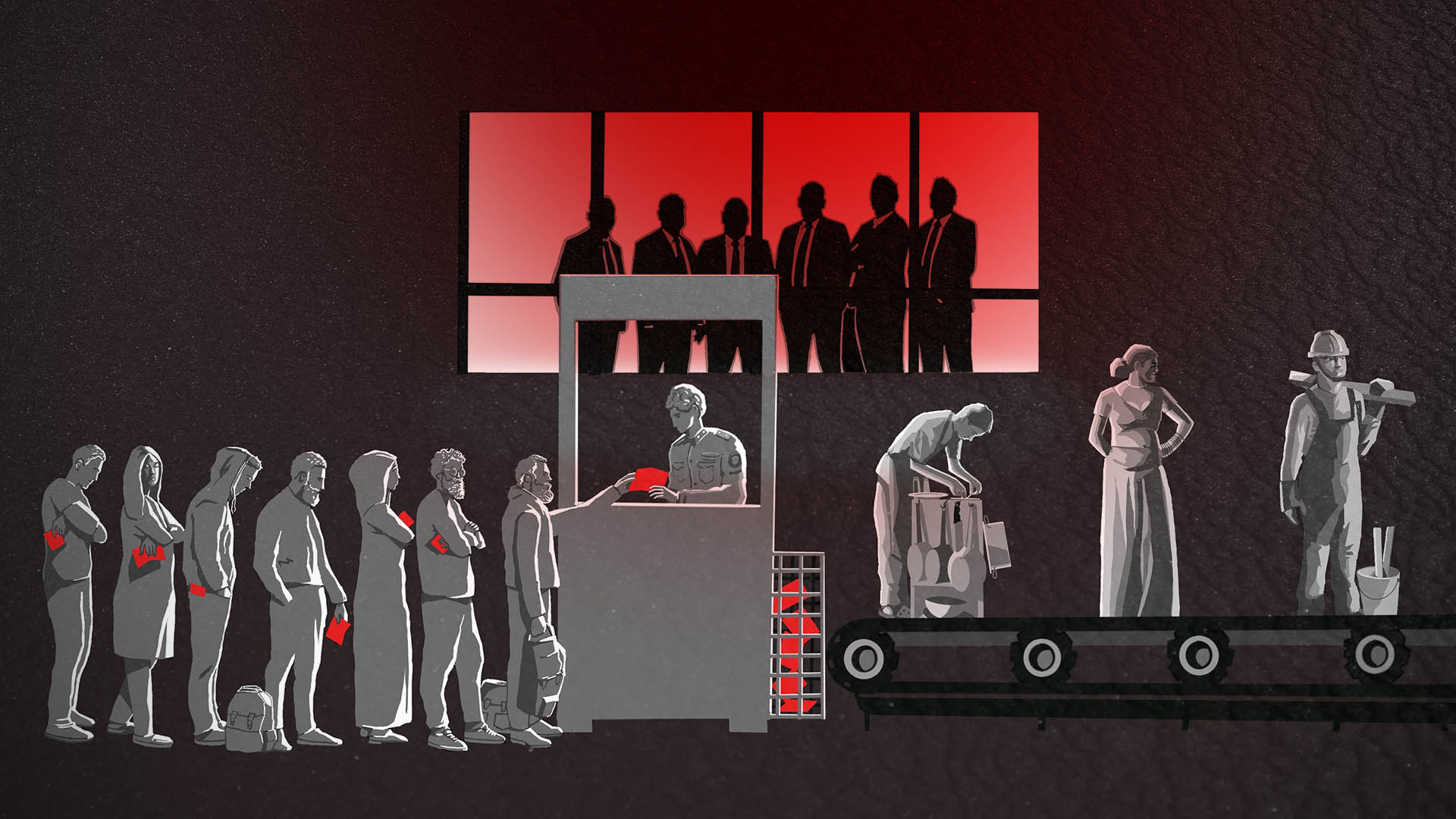
On any given day, the United Nations estimates, nearly 28 million adults and children around the world are trapped in jobs that are so oppressive that they amount to modern slavery or human trafficking.
They are forced to work long hours for little or no pay, toiling on farms and construction sites, in sweatshops and restaurants, as janitors and, in some cases, sex workers. They are exploited by recruiters and employers who use their poverty, isolation and immigration status against them, often threatening them with violence, arrest or deportation or ensnaring them in debts they struggle to repay.
A new investigation by the International Consortium of Investigative Journalists and other media partners has begun examining human trafficking in Asia, Africa, the Middle East and the United States.
The investigation, Trafficking Inc., focuses on two forms of human trafficking: labor trafficking and sex trafficking. Both involve using force, fraud or coercion to induce someone to work or provide a service.
ICIJ and its reporting partners are working to bring to light untold stories of hardship and abuse suffered by trafficked people — and expose the networks of companies, individuals and business practices that set the traps and profit from them.
The investigative team includes journalists from ICIJ, Reuters, NBC News, WGBH Boston, The Washington Post, Arab Reporters for Investigative Journalism, the Philippine Center for Investigative Journalism and the Investigative Reporting Program at the University of California, Berkeley.





 A policewoman of Móng Cái City’s Police Department (right) receives a baby – a victim of human trafficking, from a policewoman of China’s Fangchenggang City on Tuesday.— VNA/VNS Photo Nguyễn Hoàng
 CVD
CVD 