Exploited in Russia: African women forced to make drones

DW.com June 14, 2025

They hoped for a better career but ended up in Russia’s war factories. A new study reveals how young women, mainly from Africa, have been being exploited. Some of those affected have shared their stories with DW.

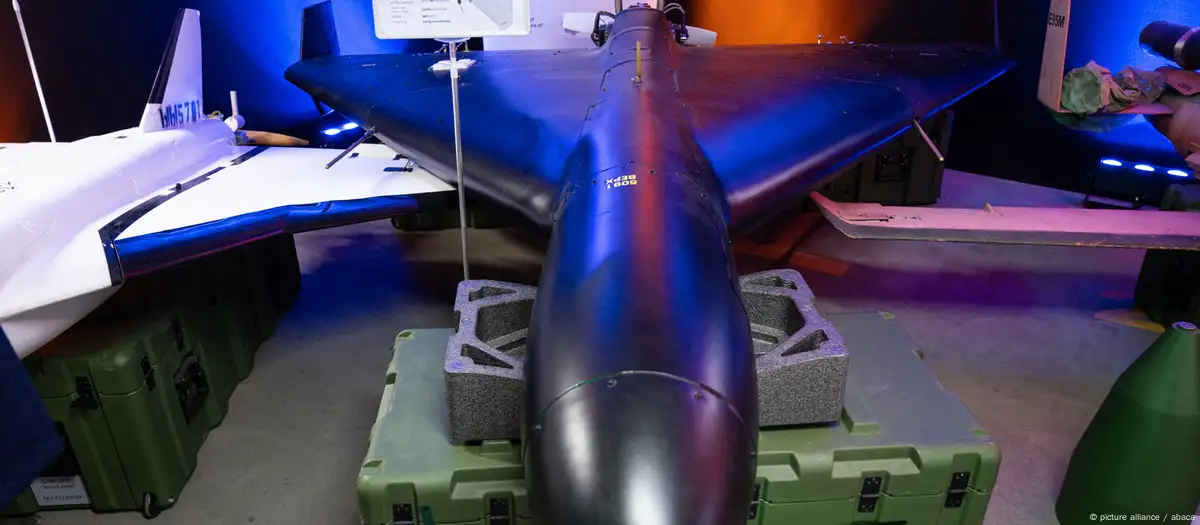
The Alabuga production facility manufactures Geran-2 combat drones based on the Iranian Shahed-136 modelImage: picture alliance / abaca

“I like Russia, its language and culture,” Aminata, 20, told DW. She wants to leave her home country of Sierra Leone in a few weeks to pursue an apprenticeship around 7,000 kilometers (4,300 miles) away in Russia.

Tiếp tục đọc “Exploited in Russia: African women forced to make drones”

Syria thay triều đổi vị

SÁNG ÁNH – 13/12/2024 14:12 GMT+7

TTCT Chủ nhật 8-12, Thông tấn xã Tass (Nga) cho biết chuyến bay Syrian Air chở gia đình Tổng thống Syria Bashar al Assad đã đến Matxcơva và ông được Nga cho tị nạn vì lý do nhân đạo.

Thủ lĩnh HTS Abu Mohammad al Julani phát biểu ở đền Hồi Umayyad, thủ đô Damascus, Syria, ngày 8-12. Ảnh: AFP

Vậy là sau 54 năm và hai đời, họ Assad chấm dứt trị vì Syria, 13 năm sau khi đất nước này rơi vào nội chiến và hỗn loạn.

Trước hết, sự sụp đổ của gia tộc Assad cũng là sự sụp đổ của phái Hồi Shia Alawi, vốn chiếm 15% dân số Syria, với 2-3 triệu người ở trong nước, khoảng 1 triệu người đang tị nạn ở Thổ Nhĩ Kỳ (và 100.000-200.000 người nữa mang quốc tịch Lebanon). 

Vào thời thuộc địa, Pháp tuyển giáo phái Alawi vào lực lượng an ninh và quân đội, dùng họ làm công cụ chia rẽ, đàn áp và cai trị Syria, có lúc lập ra một quốc gia riêng cho giáo phái này.

Tiếp tục đọc “Syria thay triều đổi vị”

How the Belarus-Russia axis works together on anti-EU disinformation push

 euractive.com 26 Jan 2024 (updated:  26 Jan 2024)

President of Belarus Alexander Lukashenko attends the CSTO Collective Security Council meeting in Minsk, Belarus, 23 November 2023. [EPA-EFE/SERGY GUNEEV / KREMLIN / POOL]

 Belarusian propaganda positions the EU as its main enemy, but several other features make it a unique case among its European neighbours.

*The author of this text remains anonymous due to fear of repercussions in their home country.

The most important and, at the same time, the most destructive peculiarity of disinformation in Belarus is strong Russian influence, which has deep historical roots and covers various spheres, from economy and culture to the military sector.

However, nowadays, Russian propaganda is helped by Belarusian colleagues who work to follow the same narrative.

This narrative includes turning EU countries into an economically and politically unstable military threat in the eyes of Belarusians while ignoring benefits and positives.

Tiếp tục đọc “How the Belarus-Russia axis works together on anti-EU disinformation push”

Loạn Ili và Cộng hòa Đông Turkestan đệ Nhị – Lịch sử từ độc lập tới bị bán đứng của Tân Cương

Nghiên cứu lịch sử Đăng Phạm

1

Các lãnh đạo Cộng hòa Đông Turkestan đệ Nhị

Ngày nay, chúng ta thường xuyên được chứng kiến những màn đối đầu ngoại giao xung quanh vấn đề Tân Cương. Trong khi nhiều nước liên tục chỉ trích, thậm chí trừng phạt Trung Quốc vì vấn đề người Duy Ngô Nhĩ, thì Trung Quốc bác bỏ cáo quốc và luôn bảo vệ ”sự thống nhất toàn vẹn Trung Quốc”, tố cáo ”chủ nghĩa ly khai Duy Ngô Nhĩ” bị các nước phương Tây lợi dụng chống Trung Quốc.

Nhưng nếu để ý, sẽ thấy một nước lớn là Nga lại khá im tiếng trong vấn đề này, không hùa theo chống Trung Quốc, nhưng cũng không công khai ủng hộ Trung Quốc về vấn đề Tân Cương. Có gì khó lý giải ở đây? Điều đó hoàn toàn lý giải được nếu biết được lịch sử vùng đất Tân Cương từ những năm 1930-1950, để thấy rằng: không ai khác ngoài Stalin và Liên Xô đã đỡ đầu cho Tân Cương độc lập. Và thậm chí trước kia, chính Đảng Cộng sản Trung Quốc của Mao Trạch Đông từng ủng hộ Tân Cương ly khai khỏi Trung Hoa.

Tiếp tục đọc “Loạn Ili và Cộng hòa Đông Turkestan đệ Nhị – Lịch sử từ độc lập tới bị bán đứng của Tân Cương”

How Russia’s timber trade is sidestepping the EU’s Ukraine war sanctions

icij.org

ICIJ partners in Europe revealed the indirect trade routes used to mask the origins of Russian timber, which continues to flow into the EU despite being banned.

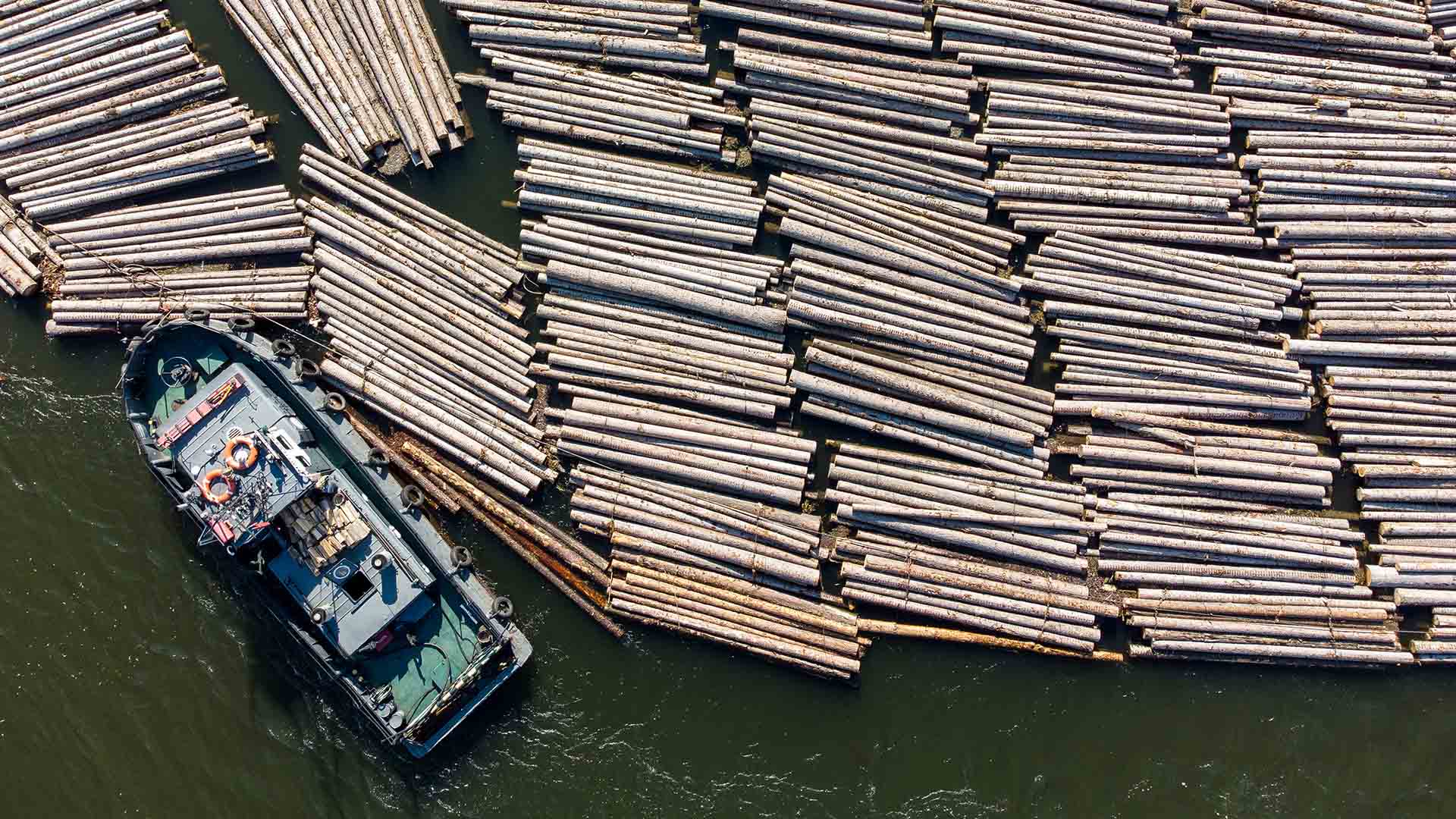
Russia was the EU’s fifth largest trading partner in 2021, exporting more than $3 billion worth of timber to the bloc.

Banned Russian timber is still being imported into the EU despite sanctions to curb timber revenue that helps finance Russia’s war in Ukraine, a new investigation by ICIJ partners in Europe has found.

Paper Trail Media, Der Spiegel, ZDF and others analyzed trade data to trace the pathway of banned wood through third countries, including China, Turkey, Kazakhstan and Kyrgyzstan.

Russia is one of the world’s largest timber exporters, harboring more than a fifth of the world’s forested areas. In 2021, the country was the European Union’s fifth largest trading partner, exporting more than $3 billion worth of timber to the bloc that year, according to the European Commission.

When Russia invaded Ukraine in February 2022, sanctions swiftly followed, including a total ban on Russian timber imports into the EU from July 2022. While direct trade between Russia and the EU was stymied, new global pathways emerged to traffic illicit wood into the bloc. 

Tiếp tục đọc “How Russia’s timber trade is sidestepping the EU’s Ukraine war sanctions”

Sudan conflict: how China and Russia are involved and the differences between them

theconversation.com

Published: June 8, 2023 12.44pm BST

As clashes continue between the Sudanese military and rapid support forces, the current and historic role of foreign governments in Sudanese affairs is under close examination.

Unsurprisingly, the Sudan conflict has amplified concerns from the US and other countries about the roles Russia and China are playing in Sudan specifically, and in Africa.

Researchers had been concerned that Beijing’s loans for infrastructure and development to countries including Sudan might be “debt-trap diplomacy”, a predatory attempt to acquire key foreign infrastructure such as ports.

Analysts had previously suggested the implications of China’s growing military engagement with Africa including establishing naval bases and its use of security contractors are examples of Beijing wanting to expand its military power and political influence abroad.

Others have suggested that Russian activity in Africa could be a return to Soviet-era levels of influence through arms sales, joint military exercises, and installing their own set of security contractors to train the Sudanese military.

The Wagner Group, a high profile group of Russian mercenaries, has denied any involvement in events in Sudan, saying in a post on Telegram: “Due to the large number of inquiries from various foreign media about Sudan, most of which are provocative, we consider it necessary to inform everyone that Wagner staff have not been in Sudan for more than two years.”

China favours stability

Our work for PeaceRep, an international research consortium led by Edinburgh law school, suggests that the US and Europe should be cautious about lumping Russia and China’s goals in Africa together. It found that Beijing and Moscow are taking different approaches. China has its own set of interests, but its approach appears to fundamentally favour stability.

As a result, China is keener to work with the broader international community on issues such as peacekeeping and mediation of conflicts. Conversely, Russia pursues its interests in Africa without as much cooperation with international institutions.

Our new report looks at the available data for pre-war Sudan to see how well claims from scholars and commentators match Russia and China’s behaviour.

We consolidated data from the United Nations, Stockholm International Peace Research Institute, the AidData research lab on Chinese and Russian engagement with Sudan, as well as news reports to examine how well the arguments from scholars and policymakers hold up.

Tiếp tục đọc “Sudan conflict: how China and Russia are involved and the differences between them”

One year on, Pandora Papers continues to be anti-corruption ‘tour de force’

icij.org

From pivotal legislative pushes in the U.S. and elsewhere, to ongoing probes into deposed leaders and tax dodgers, the impact of the largest ever offshore investigation is still being felt around the world.

n Oct. 3, 2021 — one year ago today — the International Consortium of Investigative Journalists and 150 media partners around the globe began rolling out the Pandora Papers, a world-rocking exposé that’s been called “a money bomb with political ripples,” “a financial earthquake” and “one of the essential stories of our time.”

The project took readers deeper than ever inside an offshore financial system that perpetuates corruption and authoritarianism and widens gaps between rich and poor. A U.S. senator called the investigation a “wake-up call to all who care about the future of democracy.”

More than 600 journalists at 151 news organizations in 117 countries worked together to make the Pandora Papers a reality — the largest collaboration in journalism history.

The Pandora Papers’ revelations about the financial secrets of prime ministers, oligarchs, mobsters and other powerful figures spawned action by governments and international groups, triggering investigations, legislation and rule changes in dozens of countries.

Impacts keep coming.

Tiếp tục đọc “One year on, Pandora Papers continues to be anti-corruption ‘tour de force’”

Dầu Nga lách cấm vận ra sao? – 3 kỳ

Dầu Nga lách cấm vận ra sao? – Kỳ 1: Lách qua ‘khe cửa’ của châu Âu

TT – 20/04/2023 13:38 GMT+7 – BẢO ANH

Sau khi bị Liên minh châu Âu (EU) cấm cửa, dầu mỏ Nga tìm đến những khách hàng khác. Song bằng một cách nào đó, dầu mỏ Nga vẫn lách qua được khe cửa của châu Âu.

Tàu chở dầu Yang Mei Hu (Trung Quốc) đang đậu tại trạm dầu thô ở thành phố Nakhodka, Nga vào tháng 6-2022 – Ảnh: Reuters

Trong báo cáo hằng tháng vừa công bố hồi giữa tháng 4, Cơ quan Năng lượng quốc tế (IEA) cho biết hoạt động xuất khẩu dầu thô và các sản phẩm dầu mỏ của Nga đã tăng trong tháng 3-2023 lên mức cao nhất kể từ tháng 4-2020, cụ thể đã tăng thêm 600.000 thùng mỗi ngày, lên tổng cộng 8,1 triệu thùng/ngày. Sự gia tăng này đã nâng doanh thu ước tính của Nga từ xuất khẩu dầu mỏ lên 12,7 tỉ USD vào tháng 3-2023.

Giới quan sát cho rằng trong bối cảnh các nước phương Tây áp dụng những biện pháp trừng phạt nhằm vào dầu mỏ Nga vì cuộc xung đột Nga – Ukraine, lẽ ra lượng dầu Nga xuất khẩu sẽ giảm đi. Vậy rốt cuộc lượng dầu xuất khẩu tăng đáng kể như trên đã cập bến nơi nào?

Tiếp tục đọc “Dầu Nga lách cấm vận ra sao? – 3 kỳ”

What’s in a label?


10/03/2023: Transparency International

This week, we at Transparency International faced an unexpected turn as the Russian Federation announced it would designate our organisation as “undesirable”. It claimed that we “interfere in the internal affairs of the Russian Federation, which poses a threat to the foundations of the constitutional order”

. Corruption is an issue that knows no borders. It is the essential mission of Transparency International to call attention to and fight against it everywhere. It is our specific mandate to combat transnational corruption, when deficiencies in one country enable abuses in others – to global detriment.

Daniel Eriksson, CEO of Transparency International Tiếp tục đọc “What’s in a label?”

Sykes-Picot: Lines in the Sand (2 Eps)

Sykes-Picot: Lines in the Sand (Ep 1) | Al Jazeera World

Sykes-Picot: Lines in the sand (Ep 2) | Al Jazeera World

Al Jazeera English – 21-5-2016

This is the story of the secret deal between the British and French, concluded in May 1916, which aimed to carve up the Middle East in ways that most benefited the two European powers.

Modern world history has been heavily influenced by events in the Middle East, whose strategic importance has been magnified by both a global dependence on oil and the Israel-Palestine conflict. Tiếp tục đọc “Sykes-Picot: Lines in the Sand (2 Eps)”

Anti-Western and hyper macho, Putin’s appeal in Southeast Asia

AljazeeraSoviet-era nostalgia and anti-Western sentiment fuel online support for Russia’s Vladimir Putin and his war on Ukraine.

Russian President Vladimir Putin looks through the scope as he shoots a Chukavin sniper rifle (SVC-380) during a visit to the military Patriot Park in Kubinka, outside Moscow, in September 2018 [File: Alexey Nilkolsky/Sputnik/ AFP]
Russian President Vladimir Putin looks through a scope as he shoots a Chukavin sniper rifle (SVCh-380) during a visit to the military Patriot Park in Kubinka, outside Moscow, in September 2018 [File: Alexey Nilkolsky/Sputnik/ AFP]

By Al Jazeera Staff

Published On 18 Nov 202218 Nov 2022

While the West has united in condemnation of Russia’s invasion of Ukraine, opinions differ markedly in parts of the developing world where Russia is not reviled but revered for what some see as its stance against the West and its hypocrisies.

In Southeast Asia, a region dominated for decades by “strongman” political leaders and where nostalgia for the Soviet Union persists in some quarters, Russian President Vladimir Putin has a strong following among social media users who are sympathetic to his invasion of Ukraine and find his macho self-image appealing.

Tiếp tục đọc “Anti-Western and hyper macho, Putin’s appeal in Southeast Asia”

Nước Đức và nỗi lo năng lượng: Thu qua đông tới, cho lòng hiu quạnh

JULIAN HUESMANN 17/10/2022 09:21 GMT+7

TTCT Trong bối cảnh xung đột giữa các nước châu Âu và Nga, giá năng lượng ở Đức đã tăng vọt đến mức khiến đại đa số người Đức băn khoăn trước tình hình sinh hoạt trong mùa đông sắp tới.

Nước Đức và nỗi lo năng lượng: Thu qua đông tới, cho lòng hiu quạnh - Ảnh 1.

Ảnh: Morning Consult

“Chúng ta lại vô địch thế giới”, một tay phóng viên giễu cợt trên truyền hình Đức, nhưng lần này không phải là chức vô địch World Cup hay số xe hơi bán ra. “Năng lượng của chúng ta có giá cao nhất thế giới”. 

Tôi đã biết trước giá năng lượng ở Đức sẽ tăng cao, kể cả trước khi chiến tranh ở Ukraine nổ ra, nhưng “vô địch thế giới” thì quả là bất ngờ. Tượng trưng cho cuộc khủng hoảng hiện tại, mới đây tòa nhà Reichstag – trụ sở của chính quyền liên bang Đức – đã tắt đèn tối thui “làm gương” trong chuyện tiết kiệm năng lượng.

Suốt mấy thập niên qua, Đức hưởng lợi từ khí đốt giá rẻ của Nga thời Tổng thống Vladimir Putin. Còn năm nay, ngay cả trước khi hai đường ống cung cấp khí đốt chính là Dòng phương Bắc 1 và 2 gặp sự cố, Đức đã không nhận khí đốt từ Nga nữa, mà thay vào đó là từ các nước đồng minh như Hà Lan và Na Uy.

Trước cuộc chiến, Đức phụ thuộc nguồn cung từ Nga cho hơn 50% nhu cầu năng lượng (khí đốt và than đốt), nên cuộc khủng hoảng hiện giờ là dễ hiểu. Đây thậm chí được coi là mối đe dọa chưa từng thấy với cả nền kinh tế và sự giàu có của nước Đức kể từ Thế chiến II. 

Giới lãnh đạo kinh tế và chính trị trong nước đột ngột nhận ra họ đã tham gia một cuộc chơi nguy hiểm và giờ đang phải trả giá đắt, theo đúng nghĩa đen.

Tiếp tục đọc “Nước Đức và nỗi lo năng lượng: Thu qua đông tới, cho lòng hiu quạnh”

Gorbachev: Conflicted Catalyst of Cold War’s End

Mikhail Gorbachev will be remembered in the West for laying the basis for more constructive relations to ease the end of the Cold War, but vilified in Russia for speeding the Soviet Union’s demise.

Article by Thomas Graham

August 31, 2022 10:45 am (EST) Council on Foreign Relations

Soviet leader Mikhail Gorbachev waves during the May 1 parade in Moscow’s Red Square in 1991.
Soviet leader Mikhail Gorbachev waves during the May 1 parade in Moscow’s Red Square in 1991. Wojtek Laski/Getty Images

The last Soviet leader, Mikhail Gorbachev, came to power in 1985 determined to transform a stagnant Soviet Union into a dynamic, prosperous, and powerful socialist country; he never developed a coherent, concrete plan to do that. Rather, he improvised as the political and economic ground shifted around him. That rattled the hard-liners who thought he was destroying the Soviet Union and dismayed the reformers who feared he was moving too slowly to save the country. After six years, the hard-liners had enough: They failed to oust him in an ill-conceived coup attempt in August 1991, but wounded him sufficiently so that the reformers could ease him out of power at the end of that year—as the country he sought to revive collapsed, and a new Russia emerged. Tiếp tục đọc “Gorbachev: Conflicted Catalyst of Cold War’s End”