10 Years After a Breakthrough Climate Paris Agreement, Here’s Where We Are

nytimes.com Nov. 7, 2025

Almost exactly 10 years ago, a remarkable thing happened in a conference hall on the outskirts of Paris: After years of bitter negotiations, the leaders of nearly every country agreed to try to slow down global warming in an effort to head off its most devastating effects.

The core idea was that countries would set their own targets to reduce their climate pollution in ways that made sense for them. Rich, industrialized nations were expected to go fastest and to help lower-income countries pay for the changes they needed to cope with climate hazards.

So, has anything changed over those 10 years? Actually, yes. Quite a bit, for the better and the worse. For one thing, every country remains committed to the Paris Agreement, except one. That’s the United States.

Tiếp tục đọc “10 Years After a Breakthrough Climate Paris Agreement, Here’s Where We Are”

Green energy statecraft and Australia’s clean industry future

lowyinstitute.org Elizabeth Thurbon Oliver Yates

A new policy model that removes the risk in clean commodity innovation will put Australia ahead of the pack.

Australia will need to lead as global supply chains pivot towards low-emissions production (Getty Images)

Australia will need to lead as global supply chains pivot towards low-emissions production (Getty Images)

Published 9 Jul 2025  Australia Australian trade, investment & economy

As global supply chains pivot towards low-emissions production, Australia will need to lead, or risk being left behind. The country’s challenge is not a lack of technology, capital, or ambition. It’s a gap in policy architecture. Without bankable demand, Australia’s most promising clean commodity projects – green iron, sustainable aviation fuel, and clean ammonia – remain stuck at the starting line.

To meet that challenge, we propose a new demand-side policy model: the Clean Commodities Trading Initiative (CCTI) – a flagship example of green energy statecraft. At its heart is a new tool for national transformation: Clean Commodity Credits that reward innovation and emissions savings.

A market-friendly mechanism to kickstart large-scale clean production.

Green energy statecraft is a strategic approach to governance that uses the clean energy transition to simultaneously advance a nation’s economic, environmental, social, and geostrategic goals. Unlike conventional industry policy, which focuses on domestic market corrections, statecraft treats clean energy as key to national security and prosperity – used to build alliances, secure supply chains, boost productivity, and shape global rules.

The European Union, China, Japan, and South Korea are all pursuing variations of green energy statecraft. Australia must do the same – on its own terms, with tools suited to its advantages, institutions, and budget.

Tiếp tục đọc “Green energy statecraft and Australia’s clean industry future”

Court says renewable firms can seize Spain’s property after subsidy cuts

Climate Change News | 4 August 2023

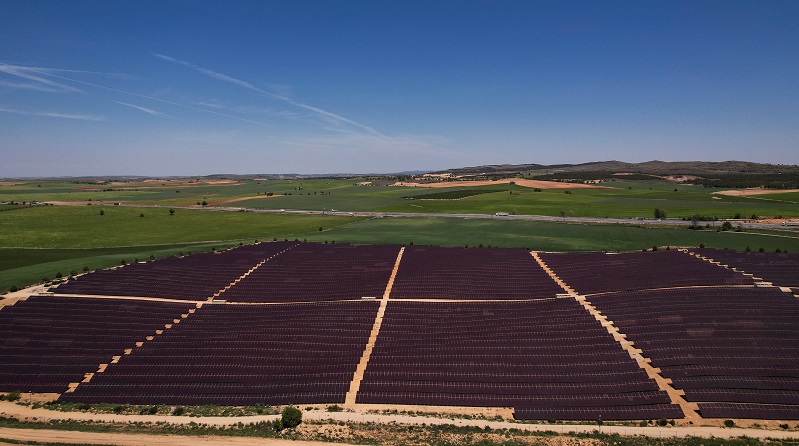
A Spanish solar plant in 2022 (REUTERS/Guillermo Martínez)

London’s High Court has ruled that two investors in Spanish solar energy plants are entitled to seize a Spanish property in London to enforce a judgment in a long-running dispute over renewable energy incentives.

The court’s interim charging order – meaning it is not yet final and can be objected to by the debtor – was issued on Wednesday but made public on Friday.

->

Renewables Competitiveness Accelerates, Despite Cost Inflation

IRENA.org

Abu Dhabi, United Arab Emirates, 29 August 2023 – The fossil fuel price crisis has accelerated the competitiveness of renewable power. Around 86 per cent (187 gigawatts) of all the newly commissioned renewable capacity in 2022 had lower costs than fossil fuel-fired electricity.
Renewable Power Generation Costs in 2022, published by the International Renewable Energy Agency (IRENA) today shows that the renewable power added in 2022 reduced the fuel bill of the electricity sector worldwide. New capacity added since 2000 reduced the electricity sector fuel bill in 2022 by at least USD 520 billion. In non-OECD countries, just the saving over the lifetime of new capacity additions in 2022 will reduce costs by up to USD 580 billion. 

Tiếp tục đọc “Renewables Competitiveness Accelerates, Despite Cost Inflation”

Three Myths About Renewable Energy and the Grid, Debunked

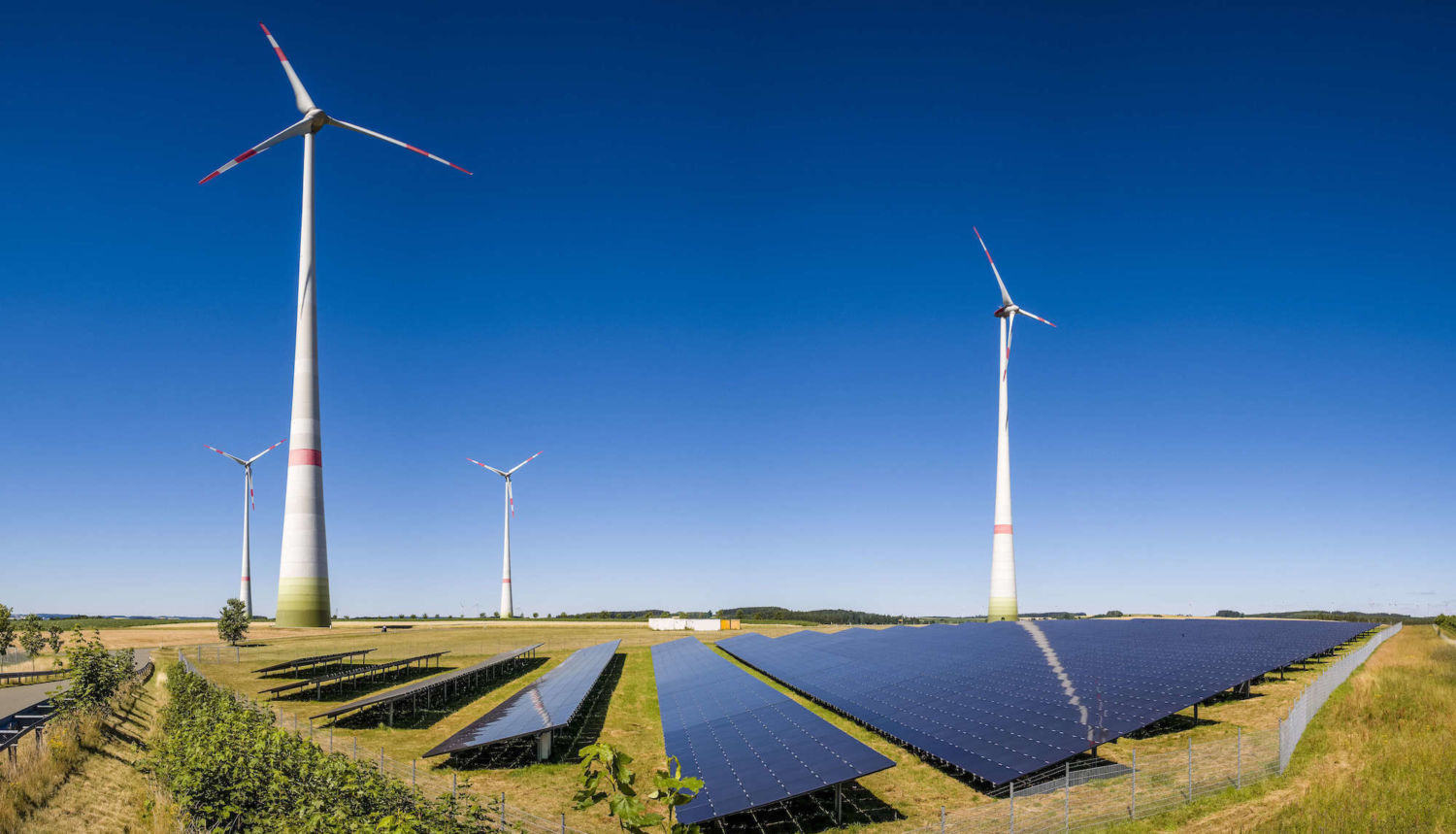
Wind turbines and solar panels in Bavaria, Germany.
Wind turbines and solar panels in Bavaria, Germany. FRANK BIENEWALD / LIGHTROCKET VIA GETTY IMAGES

Yale Envrronment360

Renewable energy skeptics argue that because of their variability, wind and solar cannot be the foundation of a dependable electricity grid. But the expansion of renewables and new methods of energy management and storage can lead to a grid that is reliable and clean.

BY AMORY B. LOVINS AND M. V. RAMANA • DECEMBER 9, 2023

As wind and solar power have become dramatically cheaper, and their share of electricity generation grows, skeptics of these technologies are propagating several myths about renewable energy and the electrical grid. The myths boil down to this: Relying on renewable sources of energy will make the electricity supply undependable.

Tiếp tục đọc “Three Myths About Renewable Energy and the Grid, Debunked”

ABD launches South, Southeast Asia clean transition fund

Alongside the GEAPP, the bank will support projects in India, Indonesia, Vietnam, Pakistan, and Bangladesh

 14 April 2023  Other News[Image: Peter Franken/Unsplash] Renews.biz

RELATED STORIES

European Commission launches green industrial plan1 FEBRUARY 2023NZ investor sets up Singapore clean power arm10 SEPTEMBER 2021Asia Pacific renewables ‘cheaper than coal by 2030’26 NOVEMBER 2020Macquarie unveils 20GW clean power push25 SEPTEMBER 2019Swiss fund eyes green Asia11 JULY 2017

The Asian Development Bank (ADB) and the Global Energy Alliance for People and Planet (GEAPP) have launched a new capital fund to accelerate clean energy access and transitions in countries across South and Southeast Asia including India, Indonesia, Vietnam, Pakistan, and Bangladesh.

GEAPP will provide an initial US$35m of catalytic capital towards the fund, which will be established and administered by ADB. 

With this partnership ADB and GEAPP aim to address the challenges of climate change and energy access and transition in Asia and beyond.

Tiếp tục đọc “ABD launches South, Southeast Asia clean transition fund”

Political declaration on establishing the Just Energy Transition Partnership with Viet Nam

GOV.UK

Published 14 December 2022

  1. The Governments of the Socialist Republic of Viet Nam, together with the International Partners Group, consisting of the European Union, the United Kingdom of Great Britain and Northern Ireland, the United States of America, Japan, the Federal Republic of Germany, the Republic of France, the Italian Republic, Canada, the Kingdom of Denmark and the Kingdom of Norway;
  2. Recognising the need to accelerate action towards the objectives and long-term goals of the United Nations Framework Convention on Climate Change (UNFCCC) and the Paris Agreement, including through the implementation of the Glasgow Climate Pact, to minimise the worst adverse impacts of climate change for countries, people and the environment;
  3. Noting that limiting global warming to 1.5°C to mitigate the worst adverse impacts of climate change requires rapid, deep and sustained reductions in global greenhouse gas emissions, including reducing global carbon dioxide emissions by 45% by 2030 relative to the 2010 level and to net zero around mid-century as well as deep reductions in other greenhouse gas emissions, emphasising climate change adaptation and achieving net zero emissions as an opportunity for sustainable development;
  4. Recognising that for Viet Nam, as an independent, sovereign and fast developing lower middle income country heavily affected by the impacts of climate change, it will be key to embrace the opportunities brought about by the fast decreasing cost of renewable energies as an opportunity for sustainable development and to tackle related challenges such as poverty, inequality and unemployment, which are exacerbated by the impact of the COVID-19 pandemic and climate change, and that vulnerable groups and some important economic sectors may be impacted by the energy transition, including thermal electricity generation, coal mining, heavy industry and transport;
  5. Recognising the need for new, predictable, long-term and sustainable support from partner countries, multilateral organisations and investors in finance, technology and capacity building for Viet Nam to exploit fully the opportunities of the transition in accordance with the national framework of public debt and external debt management to contribute significantly to the implementation of the NDC of Viet Nam, its commitment to reach to net zero greenhouse gas emissions by 2050 and its development orientation to become a high-income developed country by 2045;
  6. Tiếp tục đọc “Political declaration on establishing the Just Energy Transition Partnership with Viet Nam”

United Nations chief lays out plan to jumpstart renewables transition

IEEFA

The UN secretary-general, António Guterres, has issued a stark warning concerning the “dismal litany of humanity’s failure to tackle climate disruption” in a speech in which he set out “five critical actions to jumpstart the renewable energy transition”.

Speaking at the launch of the World Meteorological Organisation’s State of the Global Climate 2021 Report, Guterres described the global energy system as “broken” and “bringing us ever closer to climate catastrophe”. He called on the world to “end fossil fuel pollution and accelerate the renewable energy transition, before we incinerate our only home”.

Tiếp tục đọc “United Nations chief lays out plan to jumpstart renewables transition”

Fossil Fuel’s Downfall Could Be America’s Too

How U.S. polluters might drag the country’s economy down with them.

By Adam Tooze DECEMBER 3, 2021, 4:31 AM FP

The United Nations climate change conference (known as COP26) in Glasgow, Scotland, was billed as historic. By that measure, the conference didn’t deliver. But it nevertheless marks a moment of transition. Glasgow completed the process begun at the 2015 Paris conference, under which nations progressively raised their national commitments to decarbonization. All the major economies of the world are now notionally committed to reaching net-zero emissions between 2050 and 2070. As a result, Glasgow also marked the moment when climate politics began to focus on the energy transition as a matter of industrial policy. It was symptomatic that a prominent commitment to reduce coal burning was included in the final resolution. It was not enough, but it was a significant first. It was also symptomatic that Britain’s conservative government put the emphasis on businesses. That dismayed many activists, but it was a prompt eagerly seized on by U.S. climate envoy John Kerry.

Kerry finished the conference hailing an impending transformation. Firms that were willing to innovate and gamble on the energy transition would be opening up the “greatest economic opportunity since the Industrial Revolution,” he said. In a Financial Times op-ed published in November, Kerry added: “Like the proverbial cavalry, the first movers [in business] are coming. … Companies should seize this opportunity by propelling the shift—rather than being buffeted in its wake.” Meanwhile, in the New York Times, columnist Thomas Friedman chimed in to declare if we are looking to save the world, “we will get there only when Father Profit and risk-taking entrepreneurs produce transformative technologies that enable ordinary people to have extraordinary impacts on our climate without sacrificing much—by just being good consumers of these new technologies. In short: we need a few more Greta Thunbergs and a lot more Elon Musks.”

Read more on Foreign Affairs >>

Vietnam announces renewable energy plan

By New Straits Times
December 2, 2021 @ 9:50am

Vietnam announces renewable energy plan
A statue of late Vietnamese revolutionary leader Ho Chi Minh in Ho Chi Minh City.Vietnam has announced a plan to have renewable energy account for three quarters of its national power production capacity by 2045. AFP Pic

VIETNAM has announced a plan to have renewable energy account for three quarters of its national power production capacity by 2045.

Authorities also hope to achieve 70 per cent of actual production through renewable sources under its commitments made during the United Nations Climate Change Conference 2021 (COP 26) last month.

Tiếp tục đọc “Vietnam announces renewable energy plan”

IEEFA/JMK Research: Round-the-clock tenders can help meet demand for firm renewable power

Tenders have evolved from “vanilla” solar or wind, to hybrid, to round-the-clock

IEEFA

24 November (IEEFA/JMK Research India): Electricity distribution companies (discoms) demand firm and uninterrupted renewable power. A new report by IEEFA and JMK Research highlights the important role that different mixes of generation sources and storage technologies can play in overcoming the intermittency challenge of variable renewable energy (VRE) and ensuring grid stability.

Renewable energy blended with either conventional thermal power sources that have low plant load factors (PLFs) or energy storage systems (ESS) can provide firm round-the-clock (RTC) power required by discoms, according to the report.

Tiếp tục đọc “IEEFA/JMK Research: Round-the-clock tenders can help meet demand for firm renewable power”

Investment in coal-fired power to dry up as world seeks to go green

By Anh Minh   October 13, 2021 | 12:33 pm GMT+7 VNExpressInvestment in coal-fired power to dry up as world seeks to go greenWorkers fix electric cables in District 1, Ho Chi Minh City. Photo by VnExpress/Thanh Nguyen

Vietnam will find it hard to mobilize foreign funding for coal-fired electricity plants because many nations have vowed to step up environmental protection.

Most of the investments in coal-fired electricity plants in Vietnam in 2015-21 came from China, South Korea and Japan, but the three countries have now pledged to stop investing in such power stations, Mark Hutchinson, chairman of the Southeast Asia Task Force, Global Wind Energy Council (GWEC) Asia, said at an online conference on finance for energy projects on Monday.

Tiếp tục đọc “Investment in coal-fired power to dry up as world seeks to go green”

Actions Large Energy Buyers Can Take to Transform and Decarbonize the Grid: Procurement Practices for Achieving 100% Carbon Free Electricity

WRI.org

EXECUTIVE SUMMARY

▪ Large energy buyers—including corporates, cities, and institutional customers—have played and will continue to play an important role in driving clean energy in the near term, particularly renewables. However, to ensure that the power sector achieves deep decarbonization over the next two to three decades, large energy buyers will need to take additional actions to play a leading role in accelerating the transition to a carbon-free grid.

▪ Large energy buyers can implement approaches that help transform the grid such as matching clean energy purchasing with the timing of their energy use, incorporating demand flexibility, purchasing dispatchable clean electricity, adopting enabling technologies (e.g., energy storage), maximizing emissions reductions, and driving an an equitable transition to clean energy.

▪ There is no single strategy for implementing transformative procurement practices, which is why we have
highlighted a variety of approaches in this issue brief. Optimal procurement approaches can vary based on differences in customer electricity usage, market context, available product offerings, staff and resources, and differences across grids.

▪ To enable large energy buyers to implement transformative procurement practices, new products and solutions will be needed. Metrics and recognition programs will also need to be revised to incentivize and encourage more customers to take actions that can facilitate a carbon-free grid.

Download full paper here