
Balance of systems, software, supply chain constraints, and reliability and performance guarantees all weigh on total costs.
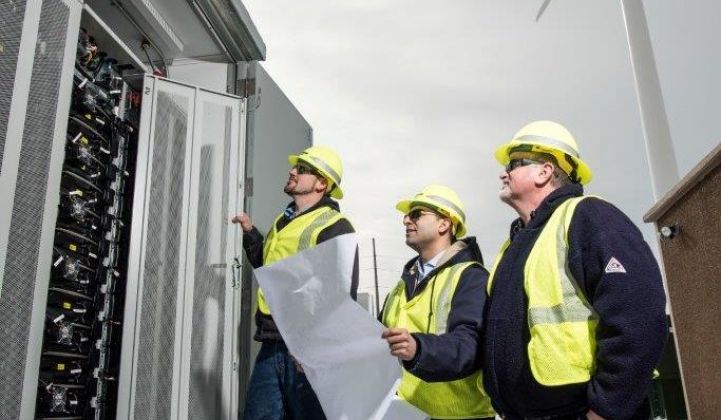
Batteries make up only a slice of energy storage system costs. (Credit: Ameren)
The energy storage market in the United States is booming, with 476 megawatts of new projects installed in the third quarter of 2020 alone, up 240 percent over the second quarter, according to industry analysts at Wood Mackenzie. 2021 is expected to be another record-breaking year for storage, but with technological innovation accelerating across the market, renewable energy asset owners need to carefully select safe and reliable systems to protect their storage investments. As the market accelerates, these are a few of the essential questions asset owners should be asking.
1. Evaluate pricing beyond the cell
When analysts speak about declines in storage pricing, they are referring to battery pricing, which continues to decline every year. Bloomberg New Energy Finance’s latest report states that current lithium-ion pricing stands at about $137 per kilowatt-hour and will drop as low as $100 per kWh by 2023.
However, purchasers of energy storage systems may see substantially higher prices for their projects, depending on a range of factors. For example, the lowest pricing for lithium-ion batteries is generally available for either a major supply contract or for very large-scale deployments of 500 megawatt-hours and above. Since most projects today are not that large, that $137 per kWh figure will be closer to $150 to $170 per kWh, and perhaps as high as $200 to $210 per kWh on the battery-pack level, depending on the size of the project.
Tiếp tục đọc “Beyond Declining Battery Prices: 6 Ways to Evaluate Energy Storage in 2021”


 CVD
CVD 