Government Debt to GDP by Country in 2025

visualcapitalist

By Niccolo Conte Graphics/Design: Sabrina Lam

Global map of government debt in 2025 by country

Key Takeaways

  • The global debt-to-GDP ratio rose 2.3 percentage points to 94.7% in 2025, but is still below the pandemic-era peak of 98.7% in 2020.
  • Japan remains the world’s most indebted nation at 230% of GDP, followed by Sudan (222%) and Singapore (176%).

Global debt levels continue to rise, with 2025 marking another year of fiscal strain across both advanced and developing economies.

Tiếp tục đọc “Government Debt to GDP by Country in 2025”

Microsoft terminates services for Israeli military after investigation into mass surveillance of Palestinians

CNN

Displaced Palestinians move with their belongings southwards on a road in the Nuseirat refugee camp area in the central Gaza Strip.

Displaced Palestinians move with their belongings southwards on a road in the Nuseirat refugee camp area in the central Gaza Strip. Eyad Baba/AFP/Getty Images

Microsoft has terminated a set of services for the Israeli military after an investigation suggested Israel was using the company’s cloud computing technology for mass surveillance of Palestinians.

In a statement posted the company’s blog, Microsoft President Brad Smith said the company had “ceased and disabled a set of services to a unit within the Israel Ministry of Defense.” The move comes after an investigation by The Guardian and Israel’s +972 Magazine in early-August reported that Israel’s military intelligence unit, known as 8200, relied on Microsoft Azure to store millions of phone calls made by Palestinians in Gaza and the occupied West Bank.

Microsoft announced on August 15 that it had begun a review of the allegations. Smith said Microsoft does not provide technology “to facilitate mass surveillance of civilians,” a principle it has applied “in every country around the world.” The review, Smith said, focused on business records, financial statements, internal documents and other records without accessing the content of the stored material.

During the investigation, the company says it found evidence that supports elements of the investigation from the news outlets, including Israel’s “consumption of Azure storage capacity in the Netherlands and the use of AI services.” Microsoft informed Israel of the decision “to cease and disable specific [Israel Defense Ministry] subscriptions and their services, including their use of specific cloud storage and AI services and technologies.”

An Israeli security official said, “There is no damage to the operational capabilities of the IDF.”

Microsoft said the review was still ongoing.

China’s shipyard dominance leads to geoeconomic risks

japantimes.co.jp 2025.07.02

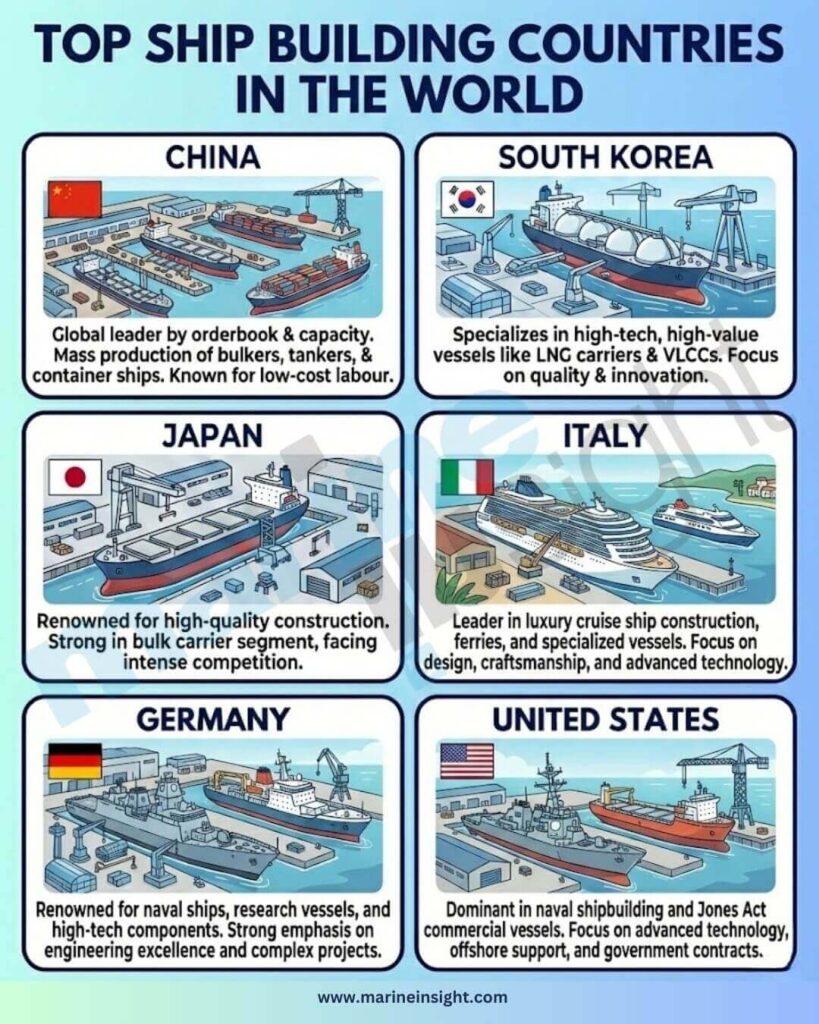
China’s unparalleled shipbuilding capacity has the U.S., Japan and its allies — both military and economic — rightly concerned about maritime threats to trade and security.
Without a concerted effort and international cooperation to challenge Beijing’s commanding lead in the global shipbuilding industry, those threats will materialize furthering China’s alarming dominance.

According to 2024 data from the Chinese government, the country ranks first worldwide in ship completions, new orders and order backlogs — claiming global shares of 55.7%, 74.1% and 63.1%, respectively. China is also expanding its capabilities in high value-added vessels, surpassing South Korea and Japan, while consolidating its role as a “shipbuilding superpower.”

Shipbuilding is not merely an economic activity — it underpins both global trade and national defense. Civilian shipbuilding provides the foundation for training engineers and skilled workers essential to naval production. As such, the growth of China’s shipbuilding sector carries profound implications, not only for maritime commerce but also for the international security architecture.

Tiếp tục đọc “China’s shipyard dominance leads to geoeconomic risks”

Why China is finally starting to acknowledge its overcapacity problem

channelnewsasia.com

Where Beijing once celebrated its manufacturing and export prowess, it now openly discusses the need to curb “involution”. This is a dramatic departure from its previous stance, says Enodo Economics’ Diana Choyleva.

Commentary: Why China is finally starting to acknowledge its overcapacity problem
People browse in electric car showrooms located on the 5th floor in a popular shopping mall in Beijing on Jul 21, 2025. (Photo: CNA/Hu Chushi)

LONDON: For years, Beijing dismissed Western concerns about Chinese overcapacity as protectionist rhetoric. When the United States and European Union complained about cheap Chinese exports flooding global markets, China’s response was predictable: These were simply competitive advantages in a free market economy.

That narrative has now fundamentally shifted. In a remarkable policy U-turn, China has not only started acknowledging the overcapacity problem but is treating it as a national priority that requires urgent intervention.

While there have been signs of this narrative change for a while, the clearest signal of this messaging transformation came through recently on China’s own policy channels.

In July, the Communist Party’s leading journal Qiushi warned that “disorderly competition has destroyed entire industry ecology”. This wasn’t diplomatic language about market dynamics – it was an admission that destructive competition had reached crisis proportions.

Tiếp tục đọc “Why China is finally starting to acknowledge its overcapacity problem”

The mathematics of starvation: how Israel caused a famine in Gaza

theguardian.com

Israel controls the flow of food into Gaza. It has calculated how many calories Palestinians need to stay alive. Its data shows only a fraction has been allowed in

Emma Graham-Harrison Chief Middle East correspondentThu 31 Jul 2025 15.49 BSTShare

The mathematics of famine are simple in Gaza. Palestinians cannot leave, war has ended farming and Israel has banned fishing, so practically every calorie its population eats must be brought in from outside.

Israel knows how much food is needed. It has been calibrating hunger in Gaza for decades, initially calculating shipments to exert pressure while avoiding starvation.

Palestinians crowd at a lentil soup distribution point in Gaza City, among them children and women holding pot and pans

“The idea is to put the Palestinians on a diet, but not to make them die of hunger,” a senior adviser to the then prime minister, Ehud Olmert, said in 2006. An Israeli court ordered the release of documents showing the details of those macabre sums two years later.

Cogat, the Israeli agency that still controls aid shipments to Gaza, calculated then that Palestinians needed an average minimum 2,279 calories per person per day, which could be provided through 1.836kg of food.

Today, humanitarian organisations are asking for an even smaller minimum ration: 62,000 metric tonnes of dry and canned food to meet basic needs for 2.1 million people each month, or around 1kg of food per person per day.

Tiếp tục đọc “The mathematics of starvation: how Israel caused a famine in Gaza”

Watch The British-Soviet Invasion of Iran (1941)

briliantmap.com

The Anglo-Soviet invasion of Iran (Operation Countenance) occurred in August 1941, during World War II.

The invasion was carried out jointly by the United Kingdom and the Soviet Union, aiming primarily to secure Iranian territory against Axis influence and protect critical supply routes.

Here’s a comprehensive overview:

Lead-Up and Reasons

Strategic Importance:

  • Iran had a strategically critical position, particularly as a transportation corridor between the Allies and the Soviet Union.
  • Iranian infrastructure, notably the Trans-Iranian Railway, offered a route for delivering vital supplies from the Allies (mostly Britain and the U.S.) to the USSR following Germany’s invasion (Operation Barbarossa) in June 1941.

Iranian Position and Axis Influence:

  • Although officially neutral, the Iranian ruler Reza Shah Pahlavi sympathized with Germany, partially due to historical rivalry with Britain and Russia.
  • Germany had established substantial diplomatic and commercial influence in Iran, with many German nationals working in strategic industries, raising fears of espionage and sabotage among the Allies.

Diplomatic Tensions:

  • Britain and the Soviet Union demanded Iran expel German nationals perceived as threats; Iran hesitated or refused, increasing Allied suspicions and tension.

Invasion: Operation Countenance

Date and Execution:

Began on August 25, 1941, when British forces advanced from the south and west, while Soviet forces attacked from the north.

Rapid military operations overwhelmed Iran’s defenses, which were relatively weak and poorly equipped compared to the invading powers.

Key Events:

  • British forces captured key oil fields in Khuzestan (Abadan), securing critical petroleum resources.
  • Soviet troops quickly took control of northern provinces, including major cities such as Tabriz and Mashhad.
  • Air and naval superiority allowed quick suppression of Iranian resistance.

Iranian Response: The Iranian army, despite fighting briefly in several locations, was rapidly overwhelmed, with significant casualties but limited overall resistance.

Tehran quickly realized the futility of resistance and began negotiations.

Tiếp tục đọc “Watch The British-Soviet Invasion of Iran (1941)”

Israel has abducted and jailed 1,000,000 Palestinians since 1967 — US group’s report.

TRT.global

Israel has abducted and jailed 1,000,000 Palestinians since 1967 — US group’s reportTel Aviv has jailed Palestinians at an average of 47 per day, says a new study, adding US “bankrolled this oppression” against Palestinians for nearly 700 months.

On February 24, Israeli occupation troops abducted Fidaa Assaf from the village of Kafr Laqif in Palestine’s Qalqilya governorate. She was returning from Ramallah Medical Complex after undergoing medical examinations.

Palestinian officials later revealed that the female prisoner, who is married and a mother, was subjected to multiple strip searches and verbal abuse.

They also noted that she was detained in a cell described as unhygienic and infested with insects, and was deprived of water and food for several days.

Tiếp tục đọc “Israel has abducted and jailed 1,000,000 Palestinians since 1967 — US group’s report.”

More than a third of this country’s population has applied to relocate

By Angus Watson, CNN Updated 4:50 AM EDT, Fri June 27, 2025

People swim in the lagoon in Funafuti, Tuvalu, on November 28, 2019.

People swim in the lagoon in Funafuti, Tuvalu, on November 28, 2019. Mario Tama/Getty ImagesSydney, AustraliaCNN — 

More than a third of the population of Tuvalu has applied to move to Australia, under a landmark visa scheme designed to help people escape rising sea levels.

The island nation – roughly halfway between Hawaii and Australia – is home to about 10,000 people, according to the latest government statistics, living across a clutch of tiny islets and atolls in the South Pacific.

With no part of its territory above six meters, it is one of the most at-risk places in the world to rising seas caused by climate change.

On June 16, Australia opened a roughly one-month application window for what it says is a one-of-a-kind visa offering necessitated by climate change. Under the new scheme, Australia will accept 280 visa winners from a random ballot between July and January 2026. The Tuvaluans will get permanent residency on arrival in Australia, with the right to work and access public healthcare and education.

More than 4,000 people have applied under the scheme, according to official figures seen by CNN.

“The opening of the Falepili Mobility Pathway delivers on our shared vision for mobility with dignity, by providing Tuvaluans the opportunity to live, study and work in Australia as climate impacts worsen,” Australian Foreign Minister Penny Wong said in a statement.

CNN has reached out to the Tuvalu government.

According to Tuvalu’s Prime Minister Feleti Teo, more than half of Tuvalu will be regularly inundated by tidal surges by 2050. By 2100, 90% of his nation will be regularly under water, he says.

Fongafale, the nation’s capital, is the largest and most populated islet in Tuvalu’s main atoll, Funafuti. It has a runway-like strip of land just 65 feet (20 meters) wide in some places.

“You can put yourself in my situation, as the prime minister of Tuvalu, contemplating development, contemplating services for the basic needs of our people, and at the same time being presented with a very confronting and disturbing forecast,” Teo told the United Nations Oceans Conference this month in Nice, France.

Tiếp tục đọc “More than a third of this country’s population has applied to relocate”

Exploited in Russia: African women forced to make drones

DW.com June 14, 2025

They hoped for a better career but ended up in Russia’s war factories. A new study reveals how young women, mainly from Africa, have been being exploited. Some of those affected have shared their stories with DW.

The Alabuga production facility manufactures Geran-2 combat drones based on the Iranian Shahed-136 modelImage: picture alliance / abaca

“I like Russia, its language and culture,” Aminata, 20, told DW. She wants to leave her home country of Sierra Leone in a few weeks to pursue an apprenticeship around 7,000 kilometers (4,300 miles) away in Russia.

Tiếp tục đọc “Exploited in Russia: African women forced to make drones”

The US hypocrisy about Israel’s nuclear weapons must stop

thebulletin.org By Victor GilinskyLeonard Weiss | March 21, 2025

Israeli space launch vehicle Shavit sends a military intelligence satellite into space in March 2023. The same Shavit rocket can launch ballistic missiles, including the nuclear-capable, three-stage Jericho III intermediate-range ballistic missile. The Jericho III reportedly has a range exceeding 4,000 kilometers, enough to reach all of Iran, Pakistan, Europe, and western Russia. Israel has not acknowledged the existence of its nuclear weapon arsenal despite being widely known. (Credit: Israel Defense Ministry)Share

An extraordinary three-part series on Israeli television, The Atom and Me, lays out how the country got its nuclear weapons. It takes for granted what anyone who pays attention has known for years. But the series goes well beyond a general discussion about Israel’s nuclear weapons. It shows the country’s single-minded determination to get the bomb no matter what it took, including stealing nuclear explosives and bomb components from the United States and violating a major nuclear arms control treaty to which Israel is a party—and lying about it.

Tiếp tục đọc “The US hypocrisy about Israel’s nuclear weapons must stop”

China is Southeast Asia’s biggest public funder of clean energy with US$2.7bn in investment

eco-business.com

Indonesia received the most funding from China over the last decade, according to a new report by Zero Carbon Analytics. But uncertainties caused by US-driven tariff plans could see Southeast Asian countries retract green investments, said an analyst.

Cirata floating solar Indonesia
China’s PowerChina Huadong Engineering Corporation Limited constructed the Cirata floating solar plant in West Java, Indonesia. Image: PLN Nusantara

By Hannah Alcoseba Fernande June 4, 2025

China is the leading source of public clean energy investments in Southeast Asia over the last decade, channeling over US$ 2.7 billion into projects across the region, according to a report by international research organisation Zero Carbon Analytics.

Tiếp tục đọc “China is Southeast Asia’s biggest public funder of clean energy with US$2.7bn in investment”

Book excerpt: “Freedom: Memoirs 1954-2021” by Angela Merkel

freedom-cover-st-martins-press-1280.jpg
St. Martin’s Press

CBS.com

In “Freedom: Memoirs 1954-2021” (published by St. Martin’s Press), former German Chancellor Angela Merkel writes about two lives: her early years growing up under a Communist-controlled police state in East Germany, and her years as leader of a nation reunited following the fall of the Berlin Wall.

Read an excerpt below

Prologue

This book tells a story that will not happen again, because the state I lived in for thirty-five years ceased to exist in 1990. If it had been offered to a publishing house as a work of fiction, it would have been turned down, someone said to me early in 2022, a few weeks after I stepped down from the office of federal chancellor. He was familiar with such issues, and was glad that I had decided to write this book, precisely because of its story. A story that is as unlikely as it is real. It became clear to me: telling this story, drawing out its lines, finding the thread running through it, identifying leitmotifs, could also be important for the future.

For a long time I couldn’t imagine writing such a book. That first changed in 2015, at least a little. Back then, in the night between September 4 and 5, I had decided not to turn away the refugees coming from Hungary at the German-Austrian border. I experienced that decision, and above all its consequences, as a caesura in my chancellorship. There was a before and an after. That was when I undertook to describe, one day when I was no longer chancellor, the sequence of events, the reasons for my decision, my understanding of Europe and globalization bound up with it, in a form that only a book would make possible. I didn’t want to leave the further description and interpretation just to other people.

Tiếp tục đọc “Book excerpt: “Freedom: Memoirs 1954-2021” by Angela Merkel”

Another year, another rise in food insecurity – including famine

UN.org

Hundreds of thousands of Sudanese have sought refuge in Chad due to the ongoing conflict and resulting food shortages.

© WFP/Lena von Zabern

Hundreds of thousands of Sudanese have sought refuge in Chad due to the ongoing conflict and resulting food shortages.

 Humanitarian Aid

In July 2024, famine was detected in the Sudan’s Zamzam IDP camp. In the following months, the official alert expanded to other camps in Darfur and Western Nuba Mountains. From December until now, famine has been confirmed in five other areas of the war-torn country. A further 17 areas are at risk. 

It is the first time since 2017 that a famine has been declared anywhere on Earth.

In the 20 months since the war between rival militaries erupted, 13 million Sudanese have been forcibly displaced and over 30.4 million are in desperate need of humanitarian assistance, according to UN estimates.

Tiếp tục đọc “Another year, another rise in food insecurity – including famine”

U.S. Confidence in Higher Education Now Closely Divided

gallup.com by Jeffrey M. Jones

Nearly as many U.S. adults have little or no confidence as have high confidence

WASHINGTON, D.C. — An increasing proportion of U.S. adults say they have little or no confidence in higher education. As a result, Americans are now nearly equally divided among those who have a great deal or quite a lot of confidence (36%), some confidence (32%), or little or no confidence (32%) in higher education. When Gallup first measured confidence in higher education in 2015, 57% had a great deal or quite a lot of confidence and 10% had little or none.

The latest results are based on a June 3-23 Gallup survey that gauged Americans’ confidence in various institutions. A follow-up story reporting on the remainder of institutions will be published in the coming days.

This year, Gallup and Lumina Foundation partnered to better understand the nature of confidence in higher education. The research includes the trend results reported above from Gallup’s June telephone survey as well as new results from a contemporaneous web survey of more than 2,000 Gallup Panel members.

A review of the historical trends shows that confidence has dropped among all key subgroups in the U.S. population over the past two decades, but more so among Republicans. Americans who lack confidence in higher education today say their concerns lie in colleges pushing political agendas, not teaching relevant skills, and being overly expensive.

A separate article in the Gallup-Lumina series will report that Americans are significantly more confident in two-year colleges than four-year colleges when evaluating the two types of institutions separately.

Republicans’ Confidence Has Changed the Most

Confidence in higher education among Republicans today is nearly a mirror image of what it was nine years ago. In 2015, 56% of Republicans had a great deal or quite a lot of confidence, and 11% had little or none. Now, 20% are confident and 50% have little or no confidence.

Republicans are not alone in having reduced confidence in higher education, as 35% of independents, down from 48% in 2015, and 56% of Democrats, down from 68%, are confident.

In the past year, all party groups have shown at least some increase in the percentage with very little or no confidence, and a decrease in the percentage saying they have some. None of the party groups shows meaningful change in high confidence over the past year.

Tiếp tục đọc “U.S. Confidence in Higher Education Now Closely Divided”

Australia PM Anthony Albanese wins second three-year term

Aljazeera.com

Labor Party leader becomes the first Australian prime minister to win a second consecutive three-year term in two decades.

Australian PM Anthony Albanese
Australia’s Prime Minister Anthony Albanese speaks at the Labor Party election night event in Sydney, May 3, 2025 [Hollie Adams/Reuters]

Published On 3 May 20253 May 2025

Anthony Albanese has become the first Australian prime minister to win a second consecutive three-year term in two decades, in a dramatic comeback for his Labor Party in a general election dominated by the cost-of-living crisis.

The Labor Party was on track on Saturday for an unexpectedly large parliamentary majority, as Peter Dutton, leader of the conservative Liberal Party, conceded defeat, having lost his own seat.

In his victory speech, left-leaning Albanese pledged to steer the nation through a rough patch of global uncertainty.

“Australians have chosen to face global challenges the Australian way, looking after each other while building for the future,” he told supporters in Sydney.

“We do not need to beg or borrow or copy from anywhere else. We do not seek our inspiration overseas. We find it right here in our values and in our people.”

Australia’s public broadcaster ABC projected that Labor was on track to win 85 seats in the House of Representatives, easily surpassing the 76-seat threshold needed to reach a majority.

Tiếp tục đọc “Australia PM Anthony Albanese wins second three-year term”