Which Countries Pollute the Most Ocean Plastic Waste?

visualcapitalist.com

#1 Philippines 
#2 India
#3 Malaysia 
#4 China 
#5 Indonesia
#6 Myanmar
#7 Brazil
#8 Vietnam
#9 Bangladesh 
#10 Thailand

Many high-income countries generate high amounts of plastic waste, but are either better at processing it or exporting it to other countries. Meanwhile, many of the middle-income and low-income countries that both demand plastics and receive bulk exports have yet to develop the infrastructure needed to process it.
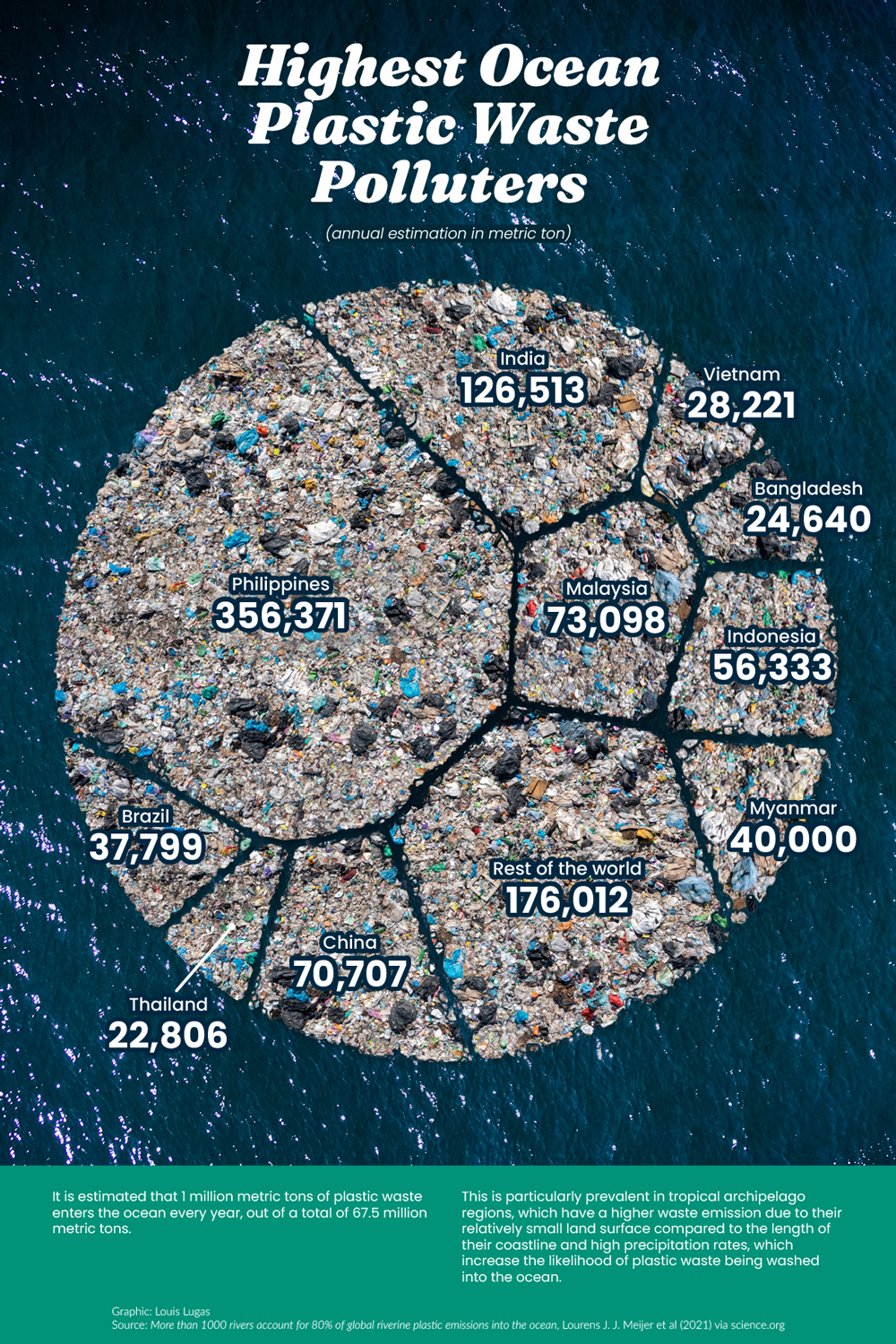
Ocean plastic waste polluting countries

Visualized: Ocean Plastic Waste Pollution By Country

Tiếp tục đọc “Which Countries Pollute the Most Ocean Plastic Waste?”

Thailand: The rich world’s new dumpsite for e-waste

Royal Thai Police raid Wai Mei Dat. Gaylord boxes and Super Sacks filled with imported e-waste. Photo Copyright The Nation, Thailand Portal. May 22, 2018. [baselactionnetwork / Flickr]

Thailand has become one of the largest dumpsites for electronic waste from developed countries since China’s January ban on the import of plastic waste. EURACTIV’s partner Le Journal de l’environnement reports. Tiếp tục đọc “Thailand: The rich world’s new dumpsite for e-waste”

Bốn nước châu Á hứa dọn rác nhựa trên biển

08/06/2017 08:31 GMT+7

TTO – Tại hội nghị thượng đỉnh về đại dương do Liên Hiệp Quốc lần đầu tổ chức, các đại biểu đến từ Trung Quốc, Thái Lan, Indonesia và Philippines cho biết họ sẽ cố dọn sạch rác nhựa trên biển.

Bốn nước châu Á hứa dọn rác nhựa trên biển
Mỗi năm có 5-13 triệu tấn rác thải nhựa từ các con sông đổ vào các đại dương – Ảnh: GETTY IMAGES

Theo BBC, các quan chức Liên Hiệp Quốc đã ca ngợi cam kết của bốn nước, dù một số cam kết chưa được chính thức hóa và các giải pháp mà họ đề xuất không được các nhà môi trường đánh giá cao. Tiếp tục đọc “Bốn nước châu Á hứa dọn rác nhựa trên biển”

How Can We Create a World Where Plastic Never Becomes Waste?

01/23/2016 09:00 am ET | Updated 4 days ago

Christophe Launay via Getty Images

huffingtonpost -Today nearly everyone, everywhere, every day, comes into contact with plastics. Plastics have become the ubiquitous workhorse material of the modern economy — combining unrivalled functional properties with low cost. And yet, while delivering many benefits, the current plastics economy has drawbacks that are becoming more apparent by the day.

Significant economic value is lost after each use, along with wide-ranging negative impacts to natural systems. How can we turn the challenges of our current plastics economy into a global opportunity for innovation and value capture, resulting in stronger economies and better environmental outcomes? Tiếp tục đọc “How Can We Create a World Where Plastic Never Becomes Waste?”