Quay về quá khứ để bảo vệ môi trường nông thôn

KTSG – 25/01/2022 – 17:08

Luật Bảo vệ môi trường 72/2020/QH14 có hiệu lực từ 01-1-2022 (Luật Môi trường), lần đầu tiên đề cập đến vấn đề bảo vệ môi trường ở nông thôn. Việc bảo vệ môi trường ở nông thôn như đang quay ngược bánh xe về thời quá khứ để tái hiện lại lịch sử bảo vệ môi trường ở nơi đó.
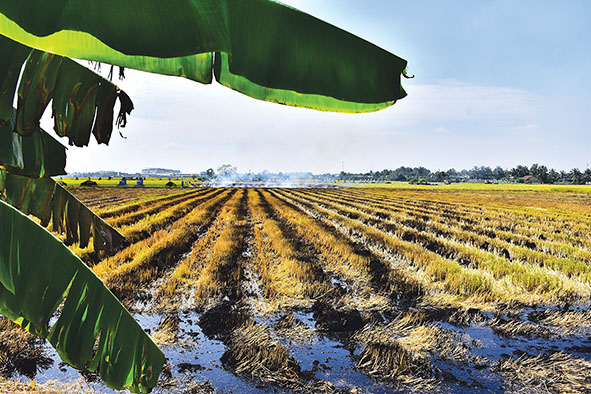
Nông dân đốt rơm, rạ sau mỗi mùa gặt. Ảnh: N.K

Theo quy định tại Luật Môi trường, hộ gia đình, cá nhân ở nông thôn phát sinh chất thải rắn sinh hoạt sau khi thực hiện phân loại theo quy định thì khuyến khích tận dụng tối đa chất thải thực phẩm để làm phân bón hữu cơ, làm thức ăn chăn nuôi. Chất thải sinh hoạt hữu cơ, chất thải từ chăn nuôi, chế biến và phụ phẩm nông nghiệp phải được thu hồi, tái sử dụng hoặc làm nguyên liệu sản xuất.

Thêm vào đó là trách nhiệm hạn chế sử dụng, giảm thiểu, thải bỏ chất thải là sản phẩm nhựa sử dụng một lần và bao bì nhựa khó phân hủy sinh học theo quy định. Ủy ban nhân dân cấp xã tổ chức hoạt động giữ gìn vệ sinh, cải tạo cảnh quan nông thôn; quy định về hoạt động tự quản về bảo vệ môi trường trên địa bàn nông thôn.

Tiếp tục đọc “Quay về quá khứ để bảo vệ môi trường nông thôn”

The Challenge of Agricultural Pollution : Evidence from China, Vietnam, and the Philippines

Thumbnail
In emerging East Asia, agricultural output has expanded dramatically over recent decades, primarily as a result of successful efforts to stimulate yield growth. This achievement has increased the availability of food and raw materials in the region, drastically diminished hunger, and more generally provided solid ground for economic development. The intensification of agriculture that has made this possible, however, has also led to serious pollution problems that have adversely affected human and ecosystem health, as well as the productivity of agriculture itself. In the region that currently owes the largest proportion of deaths to the environment, agriculture is often portrayed as a victim of industrial and urban pollution, and this is indeed the case. Yet agriculture is taking a growing toll on economic resources and sometimes becoming a victim of its own success. In parts of China, Vietnam, and the Philippines—the countries studied in The Challenge of Agricultural Pollution—this pattern of highly productive yet highly polluting agriculture has been unfolding with consequences that remain poorly understood. With large numbers of pollutants and sources, agricultural pollution is often undetected and unmeasured. When assessments do occur, they tend to take place within technical silos, and so the different ecological and socioeconomic risks are seldom considered as a whole, while some escape study entirely. However, when agricultural pollution is considered in its entirety, both the significance of its impacts and the relative neglect of them become clear. Meanwhile, growing recognition that a “pollute now, treat later” approach is unsustainable—from both a human health and an agroindustry perspective—has led public and private sector actors to seek solutions to this problem. Yet public intervention has tended to be more reactive than preventive and often inadequate in scale. In some instances, the implementation of sound pollution control programs has also been confronted with incentive structures that do not rank environmental outcomes prominently. Significant potential does exist, however, to reduce the footprint of farms through existing technical solutions, and with adequate and well-crafted government support, its realization is well within reach.
Citation
“Cassou, Emilie; Jaffee, Steven M.; Ru, Jiang. 2018. The Challenge of Agricultural Pollution : Evidence from China, Vietnam, and the Philippines. Directions in Development—Environment and Sustainable Development;. Washington, DC: World Bank. © World Bank. https://openknowledge.worldbank.org/handle/10986/29187 License: CC BY 3.0 IGO.”