Atomic Bomb Survivors Win Nobel Peace Prize, Say Gaza Today Is Like Japan 80 Years Ago

Nobel Peace Prize Winner Toshiyuki Mimaki: “I thought the prize would go to those working hard in Gaza. In Gaza, bleeding children are being held by their parents. It’s like Japan 80 years ago.” 36,000 tons of explosives were dropped on Hiroshima/Nagasaki 82,000 tons have been dropped on Gaza

A Japanese group of atomic bomb survivors, Nihon Hidankyo, has won the Nobel Peace Prize as fears grow of a new nuclear arms race. The head of the group has compared Gaza today to Japan 80 years ago when the U.S. bombed Hiroshima and Nagasaki. We feature a Democracy Now! interview with Setsuko Thurlow, a survivor of the U.S. atomic bombing of Hiroshima and an anti-nuclear activist, and get response from Joseph Gerson, president of the Campaign for Peace, Disarmament and Common Security, a U.S. nuclear disarmament activist who has spent decades working closely with the group.

Addressing Putin’s Nuclear Threat: Thinking Like the Cold War KGB Officer That He Was

by Douglas London October 18, 2022 justsecurity.org

The powerful explosion that crippled Vladimir Putin’s showcase bridge over the Kerch Strait linking Russia and Crimea increased pressure on the cornered Kremlin potentate to do something shocking, as he loses control on the battlefield and inside his royal court. But will he stop at the intensified missile bombardments that are hitting apartments and playgrounds in Kyiv and other civilian infrastructure across Ukraine?

Tiếp tục đọc “Addressing Putin’s Nuclear Threat: Thinking Like the Cold War KGB Officer That He Was”

How international law applies to attacks on nuclear and associated facilities in Ukraine

thebulletin.org

By George M. Moore | March 6, 2022

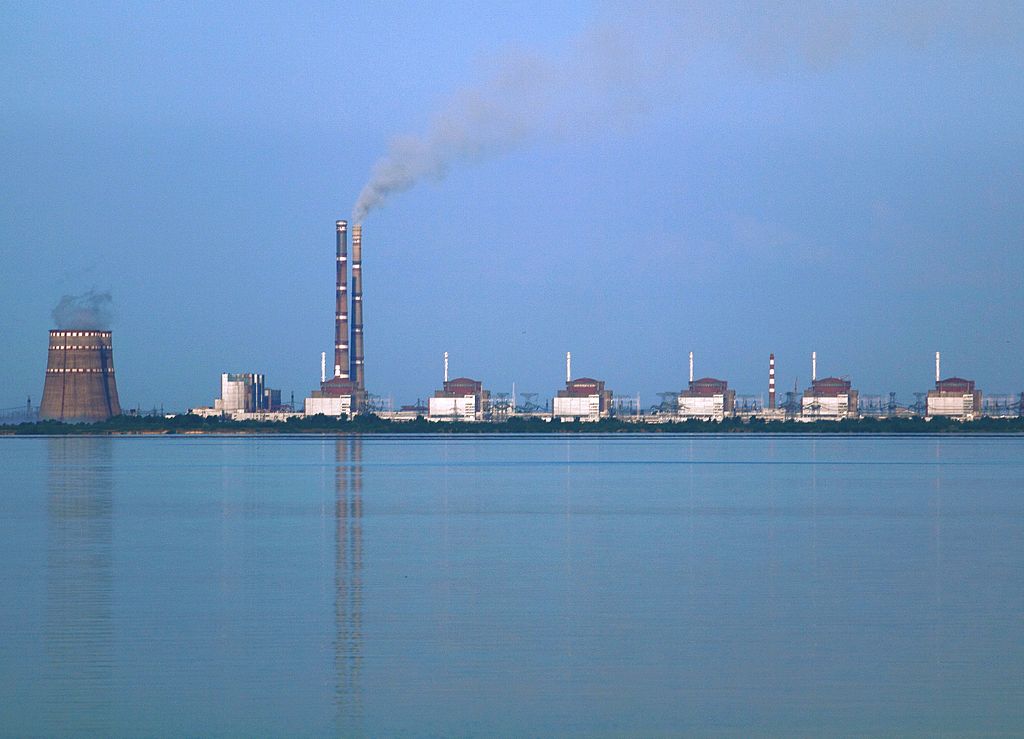
 Zaporizhzhia nuclear power plant in southern Ukraine. The two tall smokestacks are at a coal-fired generating station about 3km beyond the nuclear plant. Photo credit: Ralf1969 via Wikimedia Commons.
As the Russian invasion of Ukraine began to unfold, Russia’s swift occupation of the Chernobyl reactor complex and the surrounding exclusion zone sparked widespread speculation and concern.[1] The concern was not limited to whether the occupation would cause further radioactive release from Chernobyl;[2] it also included possible Russian military action against other Ukrainian nuclear facilities. These fears were further accelerated when Russian forces shelled and apparently occupied the Zaporizhzhia nuclear power complex near Enerhodar, Ukraine.[3] There have also been reports of attacks on a former Radon disposal site near Kyiv.[4]

World leaders have expressed concerns, and the UN Security Council held an emergency meeting on Friday to discuss the issue. At the meeting, the US ambassador told the emergency session that the assault on the Zaporizhzhia nuclear power plant “represents a dire threat to the world.” [5] The IAEA’s Board of Governors passed a resolution that deplored the Russian invasion and urged Russia to allow Ukraine to continue to control its nuclear facilities. The board’s resolution was similar to a UN General Assembly resolution passed on March 3rd.[6] Despite the high levels of concern the reactors at Zaporizhzhia do not appear to have been damaged and there has been no reported radiation release from the facility.

Tiếp tục đọc “How international law applies to attacks on nuclear and associated facilities in Ukraine”

Russian troops seize Europe’s largest nuclear power plant in southeastern Ukraine

Ukraine nuclear power plant attack: All you need to know

aljazeera.com

Russian troops seize Europe’s largest nuclear power plant in southeastern Ukraine, after attack sparks fire.

Published On 4 Mar 20224 Mar 2022

Russian forces have captured Ukraine’s Zaporizhzhia nuclear power plant, the largest in Europe, according to regional officials.

Ukrainian authorities said on Friday Russian shelling had caused a fire at a building in the plant complex that was later put out. The blaze raised alarm from leaders worldwide of a potential massive disaster. Russia blamed the attack on Ukrainian saboteurs, calling it a “monstrous provocation”.

Here is what we know so far:

INTERACTIVE - Zaporizhzhia

Where is it located?

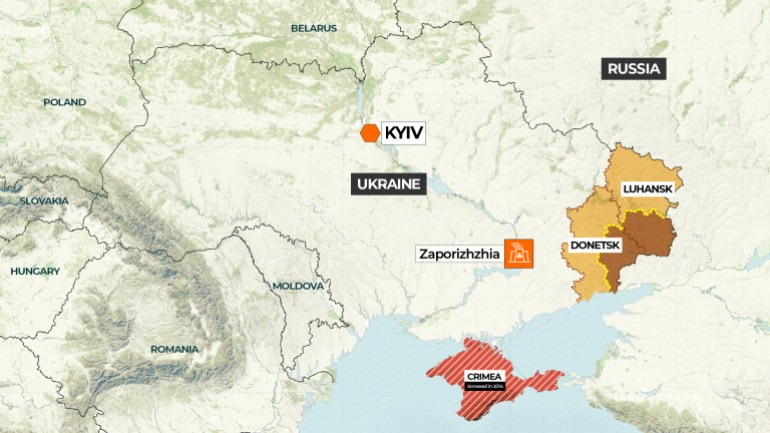
The Zaporizhzhia nuclear power plant is located in the southern Ukraine steppe on the Dnieper River, some 550 kilometres (342 miles) southeast of Ukraine’s capital, Kyiv, and about 525km (325 miles) south of Chernobyl, the site of the world’s worst nuclear power plant accident in 1986, which has also now been seized by Russian forces.

The plant has a total capacity of about 6,000 megawatts, enough to power about roughly four million homes.

On Wednesday, residents carrying Ukrainian flags had blocked the road to the plant, in an apparent standoff with Russian forces.

What happened?

But on Friday Russian troops were accused of attacking the plant, in an assault Ukraine’s President Volodymyr Zelenskyy branded “nuclear terror” and said could endanger the continent.

A video feed from the plant showed shelling and smoke rising near a building at the plant compound.

Tiếp tục đọc “Russian troops seize Europe’s largest nuclear power plant in southeastern Ukraine”

Global nuclear weapons: downsizing but modernizing

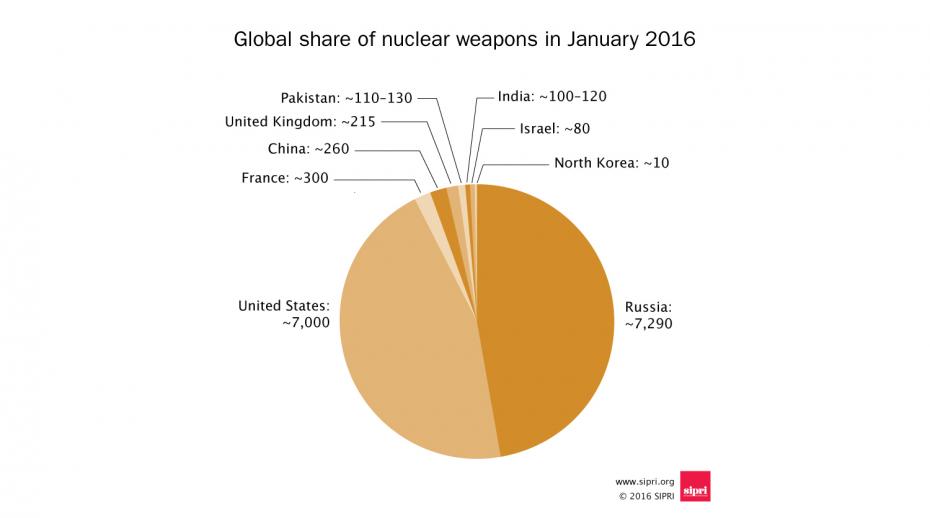
Pie chart showing gloal share of nuclear weapons in January 2016

SPIRI_(Stockholm, 13 June 2016) The Stockholm International Peace Research Institute (SIPRI) today launches its annual nuclear forces data, which highlights the current trends and developments in world nuclear arsenals. The data shows that while the overall number of nuclear weapons in the world continues to decline, none of the nuclear weapon-possessing states are prepared to give up their nuclear arsenals for the foreseeable future.

At the start of 2016 nine states—the United States, Russia, the United Kingdom, France, China, India, Pakistan, Israel and North Korea—possessed approximately 4,120 operationally deployed nuclear weapons. If all nuclear warheads are counted, these states together possessed a total of approximately 15,395 nuclear weapons compared with 15,850 in early 2015 (see table 1).


Table 1. World nuclear forces, 2016 Tiếp tục đọc “Global nuclear weapons: downsizing but modernizing”

Trump Wanted Tenfold Increase in Nuclear Arsenal, Surprising Military

NBC News

WASHINGTON — President Donald Trump said he wanted what amounted to a nearly tenfold increase in the U.S. nuclear arsenal during a gathering this past summer of the nation’s highest ranking national security leaders, according to three officials who were in the room.

Trump’s comments, the officials said, came in response to a briefing slide he was shown that charted the steady reduction of U.S. nuclear weapons since the late 1960s. Trump indicated he wanted a bigger stockpile, not the bottom position on that downward-sloping curve. Tiếp tục đọc “Trump Wanted Tenfold Increase in Nuclear Arsenal, Surprising Military”

Putin and Trump Talk Up Need for More Nuclear Weapons

In a year-end speech to his top military officers on Thursday, Russian President Vladimir Putin threw down the gauntlet, declaring that the Russian military, emboldened by recent adventures in Syria and Ukraine, is ready to defeat any country that dares challenge it. “We can say with certainty: we are stronger now than any potential aggressor,” he proclaimed. “Anyone.”

He also made a pitch for bigger and badder nuclear weapons. Putin said Moscow must “strengthen the military potential of strategic nuclear forces, especially with missile complexes that can reliably penetrate any existing and prospective missile defence systems.” Tiếp tục đọc “Putin and Trump Talk Up Need for More Nuclear Weapons”