Japan Struggles to Find a Site for Its High-Level Radioactive Waste

nippon.com Jan 15, 2025 Matsumoto Sōichi [Profile]

The Nuclear Waste Management Organization of Japan recently backed the further survey of two potential disposal sites for high-level radioactive waste in Hokkaidō. The government has struggled to convince municipalities to participate in review procedures, with a growing list of stakeholders calling for a new approach to the selection process.

A Three-Step Process

The Japanese government and nuclear power plant operators have long grappled with how to dispose of spent fuel and other high-level radioactive waste. Authorities finally settled on the approach of burying waste deep underground at facilities 300 or more meters below the surface. In 2002, NUMO, the Nuclear Waste Management Organization of Japan, began hunting for a storage location by inviting municipalities to put themselves forward as candidate sites. To date, this “volunteer” policy has netted only three participants, the towns of Suttsu and Kamoenai in Hokkaidō and Genkai in Saga.

Tiếp tục đọc “Japan Struggles to Find a Site for Its High-Level Radioactive Waste”
The US is on the cusp of a nuclear renaissance. One problem: Americans are terrified of the waste

By Ella Nilsen and Bill Weir, CNN Published 6:00 AM EST, Mon November 25, 2024

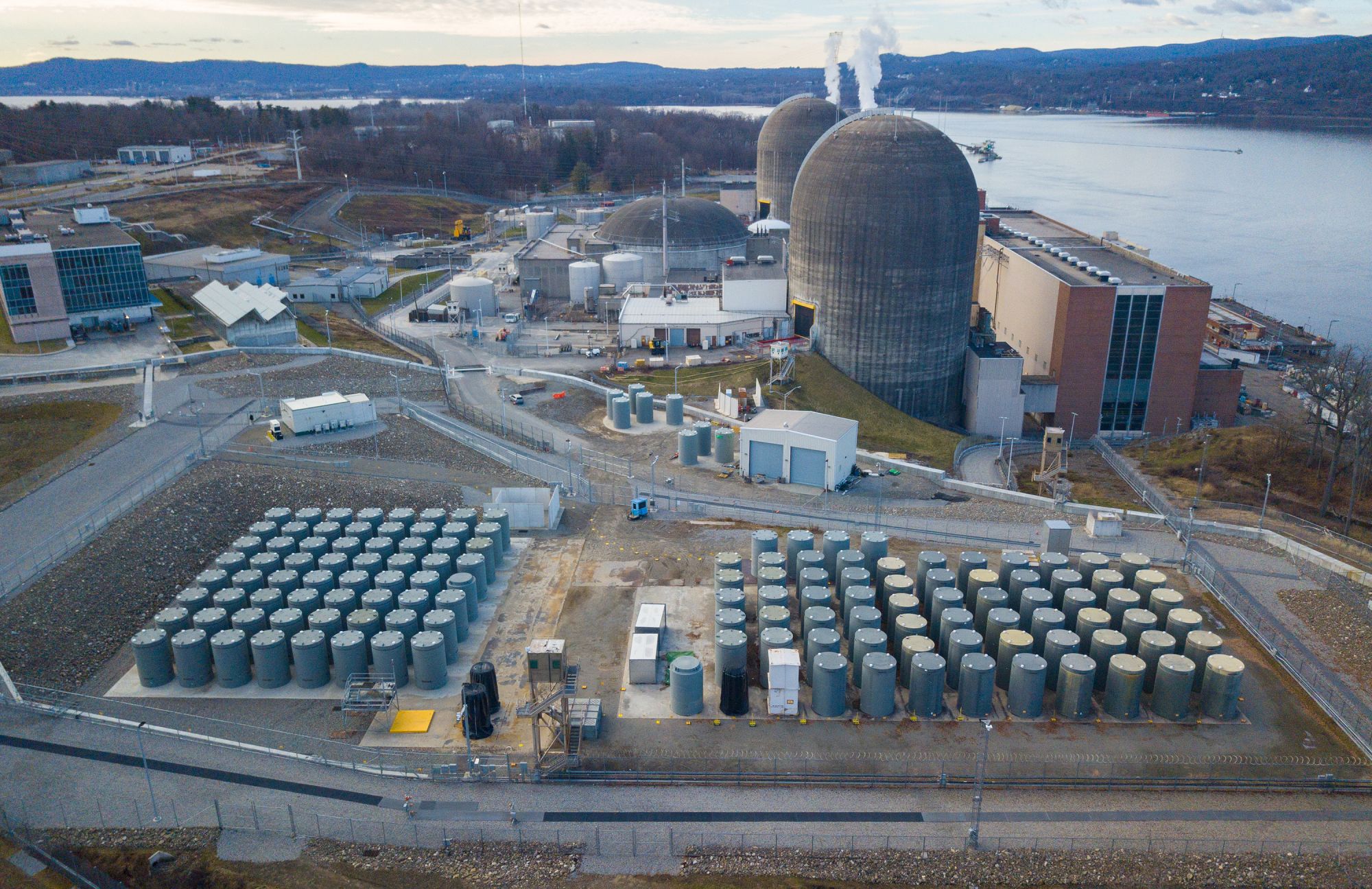
An array of containers storing nuclear waste sit at the decommissioned Indian Point nuclear power plant in Buchanan, New York.

An array of containers storing nuclear waste sit at the decommissioned Indian Point nuclear power plant in Buchanan, New York. Brian Vangor/HoltecBUCHANAN, New YorkCNN — 

The Indian Point nuclear power plant was an energy juggernaut for 50 years, generating a quarter of the electricity that powered New York City’s iconic, glowing skyline.

It is well into its decommissioning process after shutting down in 2021: The remaining waste of the radioactive fuel that once generated all of that power has been sealed inside more than 120 hulking metal and concrete canisters.

Tiếp tục đọc “The US is on the cusp of a nuclear renaissance. One problem: Americans are terrified of the waste”

Nuclear waste storage sites in rock salt may be more vulnerable than previously thought

Date: November 26, 2015

Source:University of Texas at Austin

Summary:Research shows that rock salt, used by Germany and the United States as a subsurface container for radioactive waste, might not be as impermeable as thought.

Research from The University of Texas at Austin shows that rock salt, used by Germany and the United States as a subsurface container for radioactive waste, might not be as impermeable as thought or as capable of isolating nuclear waste from groundwater in the event that a capsule or storage vessel failed.

sciencedaily – A team of researchers from the university has used field testing and 3-D micro-CT imaging of laboratory experiments to show that rock salt can become permeable. Their findings, published in the Nov. 27 issue of Science, has implications for oil and gas operations, and, most notably, nuclear waste storage. The team includes researchers from the university’s Cockrell School of Engineering and Jackson School of Geosciences.

“What this new information tells us is that the potential for permeability is there and should be a consideration when deciding where and how to store nuclear waste,” said Maša Prodanovic, assistant professor in the Department of Petroleum and Geosystems Engineering. “If it’s an existing nuclear waste storage site, you may want to re-evaluate it with this new information.”

Salt generally blocks fluid flow at shallow depth, a feature that allows oil reservoirs to form. But scientists have long suspected that salt becomes permeable at greater depth. Jackson School professor James E. Gardner confirmed this theory through laboratory experiments with synthetic rock salt. Tiếp tục đọc “Nuclear waste storage sites in rock salt may be more vulnerable than previously thought”