How international law applies to attacks on nuclear and associated facilities in Ukraine

thebulletin.org

By George M. Moore | March 6, 2022
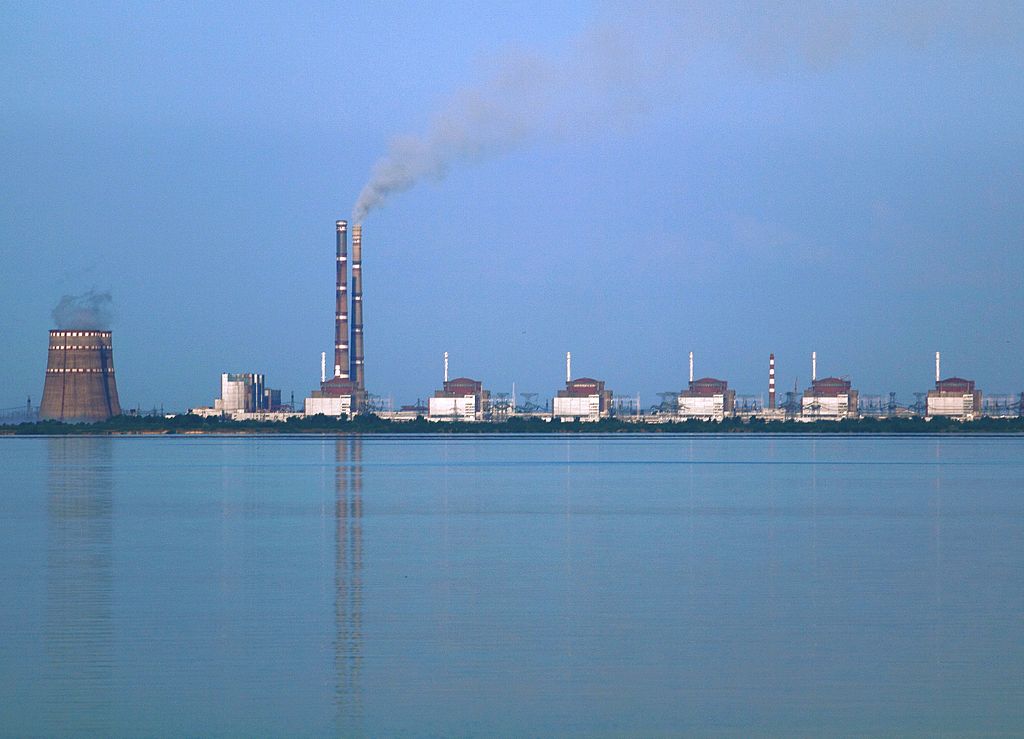
 Zaporizhzhia nuclear power plant in southern Ukraine. The two tall smokestacks are at a coal-fired generating station about 3km beyond the nuclear plant. Photo credit: Ralf1969 via Wikimedia Commons.

As the Russian invasion of Ukraine began to unfold, Russia’s swift occupation of the Chernobyl reactor complex and the surrounding exclusion zone sparked widespread speculation and concern.[1] The concern was not limited to whether the occupation would cause further radioactive release from Chernobyl;[2] it also included possible Russian military action against other Ukrainian nuclear facilities. These fears were further accelerated when Russian forces shelled and apparently occupied the Zaporizhzhia nuclear power complex near Enerhodar, Ukraine.[3] There have also been reports of attacks on a former Radon disposal site near Kyiv.[4]

World leaders have expressed concerns, and the UN Security Council held an emergency meeting on Friday to discuss the issue. At the meeting, the US ambassador told the emergency session that the assault on the Zaporizhzhia nuclear power plant “represents a dire threat to the world.” [5] The IAEA’s Board of Governors passed a resolution that deplored the Russian invasion and urged Russia to allow Ukraine to continue to control its nuclear facilities. The board’s resolution was similar to a UN General Assembly resolution passed on March 3rd.[6] Despite the high levels of concern the reactors at Zaporizhzhia do not appear to have been damaged and there has been no reported radiation release from the facility.

Tiếp tục đọc “How international law applies to attacks on nuclear and associated facilities in Ukraine”

Russian troops seize Europe’s largest nuclear power plant in southeastern Ukraine

Ukraine nuclear power plant attack: All you need to know

aljazeera.com

Russian troops seize Europe’s largest nuclear power plant in southeastern Ukraine, after attack sparks fire.

Published On 4 Mar 20224 Mar 2022

Russian forces have captured Ukraine’s Zaporizhzhia nuclear power plant, the largest in Europe, according to regional officials.

Ukrainian authorities said on Friday Russian shelling had caused a fire at a building in the plant complex that was later put out. The blaze raised alarm from leaders worldwide of a potential massive disaster. Russia blamed the attack on Ukrainian saboteurs, calling it a “monstrous provocation”.

Here is what we know so far:

INTERACTIVE - Zaporizhzhia

Where is it located?

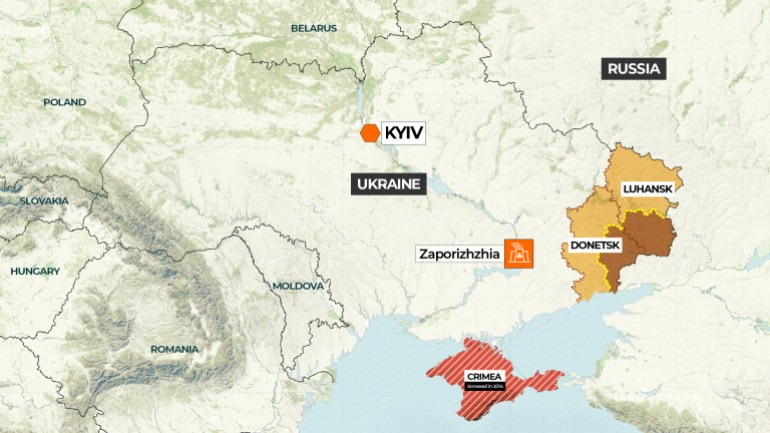
The Zaporizhzhia nuclear power plant is located in the southern Ukraine steppe on the Dnieper River, some 550 kilometres (342 miles) southeast of Ukraine’s capital, Kyiv, and about 525km (325 miles) south of Chernobyl, the site of the world’s worst nuclear power plant accident in 1986, which has also now been seized by Russian forces.

The plant has a total capacity of about 6,000 megawatts, enough to power about roughly four million homes.

On Wednesday, residents carrying Ukrainian flags had blocked the road to the plant, in an apparent standoff with Russian forces.

What happened?

But on Friday Russian troops were accused of attacking the plant, in an assault Ukraine’s President Volodymyr Zelenskyy branded “nuclear terror” and said could endanger the continent.

A video feed from the plant showed shelling and smoke rising near a building at the plant compound.

Tiếp tục đọc “Russian troops seize Europe’s largest nuclear power plant in southeastern Ukraine”

Nuclear energy, ten years after Fukushima

Nature.com
Amid the urgent need to decarbonize, the industry that delivers one-tenth of global electricity must consult the public on reactor research, design, regulation, location and waste.
Two people watch a nuclear power reactor though augmented reality equipment

Visitors to an industry exhibition in 2020 in China view a model nuclear-power reactor through augmented-reality headsets.Credit: Tang Ke/VCG via Getty

Ten years have passed since a catastrophic earthquake and tsunami damaged the Fukushima Daiichi nuclear power plant in Japan, triggering the worst nuclear accident since the Chernobyl disaster in 1986.

The accident struck at a time of renewed hope and untested optimism surrounding a new wave of nuclear-energy technologies and the part they might play in achieving a low-carbon future. It led to retrenchment, amid fresh concerns over the technological, institutional and cultural vulnerabilities of nuclear infrastructures, and the fallibility of humans in designing, managing and operating such complex systems. Tiếp tục đọc “Nuclear energy, ten years after Fukushima”

How atomic bomb survivors have transformed our understanding of radiation’s impacts

sciencemag.org By Dennis NormileJul. 23, 2020 , 2:00 PM

A mushroom cloud hangs over Hiroshima on 6 August 1945. An estimated 90,000 to 120,000 people died that day or soon after; many others developed cancer later.

HIROSHIMA—Kunihiko Iida wants the world to know that the atomic bombs the United States dropped on Hiroshima and Nagasaki 75 years ago next month are still claiming lives and causing suffering.

Iida was 3 years old in August 1945. His father had died in battle; he was living with his mother and her parents in a house 900 meters from Hiroshima’s hypocenter, the spot right beneath the detonation. The blast crumpled the house. The family fled the city, but Iida’s mother and older sister soon died from their injuries, a fact the little boy didn’t grasp. “Until I entered elementary school, I thought they were living and that we would meet someday,” he says.

His injuries left him bedridden for years, and he has suffered debilitating illnesses ever since. Childhood anemia caused him to collapse at school. He’s had ulcers and asthma, underwent two surgeries to remove brain tumors, and now has thyroid growths. “There has never been a break in these illnesses,” he says. Tiếp tục đọc “How atomic bomb survivors have transformed our understanding of radiation’s impacts”

Where The Wind Blew

springfilms.

WHERE THE WIND BLEW tells the story of how the Cold War super powers, in their race to develop more and more deadly bombs, spent forty years developing weapons capable of wiping out entire nations, while sacrificing their own vulnerable populations in the name of national security.

Using archive and testimony from both those affected and those participating in these escalating events, Where the Wind Blew shows not only how ordinary people were allowed to suffer in ignorance, but also how, with personal fortitude and courage they defied their governments. They helped change the course of history by joining forces, first nationally, then across the world to finally triumph against the testing of nuclear weapons. Kazakhstan became, in 1989, the first nation to close its test site, leading the way to an international test ban treaty. Tiếp tục đọc “Where The Wind Blew”

U.S. warns North Korea of ‘overwhelming’ response to use of nuclear weapons

jAPAN TIMES

AP Feb 3, 2017

In an explicit warning to North Korea, U.S. Defense Secretary Jim Mattis on Friday said any use of nuclear weapons by the North on the United States or its allies would be met with what he called an “effective and overwhelming” response.

U.S. defense secretaries have long offered assurances to South Korea and Japan that its nuclear “umbrella” will protect them, but Mattis’ statement was perhaps more pointed than most. He made the remarks during an appearance with his South Korean counterpart, Defense Minister Han Min-koo. Tiếp tục đọc “U.S. warns North Korea of ‘overwhelming’ response to use of nuclear weapons”