Nuclear energy, ten years after Fukushima

Nature.com
Amid the urgent need to decarbonize, the industry that delivers one-tenth of global electricity must consult the public on reactor research, design, regulation, location and waste.
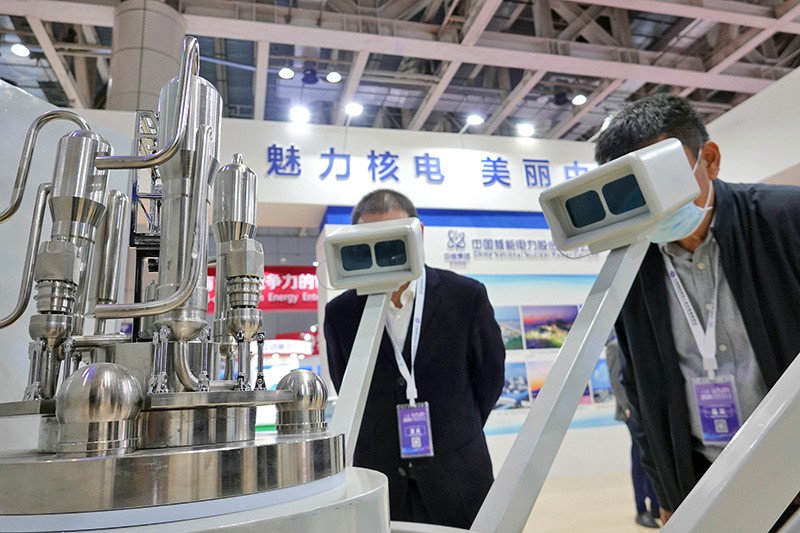
Two people watch a nuclear power reactor though augmented reality equipment

Visitors to an industry exhibition in 2020 in China view a model nuclear-power reactor through augmented-reality headsets.Credit: Tang Ke/VCG via Getty

Ten years have passed since a catastrophic earthquake and tsunami damaged the Fukushima Daiichi nuclear power plant in Japan, triggering the worst nuclear accident since the Chernobyl disaster in 1986.

The accident struck at a time of renewed hope and untested optimism surrounding a new wave of nuclear-energy technologies and the part they might play in achieving a low-carbon future. It led to retrenchment, amid fresh concerns over the technological, institutional and cultural vulnerabilities of nuclear infrastructures, and the fallibility of humans in designing, managing and operating such complex systems. Tiếp tục đọc “Nuclear energy, ten years after Fukushima”

The UK-China Civilian Nuclear Agreement

Photo courtesy of Michael Lowell from https://www.flickr.com/photos/pookieevans/849683393/in/photolist-abyFoE-abvK2R-7pSuwy-df7tX6-7T7vtd-e3ghoR-5j74ft-5j7492-5j74mF-7V4Eta-58furn-5E1hm-33bn7z-o2HeXv-9a1bGf-7YgbNu-3gTpf-aDepcL-2i5RgF-rgW7pq-ryoHvF-7CjyDW-
By Jane Nakano, Michelle Melton Oct 23, 2015

This week, Xi Jinping made his first visit to the United Kingdom as the president of the People’s Republic of China. Both governments hope that the visit will inaugurate a “golden era” of trade relations. President Xi’s visit highlights the budding cooperation between the two countries in the area of civilian nuclear energy. Among the roughly £30 billion in deals inked between the two countries was a Chinese commitment to partially fund the first nuclear plant to be built in the United Kingdom since 1995 and the first new nuclear plant in the European Union since the 2011 Fukushima accident. The announcement during Xi’s visit of an agreement to allow substantial Chinese participation in the UK civil nuclear program signifies a new era for China’s nuclear export program and perhaps for the global nuclear industry. It also provides fodder for ongoing debates about the costs and benefits of using nuclear power to address climate change and the national security implications of allowing foreign investment in critical infrastructure. We outline the scope of nuclear cooperation, explain the key factors driving the deal, and discuss the potential implications for the global nuclear industry. Tiếp tục đọc “The UK-China Civilian Nuclear Agreement”