The gap in global standards – World Development Report 2025

STANDARDS FOR DEVELOPMENT

worldbank.org

Rising Standards Reshape the Global Economy

International standards are proliferating, delivering major benefits to wealthy nations and big multinationals while leaving many developing countries behind, a new World Bank report shows. 

Main Messages

  • Standards are the hidden foundations of prosperity. They are the shared rules that make plugs fit sockets, medicines work safely, and digital systems connect seamlessly. Standards embody collective knowledge, build trust, and enable economies to function efficiently. When they fail, markets fragment; when they work, prosperity follows.
  • For low- and middle-income countries, standards have never mattered more. Nearly 90 percent of world trade is now shaped by nontariff measures, most linked to standards. From digital systems for payment to charging stations for electric vehicles, new technologies can deliver economywide benefits only when standards exist. Mastering them can enhance national competitiveness and protect against technological, financial, and environmental risks.
  • Standards are a versatile tool of economic policy.Governments can use voluntary standards to drive innovation and give technical guidance on compliance with regulations. They can also make them mandatory when uniform compliance is necessary to protect health, safety, or the environment. In addition, governments can deploy standards as an instrument of industrial policy without reference to specific technologies or firms.
  • Ambition must match capacity.Countries should follow a trajectory that takes into account their stage of economic development, first adapting international standards to local realities when needed, then aligning with them as institutions mature, and actively participating in authoring standards in priority areas as capabilities grow. Rwanda’s Zamukana Ubuziranenge (“Grow with Standards”) program exemplifies this path, helping micro, small, and medium enterprises progress step by step towards compliance with international standards.
  • Investing in quality-enhancing infrastructure makes standards work well. The system of testing, certification, metrology, and accreditation in a country is what makes standards effective. Such systems are expensive to build and easy to neglect. Countries should start with public provision of quality-enhancing services in key sectors, then gradually open these services up to private participation. In many places, capacity gaps are stark: Ethiopia has fewer than 100 accredited auditors for compliance with standards of the International Organization for Standardization (ISO), compared with 12,000 in Germany.
  • To make standards a springboard for development, countries should do the following:
    • Create incentives for firms to upgrade the quality of their exports rather than imposing unrealistic mandates.
    • Adapt and sequence standards to align with the national capacity to enforce them.
    • Participate actively in international forums for setting standards.
    • Invest in and share quality infrastructure resources regionally.
  • The global community, for its part, must do the following:
    • Support participation by low- and middle-income countries in developing international standards and design tiered standards that reflect diverse capacities among countries.
    • Deepen regulatory cooperation and reduce fragmentation.
    • Develop credible standards for emerging technologies and actions to prevent or mitigate climate change.
    • Expand research and data on the economic and social impacts of standards.
  • Standards matter for development. Countries that take them seriously are getting ahead. Countries that ignore them risk falling behind.

➜ Download Main Messages: English | عربي | Español | Français | Português | Pусский | 中文

Australia’s Strategic Priorities and Challenges with Southeast Asia

lowyinstitute.org By Susannah Patton 6 November 2025

On this page

Listen to this journal article

Introduction

Going into the 2022 election, improving relations with Southeast Asia was at the top of the foreign policy to-do list for the Australian Labor Party, led by now prime minister Anthony Albanese. While the outgoing Liberal-National coalition government had notched up some achievements in its engagement with the region, there was also a sense of drift. The Pacific Step Up policy had focused on boosting ties with one of Australia’s two near regions, but Southeast Asia had not received the same level of diplomatic focus. Among the Labor Party’s pledges were appointing a special envoy for Southeast Asia, providing A$470 million in new aid to the region, and creating an office for Southeast Asia within the Department of Foreign Affairs and Trade. [1] For the most part, the Albanese government has followed through on its commitment to strengthen ties with Southeast Asia through more active diplomatic outreach, an economic strategy to boost two-way trade and investment, and a more nuanced approach to managing sensitive issues in Australia’s relations with the region, especially China-related issues and Middle East policy.

During the new term of government beginning in 2025, it is likely that the Albanese government will maintain Southeast Asia, along with the Pacific Islands, as a region of high priority. Albanese’s July 2025 John Curtin Oration articulated what he called Labor’s “constructive and creative role” and gave high billing to efforts to intensify economic engagement with Southeast Asia and deepen security cooperation with Indonesia. [2] While other global relationships may fluctuate according to events, the central importance of Southeast Asia within this distinctively Labor worldview suggests that engagement with this region, especially Indonesia, will remain high on Australia’s agenda for the next three years.

This essay analyzes the achievements of the Albanese government in its relations with Southeast Asia. It also assesses the continued challenges Australia faces both in deepening economic relations with the region and in continuing to balance regional ties with the U.S. alliance, especially given a less predictable and more demanding administration in Washington.

Tiếp tục đọc “Australia’s Strategic Priorities and Challenges with Southeast Asia”

Nuclear energy: Where China is getting with small modular and fusion reactors

On Oct. 13 of this year, the PRC state media outlet CPNN, reported that China is pulling ahead in advanced nuclear power technology development with the launch of the large-scale production “Hualong One” (also known as HPR1000). As it develops, China not only aims to tackle the transmission bottleneck in the south, but also to export to countries like Pakistan as the PRC’s “business card” to the world.

China’s dual goals of localization and export orientation have long defined its nuclear strategy. Led by state-owned giants such as the China National Nuclear Corporation (CNNC), Beijing has invested heavily in domestic innovation while aggressively expanding into overseas markets. Beijing has sought to expand its reactor sales to markets such as Argentina and the United Kingdom, while also securing control over upstream uranium resources. CNNC’s 2019 acquisition of Namibia’s Rössing Uranium Mine, one of the world’s largest open-pit uranium operations, underscored China’s growing dominance across the nuclear value.

Beijing’s policy support for state-owned enterprises has enabled it to build a vertically integrated nuclear industry, driving rapid advances in small modular reactors (SMRs), fourth-generation technologies, and nuclear fusion research (the Artificial Sun). Furthermore, intensifying US–China competition is reshaping global nuclear exports and deepening the geopolitical risks of dependence on Chinese nuclear systems.

Tiếp tục đọc “Nuclear energy: Where China is getting with small modular and fusion reactors”

Tsunami Risk in Vietnam – Hazard level: Medium 

Think Hazard.org Global Facility for Disaster Reduction and Recovery (GFDRR)

In the area you have selected (Vietnam) tsunami hazard is classified as medium according to the information that is currently available. This means that there is more than a 10% chance of a potentially-damaging tsunami occurring in the next 50 years. Based on this information, the impact of tsunami should be considered in different phases of the project for any activities located near the coast. Project planning decisions, project design, and construction methods should take into account the level tsunami hazard. Further detailed information should be obtained to adequately account for the level of hazard.

Pacific "Ring of Fire" (enlarged graphic). Source: Adapted from U.S. Geological Survey
Pacific “Ring of Fire” (enlarged graphic). Source: Adapted from U.S. Geological SurveyDownload Image

Climate change impact: The areas at risk of tsunami will increase as global mean sea level rises. According to the IPCC (2013), global mean sea level rise depends on a variety of factors, and estimates for 2100 range from ~20 cm to nearly 1 m. However, regional changes in sea level are difficult to predict. Projects in low-lying coastal areas such as deltas, or in island states should be designed to be robust to projected increases in global sea level.

Tiếp tục đọc “Tsunami Risk in Vietnam – Hazard level: Medium “

China wants to lead the world on AI regulation — will the plan work?

nature.com

Having placed artificial intelligence at the centre of its own economic strategy, China is driving efforts to create an international system to govern the technology’s use.

Chinese President Xi Jinping speaks at the APEC Economic Leaders' Meeting.
Chinese president Xi Jinping speaking at the 2025 Asia-Pacific Economic Cooperation meeting in Gyeongju, South Korea.Credit: Yonhap via AP/Alamy

Despite risks ranging from exacerbating inequality to causing existential catastrophe, the world has yet to agree on regulations to govern artificial intelligence. Although a patchwork of national and regional regulations exists, for many countries binding rules are still being fleshed out.

Tiếp tục đọc “China wants to lead the world on AI regulation — will the plan work?”

The lights dim on Laos’ brief Bitcoin dream

mekoneye.com By Võ Kiều Bảo Uyên 17 November 2025 at 14:50

Four years after it first approved Bitcoin mining projects powered by surplus hydropower, Laos is beginning to rethink whether the energy-hungry industry — now linked to massive transnational cryptocurrency scams — is worth keeping alive

High-rise buildings stand in the Boten Special Economic Zone in northern Laos, near the border with China. The area is suspected to be a hotspot for scam operations, including schemes that store fraudulent money in crypto for later laundering. PHOTO: Thanh Hue

Houaphanh Province, LAOS — Bitcoin is a world far away from 19-year-old Chai, an ethnic Hmong and a college student who has never owned a computer. 

But its shadow has already crept into his mountainous village, where power outages are common—often a side effect of the vast energy demands elsewhere, including cryptocurrency mining.

Despite the national grid being connected to his remote community seven years ago, he and his classmate studied by candlelight, oil lamp, or mobile flashlight at night to prepare for university entrance exams. The blackout worsens during the dry seasons when hydropower drops. 

Tiếp tục đọc “The lights dim on Laos’ brief Bitcoin dream”

Growing demand for military involvement in climate emergencies worldwide

Global Military Advisory Council on Climate Change 


Brussels / The Hague – 30 July  2025

A groundbreaking new report, “Resilience, Readiness, and Response,” from Project CASA (Climate and Security Action through Civil-Military Cooperation in Climate-Related Emergencies) highlights the increasing and essential role of national militaries in addressing the escalating global climate crisis.

The report is the result of a comprehensive two-year study which provides the first cross-national dataset on military involvement in climate disasters. Edited by Ronald A. Kingham and Dr. Ashley McIlvain Moran and published by the Environment & Development Resource Centre (EDRC), the report serves as both a critical resource and a call to action for policymakers and practitioners grappling with climate-worsened disasters.

Tiếp tục đọc “Growing demand for military involvement in climate emergencies worldwide”

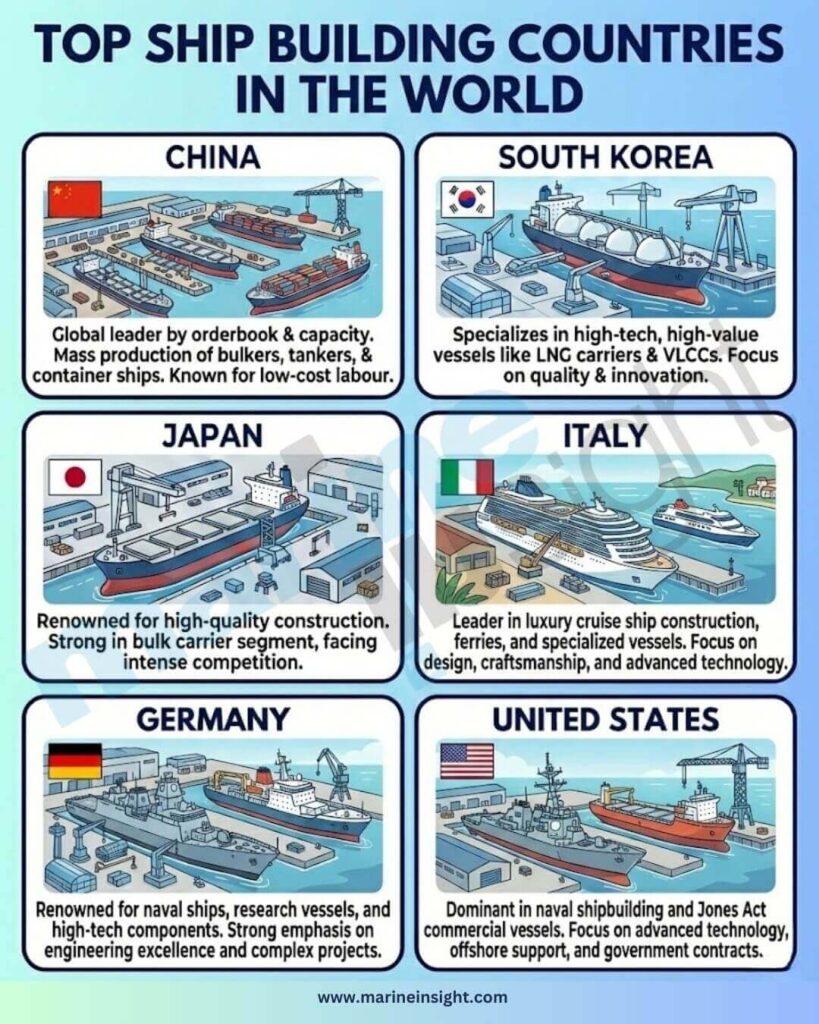
China’s shipyard dominance leads to geoeconomic risks

japantimes.co.jp 2025.07.02

China’s unparalleled shipbuilding capacity has the U.S., Japan and its allies — both military and economic — rightly concerned about maritime threats to trade and security.
Without a concerted effort and international cooperation to challenge Beijing’s commanding lead in the global shipbuilding industry, those threats will materialize furthering China’s alarming dominance.

According to 2024 data from the Chinese government, the country ranks first worldwide in ship completions, new orders and order backlogs — claiming global shares of 55.7%, 74.1% and 63.1%, respectively. China is also expanding its capabilities in high value-added vessels, surpassing South Korea and Japan, while consolidating its role as a “shipbuilding superpower.”

Shipbuilding is not merely an economic activity — it underpins both global trade and national defense. Civilian shipbuilding provides the foundation for training engineers and skilled workers essential to naval production. As such, the growth of China’s shipbuilding sector carries profound implications, not only for maritime commerce but also for the international security architecture.

Tiếp tục đọc “China’s shipyard dominance leads to geoeconomic risks”

Geneva talks on global plastic pollution treaty collapse without a deal

Al Jazeera Several delegates express dismay at the failure to break a deadlock at the sixth round of talks in under three years.

Piles of plastic trash at the waste sorting plant of recycling company Remondis in Erftstadt, Germany, August 12, 2025.
Piles of plastic waste at a recycling plant in Erftstadt, Germany [File: Jana Rodenbusch/Reuters]

Published On 15 Aug 2025

Global talks to develop a landmark treaty to tackle plastic pollution have once again failed to reach an agreement, despite efforts late into the night to strike a deal.

Delegates at a closing meeting of the Intergovernmental Negotiating Committee (INC) in Geneva on Friday spoke of their dismay at the failure to break a deadlock at the sixth round of talks in under three years, as countries remained deeply divided over the scope of any treaty.

“South Africa is disappointed that it was not possible for this session to agree a legally binding treaty and positions remain far apart,” its delegate told a closing meeting.

Cuba’s delegate said that negotiators had “missed a historic opportunity but we have to keep going and act urgently”, the AFP news agency reported.

Tiếp tục đọc “Geneva talks on global plastic pollution treaty collapse without a deal”

Vì sao băng nhóm tội phạm Crypto ở Đông Nam Á nở rộ –  Why scam gangs in Southeast Asia are a growing global threat

Griffith.edu.au May 19, 2025 By Dr Hai Thanh Luong

From fake job offers to cryptocurrency fraud and online romance scams, Southeast Asia has become a global hub for transnational scam operations. 

These aren’t isolated crimes, they are organised, cross-border and industrial-scale criminal enterprises that exploit vulnerable people and expose the limits of international law enforcement.

New research shows this surge in scams represents more than just a regional issue. It’s a transnational emergency, and it demands an urgent, coordinated response.

Why Southeast Asia?

Several factors have turned Southeast Asia into a hotbed for scam syndicates. 

The collapse of rule of law in parts of Myanmar has created ungoverned spaces where criminal operations flourish. 

Meanwhile, countries like Cambodia, Laos and the Philippines offer a fertile environment for transnational crime due to weak governance, corruption, and limited oversight.

These scam centres don’t just target foreign victims. They also lure and trap workers—many of them young people from poorer nations—under the false promise of legitimate employment. Once inside, many are subjected to forced labour, abuse and trafficking.

This has become a humanitarian crisis as scam compounds across Southeast Asia have held thousands of people against their will, forcing them to commit fraud under threat of violence.

The rise of digital technologies has only made these operations harder to trace and easier to scale. From encrypted messaging to unregulated cryptocurrency, scam networks have globalised rapidly, while enforcement efforts remain stuck behind borders.

Why national responses aren’t working

One of the key challenges in confronting this crisis is the fragmented nature of law enforcement. 

Scams that begin in one country can target victims in another, while using platforms, payment systems, and communication tools hosted across multiple jurisdictions.

But many national police forces are not equipped to act beyond their borders. And transnational criminal syndicates have exploited the lack of international coordination to operate with relative impunity.

Even where political will exists, legal mismatches and diplomatic bottlenecks prevent timely investigations, arrests or prosecutions. 

Countries tend to focus inward, launching isolated crackdowns that fail to dismantle the broader networks.

This mismatch between the global nature of the threat and the localised nature of responses is precisely what allows these scams to thrive.

What needs to happen

To seriously confront this growing criminal economy, regional governments must prioritise coordinated responses, cross-border investigations, and robust intelligence sharing.

This includes:

  • Building shared databases and real-time intelligence channels to track trends, suspects and operations;
  • Developing harmonised legal tools to enable prosecutions and asset recovery across jurisdictions;
  • Working with tech and financial platforms to shut down scam infrastructure;
  • Protecting and rehabilitating victims, particularly those trafficked into scam compounds.

ASEAN, Interpol, and UNODC all have a role to play. But meaningful cooperation remains patchy, slow and overly politicised. Tackling scams as a global crisis, not just a regional one, will require serious investment and political leadership.

A crisis we can’t ignore

Scams are often dismissed as digital annoyances or consumer issues. 

The response to this crisis cannot be local, slow or siloed. The fight against transnational scams cannot be won in isolation. 

Only by working together can states dismantle the criminal networks exploiting the region’s vulnerabilities.

But what we are seeing in Southeast Asia is a complex ecosystem of transnational organised crime, often underpinned by exploitation and violence.

Billions of dollars are being stolen. Thousands of people are being trafficked and abused. And public trust in digital systems is eroding as scams become more sophisticated.

“Một loại ung thư” – UN cảnh báo tập đoàn tội phạm mạng Châu Á mở rộng khắp thế giới – ‘A cancer’: UN warns Asia-based cybercrime syndicates expanding worldwide

Al Jazeera

Agency says gangs caused $37bn in losses in Asia as they gain new footholds in Africa, South America, and Middle East.

Tiếp tục đọc “Vì sao băng nhóm tội phạm Crypto ở Đông Nam Á nở rộ –  Why scam gangs in Southeast Asia are a growing global threat”

Ranked: Emerging Markets by FDI Confidence

 visualcapitalist.com June 30, 2025

This infographic ranks the top 25 emerging markets by their FDI confidence in 2025, based on a survey of global business leaders.

Key Takeaways

  • China, the UAE, and Saudi Arabia are the top three emerging markets by FDI confidence in 2025
  • Brazil overtook India to take the fourth spot, with both countries making the top five
  • Domestic economic performance and efficiency of legal and regulatory processes were the top two priorities for FDI investors

Emerging markets often attract foreign investors with prospects for higher economic growth and diversification.

Where are global business leaders placing their foreign direct investment (FDI) bets in 2025?

This chart highlights the top 25 emerging markets by FDI confidence score in 2025, based on a survey conducted by Kearney. The rankings are drawn from responses by 536 senior executives at global companies with annual revenues above $500 million.

China Leads in Foreign Investor Sentiment

China (including Hong Kong) remains the top emerging market for foreign investor confidence in 2025. However, FDI inflows have slowed in recent years, hitting multi-year lows in 2023.

Following China, the UAE and Saudi Arabia also retain their places as the second and third-most favored developing economies for FDI.

Here’s a look at the full list of top emerging markets for FDI confidence in 2025:Search:

RankCountryFDI Confidence Score
1China (including Hong Kong) 🇨🇳🇭🇰1.97
2United Arab Emirates 🇦🇪1.86
3Saudi Arabia 🇸🇦1.76
4Brazil 🇧🇷1.59
5India 🇮🇳1.53
6Mexico 🇲🇽1.51
7South Africa 🇿🇦1.48
8Poland 🇵🇱1.46
9Argentina 🇦🇷1.46
10Thailand 🇹🇭1.45

Brazil and India—two of the biggest emerging economies by GDP—round out the top five, with Brazil overtaking India in FDI confidence in the 2025 rankings.

These rankings align with investors’ FDI priorities from the same survey, where the efficiency of legal and regulatory processes and domestic economic performance top the list.

South Africa made the largest upward move in 2025, jumping from 11th to 7th in the rankings. It also recorded FDI inflows of around $661 million in Q1 2025, up 56% from the fourth quarter of 2024.

Overall, 11 of the top 25 emerging markets for FDI confidence are in Asia and the Middle East.

What’s Driving Investor Confidence?

The factors driving FDI confidence vary for each economy.

In China, tech innovation was the leading driver of investor confidence, while economic performance ranked highest for the UAE and Saudi Arabia.

Meanwhile, the talent/skill of the labor pools in India and Mexico were the strongest factors attracting investors.

More than a third of this country’s population has applied to relocate

By Angus Watson, CNN Updated 4:50 AM EDT, Fri June 27, 2025

People swim in the lagoon in Funafuti, Tuvalu, on November 28, 2019.

People swim in the lagoon in Funafuti, Tuvalu, on November 28, 2019. Mario Tama/Getty ImagesSydney, AustraliaCNN — 

More than a third of the population of Tuvalu has applied to move to Australia, under a landmark visa scheme designed to help people escape rising sea levels.

The island nation – roughly halfway between Hawaii and Australia – is home to about 10,000 people, according to the latest government statistics, living across a clutch of tiny islets and atolls in the South Pacific.

With no part of its territory above six meters, it is one of the most at-risk places in the world to rising seas caused by climate change.

On June 16, Australia opened a roughly one-month application window for what it says is a one-of-a-kind visa offering necessitated by climate change. Under the new scheme, Australia will accept 280 visa winners from a random ballot between July and January 2026. The Tuvaluans will get permanent residency on arrival in Australia, with the right to work and access public healthcare and education.

More than 4,000 people have applied under the scheme, according to official figures seen by CNN.

“The opening of the Falepili Mobility Pathway delivers on our shared vision for mobility with dignity, by providing Tuvaluans the opportunity to live, study and work in Australia as climate impacts worsen,” Australian Foreign Minister Penny Wong said in a statement.

CNN has reached out to the Tuvalu government.

According to Tuvalu’s Prime Minister Feleti Teo, more than half of Tuvalu will be regularly inundated by tidal surges by 2050. By 2100, 90% of his nation will be regularly under water, he says.

Fongafale, the nation’s capital, is the largest and most populated islet in Tuvalu’s main atoll, Funafuti. It has a runway-like strip of land just 65 feet (20 meters) wide in some places.

“You can put yourself in my situation, as the prime minister of Tuvalu, contemplating development, contemplating services for the basic needs of our people, and at the same time being presented with a very confronting and disturbing forecast,” Teo told the United Nations Oceans Conference this month in Nice, France.

Tiếp tục đọc “More than a third of this country’s population has applied to relocate”

‘Madness’: World leaders call for deep-sea mining moratorium at UN ocean summit

Mongabay.com Elizabeth Claire Alberts 11 Jun 2025 France

  • World leaders have renewed calls for a global moratorium on deep-sea mining at the 2025 U.N. Ocean Conference (UNOC) in Nice, France, as the U.S. moves to mine the deep sea in international waters under its own controversial authority.
  • Four additional countries have joined the coalition of nations calling for a moratorium, precautionary pause, or ban on deep-sea mining, bringing the total number to 37.
  • The U.S., which did not have an official delegation at UNOC, is pushing forward with its plans to mine in international waters — a decision that has drawn criticism from the international community.

Tiếp tục đọc “‘Madness’: World leaders call for deep-sea mining moratorium at UN ocean summit”

Number of internally displaced people tops 80 million for first time

“Internal displacement refers to the forced movement of people within the country they live in.” 

Internal-displacement.org

     –  83.4 million people were living in internal displacement at the end of 2024, more than twice as many as only six years ago (2018).

     –  90 per cent had fled conflict and violence. In Sudan, conflict led to 11.6 million internally displaced people (IDPs), the most ever for one country. Nearly the entire population of the Gaza Strip remained displaced at the end of the year.

     –  Disasters triggered nearly twice as many movements in 2024 as the annual average over the past decade. The 11 million disaster displacements in the United States were the most ever recorded for a single country. 

GENEVA, Switzerland – The number of internally displaced people (IDPs) reached 83.4 million at the end of 2024, the highest figure ever recorded, according to the Global Report on Internal Displacement 2025 published today by the Internal Displacement Monitoring Centre (IDMC). This is equivalent to the population of Germany, and more than double the number from just six years ago.  

“Internal displacement is where conflict, poverty and climate collide, hitting the most vulnerable the hardest,” said Alexandra Bilak, IDMC director“These latest numbers prove that internal displacement is not just a humanitarian crisis; it’s a clear development and political challenge that requires far more attention than it currently receives.”

Tiếp tục đọc “Number of internally displaced people tops 80 million for first time”