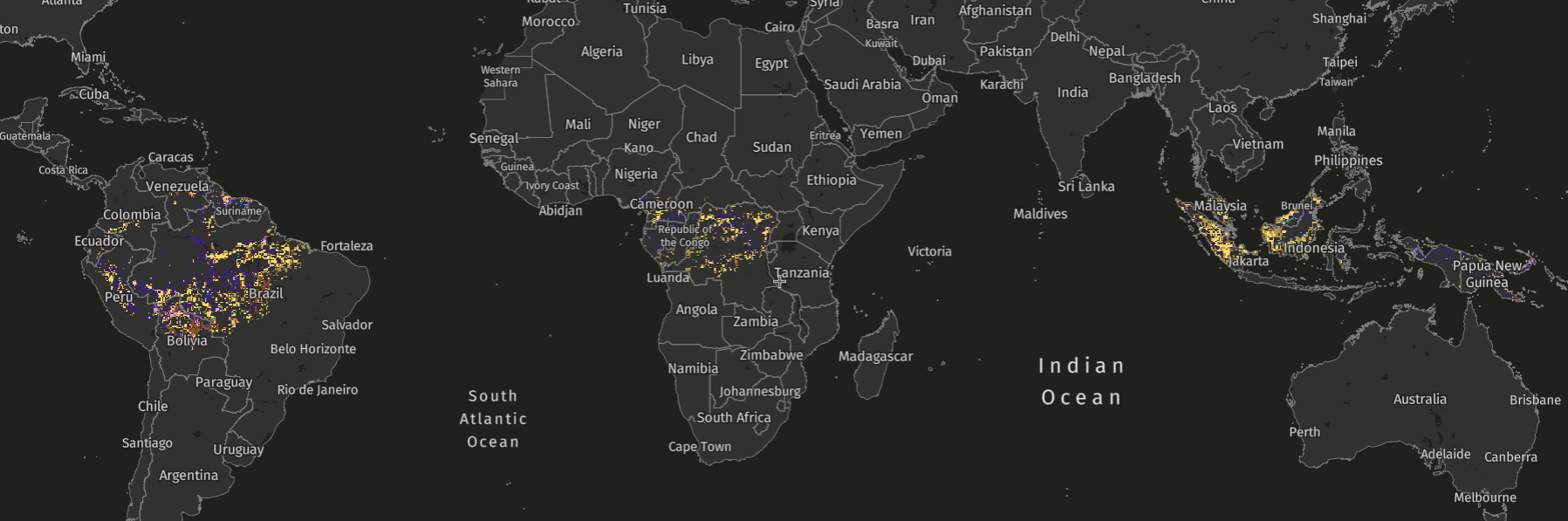
See What’s Driving Deforestation Alerts on Global Forest Watch

globalforestwatch.org Oct 20, 2025

Screenshot 2025-10-16 184230

Global Forest Watch’s (GFW) deforestation alerts provide information about loss of tree cover in near-real-time, making them a critical tool for those working to combat deforestation. Existing alerts on GFW have been used to help Indigenous and local communities protect their forests, halt and prosecute environmental crimes and protect threatened wildlife.

However, in the past, alerts only let users know there’s been a disturbance without identifying a cause, other than a few limited classes such as fires.

Now, new drivers of deforestation alerts data is available on GFW that shows the causes of alerts across the tropics. This innovative data set uses an AI method to assign drivers to GFW’s integrated deforestation alerts in the three major forested regions in the tropics, allowing users to see what’s driving loss in near-real-time in these regions for the first time.

Critically, this information helps users distinguish between tree cover loss from natural and human causes, enabling more targeted action from those managing forests and reducing the need for costly field visits. Further, the data also provides more rapid information to estimate ecological impacts and supports better understanding of carbon emissions related to forest disturbances.

Tiếp tục đọc “See What’s Driving Deforestation Alerts on Global Forest Watch”

Protected areas hit hard as Mekong countries’ forest cover shrank in 2024

mongabay.com Gerald Flynn 6 Oct 2025Asia

  • The five Mekong countries lost nearly 1 million hectares (2.5 million acres) of tree cover in 2024, with nearly a quarter of which was primary forest, and more than 30% of losses occurring inside protected areas.
  • Cambodia and Laos saw some of the highest levels of loss inside protected areas, driven by logging, plantations and hydropower projects, though both countries recorded slight declines from 2023.
  • In Myanmar, conflict has complicated forest governance, with mining and displacement contributing to losses, though overall deforestation fell slightly compared to the previous year.
  • Thailand and Vietnam bucked the regional trend, with relatively low forest losses in protected areas, supported by logging bans, reforestation initiatives, and stricter law enforcement.

See All Key Ideas

BANGKOK — The Mekong countries of Cambodia, Laos, Myanmar, Thailand and Vietnam lost a combined area of tree cover of nearly a million hectares in 2024, or an area almost the size of Lebanon. That’s according to Mongabay’s analysis* of satellite data published by the Global Land Analysis and Discovery (GLAD) laboratory at the University of Maryland, in partnership with Global Forest Watch (GFW).

GFW data show 991,801 hectares (2.45 million acres) of tree cover were lost in 2024, including nearly 220,000 hectares (544,000 acres) of primary forest, across the five Mekong countries. More than 30% of tree cover loss recorded in 2024 occurred inside protected areas, although across the region, the rate of deforestation — both within protected areas and outside of them — slowed slightly from 2023. Despite this, the drivers of deforestation vary somewhat from country to country, and last year’s losses still reflect a grim trajectory for forests in the Mekong region.

The economies of almost all Mekong countries are heavily reliant on agriculture, with forests cleared for both agribusiness-run plantations or subsistence farming plots. But research indicates the conversion of forest to croplands has resulted in increasingly unpredictable weather patterns and subsequently poorer agricultural yields.

Tiếp tục đọc “Protected areas hit hard as Mekong countries’ forest cover shrank in 2024”

Animals that spread seeds are critical for climate solutions

mongabay.com

  • New research analyzing more than 3,000 tropical forest sites reveals that areas with fewer seed-dispersing animals store up to four times less carbon than forests with healthy wildlife populations.
  • The study found that 81% of tropical trees rely on animals to disperse their seeds, establishing an ancient partnership now threatened by human activities such as deforestation, road construction, and hunting.
  • Researchers mapped global “seed dispersal disruption” and found it explains a 57% reduction in carbon storage potential across proposed forest restoration areas.
  • Tiếp tục đọc “Animals that spread seeds are critical for climate solutions”

‘Plenty of fish in the sea’? Not anymore

UN.org

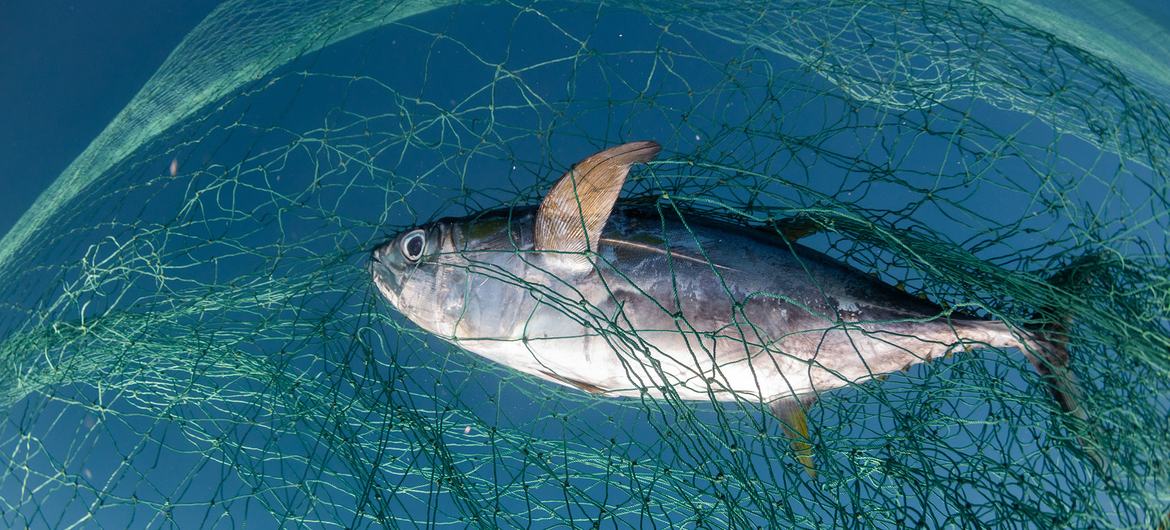
A report launched at the Third UN Ocean Conference, in Nice, shows that 35 per cent of the global fish stocks are being harvested unsustainably.

© The Ocean Story/Vincent Kneefel

A report launched at the Third UN Ocean Conference, in Nice, shows that 35 per cent of the global fish stocks are being harvested unsustainably.

By Fabrice Robinet, reporting from Nice  Climate and Environment

At the Third UN Ocean Conference in Nice, the “catch of the day” wasn’t a seabass or a red mullet – it was a figure: 35 per cent. That’s the share of global fish stocks now being harvested unsustainably, according to a new UN report released Wednesday.

https://x.com/UN_News_Centre/status/1932800237715783856?ref_src=twsrc%5Etfw%7Ctwcamp%5Etweetembed%7Ctwterm%5E1932800237715783856%7Ctwgr%5Ed912305c5ff556ade0e29bacd77858c0403f520d%7Ctwcon%5Es1_&ref_url=https%3A%2F%2Fnews.un.org%2Fen%2Fstory%2F2025%2F06%2F1164251

As yachts bobbed gently and delegates streamed by in a rising tide of lanyards and iPads at Port Lympia, Nice’s historic harbor, that statistic sent a ripple through the conference’s third day – a stark reminder that the world’s oceans are under growing pressure from overfishing, climate change and unsustainable management.

Tiếp tục đọc “‘Plenty of fish in the sea’? Not anymore”

Vietnam and China partner on wildlife-friendly traditional medicine practices


Mongabay.com

Vietnam and China, the two largest markets for traditional medicine (TM) that uses wild plants and animals, announced a new partnership in January to adopt practices that protect wildlife while preserving the countries’ cultural heritage.

The first-of-its-kind agreement involved leading TM associations from Vietnam and China — the Vietnam Oriental Traditional Medicine Association (VOTMA) and the China Association of Traditional Chinese Medicine (CATCM) — along with researchers, policymakers and pharmaceutical leaders. TRAFFIC, an international NGO monitoring illegal wildlife trade, facilitated it.

The partnership aims to explore “several sustainable practices to make traditional medicine more conservation-friendly,” said TRAFFIC Vietnam director Trinh Nguyen in a statement to Mongabay. She said these include encouraging practitioners to switch to legal, sustainable and cultivated plant-based alternatives, and eliminating illegal wildlife ingredients in prescriptions.

Historical TM practices in the two countries have incorporated wildlife-derived ingredients, including those from threatened species, such as tiger bonespangolin scalesrhino horns and bear bile. While many such ingredients are legal to trade inside China, the wildlife parts are often sourced from other countries to meet domestic demand. Many of the threatened species are, however, listed on CITES Appendix I, making the international trade in their parts illegal. As TM becomes popular globally, conservationists worry about its impact on wildlife.

Tiếp tục đọc “Vietnam and China partner on wildlife-friendly traditional medicine practices”

The 2017 comedy wildlife photography awards

Guardian