Japan pulls out of Vietnam nuclear project, complicating Hanoi’s power plans​

Reuters.com By Francesco Guarascio and Phuong Nguyen Updated December 8, 2025

Workers repair an electric grid in Hanoi
  • Summary
  • Timeline for Vietnam project too tight, Hanoi envoy says
  • Ties already strained over petrol motorbike ban hurting Honda
  • Demand surging from industry, expanding middle class
  • Extreme weather events also threatening supply

HANOI, Dec 8 (Reuters) – Japan has dropped out of plans to build a major nuclear power plant in Vietnam because the time frame is too tight, Japanese ambassador Naoki Ito told Reuters, potentially complicating Vietnam’s long-term strategy to avoid new power shortages.

Vietnam, home to large manufacturing operations for multinationals including Samsung and Apple, has faced major power blackouts as demand from its huge industrial sector and expanding middle class often outpaces supplies, strained by increasingly frequent extreme weather, such as droughts and typhoons.

The Reuters Power Up newsletter provides everything you need to know about the global energy industry. Sign up here.

“The Japanese side is not in a position to implement the Ninh Thuan 2 project,” the ambassador to Vietnam said, referring to a plant with a planned capacity of 2 to 3.2 gigawatts. The project is part of Vietnam’s strategy to boost power generation capacity.

Tiếp tục đọc “Japan pulls out of Vietnam nuclear project, complicating Hanoi’s power plans​”

Nuclear energy: Where China is getting with small modular and fusion reactors

On Oct. 13 of this year, the PRC state media outlet CPNN, reported that China is pulling ahead in advanced nuclear power technology development with the launch of the large-scale production “Hualong One” (also known as HPR1000). As it develops, China not only aims to tackle the transmission bottleneck in the south, but also to export to countries like Pakistan as the PRC’s “business card” to the world.

China’s dual goals of localization and export orientation have long defined its nuclear strategy. Led by state-owned giants such as the China National Nuclear Corporation (CNNC), Beijing has invested heavily in domestic innovation while aggressively expanding into overseas markets. Beijing has sought to expand its reactor sales to markets such as Argentina and the United Kingdom, while also securing control over upstream uranium resources. CNNC’s 2019 acquisition of Namibia’s Rössing Uranium Mine, one of the world’s largest open-pit uranium operations, underscored China’s growing dominance across the nuclear value.

Beijing’s policy support for state-owned enterprises has enabled it to build a vertically integrated nuclear industry, driving rapid advances in small modular reactors (SMRs), fourth-generation technologies, and nuclear fusion research (the Artificial Sun). Furthermore, intensifying US–China competition is reshaping global nuclear exports and deepening the geopolitical risks of dependence on Chinese nuclear systems.

Tiếp tục đọc “Nuclear energy: Where China is getting with small modular and fusion reactors”

Japan Struggles to Find a Site for Its High-Level Radioactive Waste

nippon.com Jan 15, 2025 Matsumoto Sōichi [Profile]

The Nuclear Waste Management Organization of Japan recently backed the further survey of two potential disposal sites for high-level radioactive waste in Hokkaidō. The government has struggled to convince municipalities to participate in review procedures, with a growing list of stakeholders calling for a new approach to the selection process.

A Three-Step Process

The Japanese government and nuclear power plant operators have long grappled with how to dispose of spent fuel and other high-level radioactive waste. Authorities finally settled on the approach of burying waste deep underground at facilities 300 or more meters below the surface. In 2002, NUMO, the Nuclear Waste Management Organization of Japan, began hunting for a storage location by inviting municipalities to put themselves forward as candidate sites. To date, this “volunteer” policy has netted only three participants, the towns of Suttsu and Kamoenai in Hokkaidō and Genkai in Saga.

Tiếp tục đọc “Japan Struggles to Find a Site for Its High-Level Radioactive Waste”

Kết luận của Tổng Bí thư tại buổi làm việc với Viện Năng lượng Nguyên tử Việt Nam

Nangluongvietnam.vn 10:08 | 17/09/2025

 – Văn phòng Ban Chấp hành Trung ương Đảng vừa có Thông báo số 321-TB/VPTW, ngày 13/9/2025, về Kết luận của Tổng Bí thư Tô Lâm tại buổi làm việc với Viện Năng lượng Nguyên tử Việt Nam (ngày 4/9/2025). Dưới đây là nguyên văn Thông báo Kết luận của Tổng Bí thư.

Ngày 4/9/2025, Tổng Bí thư Tô Lâm đã làm việc với Viện Năng lượng Nguyên tử Việt Nam (VINATOM) tại trụ sở của Viện.

Tham dự buổi làm việc có Thủ tướng Chính phủ Phạm Minh Chính; các Uỷ viên Bộ Chính trị: Nguyễn Duy Ngọc – Chủ nhiệm Uỷ ban Kiểm tra Trung ương, Phó Trưởng Ban Chỉ đạo Trung ương về phát triển khoa học, công nghệ, đổi mới sáng tạo và chuyển đổi số; Lương Tam Quang – Bộ trưởng Bộ Công an; Lê Minh Hoan – Uỷ viên Trung ương Đảng, Phó Chủ tịch Quốc hội.

Tiếp tục đọc “Kết luận của Tổng Bí thư tại buổi làm việc với Viện Năng lượng Nguyên tử Việt Nam”

The US is on the cusp of a nuclear renaissance. One problem: Americans are terrified of the waste

By Ella Nilsen and Bill Weir, CNN Published 6:00 AM EST, Mon November 25, 2024

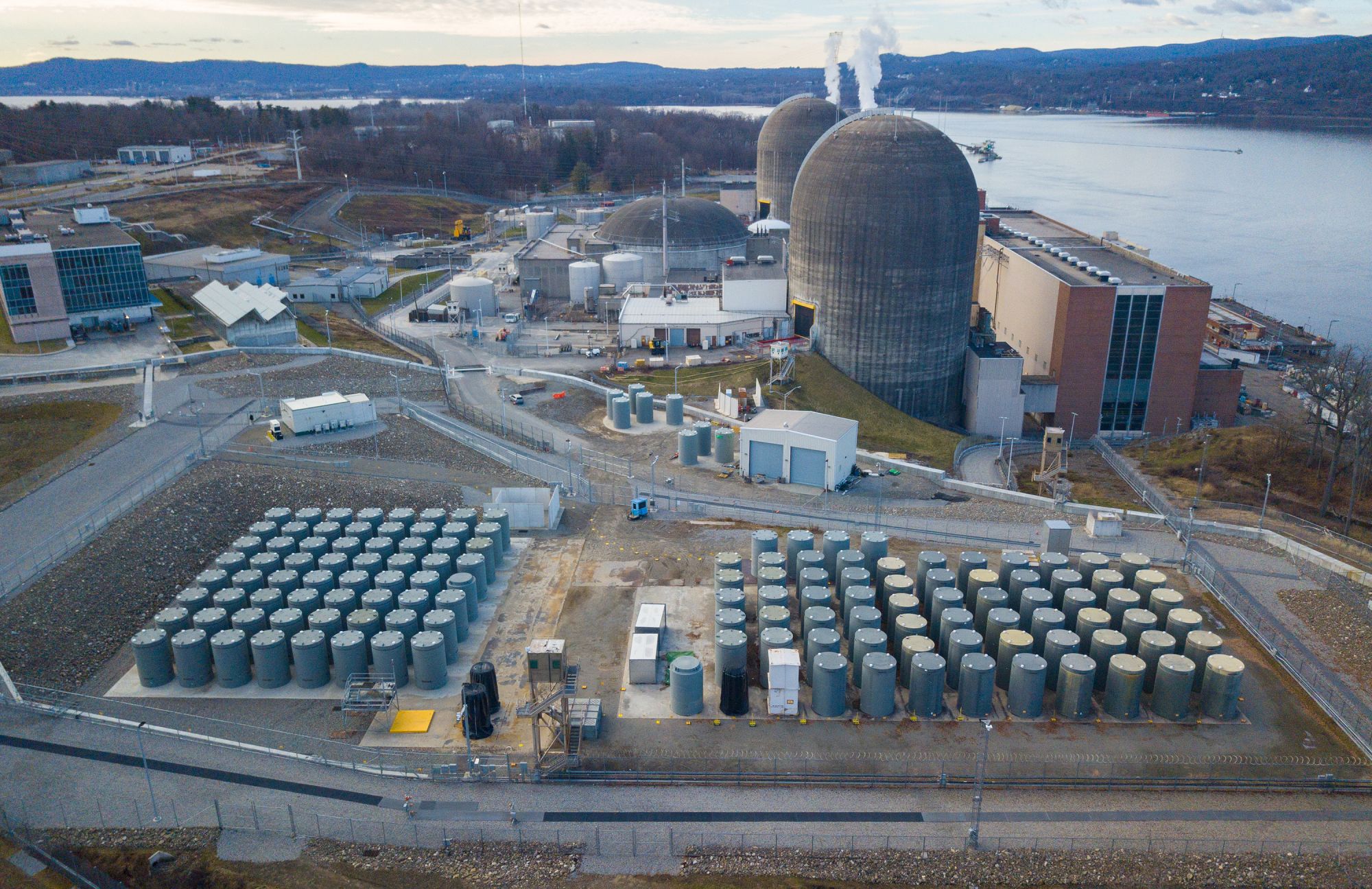
An array of containers storing nuclear waste sit at the decommissioned Indian Point nuclear power plant in Buchanan, New York.

An array of containers storing nuclear waste sit at the decommissioned Indian Point nuclear power plant in Buchanan, New York. Brian Vangor/HoltecBUCHANAN, New YorkCNN — 

The Indian Point nuclear power plant was an energy juggernaut for 50 years, generating a quarter of the electricity that powered New York City’s iconic, glowing skyline.

It is well into its decommissioning process after shutting down in 2021: The remaining waste of the radioactive fuel that once generated all of that power has been sealed inside more than 120 hulking metal and concrete canisters.

Tiếp tục đọc “The US is on the cusp of a nuclear renaissance. One problem: Americans are terrified of the waste”

The Nuclear Revival: How Nuclear Reactors Have Evolved

#CNAInsider We chart the evolution of nuclear power, from the first controlled chain reaction to today’s small, micro modular reactors and the pursuit of fusion. New designs are being tailored to meet the energy needs of remote communities, AI infrastructure, and climate-conscious cities.

The episode highlights how nuclear power is being adapted to local contexts, featuring China’s pebble-bed reactor, Finland’s underground district heating plant, and Indonesia’s floating nuclear concept. It also examines Westinghouse’s portable microreactor and the fusion research underway at ITER in France and KSTAR in South Korea. Engineers, scientists, and policy experts weigh in on how nuclear energy is being reimagined to deliver clean, reliable power in a rapidly changing world.

Indonesia’s Floating Nuclear Power Plant Plan To Power Thousands Of Its Islands

How Small Nuclear Reactors Are Transforming Power Grids In China & Finland

UN atomic chief backs nuclear power at COP28 as world reckons with proliferation

Rafael Mariano Grossi, the director-general of the International Atomic Energy Agency, speaks with The Associated Press at the COP28 U.N. Climate Summit, Thursday, Nov. 30, 2023, in Dubai, United Arab Emirates. (AP Photo/Rafiq Maqbool)

Rafael Mariano Grossi, the director-general of the International Atomic Energy Agency, speaks with The Associated Press at the COP28 U.N. Climate Summit, Thursday, Nov. 30, 2023, in Dubai, United Arab Emirates. (AP Photo/Rafiq Maqbool)

BY JON GAMBRELLUpdated 7:34 AM GMT+7, December 1, 2023 AP

DUBAI, United Arab Emirates (AP) — The world wants more nuclear energy as a means to fight climate change and supply an ever-growing demand for electricity, part of a generational shift in thinking on atomic power, the head of the United Nations nuclear watchdog said Thursday.

Rafael Mariano Grossi, the director-general of the International Atomic Energy Agency, made the comments in an interview with The Associated Press at the COP28 climate talks. He called the inclusion of nuclear power at the summit, where he said a major nuclear agreement was likely, showed just how far the formerly “taboo” subject had come decades after the disasters at Three Mile Island and Chernobyl.

However, he acknowledged the challenge still posed for his agency in monitoring nuclear programs in countries, particularly in Iran after the collapse of its 2015 nuclear deal with world powers.

Tiếp tục đọc “UN atomic chief backs nuclear power at COP28 as world reckons with proliferation”

No decision on use of nuclear energy yet, Singapore to keep options open

CNA.com

Minister for Trade and Industry Gan Kim Yong says Singapore needs to build capabilities to understand advanced nuclear energy technologies.

No decision on use of nuclear energy yet, Singapore to keep options open
A view of a nuclear power plant. (Photo: AFP/Abdul Goni)

SINGAPORE: Singapore has not made any decision to deploy nuclear energy yet but must keep its options open and build expertise in the area, Minister for Trade and Industry Gan Kim Yong said on Monday (Oct 23) during the Singapore International Energy Week. 

Mr Gan said on the first day of the annual event that Singapore was exploring low-carbon energy sources, including hydrogen and nuclear energy. 

The use of nuclear energy was one of three possible scenarios previously set out by Singapore in its Energy 2050 Committee Report released last year. The report identified nuclear energy as a potential power source to achieve net-zero emissions by 2050, with this form of energy potentially able to supply about 10 per cent of the country’s needs. 

Tiếp tục đọc “No decision on use of nuclear energy yet, Singapore to keep options open”

The human cost of France’s nuclear tests in the Pacific

https://www.youtube.com/watch?v=4UFe4tRMZ0Y

Al Jazeera English – 10-8-2023

For 30 years, France undertook nuclear testing in its Pacific territory, French Polynesia.

In recent years, investigations have revealed the effects of the tests were far greater than France has officially acknowledged.

A total of 193 nuclear tests were undertaken, including 41 atmospheric tests that exposed the local population and site workers to high levels of radiation.

Today, children across the Pacific islands are still dealing with the nuclear fallout.

Cancer and other developmental diseases plague new generations born after the last test in 1996.

101 East investigates the costs of France’s nuclear tests in French Polynesia.

Europe’s most powerful nuclear reactor kicks off in Finland

By JARI TANNER

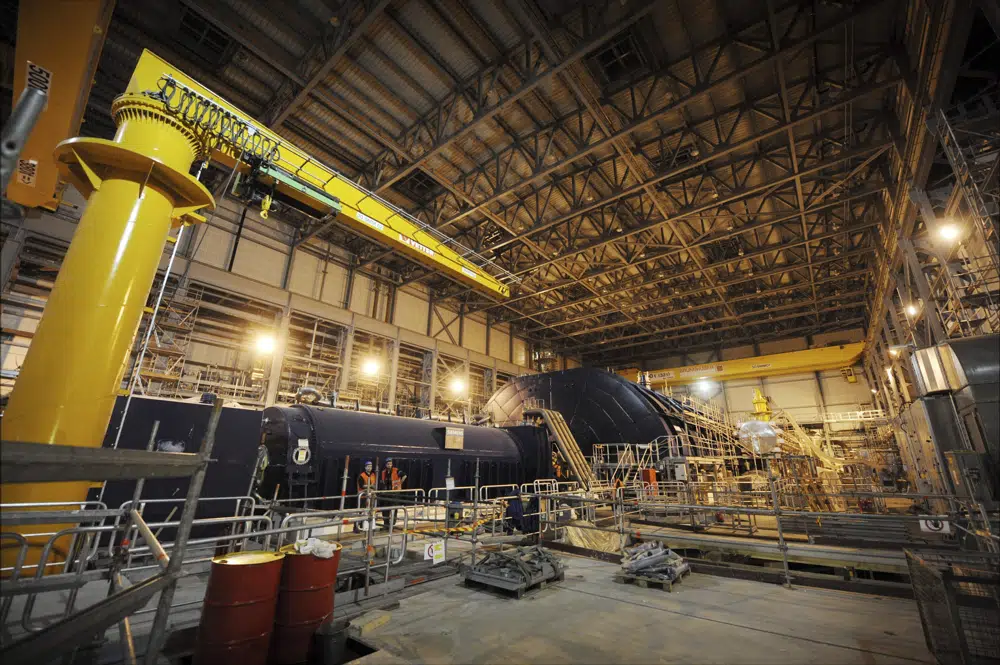
FILE - The turbine hall of the nuclear power plant Olkiluoto 3 'OL3' is pictured under construction in Eurajoki, south-western Finland, March 23, 2011. Finland’s much-delayed and costly new nuclear reactor, Europe's most powerful by production capacity, has completed a test phase lasting over a year and started regular output, boosting the Nordic country’s electricity self-sufficiency significantly. The Olkiluoto 3 reactor, which has 1,600-megawatt capacity, was connected into the Finnish national power grid in March 2022 and kicked off regular production on Sunday, April 16, 2023. (AP Photo/Lehtikuva, Antti Aimo-Koivisto, File)

FILE – The turbine hall of the nuclear power plant Olkiluoto 3 ‘OL3’ is pictured under construction in Eurajoki, south-western Finland, March 23, 2011. Finland’s much-delayed and costly new nuclear reactor, Europe’s most powerful by production capacity, has completed a test phase lasting over a year and started regular output, boosting the Nordic country’s electricity self-sufficiency significantly. The Olkiluoto 3 reactor, which has 1,600-megawatt capacity, was connected into the Finnish national power grid in March 2022 and kicked off regular production on Sunday, April 16, 2023. (AP Photo/Lehtikuva, Antti Aimo-Koivisto, File)

HELSINKI (AP) — Finland’s much-delayed and costly new nuclear reactor, Europe’s most powerful by production capacity, has completed a test phase lasting more than a year and started regular output, boosting the Nordic country’s electricity self-sufficiency significantly.

The Olkiluoto 3 reactor, which has 1,600-megawatt capacity, was connected into the Finnish national power grid in March 2022 and kicked off regular production on Sunday. Operator Teollisuuden Voima, or TVO, tweeted that “Olkiluoto 3 is now ready” after a delay of 14 years from the original plan.

Tiếp tục đọc “Europe’s most powerful nuclear reactor kicks off in Finland”

Nuclear Power in China

world-nuclear.org

(Updated January 2023)

  • The impetus for nuclear power in China is increasingly due to air pollution from coal-fired plants.
  • China’s policy is to have a closed nuclear fuel cycle.
  • China has become largely self-sufficient in reactor design and construction, as well as other aspects of the fuel cycle, but is making full use of western technology while adapting and improving it.
  • Relative to the rest of the world, a major strength is the nuclear supply chain.
  • China’s policy is to ‘go global’ with exporting nuclear technology including heavy components in the supply chain.

Operable Reactors : 53,150 MWe

Reactors Under Construction: 21,867 MWe

Reactors Shutdown: 0 MWe

Electricity sector

Total generation (in 2019): 7541 TWh

Generation mix: 4899 TWh (65%) coal; 1304 TWh (17%) hydro; 406 TWh (5%) wind; 348 TWh (5%) nuclear; 226 TWh (3%) natural gas; 225 TWh (3%) solar; 121 (2%) biofuels & waste.

Import/export balance: 4.4 TWh net export (17.2 TWh imports; 21.7 TWh exports)

Total consumption: 6568 TWh

Per capita consumption: c. 4700 kWh in 2019

Source: International Energy Agency and The World Bank. Data for year 2019

Most of mainland China’s electricity is produced from fossil fuels, predominantly coal – 69% in 2019. Wind and solar capacity in 2019 was 21% of total installed generating capacity, but delivering under 9% of the electricity.

Rapid growth in demand has given rise to power shortages, and the reliance on fossil fuels has led to much air pollution. The economic loss due to pollution is put by the World Bank at almost 6% of GDP,1 and the new leadership from March 2013 prioritized this.* Chronic and widespread smog in the east of the country is attributed to coal burning.

* Official measurements of fine particles in the air measuring less than 2.5 micrometres, which pose the greatest health risk, rose to a record 993 micrograms per cubic metre in Beijing on 12 January 2013, compared with World Health Organization guidelines of no higher than 25.

The International Energy Agency (IEA) notes that since 2012, China has been the country with the largest installed power capacity, and it has increased this by 85% since then to reach 2011 GWe in 2019, about a quarter of global capacity.

In August 2013 the State Council said that China should reduce its carbon emissions by 40-45% by 2020 from 2005 levels, and would aim to boost renewable energy to 15% of its total primary energy consumption by 2020. In 2012 China was the world’s largest source of carbon emissions – 2626 MtC (9.64 Gt CO2), and its increment that year comprised about 70% of the world total increase. In March 2014 the Premier said that the government was declaring “war on pollution” and would accelerate closing coal-fired power stations.

Tiếp tục đọc “Nuclear Power in China”

Đầu tư cho KH&CN hạt nhân thế nào cho hiệu quả?

TS – Thanh Nhàn

Nếu đơn thuần chỉ nhìn vào lợi ích kinh tế, rất nhiều người không thấy được giá trị mà cơ sở hạ tầng khoa học và các thiết bị nghiên cứu lớn như lò phản ứng nghiên cứu có thể đem lại cho một ngành, nhiều ngành, thậm chí cho cả xã hội.

Đoàn công tác VINATOM làm việc với TS. Khaled Toukan, Chủ tịch Ủy ban Năng lượng nguyên tử Jordan và các cán bộ của Ủy ban.

Jordan tháng mười một, khoảng thời gian đẹp nhất, dễ chịu nhất trong năm của quốc gia có khí hậu theo kiểu Địa Trung Hải: mát mẻ, nhiều mưa vào mùa đông và nóng khô mùa hè. Mặc dù thuộc về khu vực Trung Đông, kho dầu mỏ hàng đầu thế giới, nhưng vùng đất này không có nhiều tài nguyên thiên nhiên, và đặc biệt không có dầu mỏ. Có lẽ, đây là một phần lý do giải thích vì sao giữa các quốc gia Trung Đông giàu có nhờ khai thác vàng đen như UAE, Qatar, Kuwait… thì Jordan lại có vẻ kém tiếng, thậm chí lép vế. Tuy nhiên đó đã là quá khứ bởi từ năm, sáu năm trở lại đây, Jordan đã nổi lên như một hiện tượng. “Jordan hầu như đã đạt tới tầm quốc tế trong lĩnh vực năng lượng nguyên tử, họ đang dần dần phát triển theo hướng đó bởi có trong tay những cơ sở hạ tầng mơ ước nhất về năng lượng nguyên tử và vật lý hạt nhân là lò phản ứng nghiên cứu đa mục tiêu và trung tâm máy gia tốc Synchrotron. Và hơn nữa, họ có những con người có năng lực và tầm nhìn”, TS. Trần Chí Thành, Viện trưởng Viện Năng lượng nguyên tử Việt Nam (VINATOM), nhận xét như vậy ngay khi còn chưa rời Jordan.

Tiếp tục đọc “Đầu tư cho KH&CN hạt nhân thế nào cho hiệu quả?”

How small modular reactors may fuel nuclear power’s comeback

Al Jazeera English – 1 thg 11, 2022

Nuclear power gained a bad reputation following the disasters at Chernobyl, Fukushima and Three Mile Island.

Now, with global energy disruptions caused by Russia’s war in Ukraine and sky-high fuel prices means aging nuclear plants are getting a new lease on life.

And there is new type of nuclear plant is on the horizon- one that could revolutionize the industry.

They are called Small Modular Reactors, or SMRs for short.

Al Jazeera’s Rob Renolds reports from San Luis Obispo California.

7 reasons why nuclear energy is not the answer to solve climate change

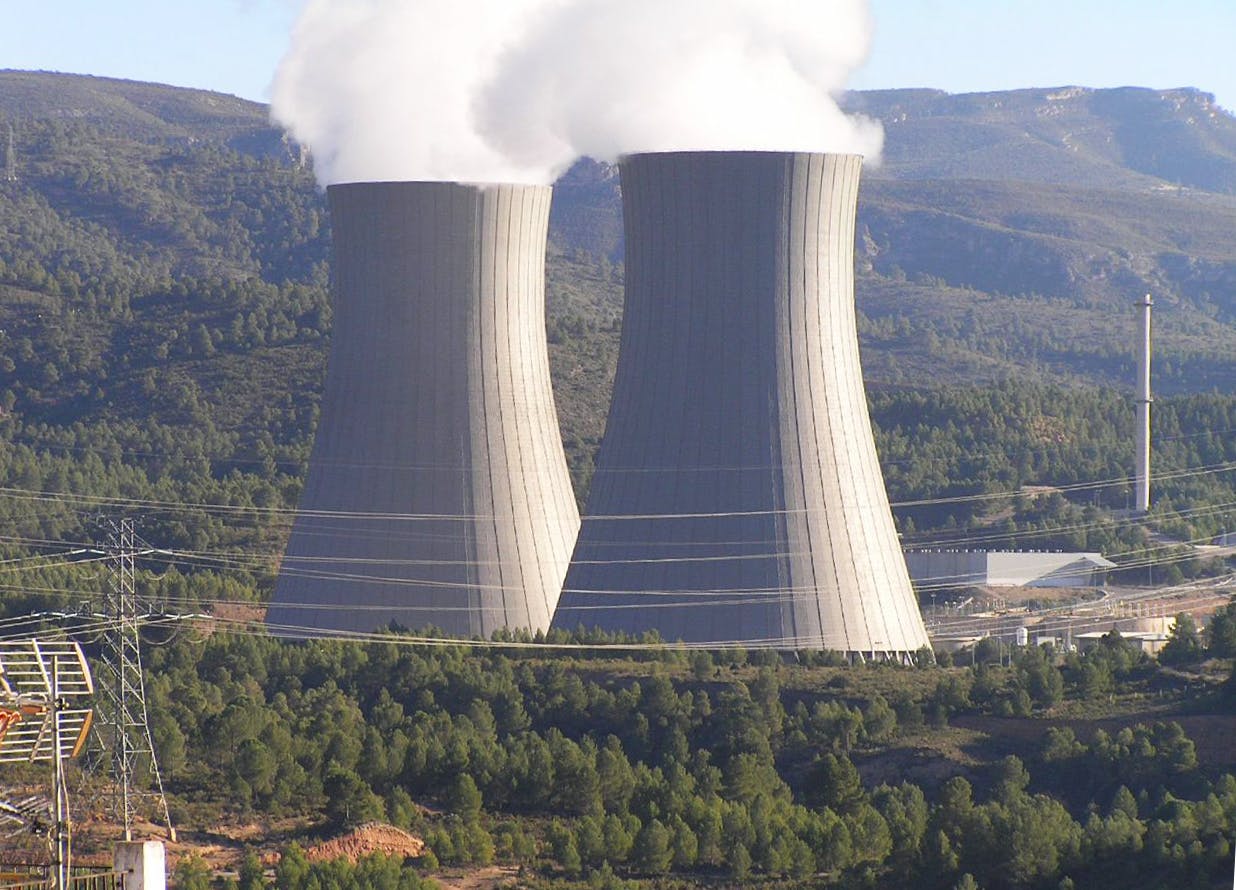
Cofrentes Nuclear Power Plant located about 2 kilometers southeast of Cofrentes, Spain
Mark Z. Jacobson

Mark Z. Jacobson

Professor of Civil and Environmental Engineering, Director, Atmosphere/Energy Program, Stanford University   

oneearth – There is a small group of scientists that have proposed replacing 100% of the world’s fossil fuel power plants with nuclear reactors as a way to solve climate change. Many others propose nuclear grow to satisfy up to 20 percent of all our energy (not just electricity) needs. They advocate that nuclear is a “clean” carbon-free source of power, but they don’t look at the human impacts of these scenarios. Let’s do the math…

Tiếp tục đọc “7 reasons why nuclear energy is not the answer to solve climate change”

Điện hạt nhân, liệu có hồi sinh?

Nguyễn Vũ18/07/2022 09:14 GMT+7

TTCTVới giá thành ngày càng cao, sự thiếu hụt tay nghề chuyên môn chưa khắc phục được, điện hạt nhân khó lòng một sớm một chiều hồi sinh như mong muốn.

Điện hạt nhân, liệu có hồi sinh? - Ảnh 1.

Nhà máy hạt nhân V.C. Summer ở South Carolia, nơi kế hoạch xây lò phản ứng hạt nhân để thay thế nhà máy điện chạy than năm 2008 đã thất bại. Ảnh chụp tháng 9-2016 của AP

Sau nhiều năm dài bị đóng băng, các nước phương Tây đang khởi động lại nhiều dự án điện hạt nhân trong bối cảnh nhiên liệu hóa thạch đắt đỏ, gây ô nhiễm, là thủ phạm làm trầm trọng hơn tình trạng biến đổi khí hậu toàn cầu. Tuy nhiên, các dự án này đang gặp nhiều trở ngại, trong số đó việc thiếu nhân lực có chuyên môn là trở ngại có nhiều tiền bạc cũng không giải quyết được.

Điện hạt nhân từng được xem là giải pháp lý tưởng của loài người nhằm chấm dứt sự phụ thuộc vào dầu mỏ; hàng loạt nhà máy điện hạt nhân được xây dựng từ thập niên 1950 đến 1970 ở Mỹ và châu Âu. Nguồn nguyên liệu cho các nhà máy này là uranium được làm giàu ở mức độ thấp, nhằm tạo ra phản ứng dây chuyền có kiểm soát và sản sinh ra nhiệt. Nhiệt được dùng để đun nóng nước biến thành hơi nước chạy các turbine khí để phát điện. Mấu chốt của công nghệ là làm sao kiểm soát được phản ứng dây chuyền không để lò hạt nhân quá nóng gây sự cố có thể dẫn tới thảm họa.

Tiếp tục đọc “Điện hạt nhân, liệu có hồi sinh?”