The debut of the Chàm Islands Nature Reserve would help improve the protection of natural areas for Quảng Nam and bring more value in eco-tourism, research, education, investment and ‘green’ growth in the future.
A view of Chàm Islands, off the coast of Hội An ancient town. The islands have been developed as a Nature Reserve for better protection and conservation of their rich forest and marine value. VNS Photo Công Thành
CHÀM ISLANDS — The management board of Chàm Islands Marine Protected Area (MPA), 20km off the coast of Hội An City has been building procedures and requirements for the establishment of the Chàm Islands Nature Reserve for extended protection and conservation of natural resources on land and sea.
Khát vọng phát triển huyện Cần Giờ – vùng đất giáp biển, “lá phổi xanh” của TPHCM, đã thôi thúc từ nhiều thập niên qua; và nay với những dự án lớn chuẩn bị đầu tư, đang kỳ vọng sẽ mang lại cơ hội lớn để Cần Giờ cất cánh. Tuy nhiên, cùng với đó là làm sao vẫn bảo vệ được “lá phổi xanh” này.
Saving Pangolins From Poachers In Cat Tien, Vietnam | The Last Defenders | Full Episode
CNA Insider – 15-9-2023
Cat Tien is one of Vietnam’s most biologically diverse and largest national parks. It is home to 40 species of critically endangered wildlife, including the vulnerable pangolin population.
Lam and Julong are anti-poaching officers from Save Vietnam’s Wildlife. Together with the government’s forest rangers, they form a forest protection team to fight against the threats posed by poaching to wildlife. They face the risk of possible violent confrontation with armed poachers and the danger of the unpredictable elements of the forest.
“This is false information used with ill intents with regards to Việt Nam’s efforts to combat and prevent crimes, as well as Việt Nam’s diplomatic activities.”
Spokesperson for the Ministry of Foreign Affairs Phạm Thu Hằng at Thursday’s press conference in Hà Nội. — VNA/VNS Photo Văn Điệp
‘Breakthrough’ funded by G7+ investors misses deadline; Hanoi’s $15.5bn plan delayed
Leaders of ASEAN and G20 nations gather this month with climate change, and how to finance tackling it, looming large after one of the hottest summers on record. Illustration by Hiroko Oshima
SAYUMI TAKE and ERWIDA MAULIA, Nikkei staff writersSEPTEMBER 5, 2023 06:00 JST
TOKYO/JAKARTA — Last November, G20 leaders in Bali hailed what they said was a transformational climate change finance deal to help wean Indonesia off coal. Nine months on, not a single dollar of the $20 billion package has been spent on actively closing down fossil fuel projects.
As the Northern Hemisphere sweats out one of the planet’s hottest-ever summers, and G20 leaders prepare to gather again in India this month, the project that was supposed to provide a breakthrough model in paving the way for the developed world to assist emerging countries to reduce carbon while their economies grow remains mired in meetings on operational details.
[VOV2] – Hội thảo đã gợi mở những trao đổi hiệu quả về vai trò của phụ nữ và cách thức giúp nâng cao bình đẳng giới, phát triển toàn diện trong quản lý rác thải nhựa ở cấp hộ gia đình và cộng đồng.
“Cần thiết phải lồng ghép các vấn đề bình đẳng giới và phát triển toàn diện trong bản kế hoạch hành động chung của Trung ương Hội liên hiệp Phụ nữ Việt Nam, Đại sứ quán Canada, Chương trình Phát triển của Liên hợp quốc tại Việt Nam (UNDP Việt Nam) và các thành viên tích cực khác thuộc mạng lưới Chương trình đối tác hành động Quốc gia về Nhựa (NPAP). Cụ thể sẽ đề xuất tích hợp những giải pháp đơn lẻ thành nền kinh tế tuần hoàn nhựa bền vững và toàn diện, bằng cách tận dụng nguồn lực từ các nhà hoạch định chính sách, chuyên gia, doanh nghiệp và đối tác phát triển”. Đây là nội dung được đưa ra tại Hội thảo về Bình đẳng giới và Phát triển toàn diện trong quản lý chất thải nhựa do Trung ương Hội liên hiệp Phụ nữ Việt Nam hợp tác cùng Đại sứ quán Canada tại Việt Nam và UNDP Việt Nam vừa tổ chức mới đây tại Hà Nội.
Hội thảo về Bình đẳng giới và Phát triển toàn diện trong quản lý chất thải nhựa
Hội thảo nhằm mục đích chia sẻ kết quả “Báo cáo đánh giá hiện trạng về giới (GESI) trong chuỗi giá trị nhựa tại Việt Nam” của Chương trình đối tác hành động Quốc gia về Nhựa (NPAP), cũng như nâng cao nhận thức của đối tác quốc gia và các bên liên quan trong thúc đẩy bình đẳng giới và phát triển toàn diện thuộc lĩnh vực quản lý chất thải nhựa.
Hội thảo đã gợi mở những trao đổi hiệu quả về vai trò của phụ nữ và cách thức giúp nâng cao bình đẳng giới, phát triển toàn diện trong quản lý rác thải nhựa ở cấp hộ gia đình và cộng đồng.
FILE – The Iron Gate Dam powerhouse and spillway are seen on the lower Klamath River near Hornbrook, Calif., on March 2, 2020. This dam, along with three others on the Klamath River, are scheduled to be removed by the end of 2024. Crews will work to restore the river and surrounding land. (AP Photo/Gillian Flaccus, File)
2 of 4 |
FILE – The Klamath River winds runs along state Highway 96 on June 7, 2021, near Happy Camp, Calif. Work has begun on removing four dams along the Klamath River, the largest dam removal project in history. All the dams are scheduled to come down by the end of 2024. (AP Photo/Nathan Howard, File)
3 of 4 |
FILE – Demian Ebert, the Klamath program manager for PacifiCorp, looks at a tank holding juvenile chinook salmon being raised at the Iron Gate Hatchery at the base of the Iron Gate Dam on March 3, 2020, near Hornbrook, Calif. The Iron Gate Dam is one of four dams along the Klamath River scheduled to be removed by the end of 2024. Once the dams are gone, crews will work to restore the river and surrounding land. (AP Photo/Gillian Flaccus, File)
4 of 4 |
FILE – Jamie Holt, lead fisheries technician for the Yurok Tribe, right, and Gilbert Myers count dead chinook salmon pulled from a trap in the lower Klamath River on June 8, 2021, in Weitchpec, Calif. Work has begun on the largest dam removal project in history along the Klamath River. Four dams will be removed by the end of 2024. (AP Photo/Nathan Howard, File)
BY ADAM BEAMUpdated 11:05 AM GMT+7, July 31, 2023Share
Climate change has threatened to erase major cities in Vietnam, including its biggest metropolis, Ho Chi Minh City. A historic downpour which sank many parts of the city late last year was seen as a mere tip of the iceberg. It’s predicted that by 2050, the city will go underwater if no concrete measures are taken to prevent the phenomenon of rising sea levels, land subsidence, weak soil foundation due to groundwater extraction, rapid developments and population growth. What has been done to respond to the gradual sinking of the city? Can it survive a looming threat to its existence?
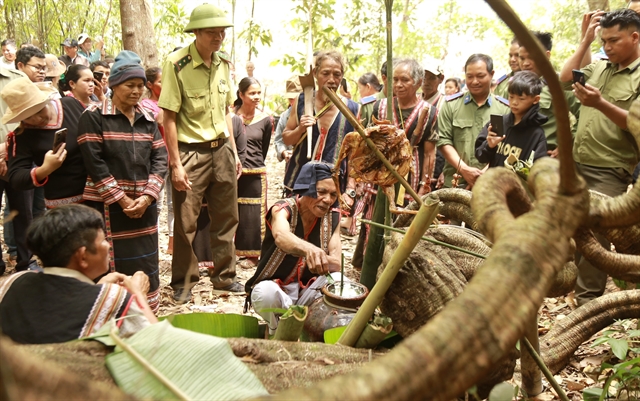
Forest worship practices have existed in the consciousness and life of ethnic minorities for a long time, featured in local ceremonies and festivals based on concepts of the universe and animism and represented by sacred forest gods.
RITUAL: Under shaggy vines, Sui Dơih (centre) – the celebrant – prepares offerings including a roasted pig, grilled meat, wine, chicken liver and a piece of raw pork.
For ethnic minorities in the Tây Nguyên (Central Highlands) and mountainous regions across the country, the forest does not simply refer to materials and resources, but also a broad spiritual culture.
Forest worship practices have existed in the consciousness and life of ethnic minorities for a long time, featured in local ceremonies and festivals based on concepts of the universe and animism and represented by sacred forest gods.
Among them is the religious practice of cúng rừng (forest god worship) of the Jrai community in the Central Highlands province of Gia Lai. The event is a major tradition showing attachment to Mother Nature. Tiếp tục đọc “Traditional forest ritual protects Mother Nature”→
Có lẽ biển khơi giàu tôm cá rồi sẽ chỉ còn là quá khứ, khi san hô, mái nhà sinh sôi trú ngụ của các loài sinh vật biển, đang lâm vào thế giằng co giữa sức ép phát triển kinh tế trong ngắn hạn và bảo vệ môi trường, mà phần thắng thế không thuộc về môi trường.
Rạn san hô Hòn Chồng, Nha Trang. Ảnh: Tkachenko
Ngay sát không gian ồn ào, đông đúc khách du lịch của bờ biển Nha Trang – một trong 29 vịnh đẹp nhất hành tinh, chỉ còn sót lại rạn san hô Hòn Chồng đẹp đẽ hiếm hoi. Nhưng dù là bãi đẻ bãi giống cho tôm cá ngoài biển giờ đây thi thoảng mới bắt gặp một vài con cá bé tẹo lẩn trốn thật nhanh giữa những nhánh san hô, không hề có đàn cá lội đông đúc như những tờ rơi quảng bá rạn san hô Nha Trang. Vừa chỉ cho tôi một số cụm san hô bị tẩy trắng, bị bệnh, giáo sư Konstantin Tkachenko, nhà khoa học ở Đại học Samara, Nga, có 30 năm nghiên cứu san hô nhìn vào nhiệt kế thở dài “30oC là ngưỡng nhiệt độ cuối cùng san hô có thể chịu đựng. Nếu mức nhiệt của nước lên tới 31-32oC liên tục quá bốn tuần thì san hô sẽ bị tẩy trắng không thể phục hồi”. Có nhiều nguy cơ bủa vây quanh những rạn san hô đẹp đẽ này trong khi bản thân chúng lại quá nhạy cảm trước tác động của biến đổi khí hậu, của môi trường và dĩ nhiên là con người…
Tuyến sông Cổ Cò đoạn qua Quảng Nam kỳ thực chỉ dài chưa đầy 20km, thế nhưng hành trình để dòng sông phục sinh sau bao năm vẫn nghe xa xôi như vạn dặm…
Khung cảnh thường thấy với các dự án dở dang bên dòng sông Cổ Cò chưa nạo vét xong. Ảnh: Q.T
Những lời hứa bỏ lại
Loáng một cái đã hết nửa năm 2023, thời gian cũng vùi vào cát những lời cam kết về tiến độ phục sinh dòng sông Cổ Cò.
Trong số những “lời hứa” mà các bên liên quan ký kết thực hiện vào một ngày cuối năm 2021, chỉ có việc bàn giao mặt bằng toàn bộ cầu Ông Điền là về đích vượt thời hạn. Phần còn lại, đã 6 tháng hoặc hơn một năm trôi qua nhiều “lời hứa” vẫn ngủ quên theo con nước của dòng sông này.
Thực ra, những động thái cố gắng lay thức nhịp thở của Cổ Cò vẫn luôn thường trực nhưng con đường thông dòng của sông cũng dùng dằng tựa như số phận thăng trầm trăm năm của Cổ Cò.
1,3 tỷ đồng là số tiền mà người dân làng Hưng Giáo, xã Tam Hưng (huyện Thanh Oai, Hà Nội) đã ủng hộ để biến ao nước tù, chứa nhiều loại rác thải trong làng thành bể bơi miễn phí rộng 1.100 m2.
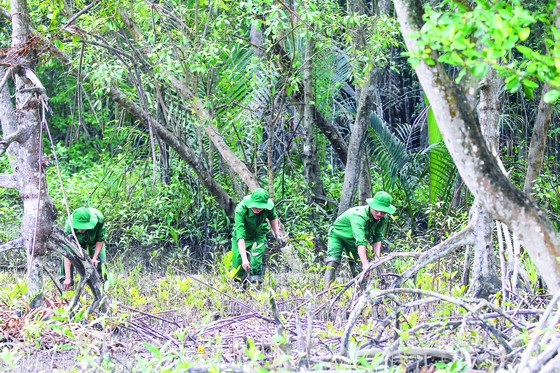
Cần Giờ, a coastal district of Ho Chi Minh City, is home to a 75,740-hectare (187,158-acre) mangrove forest, planted and maintained as part of post-war reforestation efforts.
The district’s residents largely depend on aquaculture, shellfish gathering and small-scale ecotourism for their livelihoods.
The government and developers hope to market the area as an ecotourism city based on its natural beauty and post-war success story, but major projects could disrupt Cần Giờ’s precarious balance between ecosystems and livelihoods.
All names of sources in Cần Giờ have been changed so people could speak freely without fearing repercussions from authorities.
Nationally Determined Contributions, or NDCs, are countries’ self-defined national climate pledges under the Paris Agreement, detailing what they will do to help meet the global goal to pursue 1.5°C, adapt to climate impacts and ensure sufficient finance to support these efforts.
NDCs represent short- to medium-term plans and are required to be updated every five years with increasingly higher ambition, based on each country’s capabilities and capacities.
Concrete progress is already being made towards achievement of the Paris Agreement, particularly in developing countries. For example, pledges from African countries are more robust than the global average in terms of explaining how targets will be achieved.
NDCs represent politically backed commitments by countries. If used right, they could be our way out of tackling the world’s current crises – not just the climate crisis, but other systemic problems like biodiversity loss and energy security as well.
What are Nationally Determined Contributions and where do they come from?
The legally binding international treaty, which was adopted in 2015 by all 196 Parties to the UN Climate Convention in Paris, established universal global goals endorsed by all countries. Primarily, this includes ensuring global average temperature rise is held well below 2°C above pre-industrial levels and pursuing efforts to limit the increase to 1.5°C. It also includes an aim to increase the ability to adapt to climate impacts, and make finance flows consistent with country needs to achieve these goals.








 CVD
CVD 