Cambodia’s mega canal has Vietnam worried: What does it mean for the Mekong?

CNAInsider – 31-10-2025

This April, China and Cambodia finalised a deal to build the Funan Techno Canal. It is a 180km waterway which will connect the Mekong River to the Gulf of Thailand. The USD 1.8 billion infrastructure project will be undertaken jointly by the Cambodian government and Chinese investors. The project has an ambitious completion date of 2028.

Cambodia argues that the canal will finally allow the country to control its own destiny. Currently, about a third of Cambodia’s global cargo are relying on Vietnamese ports for export, via the Mekong. The canal will allow the shipments to be exported through Cambodia’s own ports, reducing its reliance on its neighbour. The Kingdom sees the canal as a source of economic independence and growth, as well as a way to boost its transport links.

But Vietnam is concerned that the canal will divert water flows from the Mekong. Indochina’s most important river is already under threat by upstream dams and climate change. A massive new canal could well starve Vietnamese farmlands of much needed water. Cambodia on the other hand, insists that the canal will have minimal impact. As construction of the canal gets underway, what will be the long-term impact of this monumental project? Tiếp tục đọc “Cambodia’s mega canal has Vietnam worried: What does it mean for the Mekong?”

Khát nước cạnh những dòng sông

THANH HUYỀN – MẬU TRƯỜNG – 27/03/2024 05:42 GMT+7

TTCT Sau nhiều tháng nắng gắt và không có mưa, nước mặn xâm nhập ngày càng sâu vào Đồng bằng sông Cửu Long. Cà Mau và Bến Tre là hai tỉnh bị ảnh hưởng sớm và nặng nhất cho đến thời điểm này.

Ruộng lúa của ông Nguyễn Văn Cảnh chết khô vì thiếu nước ngọt. Ảnh: THANH HUYỀN Tiếp tục đọc “Khát nước cạnh những dòng sông”

Biden’s Vietnam Deals Should Center on the Mekong

A vital regional river can be a route for U.S. diplomacy.

By Brian Eyler, the director of the Stimson Center’s Southeast Asia Program.

My FP: Follow topics and authors to get straight to what you like. Exclusively for FP subscribers. Subscribe Now | Log In

SEPTEMBER 8, 2023, 4:38 PM

On Sept. 10, Joe Biden pays his first visit to Vietnam as U.S. president, where he is expected to ink a deal to elevate the U.S.-Vietnam relationship from “comprehensive” to “comprehensive strategic”—the highest level of Vietnam’s diplomatic hierarchy. Biden is forgoing this week’s twin summits in Indonesia—the Association of Southeast Asian Nations summit and the East Asia Summit—to show the value Washington places on key bilateral partners, such as Vietnam, in the Indo-Pacific.

Some critics worry that China and Russia, two of Vietnam’s other comprehensive strategic partners, could punish Vietnam for its choice to upgrade relations with the United States. But Vietnam can come out of this complicated diplomatic competition a clear winner by centering the U.S.-Vietnam collaboration on the Mekong—the mighty river that keeps both Vietnam and much of the rest of the world fed.

Tiếp tục đọc “Biden’s Vietnam Deals Should Center on the Mekong”

“The Mekong is Dying”: How China’s River Diplomacy Neglects Locals, Exacerbates Climate Change

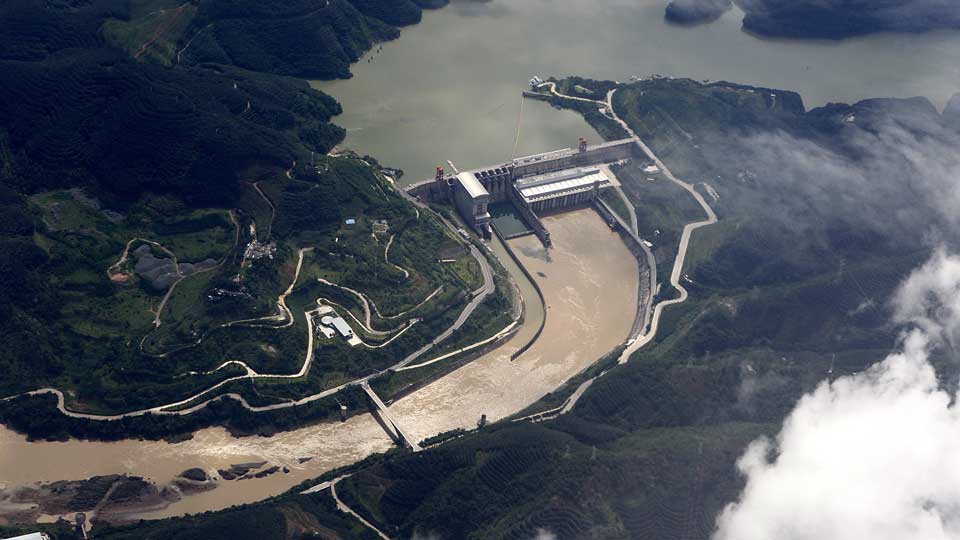
File image of the aerial view of the Jinghong Hydropower Station on the Lancang River, the Chinese part of the Mekong River, in Jinghong city, Xishuangbanna Dai Autonomous Prefecture, southwest China’s Yunnan province. Imaginechina Limited / Alamy Stock Photo

Chinaglobalsouth.com

The rainy season would usually start in May, but this was late June and it was still not raining much. Niwat Roykaew, who grew up on the bank of the Mekong River in Thailand’s northern Chiang Rai province, noticed. 

Born and raised in the Chiang Khong district, Roykaew, 63, was taught to observe the Mekong River to tell the season. But, in the past two decades, the river has become unpredictable like it has “pulsated out of tune”.

Niwat Roykaew is a Thai activist who campaigns for China to share data about water restrictions by its dams upstream.

“The water would get high for two days, then on the third day it would suddenly drop, even during the rainy season,” said Roykaew. 

Local residents like him knew that this delay could mean another year of drought. Since at least 2019, that’s what has happened: the monsoon rain is late, and when it comes, it departs early.

The Mekong River’s water levels in the lower basin, including in Thailand, are now very unstable, being heavily affected both by climate change and hydropower dams upstream that are mostly powered by China, according to local residents, activists, and experts.

Tiếp tục đọc ““The Mekong is Dying”: How China’s River Diplomacy Neglects Locals, Exacerbates Climate Change”

Nam Thủy Bắc Điều – tham vọng chuyển nước nhiều tranh cãi của Trung Quốc

VNE – Thứ ba, 30/8/2022, 19:00 (GMT+7)

Nam Thủy Bắc Điều – tham vọng chuyển nước nhiều tranh cãi của Trung Quốc

Nam Thủy Bắc Điều là đại dự án đưa nước từ các con sông miền nam tới miền bắc khô hạn của Trung Quốc, nhưng gây nhiều tranh cãi về môi trường.

Sơ đồ các tuyến dẫn nước trong dự án Nam Thủy Bắc Điều. Nguồn dữ liệu: Global Times

Hãng thông tấn Xinhua của Trung Quốc cho biết dự án Nam Thủy Bắc Điều, hệ thống vận chuyển nước lớn nhất thế giới, đưa nước từ miền nam lên miền bắc Trung Quốc xuyên qua lòng sông Hoàng Hà, được thử nghiệm thành công ngày 25/8. Đợt thử nghiệm được tiến hành nhằm đánh giá quá trình vận hành toàn bộ 155 đơn vị và đưa toàn bộ đại dự án vào hoạt động.

Tiếp tục đọc “Nam Thủy Bắc Điều – tham vọng chuyển nước nhiều tranh cãi của Trung Quốc”

Mekong farmers struggle as fertilizer prices rise

Farmers harvest rice in Thailand’s northern Nan province. PHOTO: Paritta Wangkiat

mekong eye – By Phafan NokaeoTran Nguyen and Sao Phal Niseiy

26 September 2022 at 8:25

Rising fertilizer costs decimate poor Mekong farmers’ livelihoods despite their vital role in feeding millions.

BANGKOK, THAILAND ― Skyrocketing prices for fertilizers and agricultural production has pushed farmers in the Mekong region into severe debt and poverty.

Many have been forced to abandon their farms or have been unable to pay their debts and have lost their land, despite their roles in ensuring food security for millions of people.   

“This is the worst year for farmers. Everything is more expensive, except rice prices, and they keep dropping,” said Prasert Tangthong, 58, a farmer with a small holding in Sing Buri province in central Thailand.

Tiếp tục đọc “Mekong farmers struggle as fertilizer prices rise”

Opinion: Energy importers must consider true ‘sustainability’ of Laos hydropower

Proponents describe regional power grids as a way to promote economic growth, energy security and renewables in Southeast Asia, but this might come at a heavy cost

Lat Tha Hae temple in Luang Prabang province, Laos, half submerged by the Nam Ou 1 hydropower dam (Image: Ton Ka/China Dialogue)

Ming Li Yong

the third pole – August 23, 2022

On 23 June 2022, the import of 100 megawatts (MW) of hydropower from Laos to Singapore through Thailand and Malaysia was hailed as a historic milestone. Part of a pilot project known as the Lao PDR-Thailand-Malaysia-Singapore Power Integration Project (LTMS-PIP), this event represented Singapore’s first ever import of renewable energy, and also the first instance of cross-border electricity trade involving four countries from the Association of Southeast Asian Nations (ASEAN).

However, this development takes place amid rising concerns for the ecological future of the transboundary Mekong River and the millions of people who depend on it. A 2018 study by the Mekong River Commission concluded that further hydropower development on the river would negatively affect ecosystems, and would reduce soil fertility, rice production, fish yields and food security, while increasing poverty in the river basin.

Tiếp tục đọc “Opinion: Energy importers must consider true ‘sustainability’ of Laos hydropower”

In the Mekong Basin, an ‘unnecessary’ dam poses an outsized threat

  • A dam being built in Laos near the border with Cambodia imperils downstream communities and the Mekong ecosystem as a whole, experts and affected community members say.
  • The Sekong A dam will close off the Sekong River by the end of this year, restricting its water flow, blocking vital sediment from reaching the Mekong Delta in Vietnam, and cutting off migration routes for a range of fish species.
  • Experts say the energy to be generated by the dam — 86 megawatts — doesn’t justify the negative impacts, calling it “an absolutely unnecessary project.”
  • This story was supported by the Pulitzer Center’s Rainforest Investigations Network where Gerald Flynn is a fellow.

Tiếp tục đọc “In the Mekong Basin, an ‘unnecessary’ dam poses an outsized threat”

Vietnam loses sacred cranes after habitat change

In 2020 and 2022, no sarus cranes were spotted in Cham Trim National Park. PHOTO: Nguyen Van Hung

mekongeye – By Tran Nguyen

19 September 2022 at 8:05 (Updated on 22 September 2022 at 17:13)

A vulnerable bird that usually migrated to the wetlands of the Mekong Delta has become a rare visitor to the area

DONG THAP, VIETNAM – Twenty years ago, Nguyen Van Liet took scientists to the wetlands near his hometown of Tram Chim on Vietnam’s Mekong Delta to find sarus cranes, a vulnerable bird species according to the IUCN Red List, native to Southeast Asia, South Asia and Australia.

“We had to go very early so the cranes wouldn’t know it,” Liet said of the expedition, which aimed to study the crane’s movements using a navigation device. “After sedating them, attaching tracking devices to their legs, the crew found shelter to wait for them to wake up and leave safely.”

Memories of those trips will forever be a source of pride for the 58-year-old. His efforts, no matter how humble, have contributed to helping Tram Chim become known worldwide as a place to preserve this rare crane species, which are world’s tallest flying birds.

Tiếp tục đọc “Vietnam loses sacred cranes after habitat change”

Hợp tác cấp vùng về thương mại điện năng

IUCN – 06 Th12, 2022

Trong lúc việc phát triển và mở rộng năng lượng mặt trời và gió sẽ là yếu tố quan trọng giúp Việt Nam giảm tiêu thụ than và đáp ứng yêu cầu trong lộ trình thực hiện các cam kết tại COP26, thì việc tăng cường nhập khẩu điện từ các nước láng giềng là một giải pháp bổ sung. Trong Kế hoạch Phát triển Điện lực 8 của Việt Nam (PDP 8) ban hành tháng 4 năm 2022 đã đưa ra dự đoán lượng điện nhập khẩu sẽ tăng từ 572 MW vào năm 2020 lên khoảng 4.000 MW vào năm 2025.

content hero image

Photo: A solar project invested by Trung Nam Group © Trung Nam Group

Tương lai thì nguồn điện nhập khẩu vào Việt Nam phần lớn sẽ đến từ CHDCND Lào và có thể từ Campuchia. Tuy nhiên, cách thức Việt Nam tham gia thương mại điện năng với các nước láng giềng này sẽ có ảnh hưởng trực tiếp đến việc phát triển các dự án phát điện ở các quốc gia này. Phần lớn nguồn điện năng mà Việt Nam nhập khẩu từ CHDCND Lào đến từ các đập thủy điện và các đập này có thể có tác động tiêu cực đáng kể cho Việt Nam.

Tiếp tục đọc “Hợp tác cấp vùng về thương mại điện năng”

Những chuyến ly hương của người già Đồng bằng Sông Cửu Long

Tiasang – Võ Kiều Bảo Uyên, Nhung Nguyễn

Những biến đổi về môi trường, khí hậu đã đẩy người lớn tuổi ở Đồng bằng Sông Cửu Long (ĐBSCL) phải rời quê tìm đường mưu sinh.  

Bà Nguyễn Thị Áp (63 tuổi) tại chỗ ngủ của mình – một tầng hầm để xe ở chung cư nơi bà làm nhân viên vệ sinh. Ảnh: Thành Nguyễn

Chuyến rời quê đầu tiên trong đời bà Nguyễn Thị Áp* là khi bà đã bước qua tuổi 63. Sáng sớm một ngày tháng Bảy, người phụ nữ tóc bạc trắng xách giỏ quần áo, một mình ra lộ bắt xe đi khỏi quê nhà Chợ Mới, An Giang, tỉnh thượng nguồn ĐBSCL đến Thành phố Hồ Chí Minh (TP.HCM). Không chỉ mưu sinh, với bà, đó còn là một cuộc chạy trốn.

Khoản nợ hơn 100 triệu đồng tích tụ “từ ngày còn mần lúa”, lãi chồng lãi, cùng bệnh tim của người chồng đã đẩy bà Áp – gần như cả đời chỉ quen ruộng vườn – đến đô thị xa lạ tìm kiếm việc làm. Đích đến ban đầu trong kế hoạch của bà là Bình Dương, khu công nghiệp lớn nhất nước, nhưng những hàng xóm đi trước rỉ tai rằng nơi ấy chỉ có việc cho người trẻ. Cuối cùng, theo lời họ hàng chỉ, bà đặt cược vào TPHCM, nơi sẵn công việc làm thuê qua ngày.

“Ruộng đã bán. Con cái có gia đình riêng, và cũng khổ. Dì ở lại [quê] hết đời cũng không thể trả hết nợ”, bà Áp nói, không quên dặn người phỏng vấn giấu danh tính vì sợ chủ nợ nhận ra.

Tiếp tục đọc “Những chuyến ly hương của người già Đồng bằng Sông Cửu Long”

Nước và người đồng bằng sông Cửu Long: 25 câu chuyện từ những con số


DV – Thiên nhiên ưu đãi cho đồng bằng sông Cửu Long (ĐBSCL) đất đai màu mỡ, nước ngọt dồi dào, là những thế mạnh để phát triển nông nghiệp và thủy sản. Nơi đây trở thành khu vực có ý nghĩa quan trọng đối với an ninh lương thực và an ninh kinh tế của nước ta. Nhưng trong những năm vừa qua, do nhiều yếu tố gây ảnh hưởng đến môi trường sống, người dân vùng ĐBSCL phải thay đổi tập quán canh tác lúa và hoa màu, đánh bắt và nuôi trồng thủy sản, thậm chí chuyển đổi nghề nghiệp và nơi ở.

Trong bài báo sau đây, chúng tôi phân tích dữ liệu về nông nghiệp, thủy điện, xâm nhập mặn, lượng mưa, thu nhập, tỷ lệ việc làm và tỷ lệ người di cư ở ĐBSCL trong hơn 20 năm qua, nhằm mang lại bức tranh toàn cảnh về những thay đổi trong điều kiện canh tác nông, ngư nghiệp ở vùng ĐBSCL, giải thích vì sao có sự sụt giảm trong diện tích trồng lúa và sản lượng thủy sản, và phải làm gì để thích ứng với sự thay đổi này, mang lại cuộc sống ổn định cho người dân.

Tiếp tục đọc “Nước và người đồng bằng sông Cửu Long: 25 câu chuyện từ những con số”

Elderly fleeing Mekong Delta as climate change hits

mekongeye – By Nhung Nguyen

28 November 2022 at 7:00 (Updated on 28 November 2022 at 15:02)

Vietnamese farmers flee the Delta for city jobs as climate change, droughts and creeping saltwater take a toll.

mekong delta

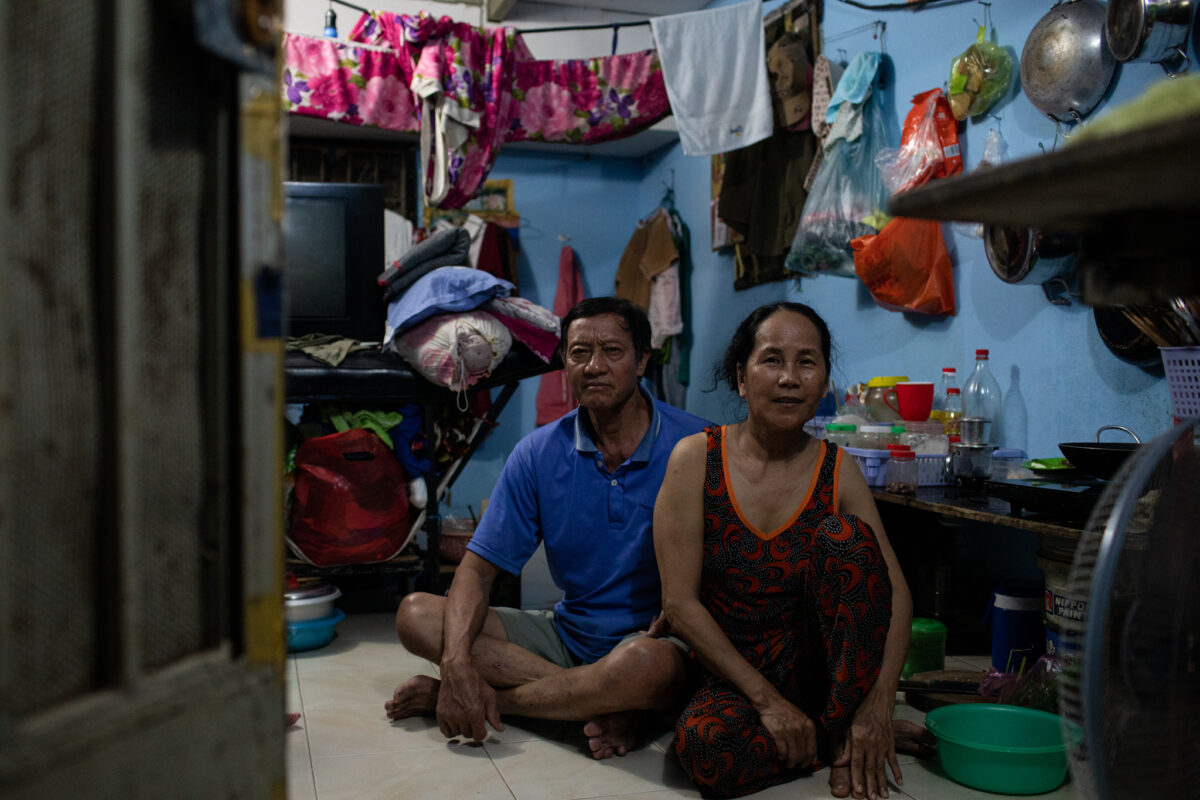
Tu Day, 58, and her husband, 63, in their small rented room in Ho Chi Minh City, Vietnam. The couple moved to the city in 2016 after environmental changes left their fish farm in the Mekong Delta unprofitable. PHOTO: Thanh Nguyen

HO CHI MINH CITY, VIETNAM – At 63, Nguyen Thi Ngoc landed her first full-time ‘company’ job as a security guard in Ho Chi Minh City. She had never been to a city before taking the job in early 2021, but the former farmer from the Mekong Delta in southern Vietnam was indifferent to the urban bustle of the country’s largest city.

“I came here to work, make some money, not to play around,” she said, while sitting outside the semi-abandoned housing complex she guarded. “In the past six months, the only place I have visited is the market.”

Tiếp tục đọc “Elderly fleeing Mekong Delta as climate change hits”

In Vietnam’s Mekong Delta, sand mining means lost homes and fortunes

mekongeyeResidents of the Mekong Delta are seeing houses tumble into rivers and livelihoods disappear due to erosion driven by sand mining

Local government workers use sandbags to fill in areas of subsidence along the Hau River in Chau Phu district, An Giang province, Vietnam (Image: Dinh Tuyen)

Dinh Tuyen – July 5, 2022

Editor’s note: In light of increasingly volatile seasons, the unquantified effects from hydropower, and continued sand mining, mainland Southeast Asia finds itself combating ever more mercurial sandbanks. For the highly populated Mekong Delta region of Vietnam, homes being washed away has become a regular facet of the wet season. But the effects of overdevelopment on the Mekong are felt across the Mekong basin. In Cambodia, the recent consequences have been stark: in May, Vannak Si and Bun Thoeun Srey Leak, both 12, died when a bank gave way in Kandal province, on the border with Vietnam. As the land beneath river-dwellers’ feet becomes ever more unstable, the sand mining and concrete industry defy solutions, as mainland Southeast Asia continues with breakneck development.

When a riverbank subsided and gave way four years ago, Tran Van Bi’s house collapsed into a river in Vietnam’s Mekong Delta. Everything his family had accumulated over 32 years was gone in an instant.

Tiếp tục đọc “In Vietnam’s Mekong Delta, sand mining means lost homes and fortunes”