Ban hành 15 quy trình nội bộ lĩnh vực biển và hải đảo

moitruong.net Khánh Chi • 12/08/2025 12:00

Bộ Nông nghiệp và Môi trường vừa ban hành quyết định về việc ban hành quy trình nội bộ giải quyết thủ tục hành chính lĩnh vực biển và hải đảo của Bộ.

Thứ trưởng Bộ Nông nghiệp và Môi trường Lê Minh Ngân vừa ký Quyết định 3091/QĐ-BNNMT ban hành quy trình nội bộ giải quyết thủ tục hành chính lĩnh vực biển và hải đảo.

Indonesia đặt mục tiêu giảm 70% lượng rác thải ra biển vào năm 2029

Indonesia đặt mục tiêu giảm 70% lượng rác thải ra biển vào năm 2029

Theo quyết định, có 15 quy trình nội bộ giải quyết thủ tục hành chính thuộc thẩm quyền tiếp nhận và giải quyết trong lĩnh vực biển và hải đảo của Bộ Nông nghiệp và Môi trường.

capture(4).png
Ảnh minh họa

Cụ thể gồm các quy trình: Công nhận khu vực biển; giao khu vực biển; gia hạn quyết định giao khu vực biển; trả lại khu vực biển; sửa đổi, bổ sung quyết định giao khu vực biển; cấp giấy phép nhận chìm ở biển; gia hạn giấy phép nhận chìm ở biển; sửa đổi, bổ sung giấy phép nhận chìm ở biển; trả lại giấy phép nhận chìm; cấp lại giấy phép nhận chìm; cấp phép nghiên cứu khoa học trong vùng biển quản lý hành chính trên biển; sửa đổi, bổ sung quyết định cấp phép nghiên cứu khoa học trong vùng biển quản lý hành chính trên biển; gia hạn quyết định cấp phép nghiên cứu khoa học; cấp lại quyết định cấp phép nghiên cứu khoa học; khai thác và sử dụng cơ sở dữ liệu tài nguyên, môi trường biển và hải đảo thông qua mạng điện tử hoặc thông qua phiếu yêu cầu hoặc văn bản yêu cầu.

Trong đó về quy trình giao khu vực biển gồm 3 bước. Bước 1, tiếp nhận và kiểm tra hồ sơ:bộ phận một cửa tiếp nhận hồ sơ trực tiếp, qua bưu chính, ủy quyền hợp pháp hoặc dịch vụ công trực tuyến; kiểm tra thành phần, số lượng, tính hợp lệ và chuyển Cục Biển và Hải đảo Việt Nam xử lý. Trường hợp hồ sơ thiếu, đơn vị lập phiếu tiếp nhận, thông báo bổ sung hoặc trả lại theo quy định.

Bước 2, xử lý hồ sơ: chuyên viên được phân công kiểm tra, đánh giá tính hợp lệ, lấy ý kiến các bộ, ngành, địa phương; trường hợp cần thiết, tổ chức kiểm tra thực địa hoặc họp thẩm định. Quy trình quy định rõ thời gian xử lý cho từng khâu, bảo đảm đúng tiến độ. Hồ sơ không đạt yêu cầu sẽ được thông báo để bổ sung, hoàn thiện.

Bước 3 trả kết quả, sau khi hoàn tất thẩm định, Bộ Nông nghiệp và Môi trường ban hành văn bản giao hoặc công nhận khu vực biển, đồng thời công khai kết quả theo quy định. Hồ sơ được bàn giao về Trung tâm Thông tin, dữ liệu biển và hải đảo quốc gia lưu trữ, khai thác.

Quy trình cũng nêu rõ nguyên tắc thực hiện, trách nhiệm của từng đơn vị, yêu cầu phối hợp chặt chẽ giữa các bộ phận liên quan nhằm nâng cao hiệu quả cải cách thủ tục hành chính, phục vụ tốt người dân và doanh nghiệp
United State’s 2025 Marine Mammal Protection Act Comparability Finding Determinations for Harvesting Nations

*Vietnam is on List 2: Nations denied comparability findings for some fisheries

NOAA.GOV

NOAA Fisheries announced its Marine Mammal Protection Act comparability determinations in the Federal Register, covering about 2,500 fisheries across 135 nations. Of these, 240 fisheries from 46 nations were denied comparability findings, restricting their ability to export to the United States.

In August 2025, NOAA Fisheries announced its 2025 Marine Mammal Protection Act comparability finding determinations in the Federal Register. These determinations cover approximately 2,500 fisheries in 135 nations seeking to export fish and fish products to the United States. Comparability finding determinations are made for each nation on a fishery-by-fishery basis. A total of 240 fisheries from 46 nations were denied comparability findings. 

NOAA Fisheries conducted a detailed analysis of each comparability finding application submitted by harvesting nations. Details regarding each nation’s comparability finding determination are categorized in the lists below. Each harvesting nation’s Comparability Finding Application Final Report can be accessed by clicking on the nation under Lists 1, 2, and 3 below. Additional documents detailing NOAA Fisheries’ evaluation process, the fisheries denied and granted comparability findings for each nation, and the trade information associated with fishery denials (including Harmonized Tariff Codes) can be found at the bottom of this page.

Nations whose fisheries were denied comparability findings are prohibited from importing fish and fish product from those fisheries into the United States beginning January 1, 2026, and may reapply for a comparability finding for the affected fisheries at any time after January 1, 2026. More information on seafood import restrictions and how they will be implemented under this program, is available here.

‘Plenty of fish in the sea’? Not anymore

UN.org

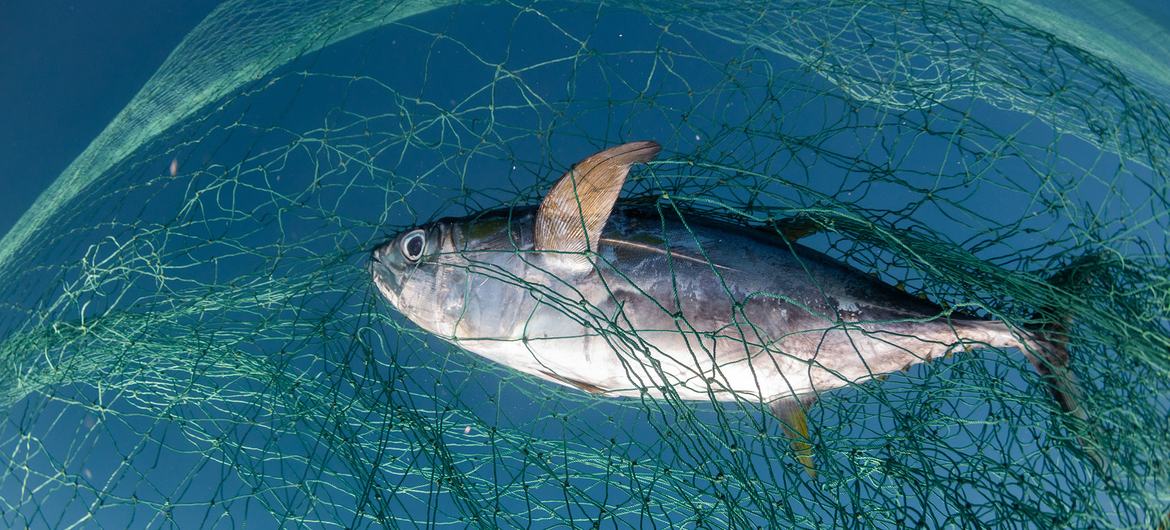
A report launched at the Third UN Ocean Conference, in Nice, shows that 35 per cent of the global fish stocks are being harvested unsustainably.

© The Ocean Story/Vincent Kneefel

A report launched at the Third UN Ocean Conference, in Nice, shows that 35 per cent of the global fish stocks are being harvested unsustainably.

By Fabrice Robinet, reporting from Nice  Climate and Environment

At the Third UN Ocean Conference in Nice, the “catch of the day” wasn’t a seabass or a red mullet – it was a figure: 35 per cent. That’s the share of global fish stocks now being harvested unsustainably, according to a new UN report released Wednesday.

https://x.com/UN_News_Centre/status/1932800237715783856?ref_src=twsrc%5Etfw%7Ctwcamp%5Etweetembed%7Ctwterm%5E1932800237715783856%7Ctwgr%5Ed912305c5ff556ade0e29bacd77858c0403f520d%7Ctwcon%5Es1_&ref_url=https%3A%2F%2Fnews.un.org%2Fen%2Fstory%2F2025%2F06%2F1164251

As yachts bobbed gently and delegates streamed by in a rising tide of lanyards and iPads at Port Lympia, Nice’s historic harbor, that statistic sent a ripple through the conference’s third day – a stark reminder that the world’s oceans are under growing pressure from overfishing, climate change and unsustainable management.

Tiếp tục đọc “‘Plenty of fish in the sea’? Not anymore”

Vietnam becomes one of first nations to sign High Sea Treaty

vnexpress.net By VNA   September 21, 2023 | 12:03 pm GMT+7

Vietnam becomes one of first nations to sign High Sea Treaty

Minister of Foreign Affairs Bui Thanh Son signs the High Sea Treaty, a United Nations agreement on the conservation and sustainable use of marine biological diversity of areas beyond national jurisdiction. Photo by Thu HongVietnam on Wednesday signed the United Nations agreement on the conservation and sustainable use of marine biological diversity of areas beyond national jurisdiction, the High Sea Treaty.

The signing by Minister of Foreign Affairs Bui Thanh Son made Vietnam one of the first countries to sign the international-legally binding instrument under the 1982 United Nations Convention on the Law of the Sea (UNCLOS). It conveyed the message that Vietnam is a positive and responsible member of the international community as well as the country’s efforts to join hands with countries to deal with global issues, contributing to peace, prosperity and sustainable development.

More than 60 countries are scheduled to sign the agreement during the underway high-level week of the 78th UN General Assembly.

Tiếp tục đọc “Vietnam becomes one of first nations to sign High Sea Treaty”

Fishing the Line: Capturing Resources that Swim Across Boundaries

resourcewatch

By Emily Cassidy, Amelia Snyder, and Kristine Lister from Resource Watch, and David Kroodsma, Global Fishing Watch

More than one billion people depend on fisheries and aquaculture as a primary source of protein. In many low-income countries, they also rely on fishing for income. While countries mostly fish within their own jurisdictions, according to data gathered by Global Fishing Watch, a handful of nations, mostly wealthy ones, fish extensively in the high seas, the international waters beyond 200 nautical miles of coastlines. These fleets often cluster right at the boundaries of some countries’ jurisdictions, harvesting fish that cross into international waters. This activity, known as “fishing the line,” is especially common along the boundaries of some poorer nations’ waters, and it may represent a transfer of resources from developing countries to wealthier ones. Tiếp tục đọc “Fishing the Line: Capturing Resources that Swim Across Boundaries”

Sustainable Fishing in Vietnam

WWF– Tram Chim National Park is one of the most important remaining expanses of wetlands in Vietnam. While most fishing in the park is forbidden, some locals exercise traditional rights to fish for food and a living. WWF works in Tram Chim to restore natural water flows, fisheries and wildlife.

https://www.youtube.com/watch?t=144&v=8Zj54YdlMls