Coral reefs in Vietnam face collapse. Can conservation efforts turn the tide?

APnews.com

Jonathan Hanitzsch rests after collecting trash off the coast of Hon Mot Island on Feb. 7, 2025, in Nha Trang, Vietnam. (AP Photo/Yannick Peterhans)

By  YANNICK PETERHANS and ANIRUDDHA GHOSALUpdated 9:02 AM GMT+7, March 5, 2025Share

NHA TRANG, Vietnam (AP) — The gentle waves off the coast of central Vietnam’s Nha Trang obscure an open secret: The life-giving coral reefs below are dying. The waters are eerily devoid of fish. The bounty of the ocean is coming to an end.

This is why Binh Van — who fished in these waters for over two decades — now charters his boat to Vietnamese tourists wanting to experience the thrill of fishing in the deep waters of the South China Sea. But there is only squid, which is flourishing in oceans warmed by climate change, to catch. His passengers don’t mind as the boat moves away from Nha Trang’s twinkling beach resorts. But Van is pensive.

Nguyen Tuan Hai drives Rainbow Diver's boat to Madonna Rock, Feb. 7, 2025, in Nha Trang, Vietnam. (AP Photo/Yannick Peterhans)
Nguyen Tuan Hai drives Rainbow Diver’s boat to Madonna Rock, Feb. 7, 2025, in Nha Trang, Vietnam. (AP Photo/Yannick Peterhans)

It wasn’t always like this. There was a time when he’d catch 70 kilograms (154 pounds) of fish, like tuna and grouper, in one night. He can’t make money on the squid.

“Now I usually go home empty-handed,” he said.

Tiếp tục đọc “Coral reefs in Vietnam face collapse. Can conservation efforts turn the tide?”
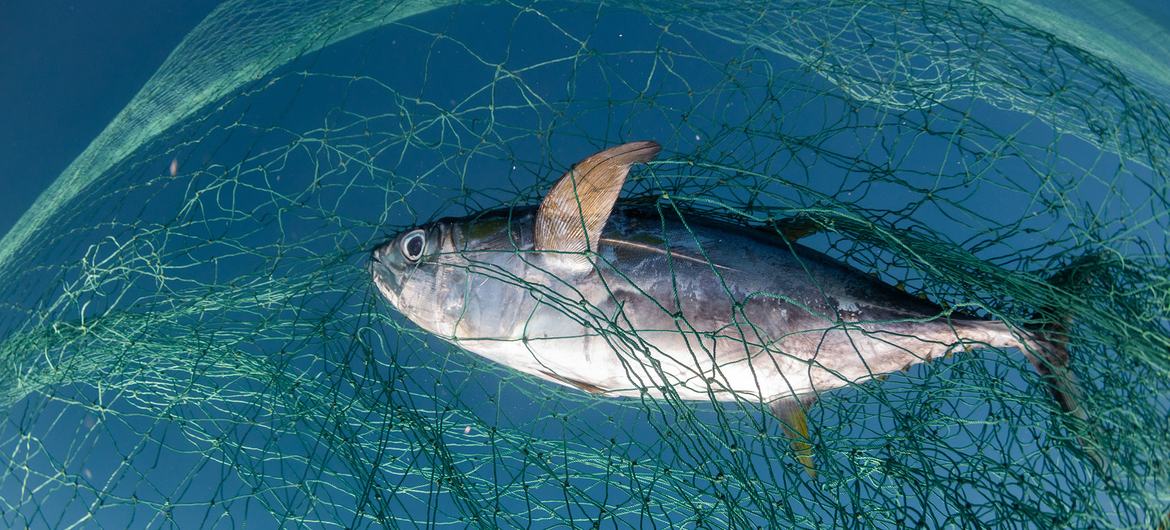
‘Plenty of fish in the sea’? Not anymore

UN.org

A report launched at the Third UN Ocean Conference, in Nice, shows that 35 per cent of the global fish stocks are being harvested unsustainably.

© The Ocean Story/Vincent Kneefel

A report launched at the Third UN Ocean Conference, in Nice, shows that 35 per cent of the global fish stocks are being harvested unsustainably.

By Fabrice Robinet, reporting from Nice  Climate and Environment

At the Third UN Ocean Conference in Nice, the “catch of the day” wasn’t a seabass or a red mullet – it was a figure: 35 per cent. That’s the share of global fish stocks now being harvested unsustainably, according to a new UN report released Wednesday.

https://x.com/UN_News_Centre/status/1932800237715783856?ref_src=twsrc%5Etfw%7Ctwcamp%5Etweetembed%7Ctwterm%5E1932800237715783856%7Ctwgr%5Ed912305c5ff556ade0e29bacd77858c0403f520d%7Ctwcon%5Es1_&ref_url=https%3A%2F%2Fnews.un.org%2Fen%2Fstory%2F2025%2F06%2F1164251

As yachts bobbed gently and delegates streamed by in a rising tide of lanyards and iPads at Port Lympia, Nice’s historic harbor, that statistic sent a ripple through the conference’s third day – a stark reminder that the world’s oceans are under growing pressure from overfishing, climate change and unsustainable management.

Tiếp tục đọc “‘Plenty of fish in the sea’? Not anymore”

‘Madness’: World leaders call for deep-sea mining moratorium at UN ocean summit

Mongabay.com Elizabeth Claire Alberts 11 Jun 2025 France

  • World leaders have renewed calls for a global moratorium on deep-sea mining at the 2025 U.N. Ocean Conference (UNOC) in Nice, France, as the U.S. moves to mine the deep sea in international waters under its own controversial authority.
  • Four additional countries have joined the coalition of nations calling for a moratorium, precautionary pause, or ban on deep-sea mining, bringing the total number to 37.
  • The U.S., which did not have an official delegation at UNOC, is pushing forward with its plans to mine in international waters — a decision that has drawn criticism from the international community.

Tiếp tục đọc “‘Madness’: World leaders call for deep-sea mining moratorium at UN ocean summit”

As Ocean Oxygen Levels Dip, Fish Face an Uncertain Future

e360.yale.edu

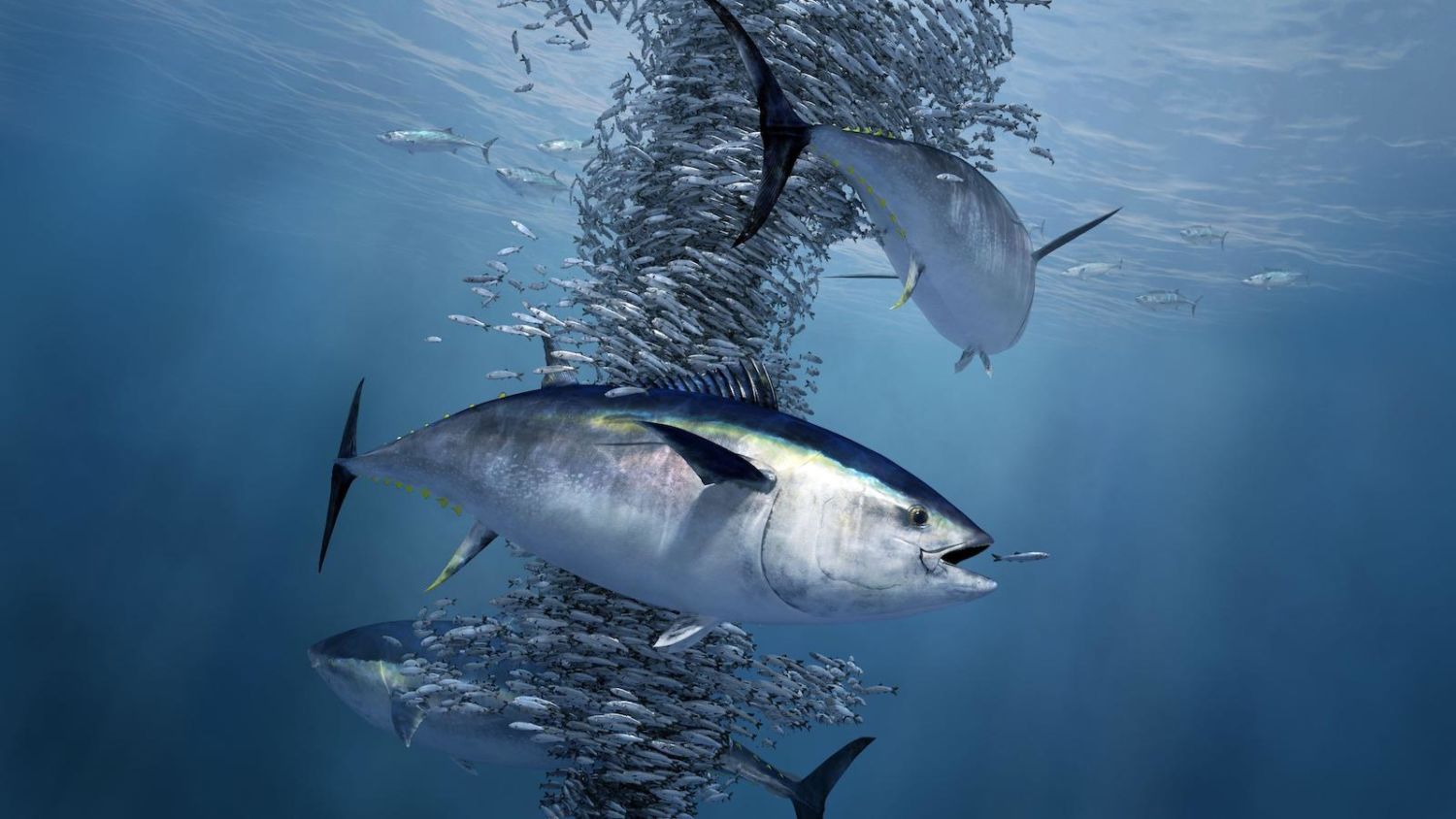
Atlantic bluefin tuna, shown feeding on a school of herring, have been driven into narrower layers of water by oxygen declines.
Atlantic bluefin tuna, shown feeding on a school of herring, have been driven into narrower layers of water by oxygen declines. MARKO STEFFENSEN / ALAMY STOCK PHOTO

Global warming not only increases ocean temperatures, it triggers a cascade of effects that are stripping the seas of oxygen. Fish are already moving to new waters in search of oxygen, and scientists are warning of the long-term threat to fish species and marine ecosystems.

BY NICOLA JONES • MAY 11, 2023

Off the coast of southeastern China, one particular fish species is booming: the oddly named Bombay duck, a long, slim fish with a distinctive, gaping jaw and a texture like jelly. When research ships trawl the seafloor off that coast, they now catch upwards of 440 pounds of the gelatinous fish per hour — a more than tenfold increase over a decade ago. “It’s monstrous,” says University of British Columbia fisheries researcher Daniel Pauly of the explosion in numbers.

The reason for this mass invasion, says Pauly, is extremely low oxygen levels in these polluted waters. Fish species that can’t cope with less oxygen have fled, while the Bombay duck, part of a small subset of species that is physiologically better able to deal with less oxygen, has moved in.

The boom is making some people happy, since Bombay duck is perfectly edible. But the influx provides a peek at a bleak future for China and for the planet as a whole. As the atmosphere warms, oceans around the world are becoming ever more deprived of oxygen, forcing many species to migrate from their usual homes. Researchers expect many places to experience a decline in species diversity, ending up with just those few species that can cope with the harsher conditions. Lack of ecosystem diversity means lack of resilience. “Deoxygenation is a big problem,” Pauly summarizes.

Tiếp tục đọc “As Ocean Oxygen Levels Dip, Fish Face an Uncertain Future”

Vietnam’s desolate seabed

mekongeye.com by Thu Quynh Nguyen 31 July 2023 at 14:39

As coral reefs and marine life disappear, efforts to save them are underway, but is it too late?

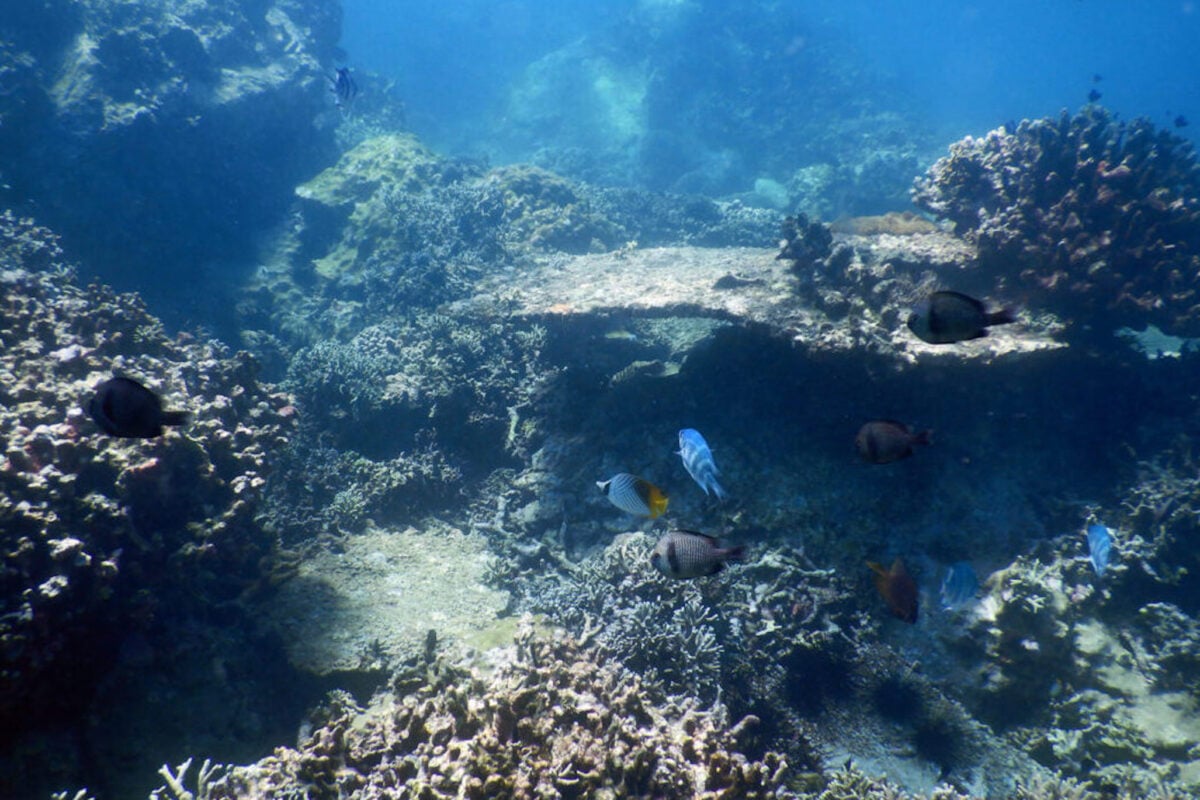
Coral die-off in Hon Mun, Nha Trang. PHOTO: Konstantin Tkachenko.

NHA TRANG, VIETNAM ― In Hon Chong, one of Vietnam’s last coral reefs, colorful schools of fish have become distant memories. These days, only small fish lurk behind bleached coral formations, a stark difference from the way some travel brochures depict the place.

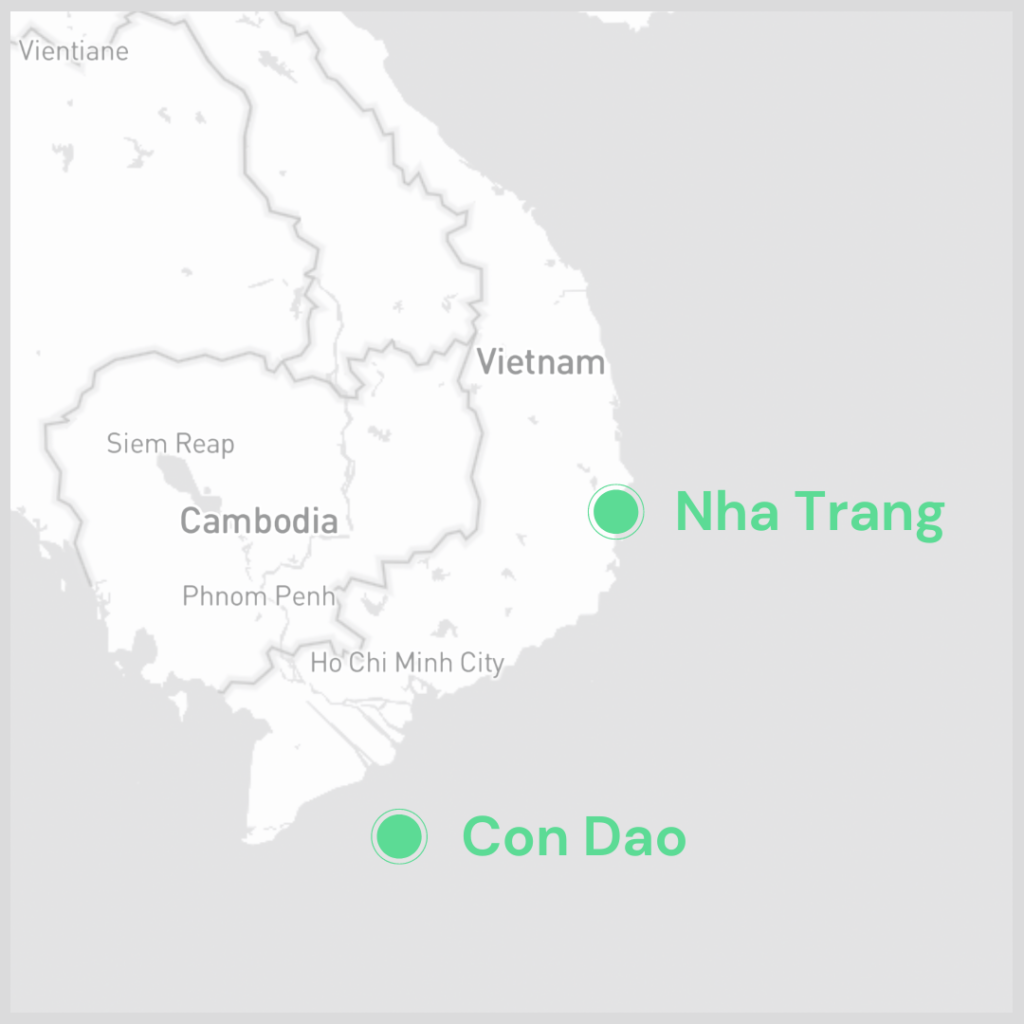
Half an hour by boat from Hon Chong is Hon Mun, a marine conservation site once home to more than 340 coral species, and valued at approximately US$70 million for its biodiversity in 2005.

About 10 years before the Covid-19 pandemic, professional divers started noticing a gradual depletion of the coral reefs in the area. They had hoped that lockdowns and border closures would alleviate stress from tourism and revive the reef.

Source: Mapbox

“After two years [of Covid-19], I was speechless to see the ocean bed so empty, the coral all bleached,” photographer Na Son, a diver who has made hundreds of trips down to Hon Mun’s ocean bed, told Mekong Eye in June 2023. Last June, Na Son was one of many divers who spoke to local media about Hon Mun’s alarming coral depletion.

Coral reefs are considered to be one of Vietnam’s national treasures, as the country boasts one of the world’s most diverse ecosystems with 355 species, according to data from the World Resources Institute.

Yet across the country, vital coral reserves are depleting at such an alarming rate that frenzied attempts to salvage what remains are likely to be insufficient to restore the ecosystems.

Tiếp tục đọc “Vietnam’s desolate seabed”

Arctic Ocean acidifying up to four times as fast as other oceans, study finds

theguardian.com

Scientists ‘shocked’ by rate of change as rapid sea-ice melt drives absorption of CO2 – with ‘huge implications’ for Arctic sea life

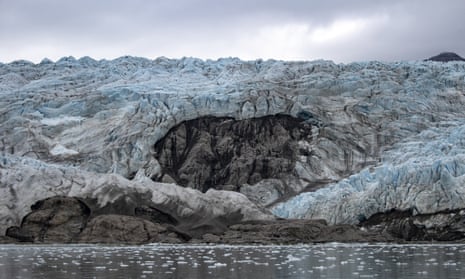
A thin layer of grey ice on a rocky shore
Norway’s Svalbard archipelago. Melting sea ice in the Arctic Ocean is driving faster warming and acidification, in a feedback loop known as Arctic amplification. Photograph: Anadolu Agency/Getty

Acidification of the western Arctic Ocean is happening three to four times faster than in other ocean basins, a new study has found.

The ocean, which absorbs a third of all of the carbon dioxide in the atmosphere, has grown more acidic because of fossil fuel use. Rapid loss of sea ice in the Arctic region over the past three decades has accelerated the rate of long-term acidification, according to the study, published in Science on Thursday.

Tiếp tục đọc “Arctic Ocean acidifying up to four times as fast as other oceans, study finds”

Plankton decline hits marine food chain

DW_Plankton is the basis for the entire marine food web – and it is under threat. From the Mediterranean to the Pacific, animals have been struggling to survive, due apparently to changes with plankton.

Food chains represent the greatest interdependency within the webs of life. The marine food chain, for instance, is essential for oceans – and depends on plankton. But environmental changes and human activities may be threatening plankton– and therefore all marine animals.

According to a recent study,the biomass of sardines and anchovies has been decreasing at alarming rates in the Mediterranean Sea. At the same time, sea lions are struggling to forage on the coasts of California. Both cases have shed light on how a single food chain element can affect all others.

While it is still unknown whether species will be able to adapt to new conditions, the marine food chain is already experiencing drastic changes – and plankton plays a crucial role across the board.

“If anything happens to the plankton, an immediate cascade effect will take place on the food chain,” Ivan Nagelkerken, a University of Adelaide’s biology professor, told DW.

Shark swimming (Picture: Imago/OceanPhoto)Even top predators depend on plankton – indirectly

Building blocks of life

Plankton are tiny aquatic organisms that drift through the sea, forming the basis of the marine food chain.

For plankton, both quantity and quality – in terms of nutrients – affect life up the food chain. Tiếp tục đọc “Plankton decline hits marine food chain”

Can we harness bacteria to help clean up future oil spills?

theconversation – In 2010 the Deepwater Horizon oil spill released an estimated 4.2 million barrels of oil into the Gulf of Mexico – the largest offshore spill in U.S. history. The spill caused widespread damage to marine species, fisheries and ecosystems stretching from tidal marshes to the deep ocean floor.
Tiếp tục đọc “Can we harness bacteria to help clean up future oil spills?”

Sustainable Fishing in Vietnam

WWF– Tram Chim National Park is one of the most important remaining expanses of wetlands in Vietnam. While most fishing in the park is forbidden, some locals exercise traditional rights to fish for food and a living. WWF works in Tram Chim to restore natural water flows, fisheries and wildlife.

https://www.youtube.com/watch?t=144&v=8Zj54YdlMls