Love Man Love Woman – Chuyện thày Đức

A film by Nguyễn Trinh Thi (2007).

In this documentary, the filmmaker follows Master Luu Ngoc Duc, one of the most prominent spirit mediums in Hanoi, and his vibrant community through their rituals and everyday life. The film explores how effeminate and gay men in homophobic Vietnam have traditionally found community and expression in the country’s popular Mother Goddess Religion, Đạo Mẫu.

What Is Intersex? What cause it? Treatment options?

webmd.com Medically Reviewed by Poonam Sachdev on November 10, 2022 Written by Amber Felton

“It’s important to note that being intersex is not a disease, disorder, or condition…It’s estimated that around 2% of individuals worldwide fit into the intersex category”

So, what is intersex?

Intersex is an umbrella term used to categorize various reproductive and sexual anatomy differences that don’t fit the usual male or female definitions. In short, intersex individuals may have chromosomes, genitals, or internal reproductive organs that don’t fit into the typical male or female category or may possess characteristics of both male and female sexes.

Intersex, by definition, is when someone generally appears to be one sex but has the dominant anatomy of the other sex or when someone is born in between the typical male and female sexes. An example of this would be a female-presenting person having mostly male anatomy. Another example of someone born intersex is someone born with an in-between presentation of male and female genitals, such as someone born with a larger-than-usual clitoris and without a vaginal opening or someone who has been born with a scrotum that is divided into a labia-like form. A person may also be born with mosaic genetics or cells with XX and XY chromosomes. 

While intersex is usually detected and assigned at birth, intersex anatomy isn’t always present then. Sometimes a person must reach the age of puberty before discovering they’re intersex. Some people may not even discover that they’re intersex until adulthood, when they discover that they’re infertile. In rare instances, intersex people are only diagnosed after they have passed away and are discovered through an autopsy. 

Tiếp tục đọc “What Is Intersex? What cause it? Treatment options?”

A law that cancels cancel culture? This country is considering it

By Heather Chen, CNN

Published 9:57 PM EDT, Fri May 12, 2023

‘Cancel culture’ or corporate cowardice?

07:49 – Source: CNN — 

Cancel culture, the online trend of calling out people, celebrities, brands and organizations – rightly or wrongly – for perceived social indiscretions or offensive behaviors, has become a polarizing topic of debate.

To some, it’s an important means of social justice and holding powerful figures to account. But to others, it’s often “misused and misdirected” and has become a form of mob rule.

But one country wants to put an end to the deeply contested online phenomena by introducing what legal experts and observers say would be the world’s first law against cancel culture – raising alarm among rights activists who fear that such legal powers could be used to stifle free speech.

Over the past year, Singapore’s government has been “looking at ways to deal with cancel culture,” a spokesperson told CNN – amid what some say is a brewing culture war between gay rights supporters and the religious right following the recent decriminalization of homosexuality in the largely conservative city-state.

Tiếp tục đọc “A law that cancels cancel culture? This country is considering it”

“Tôi xin làm vật vô tri…”

TƯỜNG ANH – 12/01/2023 06:51 GMT+7

TTCTThừa nhận đa dạng giới là một chuyện, nhưng cùng lúc việc thúc đẩy chuyển giới trong năm qua đã bộc lộ nhiều vấn đề của nó.

Một trong những vấn đề ít được công khai nhưng đã và đang len lỏi tới từng ngóc ngách các hoạt động năm qua trên thế giới: bản dạng giới và chuyển giới. Đấy cũng sẽ là vấn đề tiếp tục đặt ra những thách thức mới cho ứng xử của mỗi chúng ta và mỗi quốc gia.

Tiếp tục đọc ““Tôi xin làm vật vô tri…””

Thể thao sẽ phải chia mấy?

HUY ĐĂNG – 12/04/2023 10:25 GMT+7

TTCT Làng thể thao đỉnh cao thế giới đã trải qua hơn 100 năm lịch sử với mô hình hai nội dung nam – nữ. Nhưng đừng ngạc nhiên nếu trong tương lai, một hạng mục thứ ba, thứ tư… sẽ xuất hiện.

Tuần rồi, Liên đoàn Điền kinh thế giới (IAAF) ra một quyết định được coi là đặt dấu chấm hết cho các VĐV chuyển giới. Cụ thể, VĐV chuyển giới đã trải qua giai đoạn dậy thì khi còn là nam giới sẽ không được tham gia thi đấu các giải nữ thuộc hệ thống IAAF nữa. 

Tức để được thi đấu, VĐV chuyển giới phải phẫu thuật, hoặc trải qua những hình thức chuyển giới trước khi khoảng 12 tuổi.

Coco Telfer: “VĐV chuyển giới có những thiệt thòi mà các VĐV nữ khác không trải qua”. Ảnh: Folxhealth.com
Tiếp tục đọc “Thể thao sẽ phải chia mấy?”

Europe’s New Moral Crusade: A campaign against progressive values

Al Jazeera English – 24-12-2022

Encouraged by the reversal of pro-abortion rights in the United States, a loose coalition of evangelical Christians, far-right politicians and Russian oligarchs are now engaged in a fierce campaign against progressive, liberal values in Europe.

But what is driving this so-called moral crusade? And who is funding it?

For People & Power, filmmakers Sarah Spiller, Mark Williams and Callum Macrae went in search of answers.

Europe’s New Moral Crusade: A campaign against progressive values | People and Power

Monkeypox and the gay community

The New York Times newsletter

This weekend marks the end of Pride month, as cities across the country host events to celebrate the L.G.B.T.Q. community.
It is also a fraught moment in public health: A global outbreak of monkeypox is causing concern, with many of the cases clustered around men who have sex with men.
Experts are now trying to strike a delicate balance, warning people who may be at higher risk, without stigmatizing a community that has often been scapegoated for health scares in the past.

Tiếp tục đọc “Monkeypox and the gay community”

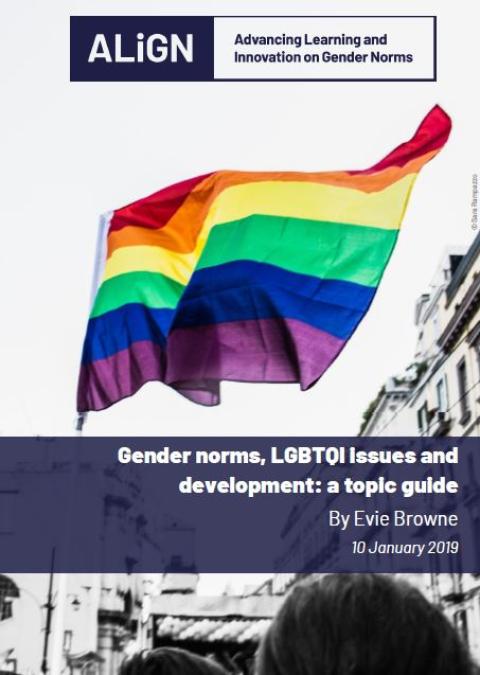
Gender norms, LGBTQI issues and development

Author: Evie BrownePublished by: ALIGN

View online guide View guide as pdf

LGBTQI+ and norms guide cover featuring a rainbow flag.

Lesbian, gay, bisexual, transgender and intersex (LGBTI) rights have become an important topic of discussion in the development sector in recent years. Moving from the provision of HIV and AIDS care for the disproportionate number of LGBT people affected, through to same-sex marriage legalisation, the landscape has shifted to promote an LGBTI-inclusive approach in many areas. This is supported by a series of international and national human rights provisions affirming all people’s rights to nondiscrimination, freedom of expression and freedom from violence. In some contexts, these changes have been possible due to shifts in social norms towards greater tolerance and acceptance of LGBTQI people. Norm change has largely been the result of long-term and increasingly visible and vibrant activist engagement, drawing on strategies such as media coverage, peer interventions, ally-building and institutional training. This guide reviews some of the literature on the norm changes that are leading to greater acceptance of and less discrimination towards LGBTQI people, focusing on low income countries in the global South. 

This topic guide is primarily intended for policy-makers and practitioners who may not be familiar with a queer theory approach to norms. It provides an overview of some important ideas and ways of thinking about how gendered social norms affect LGBTQI people in developing countries, moving the discussion beyond a rights-based approach to be more inclusive of all kinds of non-normative sexualities and genders. The guide aims to summarise the main theoretical points of a queer approach to gender norms, to identify the key issues and challenges affecting LGBTQI people, and to provide some examples of where norm change has happened.

Đêm nằm nghe pê-đê hát

1.

Buổi chiều, nghe tiếng kèn lá “ò í e…” trong ngõ hẻm nhà mình là tôi nghĩ ngay tới một đêm mất ngủ. Ở những vùng ven thành phố như cái quận Gò Vấp này, nhất là trong những xóm lao động, đám ma nơi những gia đình theo đạo thờ cúng ông bà – hay người lương, phân biệt với nguời công giáo, Thiên Chúa giáo – thường buồn bã một cách hết sức ồn ào. Tiếp tục đọc “Đêm nằm nghe pê-đê hát”