
From Cambodia to California, industrial-scale sand mining is causing wildlife to die, local trade to wither and bridges to collapse. And booming urbanisation means the demand for this increasingly valuable resource is unlikely to let up
Times are good for Fey Wei Dong. A genial, middle-aged businessman based near Shanghai, China, Fey says he is raking in the equivalent of £180,000 a year from trading in the humblest of commodities: sand.
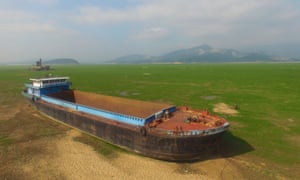
Fey often works in a fishing village on Poyang Lake, China’s biggest freshwater lake and a haven for millions of migratory birds and several endangered species. The village is little more than a tiny collection of ramshackle houses and battered wooden docks. It is dwarfed by a flotilla anchored just offshore, of colossal dredges and barges, hulking metal flatboats with cranes jutting from their decks. Fey comes here regularly to buy boatloads of raw sand dredged from Poyang’s bottom. He ships it 300 miles down the Yangtze River and resells it to builders in booming Shanghai who need it to make concrete.
The demand is voracious. The global urbanisation boom is devouring colossal amounts of sand – the key ingredient of concrete and asphalt. Shanghai, China’s financial centre, has exploded in the last 20 years. The city has added 7 million new residents since 2000, raising its population to more than 23 million. In the last decade, Shanghai has built more high-rises than there are in all of New York City, as well as countless miles of roads and other infrastructure. “My sand helped build Shanghai Pudong airport,” Fey brags. Tiếp tục đọc “Sand mining: the global environmental crisis you’ve probably never heard of”

 CVD
CVD 