
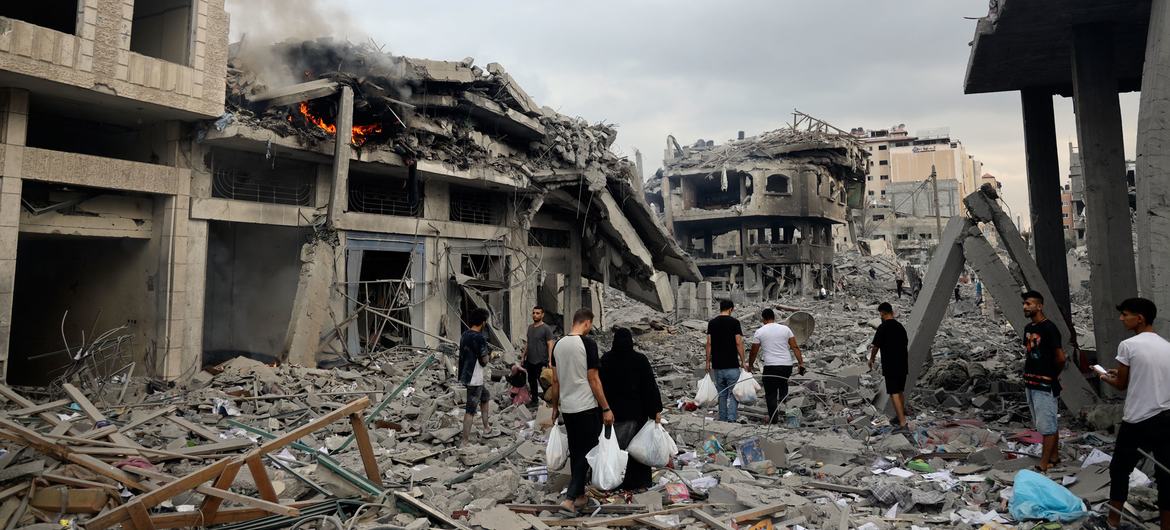
© UNICEF/Eyad El Baba
Families flee their shattered homes in Tal al-Hawa neighbourhood in Gaza city.
While aid workers serving conflict-affected civilian populations depend on a set of laws to protect them, some warring parties violate these global agreements, from targeting hospitals and schools to blocking aid workers from reaching civilians with lifesaving goods and services.
But, what exactly are the rules of war and what happens when they are broken?
To find out more about international humanitarian law, known by its acronym IHL, UN News spoke with Eric Mongelard at the UN human rights office, OHCHR.
Here’s what you need to know:
Rules of war
International humanitarian law is as old as war. From passages in the Bible and Quran to medieval European codes of chivalry, this ever-growing set of rules of engagement aims to limit a conflict’s effects on civilians or non-combatants.
The laws represent “the very minimum rules to preserve humanity in some of the worst situations known to mankind,” Mr. Mongelard said, noting that the rules of war apply the moment an armed conflict has begun.
 CVD
CVD 